When Does a Tiered Rolling Cart Work Better Than a Single-Level Cart?
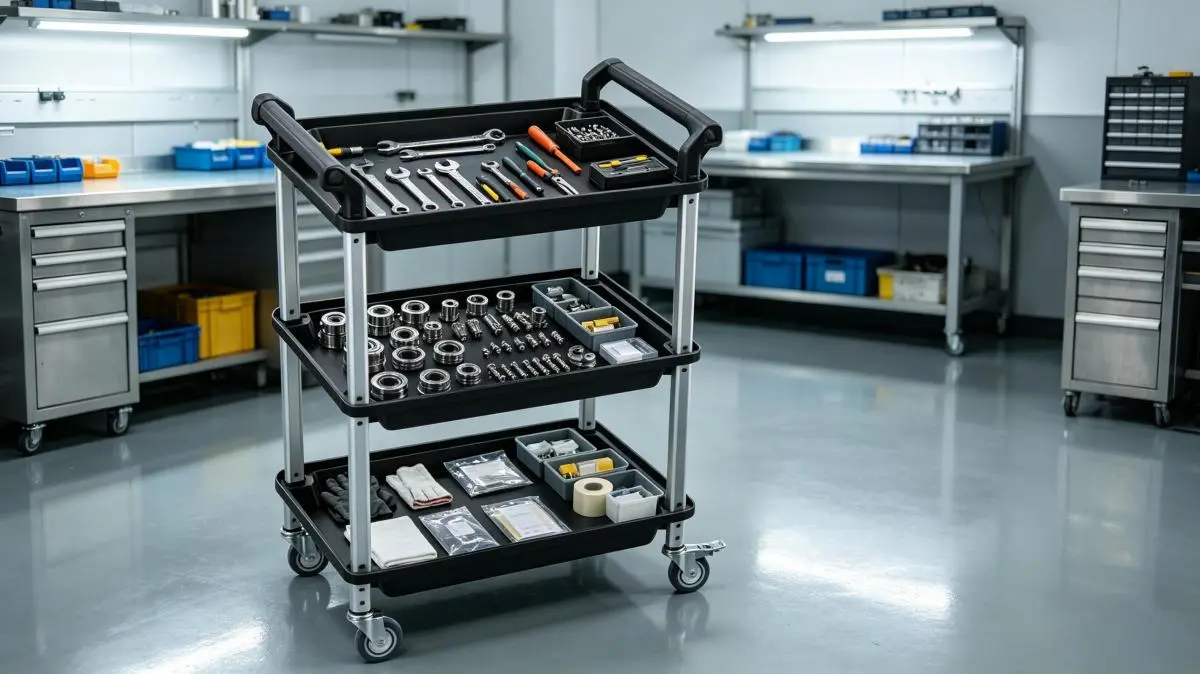
A rolling cart can make material movement easier, but the number of levels determines how the cart can support a real work process. A single-level cart provides one open working surface. A tiered rolling cart divides that mobile space into separate levels, making it possible to organize several groups of items while keeping them together during movement.
For B2B buyers, the key question is therefore not simply whether a three-tier cart offers more storage.
The more useful question is:
When does a three-tier structure actually make a workflow easier, more organized, or more repeatable?
A three-tier rolling cart is particularly useful when workers need to carry several categories of tools, parts, supplies, or materials at the same time. The value becomes clearer when these items need to remain separated, when the employee moves between multiple workstations, or when one cart supports several stages of the same task.
This makes the three-tier format relevant to workshops, warehouses, maintenance teams, production support, commercial service operations, and other professional environments.
The practical rule is simple:
A three-tier cart makes more sense when the work itself benefits from multiple organized zones.
- Why a Three-Tier Cart Fits Certain Workflows Better
- When Workers Need to Carry Several Item Groups at Once
- When Workers Repeatedly Move Between Workstations
- When the Work Requires Classification or Vertical Organization
- When Replenishment, Collection, or Route-Based Work Is Involved
- When a Single-Level Cart May Still Be Enough
- How to Identify a Genuine Three-Tier Cart Use Case Before Buying
- How Jingyan’s 3-Tier Rolling Utility Cart Fits These Workflows
- Why Manufacturer Capability Matters for a Three-Tier Cart Program
- Frequently Asked Questions About Tiered Rolling Cart Use Cases
- Conclusion: Choose Three Levels When the Workflow Needs Three Zones
Why a Three-Tier Cart Fits Certain Workflows Better
The main advantage of a tiered rolling cart is not simply that it has more shelves.
Its real value comes from giving users separate places for different groups of items during the same movement or task.
A single open surface works well when the load is simple. If a worker only needs to move one large object, a small group of similar products, or materials that do not need to be separated, there may be little benefit from additional levels.
A three-tier design approaches the problem differently.
Instead of treating everything as one load, users can assign each level a purpose.
For example:
- The top level can hold frequently used tools.
- The middle level can hold replacement parts or current work materials.
- The lower level can hold backup supplies, consumables, or collected items.
This structure becomes useful when the cart is expected to do more than carry something from one point to another.
It can help support a repeatable mobile workflow.
That distinction is important for B2B buyers. A cart may be physically capable of carrying the required items, but the more useful product is the one that also helps the end user organize those items while working.
When Workers Need to Carry Several Item Groups at Once
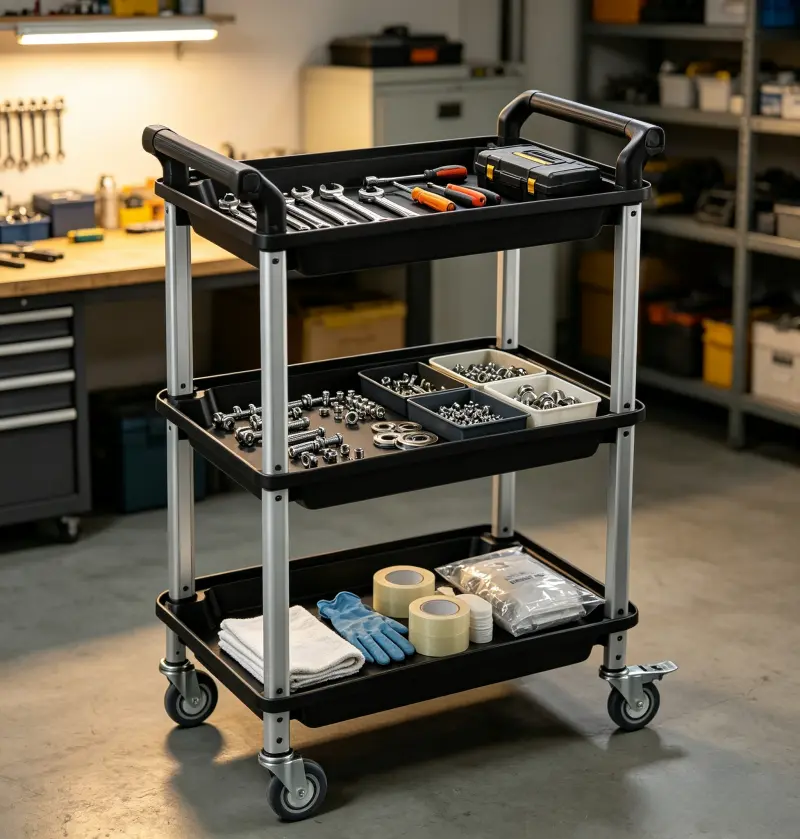
One of the clearest use cases for a tiered rolling cart is a job where several types of items need to move together.
Consider a maintenance or workshop employee who must visit multiple workstations.
The same task might require:
- hand tools,
- replacement parts,
- fasteners,
- consumables,
- inspection materials,
- and items removed during the work.
All of these items can technically be placed on one open platform. The problem is what happens after several categories accumulate.
The surface becomes harder to understand, smaller items can become buried under larger ones, and users may need to move unrelated materials simply to reach what they need.
A three-tier cart creates a simple form of separation.
1.Keep Frequently Used Items on the Most Accessible Level
Frequently accessed tools or small components can be placed on the level that the worker reaches most often.
The purpose is not to create a complicated storage system.
It is to make the workflow easier to understand at a glance.
A technician who knows that commonly used tools are always on one level does not need to search the entire cart before starting the next step.
2.Separate Supporting Materials From Active-Use Items
Replacement parts, packaged supplies, backup materials, or consumables can be assigned to another level.
This becomes especially useful when the worker needs some items continuously while other materials are only needed occasionally.
Instead of mixing everything into one working area, the cart can distinguish between:
items being used now and items needed later.
3.Keep Different Parts of One Task Together
Some tasks have several stages.
For example:
tools → replacement parts → removed components
can be treated as three related but separate groups.
A tiered cart allows these groups to travel together without requiring them to occupy the same surface.
That makes the three-level design use
When Workers Repeatedly Move Between Workstations
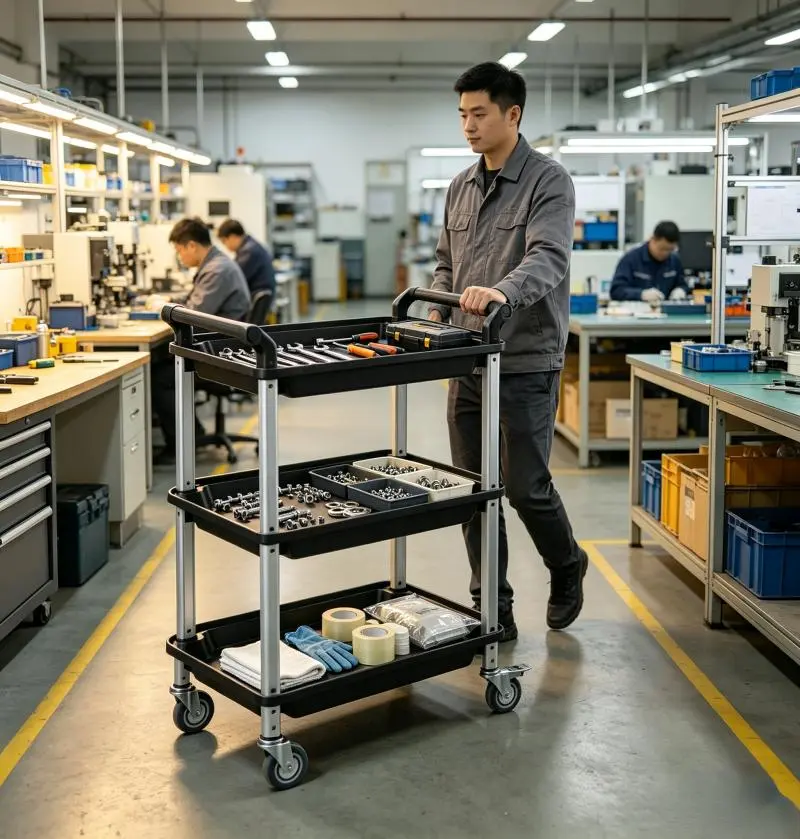
A three-tier cart becomes particularly valuable when workers repeatedly travel between different work areas during the same shift.
This can happen in:
- workshop production,
- maintenance operations,
- equipment servicing,
- warehouse picking,
- facility support,
- commercial cleaning,
- repair work,
- and other mobile service activities.
If a worker only makes one simple trip, the additional organization provided by three levels may not matter much.
But when the employee keeps moving from one station to another, the cart can become part of the working process.
1.The Cart Can Move With the Entire Task
Imagine a technician performing similar work at several stations.
Instead of returning to storage after every small step, the technician can prepare one cart with the tools, parts, and supplies needed for the job.
The cart then moves with the worker.
Each level can have a defined role based on the workflow.
This turns the cart into a mobile work-support system, rather than a temporary transport platform.
2.Repeated Access Makes Organization More Valuable
The more often workers return to the cart, the more important the arrangement of its contents becomes.
Without organization, workers may have to:
- search through mixed items,
- move one item to reach another,
- temporarily place parts on equipment,
- or leave the work area to retrieve routine supplies.
With three separated levels, the user can maintain a basic visual order.
The improvement does not come from adding complexity.
It comes from making the cart easier to read and use repeatedly.
3.A Three-Tier Cart Can Reduce Workflow Interruptions
For B2B customers, this is an important distinction.
A professional cart is often used many times per day. A small organizational advantage repeated dozens of times can be more valuable than a product feature that looks impressive but has little effect on the daily process.
When tools, parts, and supplies remain separated, the worker can return to the cart and immediately understand where each category belongs.
That is one of the strongest situations for a tiered design.
When the Work Requires Classification or Vertical Organization
Another strong use case appears when users need to organize several smaller item groups without expanding the cart into a wider footprint.
A single surface encourages items to spread horizontally.
That can work for one category of material.
It becomes less convenient when the same cart must carry multiple categories at once.
A tiered structure instead uses the available vertical space to establish separate working areas.
1.Different Categories Can Have Different Levels
A three-tier cart can be organized according to category.
For example:
Top level: active-use tools
Middle level: parts and accessories
Bottom level: reserve materials
The exact arrangement will differ by customer, but the underlying principle remains the same.
Different item groups can have different physical locations.
That simple distinction can make a mobile cart easier to manage.
2.Different Access Frequencies Can Be Managed
Not every item needs to be reached equally often.
High-frequency items can be kept in the most convenient position, while backup or reserve materials can be assigned to another level.
This means the cart can be organized according to how often items are used, not only what those items are.
That can be particularly helpful in professional environments where employees perform the same type of work repeatedly.
3.One Cart Can Support Several Work Phases
A three-tier structure can also represent the sequence of a task.
For example:
ready to use → currently in process → waiting or returning
This can help workers distinguish materials by status rather than by product type.
That is another reason the three-tier format is useful in operational environments.
The cart becomes a physical representation of the workflow.
When Replenishment, Collection, or Route-Based Work Is Involved
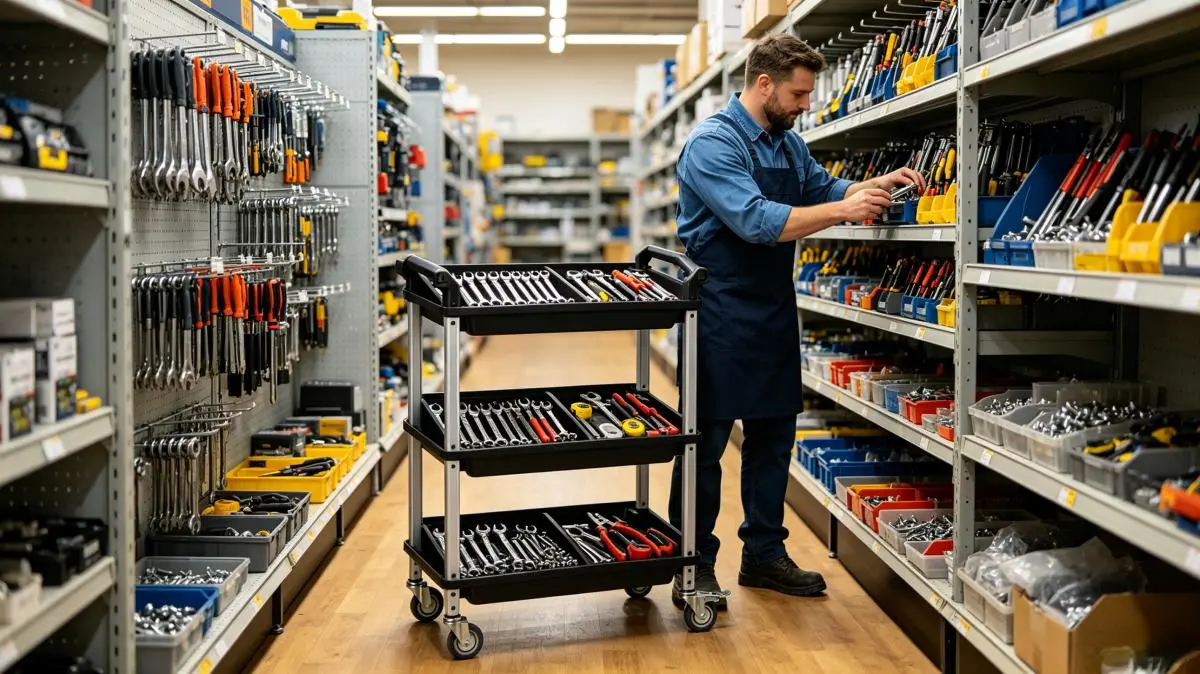
A three-tier rolling cart can also be a strong fit when the work involves regular replenishment or collection.
This is common in warehouse support, facility service, workshop material distribution, maintenance routes, and commercial service operations.
In these situations, the cart may need to carry several different states of material during the same route.
1.Separate Supplies From Materials Being Collected
One simple arrangement might be:
new supplies → active-use materials → collected materials
This can help prevent clean or unused supplies from being mixed with materials that have already been used or removed.
The arrangement can be adjusted for different operations, but the concept remains straightforward.
Three levels provide three visible zones without requiring separate carts for every category.
2.Use the Same Loading Pattern for Repeated Routes
If a service team follows a regular route, a fixed loading pattern can make the cart easier to prepare.
For example:
- top = items needed immediately,
- middle = replenishment supplies,
- bottom = reserve stock or collection materials.
The specific arrangement should be based on the actual work.
The important point is that three tiers can support a repeatable route-based process.
3.Reduce Unnecessary Reorganization During the Day
When the same cart is repeatedly used for similar jobs, consistent organization helps different employees understand the layout quickly.
A worker taking over the cart does not need to create an entirely new arrangement before starting.
That can be useful for:
- multi-shift operations,
- shared maintenance teams,
- facility service teams,
- and standardized workshop processes.
When a Single-Level Cart May Still Be Enough
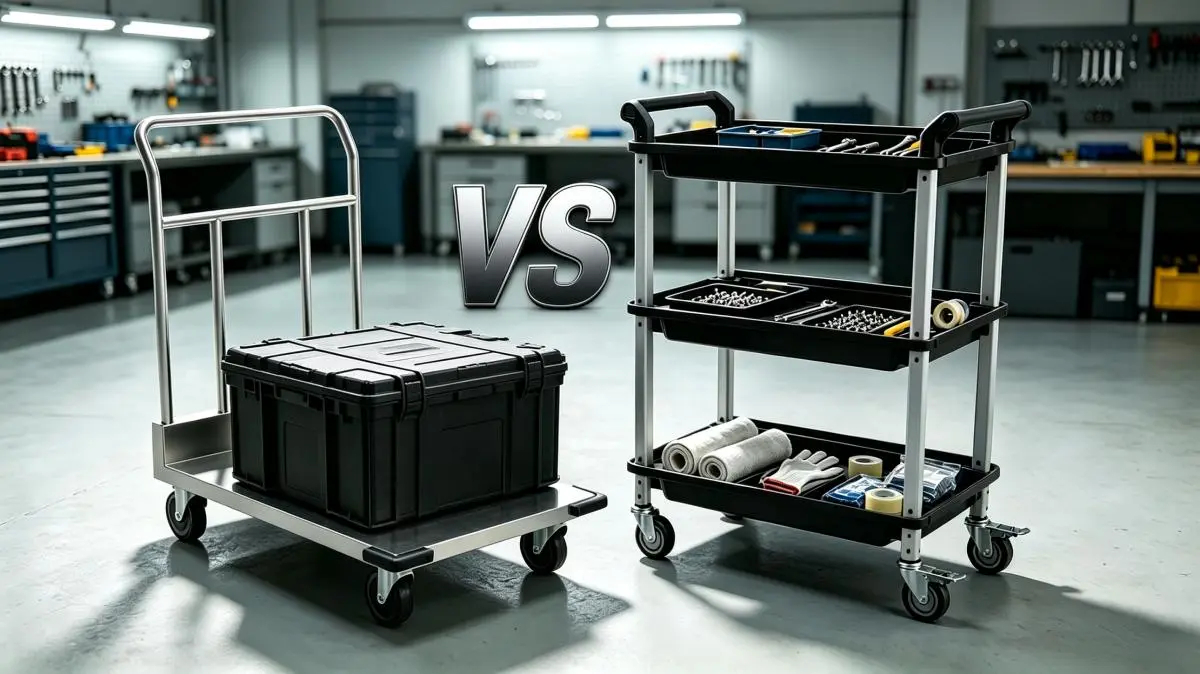
A three-tier rolling cart should not be treated as the right answer for every job.
The question is not whether three levels are objectively better.
The question is whether the workflow benefits from having multiple organized zones.
A single-level cart may still be appropriate when:
- the load is mainly one large object,
- the material is mostly one category,
- the worker does not need repeated access during the task,
- the cart is used only for simple point-to-point movement,
- or an uninterrupted surface is more useful than divided storage.
For example, if the main purpose of a cart is to carry one large container or a single bulky item, adding extra levels may not create a meaningful operational advantage.
This is why B2B buyers should avoid evaluating the products only by shelf count.
The more useful question is:
Does this customer’s workflow need separation, or does it mainly need one open mobile surface?
If it needs separation, the three-tier format becomes easier to justify.
How to Identify a Genuine Three-Tier Cart Use Case Before Buying
For B2B buyers, the easiest way to make this decision is to analyze the work process before comparing individual products.
1.Does the Worker Carry Several Categories at the Same Time?
2.Do Different Items Need to Stay Separate?
3.Does the Worker Return to the Cart Repeatedly?
Frequent access increases the value of organized storage.
A cart used as part of an ongoing task benefits more from clearly separated levels than a cart used for one-time transport.
4.Does One Cart Support Several Work Stages?
If the same cart needs to carry materials for preparation, active work, and follow-up, the three levels can be assigned according to the work sequence.
5.Does the Operation Include Replenishment or Collection?
6.Is the Cart Shared by Multiple Workers?
A consistent tiering system can help employees across shifts understand the cart without repeatedly redesigning the layout.
For B2B buyers who need to move from workflow suitability to product selection, it is useful to review broader B2B buying considerations for a 3 tier cart, including factors that affect sourcing, product evaluation, and supplier requirements. This keeps the broader purchasing discussion separate from the workflow-focused question addressed on this page.
Likewise, detailed discussion of shelf dimensions, clearance, and load capacity belongs in How to Evaluate Shelf Size, Clearance, and Load Capacity in a 3 Shelf Rolling Cart, rather than repeating those technical topics here.
How Jingyan’s 3-Tier Rolling Utility Cart Fits These Workflows
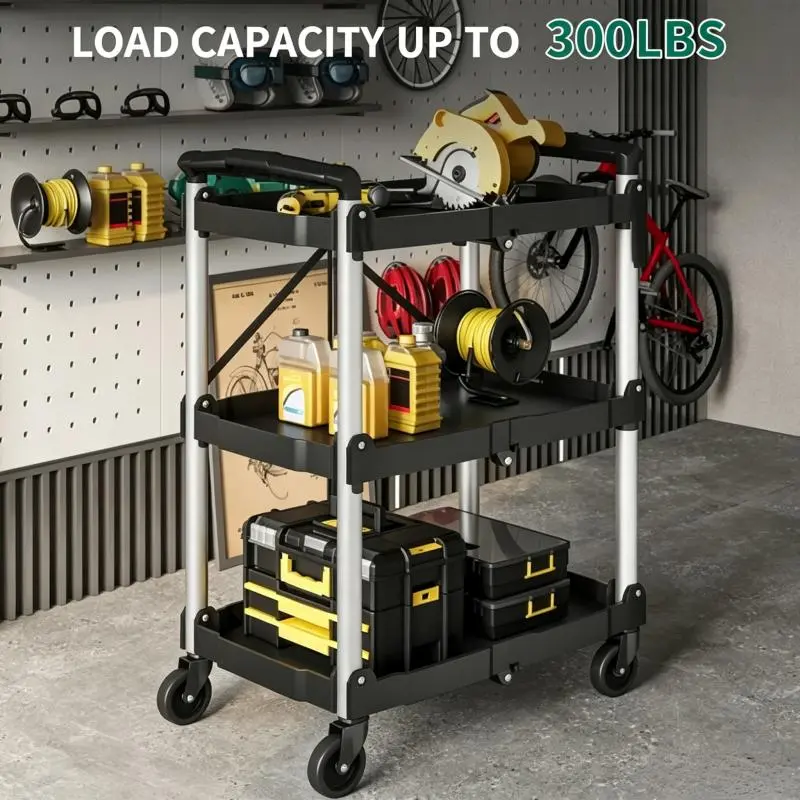
A real product example makes the workflow difference easier to understand.
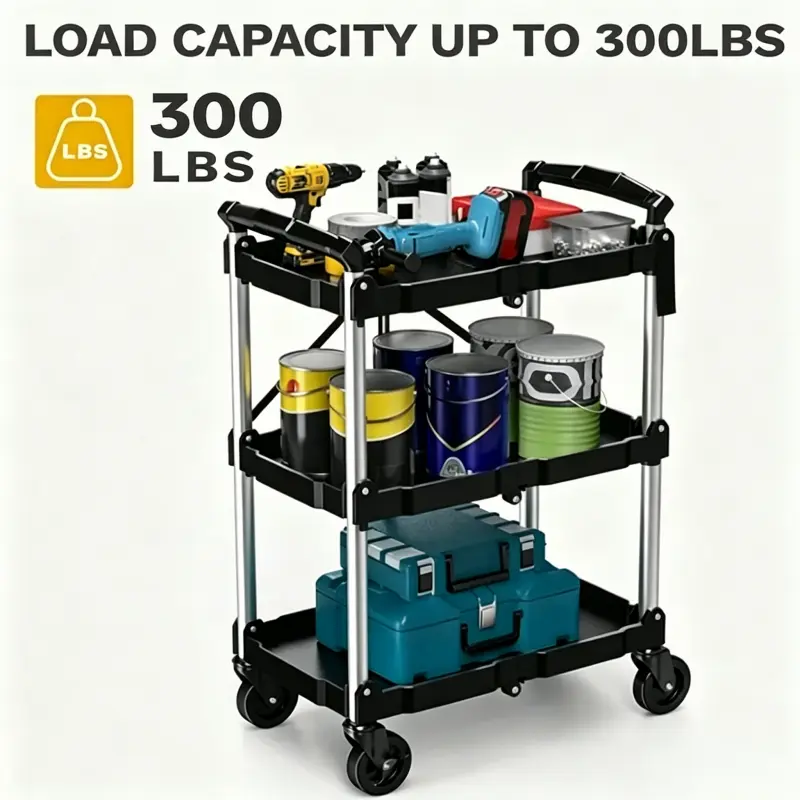
Jingyan’s 3-Tier Rolling Utility Cart uses an open three-shelf configuration with high-density polypropylene shelves and thickened aluminum tubing. Its stated load capacity is 300 lbs.
More importantly for this article, the design provides three separate levels that can be assigned to different work functions.
For example, a workshop team could use:
- the top level for frequently used tools,
- the middle level for parts and accessories,
- the lower level for backup supplies.
A warehouse support team could instead use:
- the top level for active picking items,
- the middle level for replenishment materials,
- the lower level for reserve or collected materials.
A commercial service team may organize the same cart according to the sequence of a recurring service job.
The product does not require one fixed arrangement.
That flexibility is the main reason a three-tier structure can work across several professional use cases.
The published configuration includes:
- 25.6 inches wide × 34.3 inches high × 14.6 inches deep
- 23.6 inches wide × 19.5 inches deep shelf size
- 12 inches of clearance between shelves
- 300 lb stated load capacity
- High-density polypropylene shelves
- Thickened aluminum tubing
These specifications are important when buyers move from workflow suitability to detailed product evaluation. Buyers who need a deeper review of “shelf dimensions, clearance, and load capacity“can evaluate these factors separately before selecting a specific cart.
Does the three-level structure fit the way the customer actually works?
For B2B distributors, retailers, and brands, this also creates a useful positioning opportunity. The product can be presented not only as a storage cart, but as a solution for mobile organization, service preparation, and repeated material movement.
Why Manufacturer Capability Matters for a Three-Tier Cart Program
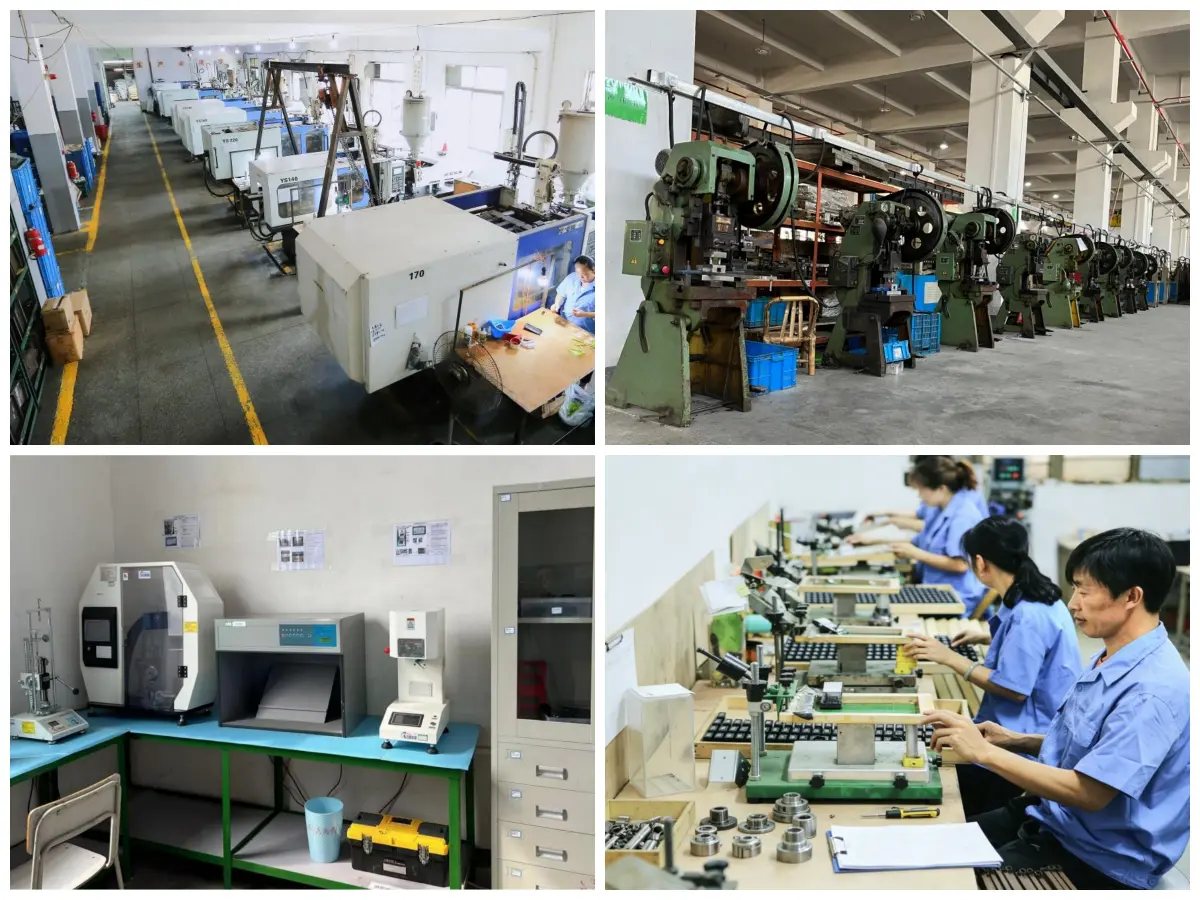
Once a cart becomes part of a customer’s daily workflow, consistency matters.
A B2B buyer may not purchase only one sample. The product may become part of a repeat purchasing program, private-label line, or distributor assortment.
That means the supplier needs to provide more than a product photo.
Relevant capabilities may include:
- stable material sourcing,
- controlled production,
- quality inspection,
- packaging control,
- logo customization,
- color requirements,
- and repeat-order support.
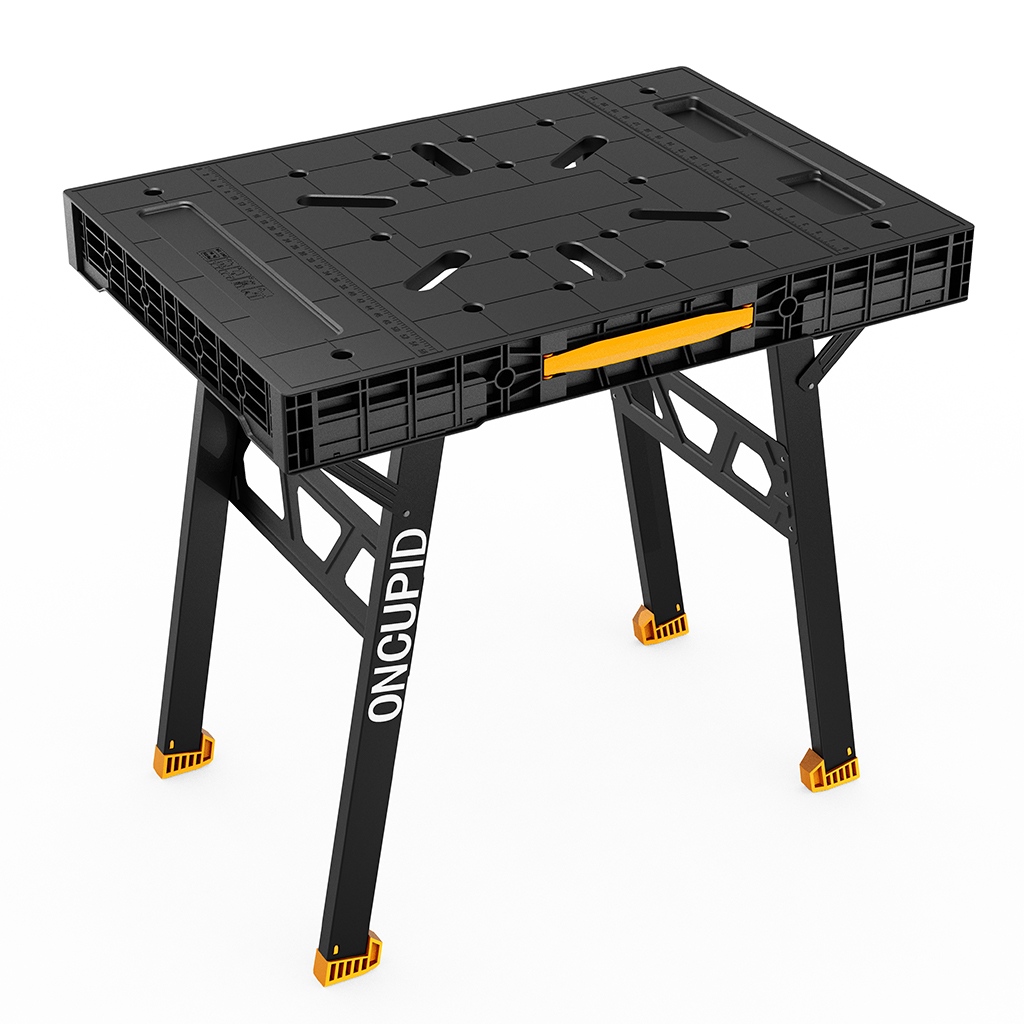
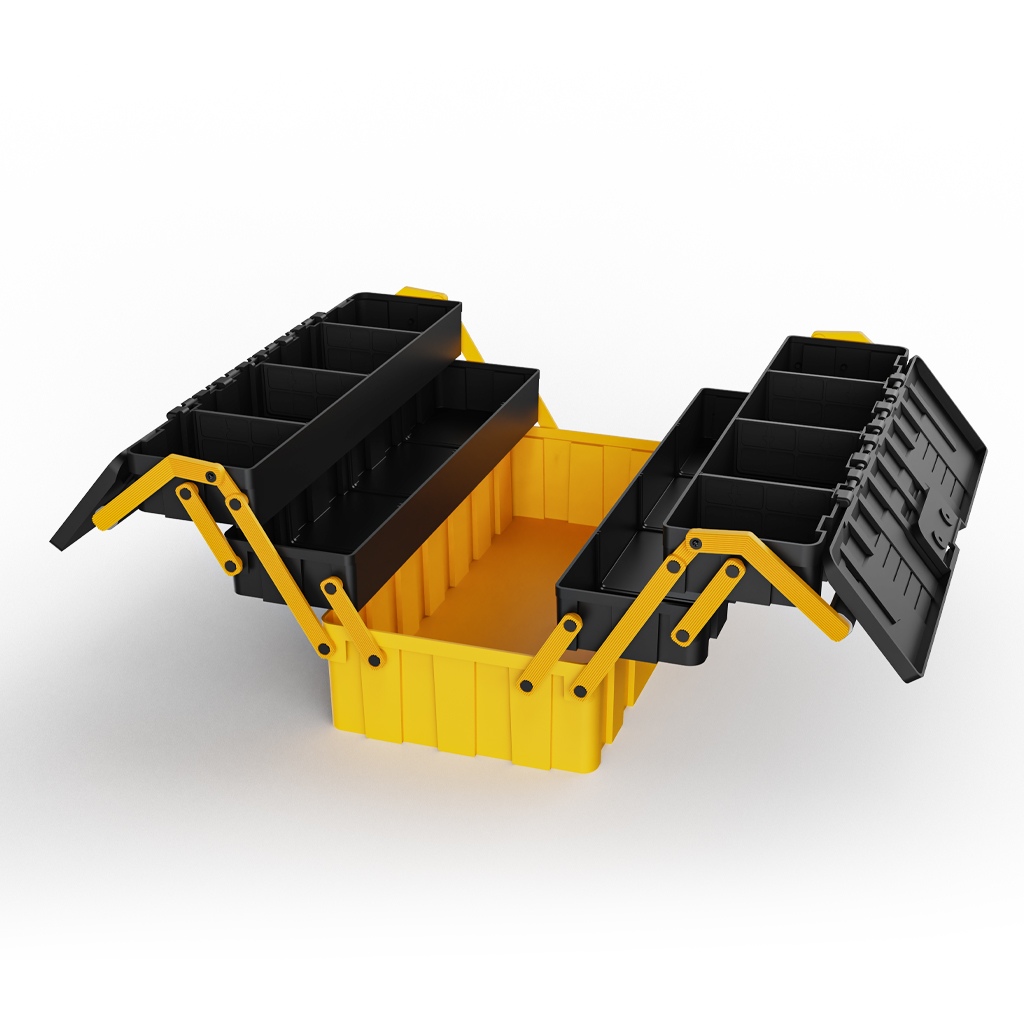
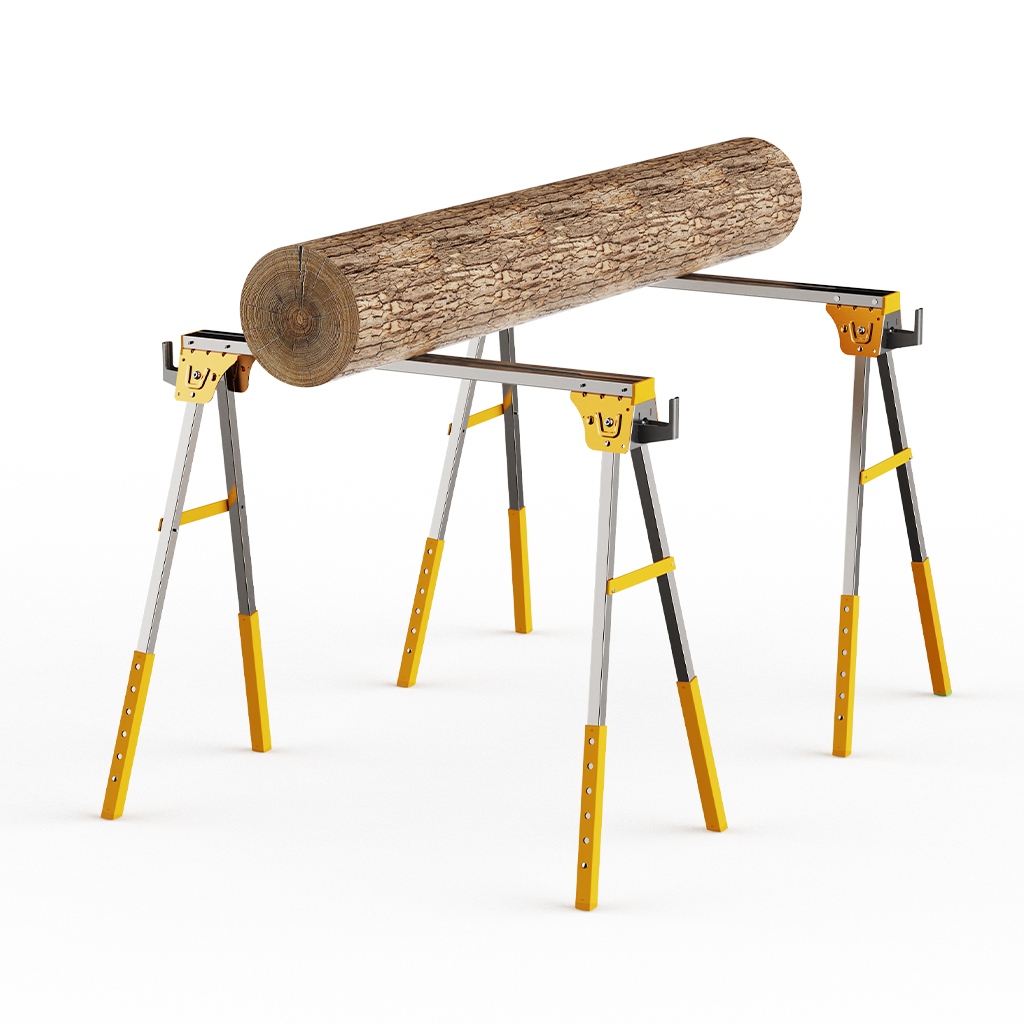
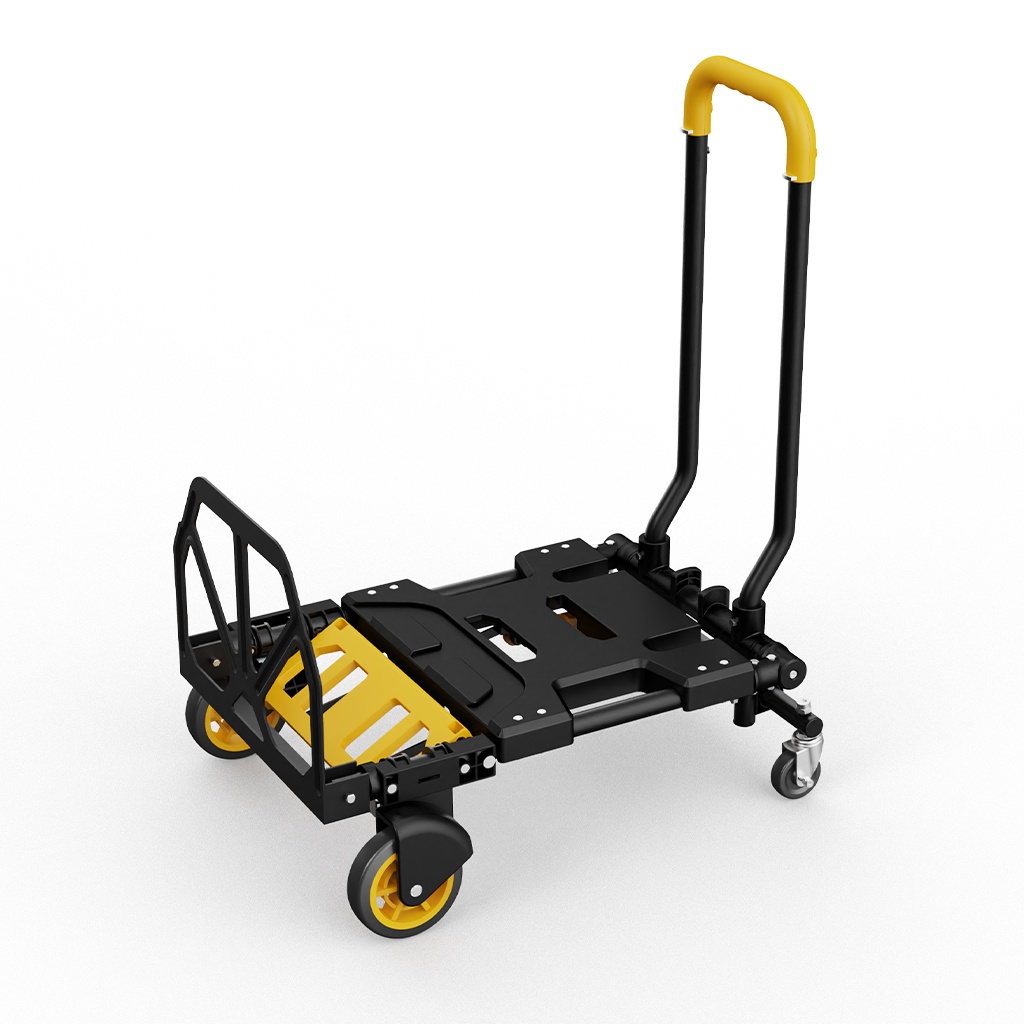
Jingyan Tools has manufacturing capabilities covering R&D, mold development, production, quality control, and customer service, with experience across workbenches, sawhorses, toolboxes, hand trucks, and related tool products.
For a three-tier cart program, this can be relevant when the buyer’s requirement develops from a basic product purchase into a broader commercial process:
sample evaluation → trial order → branded production → repeat replenishment
That is particularly important for distributors, retailers, and private-label brands that need consistent product supply rather than a one-time purchase.
Frequently Asked Questions About Tiered Rolling Cart Use Cases
1.Is a tiered rolling cart always better than a single-level cart?
No.
A tiered rolling cart is more suitable when the workflow involves multiple item groups, repeated access, classification, or several work stages. A single-level cart may still be appropriate for simple transport or one large unobstructed load.
2.What is the main advantage of a three-tier utility cart?
Its main advantage is organized movement.
Users can keep tools, parts, supplies, or other materials separated by level instead of placing everything onto one open surface.
3.Are three-tier carts suitable for warehouses?
They can be useful for workflows involving picking, replenishment, sorting, small parts movement, or repeated trips between storage and work areas.
Their value comes from keeping different item groups organized while the cart moves.
4.Can a three-tier cart be used as a mobile workstation?
Yes.
When workers repeatedly return to the cart during a task, it can function as a mobile workstation by keeping tools, parts, and supplies organized in one place.
5.Are three-tier carts suitable for commercial service operations?
They can be especially useful for recurring service routes where several categories of supplies need to move together.
Different levels can be assigned to current-use items, reserve supplies, and collected materials.
6.Can a three-tier cart be used for B2B private-label programs?
Yes.
A standard three-tier design can serve as the basis of a wholesale, distributor, or private-label product program, with branding, packaging, color, and other project requirements discussed with the manufacturer.
Conclusion: Choose Three Levels When the Workflow Needs Three Zones
The strongest reason to choose a three-tier rolling cart is not simply that it has more shelves.
It is that the work itself benefits from separation.
A three-tier cart is often a strong fit when workers need to carry several categories of materials together, move repeatedly between workstations, replenish supplies along a route, organize shared materials, or separate different stages of the same task.
In those situations, the three levels are doing more than holding products.
They are creating a simple mobile organization system.
That leads to a practical B2B decision rule:
Choose a three-tier cart when the workflow needs multiple organized zones.
A single-level cart remains useful when the job mainly requires one open mobile surface.
The best choice therefore depends on the work process, not simply the number of shelves.
For distributors, retailers, and brands, this distinction is also useful for product positioning. A three-tier rolling cart can be presented as a practical solution for mobile organization, workflow support, and repeated material movement, rather than simply another general-purpose cart.
Related products