Why 3-in-1 Trolleys Are a Smarter Choice for Flexible Material Handling

Material handling rarely follows one fixed pattern.
In a warehouse, workshop, distribution area, retail backroom, or production facility, employees may need to move cartons in one task, transport spare parts in another, and handle larger or differently positioned loads later in the same day. When every task requires a different type of equipment, the result can be more equipment on the floor, more storage space occupied, and more time spent switching between handling methods.
This is where a multi-configuration trolley can offer a practical alternative.
A well-designed material handling trolley can support different movement requirements without forcing an operation to rely on several completely separate carts. For businesses purchasing equipment in quantity, this flexibility can be especially valuable because the purchasing decision is not only about the initial product price. It is also about how efficiently the equipment can be used across different working conditions.
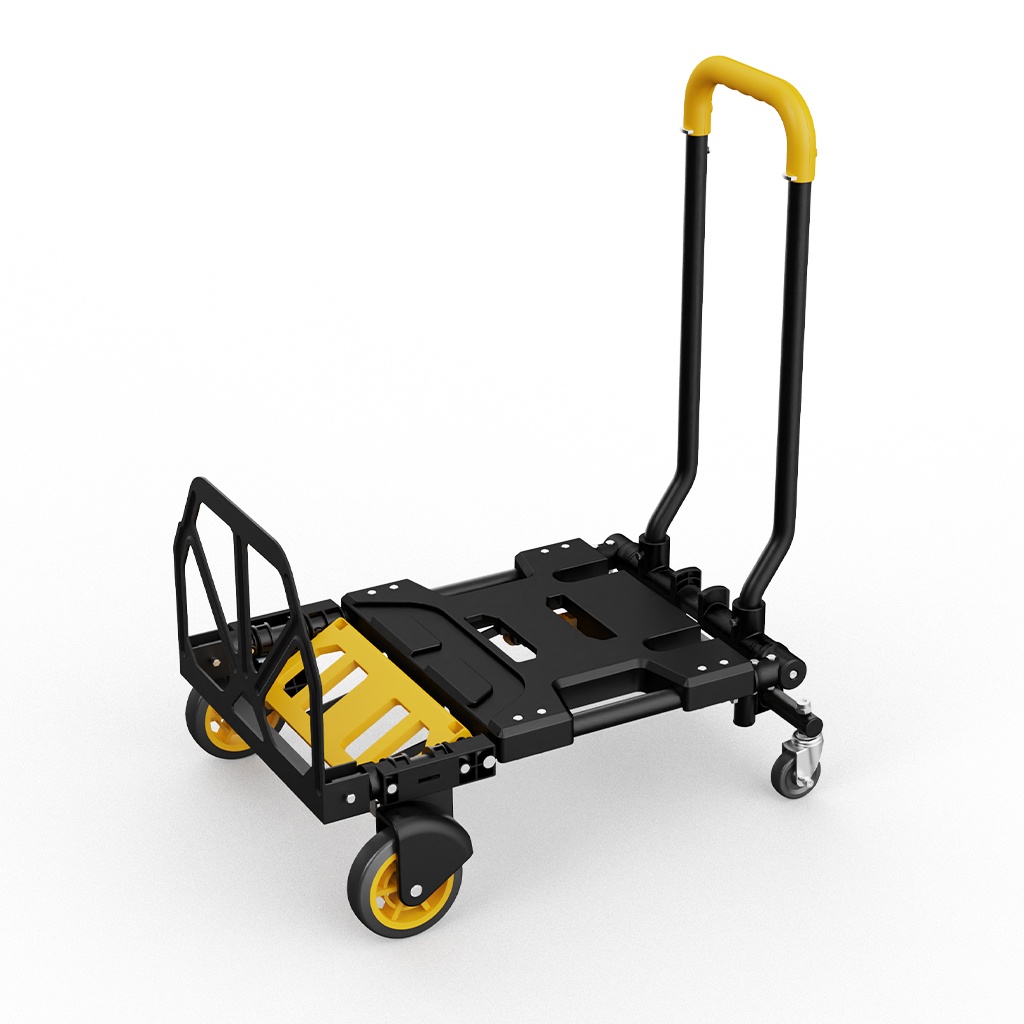
Jingyan Tools developed its 3-in-1 foldable trolley around this type of practical requirement. Built with a PP + PA + iron structure, the trolley can be configured for different handling positions while remaining relatively lightweight and compact when folded.
The product has a net weight of 7.1 kg and a listed load capacity of 120 kg. Its four-wheel configuration measures 47.5 × 62 × 80.8 cm, while the two-wheel configuration measures 47 × 40.5 × 121.5 cm. When folded, it measures 37.5 × 13 × 81 cm.
These specifications are important, but the larger purchasing question is more interesting:
Why does configuration flexibility matter in real material handling operations?
Table of Contents
- The Real Challenge Is Not Moving One Load — It Is Managing Different Tasks
- What Makes a Multi-Configuration Trolley Different?
- Why Flexibility Matters in Warehouse Material Handling
- How a 3-in-1 Trolley Fits Different Business Environments
- Warehouse and Distribution Operations
- Manufacturing and Workshop Environments
- Retail Backrooms and Stock Replenishment
- On-Site Service and Mobile Work
- Why a 3-in-1 Design Can Make Sense for Distributors
- What Procurement Teams Should Check Before Ordering
- Why Product Flexibility Can Reduce Equipment Complexity
- Jingyan Tools: From Product Design to B2B Supply
- How the Trolley Can Work Alongside Other Workshop Equipment
- Is a 3-in-1 Trolley Always the Best Choice?
- What Makes the Jingyan Tools Model Relevant for Flexible Handling?
- A Better Way to Evaluate Material Handling Equipment
- FAQ About 3-in-1 Trolleys and Material Handling
- Final Takeaway: Flexibility Is the Real Advantage
The Real Challenge Is Not Moving One Load — It Is Managing Different Tasks
A common mistake when selecting handling equipment is to evaluate a cart based on one task only.
For example, a warehouse employee may need a flat platform when moving several cartons at once. A different task may require a more upright configuration because the load is easier to control when the operator can pull or push it from a different position.
In another environment, workers may need to move equipment between storage and production areas, then fold the cart away when the task is complete.
This means the purchasing question should not simply be:
“How much weight can this cart carry?”
A better question is:
“How many of our routine handling tasks can this equipment support effectively?”
This broader way of evaluating equipment is particularly relevant to businesses purchasing multiple units.
A distributor may want one product that can serve several customer applications. A warehouse operator may prefer equipment that can be assigned to different work areas. An importer may also value a product whose configuration and appearance can be adapted for different market requirements.
That is why flexibility can become a purchasing advantage rather than simply a product feature.
What Makes a Multi-Configuration Trolley Different?

A conventional cart generally has one primary operating configuration.
It may be excellent for flat-floor transport but less convenient when the operator needs a different loading position. A dedicated hand truck can be efficient for upright loads, while a platform cart may be more appropriate for multiple boxes or wider items.
The problem appears when an operation regularly encounters both situations.
A 3-in-1 design approaches the problem differently.
Instead of treating each movement requirement as a separate equipment category, the same trolley can be adjusted into different configurations. In the Jingyan Tools design, the structure supports three practical handling modes:
- Two-wheel trolley configuration
- Four-wheel trolley configuration
- Flat-bed/platform handling configuration
The benefit is not that three configurations magically replace every type of industrial transport equipment. They do not.
The benefit is that a single compact product can address several light- to medium-duty material movement tasks within the environments for which it is designed.
That distinction matters when purchasing managers compare equipment based on actual workflow rather than simply comparing product labels.
Why Flexibility Matters in Warehouse Material Handling
1. Different Loads Require Different Handling Positions
Warehouses rarely move identical items throughout the day.
Cartons, packages, spare parts, components, tools, and supplies can vary significantly in size and shape. A flat platform is useful when several items need to be placed together, while a two-wheel configuration can be more practical when the operator needs a more compact footprint.
The advantage of flexible equipment is therefore connected to the way the load is handled, not just the load itself.
For warehouse teams, this can make a versatile trolley useful for internal transfers between receiving, storage, packing, staging, and other work areas.
The trolley does not need to become a replacement for forklifts or specialized industrial transport systems. Its value comes from handling the smaller, more frequent movements that occur around them.
This is an important distinction when evaluating warehouse handling equipment.
2. Compact Storage Can Matter as Much as Operating Capacity
Equipment that performs well during use can still create problems when it is not being used.
Warehouse floor space has a cost. Backroom areas, service vehicles, workshop corners, and storage zones can quickly become crowded when multiple pieces of equipment are left open and ready for use.
The Jingyan Tools trolley addresses this issue through its folding structure.
Its folded dimensions are approximately 37.5 × 13 × 81 cm, creating a substantially narrower storage profile than its operating configurations.
For a business operating several units, the difference can become more noticeable.
A trolley that can be folded and stored against a wall, inside a vehicle, or within a designated equipment area can help keep working spaces clearer.
For procurement teams, this means storage should be considered alongside load capacity and configuration.
3. Lightweight Equipment Can Improve Deployment Flexibility
The trolley has a net weight of 7.1 kg.
That specification does not mean it is suitable for every heavy industrial application. Instead, it indicates that the product is designed with portability and practical deployment in mind.
For businesses operating across multiple work zones, equipment that can be moved or repositioned without complicated handling can be useful.
For example, one unit may be used in a warehouse in the morning, moved to a loading or staging area later, and stored after the work is completed.
The combination of a relatively light body and folding structure can therefore contribute to operational flexibility.
This is particularly relevant for distributors and importers evaluating products for customers who may have different workspace requirements.
How a 3-in-1 Trolley Fits Different Business Environments
The value of a flexible trolley depends heavily on where it will be used.
Rather than presenting every application as identical, it is more useful to consider how the equipment responds to different operating environments.
Warehouse and Distribution Operations

Warehouses often contain multiple movement stages.
Goods may arrive at receiving, move to storage, travel to picking areas, and then move toward packing or dispatch.
Not every movement requires large-scale equipment.
Many tasks involve relatively short-distance transportation of cartons, components, packaging materials, tools, or smaller batches of goods.
A flexible material handling cart can support these routine movements without occupying the same footprint or requiring the same infrastructure as larger equipment.
The four-wheel configuration can provide a platform-oriented setup for transporting grouped items, while the two-wheel configuration can provide a different handling position when the load or route makes that arrangement more practical.
The key advantage is not simply “three functions.”
It is the ability to select a configuration according to the task.
That is a much more meaningful benefit for a warehouse manager evaluating equipment.
Manufacturing and Workshop Environments

Manufacturing facilities often have a different challenge.
Materials may need to move between storage, assembly, inspection, maintenance, and packing areas.
A trolley used in this environment can support internal movement of parts, components, tools, and supplies.
However, manufacturing buyers should evaluate equipment according to their actual load requirements, floor conditions, movement frequency, and workflow.
For lighter internal transport tasks, a flexible trolley can complement other equipment rather than replacing it.
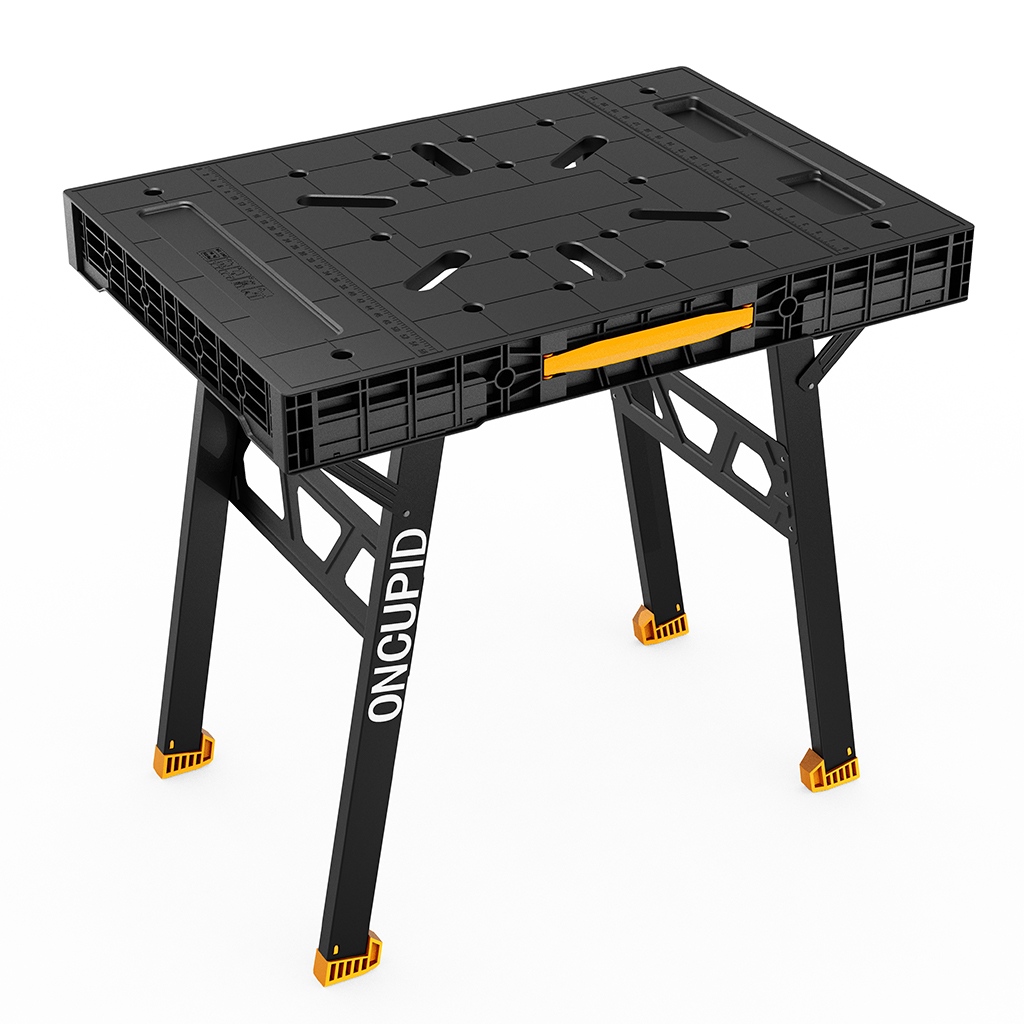
For example, a workshop may already use a dedicated workbench for assembly and a separate storage solution for tools. A mobile handling trolley can then support the movement of materials between those work areas.
This is one reason it is useful to think about material handling as part of the overall workflow rather than as an isolated product category.
Retail Backrooms and Stock Replenishment

Retail environments introduce another type of requirement.
Backroom operations may involve moving cartons from receiving areas to storage, preparing stock for shelf replenishment, or transferring goods between different zones.
The equipment must be useful without becoming difficult to store.
A foldable structure can be particularly practical where storage space is limited.
When the trolley is not required, its folded dimensions allow it to occupy less space than when fully opened.
For distributors serving retail customers, this can also be an attractive product characteristic because the same product can address several everyday handling situations without requiring a large equipment footprint.
On-Site Service and Mobile Work
Not every material movement takes place inside a warehouse.
Service teams, contractors, installers, maintenance personnel, and other mobile workers may need to transport equipment or supplies between vehicles and work areas.
In these situations, portability becomes an important consideration.
A 7.1 kg trolley that folds to a compact profile can be easier to transport between locations than a larger fixed-frame cart.
This is also where a broader product portfolio becomes useful.
For example, a mobile work team may use a foldable workbench as a temporary working surface and a material handling trolley for moving supplies to that workspace.
The two products solve different problems.
The workbench creates the working surface.
The trolley helps move materials.
Thinking about equipment as a coordinated workflow can therefore produce better purchasing decisions than evaluating each product in isolation.
Why a 3-in-1 Design Can Make Sense for Distributors
The benefits of a multi-configuration trolley are not limited to end users.
Distributors and importers evaluate products differently.
They need to consider whether a product can address several customer applications, whether its features are easy to explain, whether its storage profile is practical, and whether the supplier can support repeat orders.
A flexible product can potentially give distributors a broader sales story.
Instead of positioning the product for only one narrow use, distributors can introduce it to customers looking for different material movement solutions.
However, this does not mean the product should be marketed as suitable for every possible application.
Good B2B product positioning should remain specific.
For example, the Jingyan Tools model is designed around a 120 kg load capacity, a PP + PA + iron construction, three operating configurations, and a compact folding structure.
Those are measurable product characteristics.
They give distributors concrete information to use when evaluating applications.
What Procurement Teams Should Check Before Ordering

A flexible design is valuable only when the specifications match the intended application.
Before placing a bulk order, buyers should review several factors.
1.Load Requirements
Do not evaluate load capacity only by looking at the largest number on a product page.
Consider whether the stated capacity applies to the intended configuration and operating conditions.
For the Jingyan Tools model, the listed load capacity is 120 kg.
Procurement teams should always match the correct load rating with the intended operating mode.
2.Product Dimensions
Open dimensions determine whether the trolley can move comfortably through the customer’s normal working environment.
The four-wheel configuration measures approximately 47.5 × 62 × 80.8 cm, while the two-wheel configuration measures approximately 47 × 40.5 × 121.5 cm.
These measurements can help buyers evaluate aisle clearance, loading areas, vehicle storage, and workspace requirements before ordering.
3.Folded Dimensions
The folded size is especially important for customers that need to store or transport multiple units.
At approximately 37.5 × 13 × 81 cm, the folded trolley has a compact profile.
For distributors, folded dimensions are also relevant to packaging, warehouse storage, and transportation planning.
4.Materials and Construction
The product uses PP + PA + iron.
Each material plays a different role within the overall construction.
The iron structure provides the main supporting framework, while PP and PA components contribute to the product’s structural connections and functional components.
For B2B buyers, understanding the material combination is more useful than simply describing the product as “strong.”
It allows procurement teams to compare construction approaches and evaluate whether the product is appropriate for their target market.
Why Product Flexibility Can Reduce Equipment Complexity
The strongest argument for a multi-configuration trolley is not that it replaces every other cart.
It is that it can reduce the number of specialized handling products required for certain routine tasks.
Imagine an operation that frequently moves small loads between storage and work areas.
If one cart is only useful in one configuration, employees may need another cart when the task changes.
A multi-configuration design gives the operation another option.
That can simplify equipment allocation.
The same principle applies to distributors.
Instead of offering customers a product with a single narrow use case, a distributor can present a product that supports multiple handling situations.
This does not eliminate the need for specialized equipment where specialized equipment is genuinely required.
Instead, it gives buyers another option for everyday material movement.
Jingyan Tools: From Product Design to B2B Supply

For a B2B buyer, product design is only one part of the purchasing decision.
Supplier capability matters as well.
Jingyan Tools is the brand of Ningbo Jingyan Tool Industrial Co., Ltd., a manufacturer established in 2003. The company focuses on OEM and ODM production of workbenches, sawhorses, toolboxes, hand trucks, storage carts, and related industrial tools. Its current company information states that it operates a self-owned production base of more than 16,000㎡ and has more than 140 professionals.
This broader product portfolio is relevant because material handling products are often purchased as part of a wider tool or equipment range.
A distributor may source a trolley together with other workshop products.
A brand may require several products with consistent colors, packaging, or specifications.
An importer may prefer working with a manufacturer that can support multiple product categories instead of managing several unrelated suppliers.
Jingyan Tools therefore positions its trolley not simply as a standalone consumer product, but as part of a wider OEM and ODM manufacturing capability.
For qualified projects, buyers can discuss requirements such as product configuration, color selection, branding, packaging, and bulk supply directly with the manufacturer.
How the Trolley Can Work Alongside Other Workshop Equipment
A flexible handling product does not need to operate independently.
In a professional workshop, different products perform different functions.
A foldable workbench provides a temporary working surface.
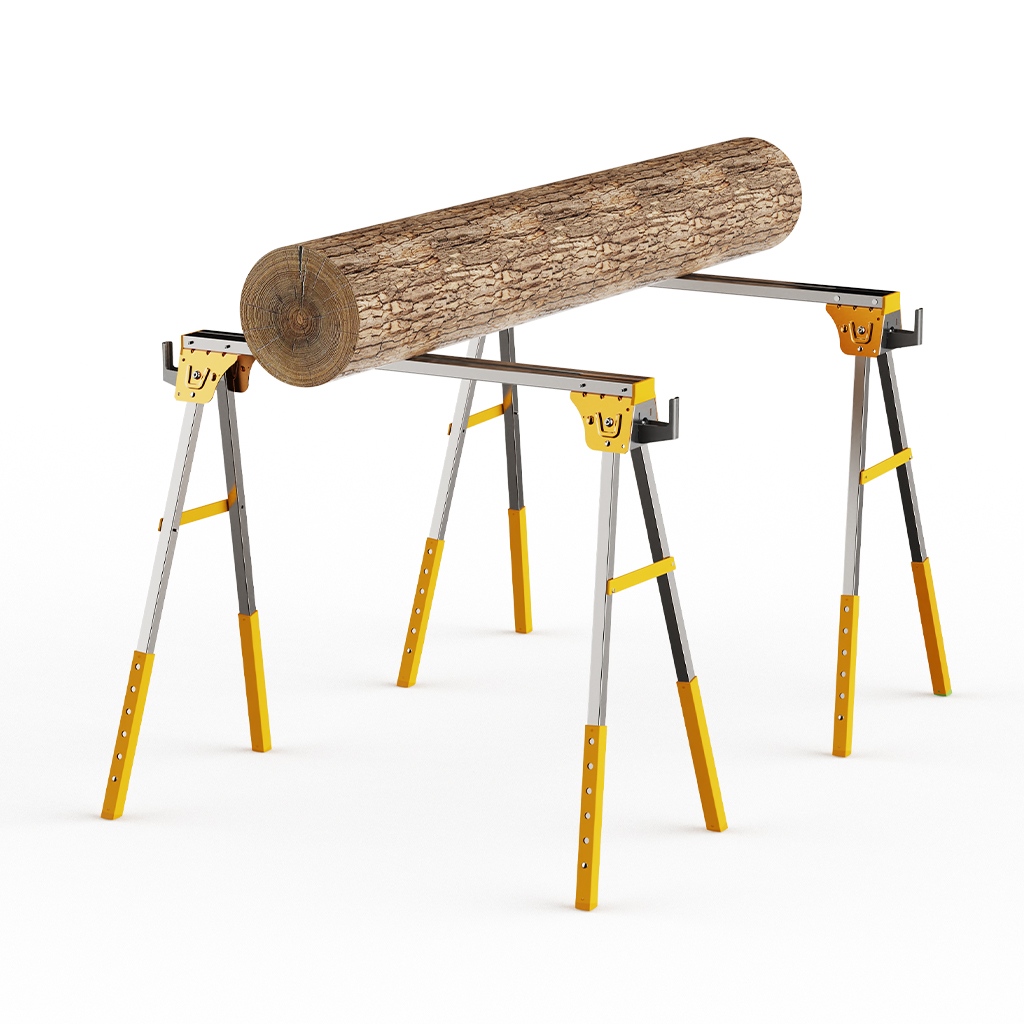
A foldable sawhorse can support cutting, assembly, and other workshop tasks.
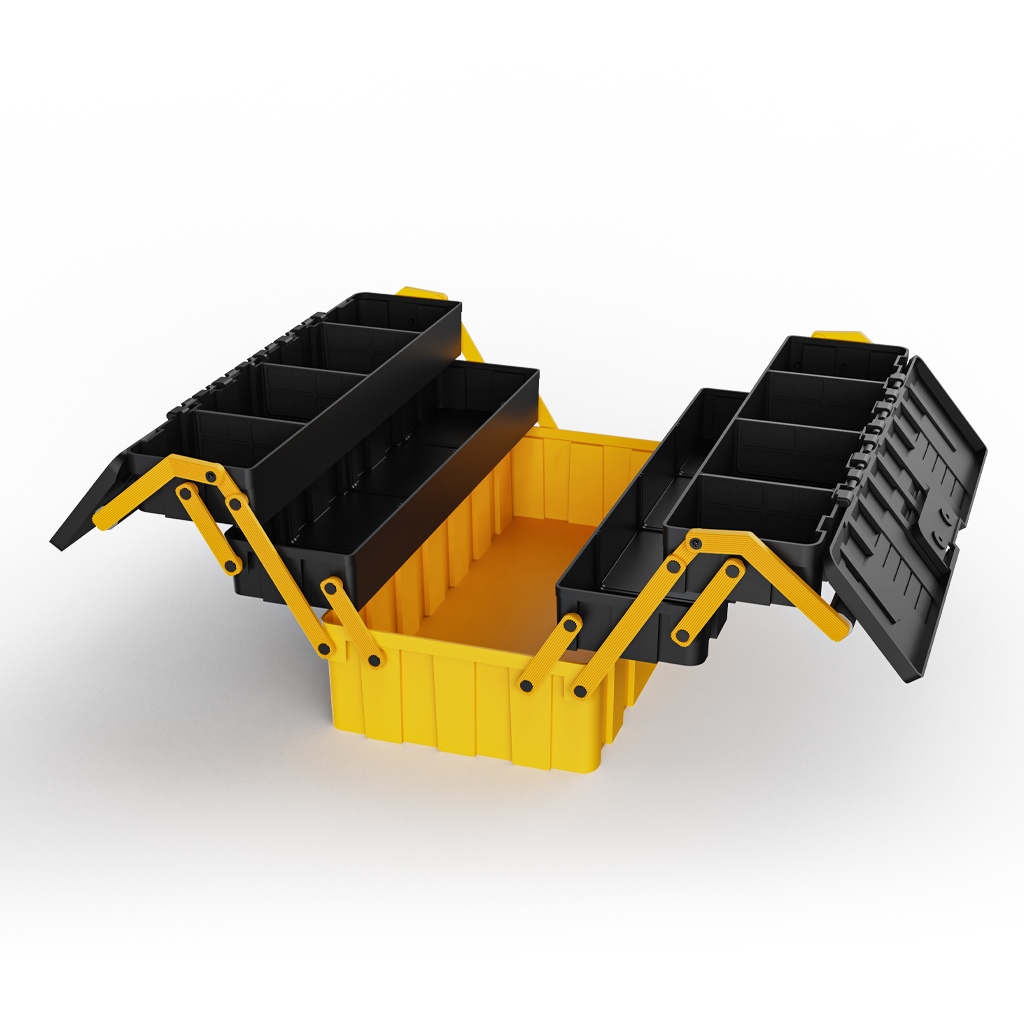
A multi-layer toolbox helps organize and transport tools.
The trolley connects these activities by helping move materials, components, supplies, or tools between work areas.
This creates a more logical internal equipment structure:
Storage → Transport → Work → Assembly → Packing
The trolley supports the transport stage rather than trying to replace the products used at the other stages.
This distinction is important because it keeps the article focused on material handling while also showing potential buyers how the product can fit into a larger equipment solution.
Is a 3-in-1 Trolley Always the Best Choice?
No.
A responsible buying guide should not claim that one product is ideal for every operation.
A flexible trolley makes the most sense when a business regularly encounters multiple handling configurations and values portability and compact storage.
For very high-capacity industrial transport, a specialized heavy-duty platform cart or powered handling system may be more appropriate.
For extremely narrow aisles, buyers may need equipment specifically designed around aisle dimensions.
For very heavy loads, the required capacity may exceed the specification of a lightweight multi-configuration trolley.
This is why the correct purchasing process begins with the application.
Ask:
- What type of goods will be moved?
- What is the typical and maximum load?
- How frequently will the equipment be used?
- What are the floor conditions?
- How much storage space is available?
- Does the operation require more than one handling configuration?
- Is portability important?
- Will the buyer require OEM or private-label customization?
The answers will determine whether a multi-configuration trolley is an appropriate solution.
What Makes the Jingyan Tools Model Relevant for Flexible Handling?
The practical value of this model comes from the combination of several characteristics rather than one headline specification.
It provides:
- Three handling configurations
- PP + PA + iron construction
- 120 kg listed load capacity
- 7.1 kg net weight
- Compact folding structure
- Four-wheel and two-wheel operating dimensions
- Multiple color options
- OEM and ODM support
The combination is particularly relevant for buyers who need a versatile product for warehouse, workshop, retail, distribution, or mobile handling applications.
The product is not positioned as a replacement for every type of industrial handling equipment.
Instead, it provides a flexible option for routine material movement where portability, multiple configurations, and compact storage are meaningful purchasing factors.
A Better Way to Evaluate Material Handling Equipment
The best equipment decision is rarely based on one specification.
Load capacity matters.
Dimensions matter.
Material matters.
But so do configuration, storage, deployment, frequency of use, and supplier capability.
For this reason, businesses should evaluate material handling solutions from an operational perspective.
Instead of asking:
“Which cart has the highest capacity?”
consider:
“Which equipment fits the greatest number of our actual handling tasks while meeting the required capacity and operating conditions?”
That shift can lead to a more practical procurement decision.
For some operations, the answer may be a dedicated industrial cart.
For others, it may be a platform truck.
For businesses with mixed, lighter-duty handling requirements, a multi-configuration trolley can provide a useful middle ground.
FAQ About 3-in-1 Trolleys and Material Handling
1.What is a 3-in-1 trolley used for?
A 3-in-1 trolley is designed to support multiple handling configurations. Depending on the design, it can be used in two-wheel, four-wheel, and platform-style configurations for different material movement tasks.
2.Is a 3-in-1 trolley suitable for warehouse use?
It can be suitable for warehouse applications where the required load falls within the product’s rated capacity and the operating environment matches its design. Typical uses can include moving cartons, supplies, spare parts, and other routine materials.
3.How much does the trolley weigh?
The net weight is 7.1 kg.
4.Can the trolley be folded for storage?
Yes. Its folded dimensions are approximately 37.5 × 13 × 81 cm, allowing it to occupy less space when stored or transported.
5.What material is the trolley made from?
The structure uses PP + PA + iron, combining a metal supporting structure with PP and PA components.
6.Can businesses order customized versions?
Jingyan Tools provides OEM and ODM manufacturing services. Buyers can discuss requirements such as color, branding, packaging, and other project specifications according to the order requirements.
Final Takeaway: Flexibility Is the Real Advantage
The most important advantage of a 3-in-1 trolley is not simply that it has three configurations.
It is that the same piece of equipment can respond to changing material movement requirements.
In warehouses, this can mean moving different types of goods without immediately changing equipment.
In workshops, it can support movement between work areas.
In retail backrooms, it can help transfer stock while remaining compact when stored.
For distributors and importers, its flexible positioning can make it relevant to multiple customer applications.
And for procurement teams, the combination of configuration flexibility, 120 kg listed load capacity, 7.1 kg net weight, compact folding dimensions, and OEM/ODM availability provides several practical factors to evaluate before making a purchasing decision.
Jingyan Tools combines this product with broader manufacturing capabilities across workbenches, sawhorses, toolboxes, hand trucks, and storage products. For buyers looking for a long-term manufacturing partner rather than a one-off product source, this broader capability can make supplier evaluation more straightforward.
If your business is evaluating flexible material handling trolley solutions for wholesale, distribution, warehouse, workshop, or private-label projects, the next step is to compare the required load, configurations, dimensions, packaging, and customization requirements with the supplier’s actual production capability.
For bulk orders, OEM projects, or customized material handling requirements, contact Jingyan Tools to discuss your application and sourcing requirements.
Related products