How Multi-Function Design Creates New Opportunities for Hand Truck Buyers
The more important question is often:
What new commercial opportunity can this product create within an existing product range?
This is where multi-function design becomes increasingly interesting.
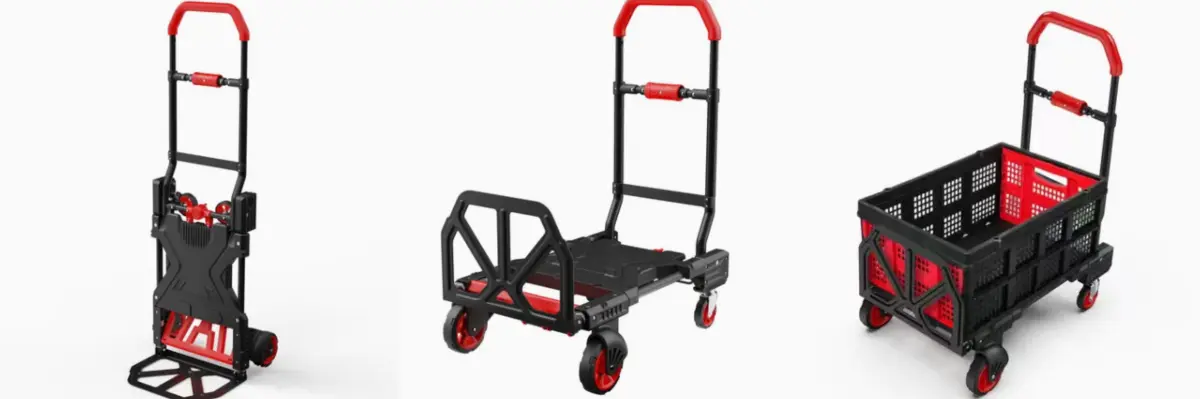
A traditional hand truck is normally positioned around one primary handling format. A multi-function model can approach the market differently by combining several related configurations into one product. Instead of being limited to one type of load or one operating mode, a well-designed product can potentially support different handling scenarios.
For B2B buyers, that difference has implications beyond product functionality.
It can influence SKU strategy, product differentiation, channel positioning, merchandising, inventory planning, and even private-label development.
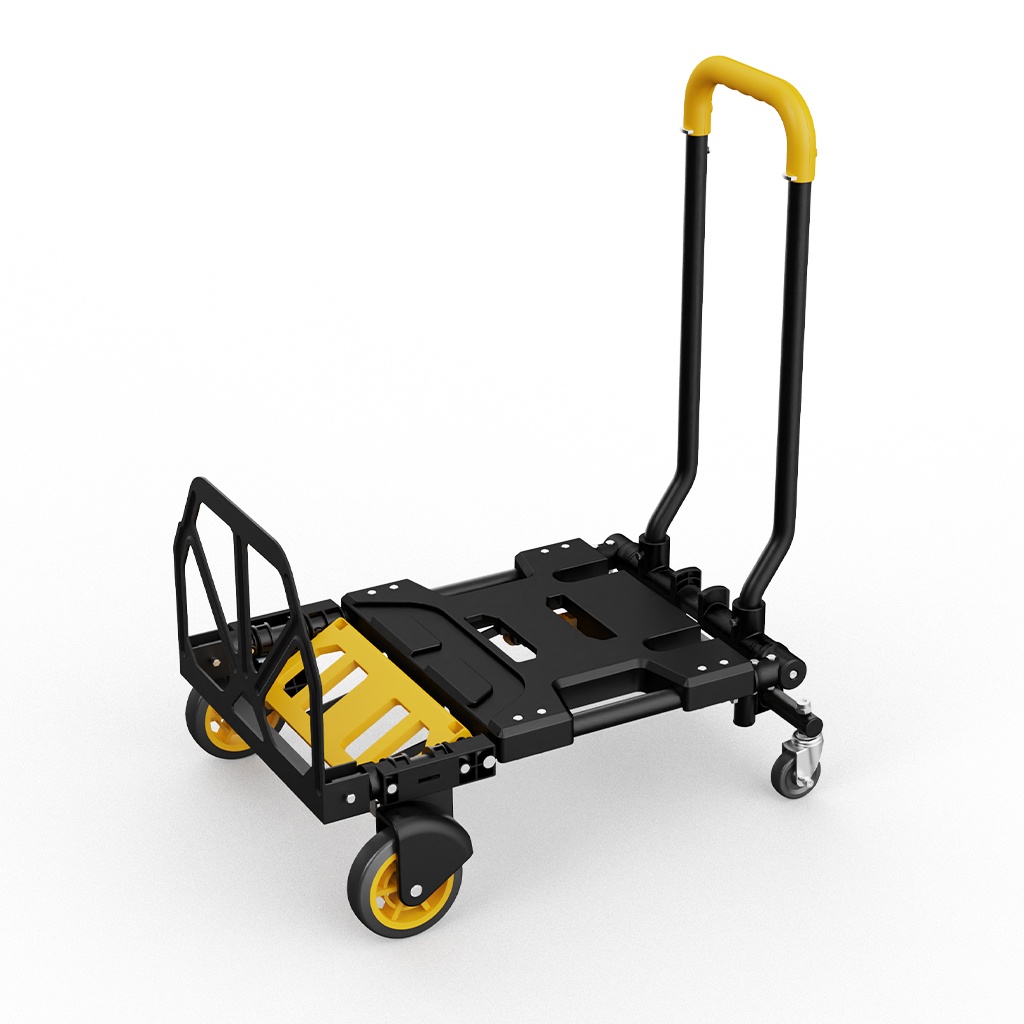
For example, a product that can operate as a two-wheel hand truck and convert into a four-wheel platform configuration is not simply offering an additional feature. It is providing the buyer with another way to position the same product for different customer needs.
Adding a folding basket introduces another dimension: the ability to handle smaller or loose items that may not be convenient to transport on an open platform.
The opportunity, therefore, is not simply to sell a product with “more functions.”
It is to develop a product that can occupy more useful positions within a B2B product portfolio.
Table of Contents
- Why Multi-Function Design Matters to B2B Buyers
- How a Convertible Hand Truck Can Expand Product-Line Opportunities
- Three Functions Can Create Three Different Sales Stories
- Why the Folding Basket Creates More Than an Accessory Advantage
- Multi-Function Design and Product Differentiation
- The Commercial Value of Compact Folding Design
- What B2B Buyers Should Evaluate Before Sourcing a Multi-Function Model
- How Multi-Function Products Can Support Different B2B Channels
- From Product Features to Product-Line Strategy
- How Multi-Function Design Can Create New Market Opportunities
- A Practical Framework for Hand Truck Buyers
- What This Means for Importers, Distributors and Private-Label Buyers
- Final Takeaway: Buy for Market Coverage, Not Feature Count
- Frequently Asked Questions
Why Multi-Function Design Matters to B2B Buyers
A professional buyer has a much broader set of considerations.
A distributor may ask:
Does this product fill a gap in our current range?
Can it serve more than one customer segment?
Is the difference easy for our sales team to explain?
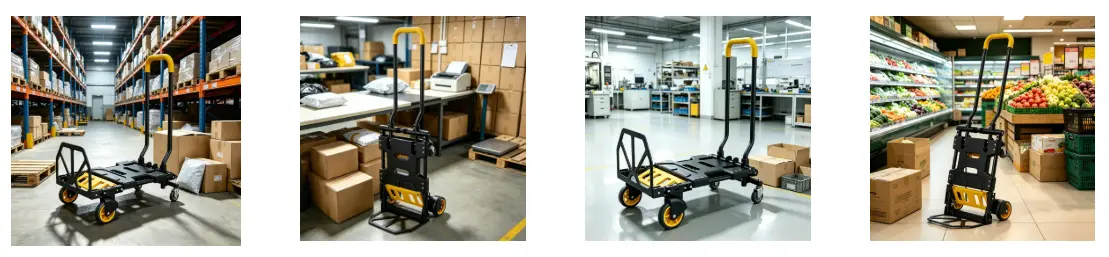
Can it support several application scenarios?
Does it have enough differentiation from competing products?
Can the supplier provide consistent production?
Can the product be customized for our market?
Is the SKU commercially worthwhile after logistics and inventory costs?
These questions change the meaning of product value.
A product does not necessarily become more valuable simply because it has more technical specifications.
Its value increases when its functions solve different but related customer problems.
1.From Feature Count to Application Coverage
A product may have three configurations, but if customers only use one of them, the additional functions create limited value.
A more useful B2B evaluation is:
How many relevant applications can this product realistically cover?
For example, a two-wheel configuration may suit upright loads and narrow cargo.
A four-wheel platform configuration may be more suitable when a wider support area is preferred.
A folding basket can provide containment for smaller or loose items.
These functions are commercially interesting because they address different relationships between the product and the cargo.
2.Why Application Coverage Can Matter More Than a Longer Feature List
For a distributor, broader application coverage can make a product easier to position across several customer groups.
This does not mean claiming that one hand truck is suitable for every industry.
Instead, the buyer can identify specific markets where the product’s different configurations offer a meaningful advantage.
Potential channels may include:
Hardware distributors
Home improvement retailers
Material-handling suppliers
General industrial supply
Maintenance and service businesses
Moving and transport supply channels
E-commerce retailers
Private-label brands
The commercial opportunity comes from finding the overlap between what the product can do and what the target market actually needs.
How a Convertible Hand Truck Can Expand Product-Line Opportunities
Traditional product-line development often creates separate products for separate handling situations.
One SKU may focus on upright transportation.
Another may focus on platform-style movement.
Another may be designed around carrying smaller items.
That approach can work, but it can also increase the number of products that a distributor has to source, store, photograph, promote, and maintain.
A multi-function design creates another possibility.
Instead of asking:
“Which separate product do we need for every application?”
the buyer can ask:
“Can one versatile SKU reasonably address several related applications?”
That distinction can have significant implications for product strategy.
1.Multi-Function Design and SKU Efficiency
Every additional SKU creates operational requirements.
A new product may require:
Product photography
Packaging design
Warehouse allocation
Inventory forecasting
Product documentation
Sales training
Quality inspection
Online listing development
After-sales support
Therefore, SKU efficiency is a legitimate consideration for B2B buyers.
A well-designed multi-function product may help reduce unnecessary duplication when several existing products have overlapping applications.
However, this should never become an argument for replacing every specialized product.
Specialized products remain important when a particular application requires dedicated performance.
The better question is:
Where can one multi-function product provide broader coverage without compromising the customer experience?
2.A Simple Product-Line Test
Before adding a new multi-function SKU, buyers can evaluate three questions.
Does it reach a new customer group?
If yes, it may expand the range.
Does it solve an existing problem in a meaningfully different way?
If yes, it may create a new market position.
Does it simply duplicate an existing product?
If yes, the buyer should reconsider whether another SKU is necessary.
This framework is particularly useful for distributors managing a large product portfolio.
Three Functions Can Create Three Different Sales Stories
A multi-function product becomes commercially more interesting when each configuration has a clear sales purpose.
For the product discussed here, the concept can be divided into three practical functions:
1.Two-wheel upright handling
2.Four-wheel platform handling
3.Basket-based transportation for smaller or loose items
The importance is not the number three.
The importance is that each configuration changes the way the customer can use the product.
1.Two-Wheel Configuration: Familiar Upright Handling
This configuration can be relevant when loads need to be moved in an upright position or when maneuverability is more important than having a wide support platform.
For B2B buyers, the advantage is that the product does not require customers to learn an entirely unfamiliar handling method.
The basic operating logic remains recognizable.
2.Four-Wheel Configuration: A Different Load Relationship
Instead of relying primarily on an upright arrangement, the cargo can be positioned on a wider horizontal support area.
This can be useful for applications involving different load shapes or situations where a platform format is more convenient.
The commercial significance is that the same SKU can potentially serve customers who would otherwise consider two different product categories.
3.Folding Basket: A New Approach to Loose Items
An open platform is useful for many boxed or structured loads, but smaller items can be more difficult to organize.
A basket creates a contained space for loose items, tools, packages, accessories, or supplies.
When the basket can fold away, the user is not permanently restricted to basket-based transportation.
This gives the product another layer of flexibility.
Why the Folding Basket Creates More Than an Accessory Advantage
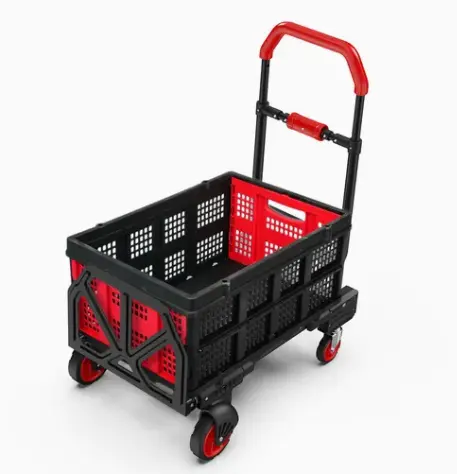
However, a basket can change the application logic of a transport product.
The difference is simple:
A platform primarily supports.
A basket supports and contains.
That distinction can matter when the cargo consists of multiple small items.
1.Containment Can Solve a Different Problem
Sometimes the problem is organization.
A collection of small items can be inconvenient to carry on an open surface because individual pieces may shift, fall, or become difficult to manage.
A basket provides a more defined transportation area.
For a distributor, this can create another product positioning opportunity.
Instead of presenting the product only as a general transport tool, the product can also be positioned for situations where organized movement of smaller items matters.
2.Why Folding Matters Commercially
A folding basket creates greater flexibility.
When the basket is required, it can provide containment.
When it is not required, the structure can be folded.
This is an example of functional integration rather than simply adding another accessory.
Multi-Function Design and Product Differentiation
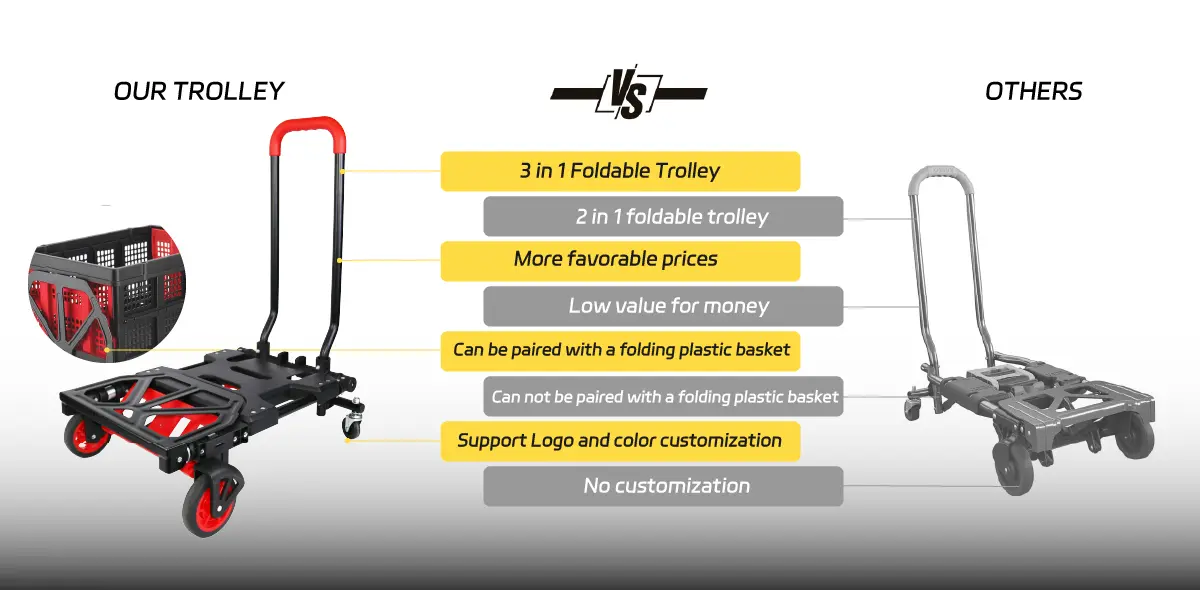
Product differentiation is becoming increasingly difficult in mature categories.
Many hand truck products can make similar claims:
Strong frame
Large wheels
High capacity
Comfortable handle
Portable design
These specifications can be important, but they do not always explain why one product deserves attention over another.
Multi-function design provides a different type of differentiation.
1.Demonstrable Differentiation Is Easier to Sell
A technical specification may require explanation.
A product transformation can often be demonstrated visually.
For example:
Configuration A → Configuration B
The customer can immediately see that the product is not simply another conventional model.
This creates useful content opportunities for distributors and retailers:
Product demonstration videos
Configuration comparison graphics
Application photography
Retail packaging illustrations
E-commerce product images
Short-form product demonstrations
For B2B buyers, this can reduce the effort required to communicate the product’s value downstream.
2.One Product, Multiple Merchandising Angles
One campaign can focus on flexibility.
Another can focus on compact storage.
Another can focus on platform functionality.
Another can highlight loose-item transportation.
The product itself does not change.
The commercial story changes according to the target customer.
That can be especially useful for distributors serving multiple sales channels.
The Commercial Value of Compact Folding Design
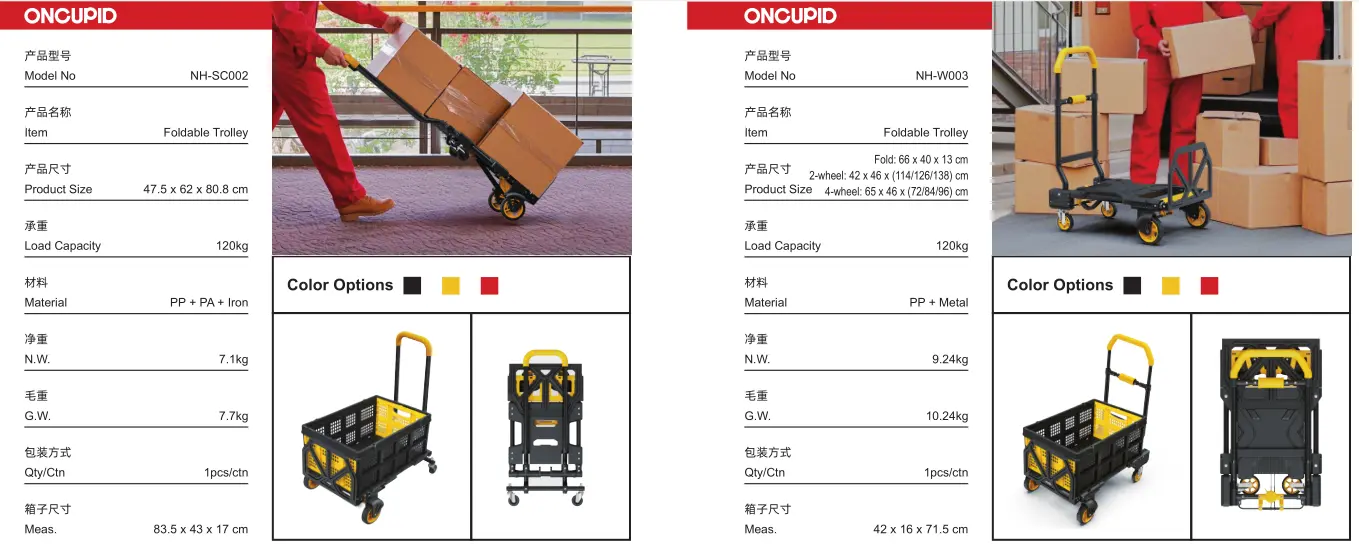
Multi-functionality is only one part of the opportunity.
The way the product stores also affects its B2B potential.
The product specification provided for this model gives a folded size of approximately:
37.5 × 13 × 81 cm
with a product weight of approximately:
7.1 kg.
For B2B buyers, folded dimensions should not be treated only as a consumer convenience.
They can influence logistics and storage.
1.Warehouse Considerations
For distributors with large product portfolios, this can be commercially relevant.
Warehouse efficiency affects the cost of maintaining inventory.
2.Transportation Considerations
Buyers should compare:
Product dimensions
Packaging dimensions
Carton quantity
Pallet configuration
Container utilization
Shipping method
A compact design does not automatically mean lower logistics costs, but it gives the buyer another variable to evaluate.
3.Retail and E-Commerce Storage
Retailers may have to manage backroom inventory.
E-commerce sellers may need to store products before fulfillment.
A foldable structure can therefore have value beyond the end user’s vehicle or workshop.
What B2B Buyers Should Evaluate Before Sourcing a Multi-Function Model
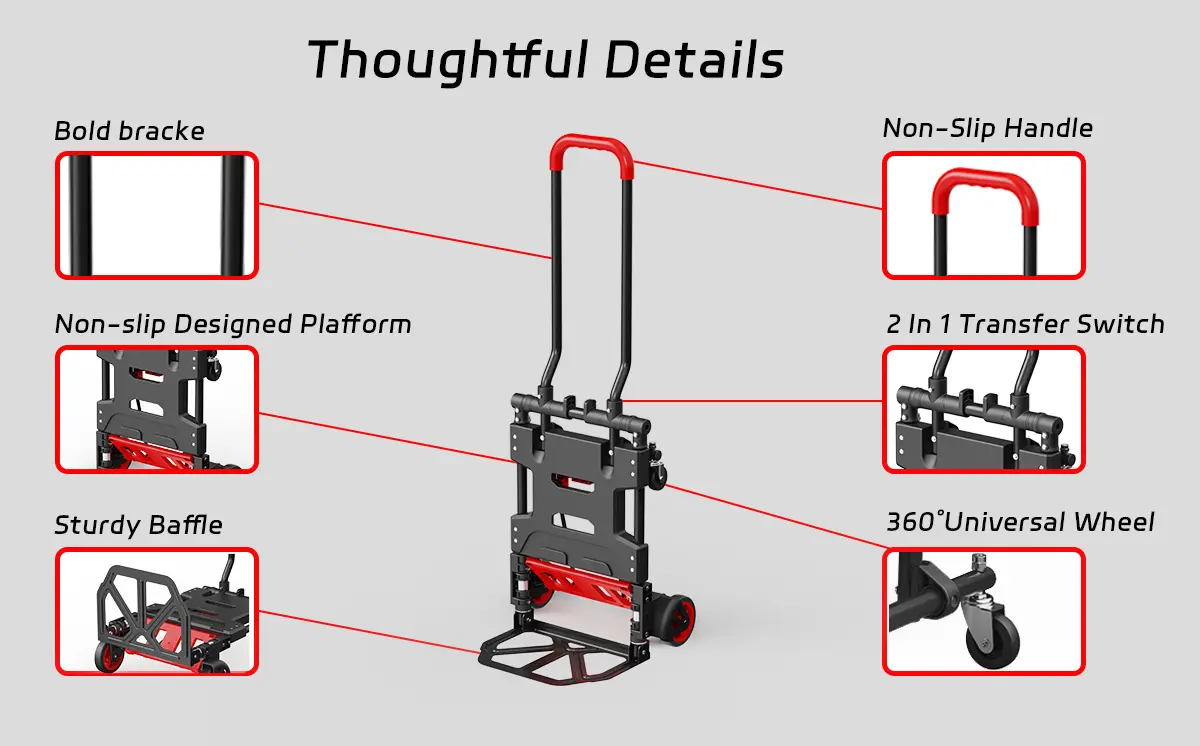
Multi-functionality should never be evaluated only from a product photograph.
The conversion system, structure, wheels, folding mechanism, and manufacturing consistency all matter.
1.Conversion Mechanism
How does the product convert?
Are tools required?
Are pins or loose components required?
How does the locking system work?
Is the conversion intuitive?
Can the mechanism withstand repeated use?
A multi-function product needs reliable transitions between configurations.
Otherwise, the additional function becomes more theoretical than practical.
2.Frame and Joint Construction
The buyer should therefore pay attention to:
Frame connections
Hinges
Locking points
Handle attachment
Wheel mounting
Basket attachment
Folding joints
For B2B purchasing, these details are important because failures can create costs far beyond the original purchase price.
3.Wheel System
The buyer should evaluate the wheel system according to the intended market.
Important factors include:
Wheel diameter
Wheel material
Bearing construction
Noise
Stability
Maneuverability
Intended floor conditions
There is no single wheel specification that is automatically best for every market.
The correct specification depends on the intended application.
4.Load Capacity and Product Positioning
However, buyers should not use load capacity in isolation.
A product should be positioned according to its complete application profile.
A 120 kg rating means something different when combined with:
Product weight
Wheel design
Frame structure
Configuration
Folding mechanism
Intended operating environment
This is another reason why B2B buyers should evaluate the complete product rather than one specification.
How Multi-Function Products Can Support Different B2B Channels
1.Distributors
The focus can be on application coverage and product differentiation.
2.Retailers
Visual differentiation
Packaging
Demonstration
Shelf appeal
Product comparison
A product that visibly changes configuration can be easier to demonstrate.
3.Private-Label Buyers
Private-label buyers may have a different objective.
They may want a product that is not completely generic.
A multi-function architecture can provide a foundation for:
Custom colors
Branding
Packaging
Product labeling
Market-specific positioning
For buyers exploring OEM/ODM tool solutions, this product architecture can provide a starting point for developing a differentiated product presentation.
From Product Features to Product-Line Strategy
A buyer should not only ask:
“Is this product good?”
A better question is:
“Where does this product fit within our portfolio?”
A product line could potentially be organized into several positions:
| Product Position | Main Commercial Role |
|---|---|
| Basic model | Price and simplicity |
| Standard model | General-purpose handling |
| Multi-function model | Flexibility and broader applications |
| Specialized model | Specific professional requirements |
That creates a clearer product ladder.
1.Avoiding Product-Line Cannibalization
If the new product competes directly with an existing product without adding a meaningful benefit, it may simply divide sales.
However, if the new product provides:
A different configuration
A new application
A new customer segment
A stronger visual proposition
A customization opportunity
then it may expand the range rather than simply duplicate it.
This is one of the most important questions for distributors.
How Multi-Function Design Can Create New Market Opportunities
Sometimes they come from connecting two existing needs.
1.Transport + Containment
2.Upright Handling + Platform Handling
3.Functionality + Compact Storage
4.Standard Product + Custom Brand Positioning
These combinations create opportunities because they connect existing customer problems rather than inventing artificial use cases.
A Practical Framework for Hand Truck Buyers
1.Does Every Function Solve a Real Customer Problem?
2.Does the Product Fill a Gap in the Current Range?
If the products are almost identical, the buyer needs a stronger reason to add another SKU.
3.Can the Product's Difference Be Demonstrated Quickly?
4.Can the Supplier Support Volume Production?
Production capability
Quality control
Sampling
Packaging
OEM/ODM capability
Lead time
Documentation
5.Does the Product Fit the Target Sales Channel?
What This Means for Importers, Distributors and Private-Label Buyers
For importers, multi-function design can potentially increase the application coverage of one SKU.
For distributors, it can create a position between basic transport products and highly specialized equipment.
For retailers, multiple configurations can provide stronger visual merchandising opportunities.
For private-label buyers, the product architecture can provide a starting point for differentiation.
However, none of these benefits should be considered automatic.
The product still needs:
Competitive pricing
Stable quality
Appropriate packaging
Reliable supply
Suitable specifications
Clear positioning
Consistent production
Supplier capability therefore needs to be evaluated together with product design.
For OEM/ODM buyers, an integrated manufacturing partner can be particularly useful because product customization may involve design, tooling, sampling, production, inspection, packaging, and logistics rather than simply printing a logo on an existing product.
Final Takeaway: Buy for Market Coverage, Not Feature Count
The real opportunity is that several functions can work together to create broader application coverage and a clearer role within a product portfolio.
A convertible structure can provide different handling configurations.
A folding basket can extend the product toward loose-item transportation.
A compact folding structure can support storage and logistics.
OEM/ODM capability can help distributors and private-label buyers adapt the product to a particular market.
When these elements work together, the product becomes more than a collection of features.
It becomes a potential product-line strategy.
For B2B buyers, the most useful question is therefore not:
“How many functions does this hand cart have?”
The better question is:
“Which customer problems do these functions solve, and what role can this product play in our product range?”
That shift can help importers, distributors, retailers, and private-label buyers evaluate multi-function products from a more commercial perspective.
The goal is not to buy the product with the most features.
The goal is to find the product whose functions create the strongest combination of:
customer usefulness + application coverage + product differentiation + commercial potential.
Frequently Asked Questions
1.Is a convertible hand truck suitable for B2B distribution?
2.What is the main advantage of multi-function design?
3.Can a folding basket make a hand truck more versatile?
4.Should distributors replace standard hand trucks with multi-function models?
5.Not necessarily. Standard and multi-function products can occupy different positions in a product portfolio. The important question is whether the new product fills a genuine gap.
6.Can a multi-function hand truck be developed as a private-label product?
Related products