Introduction: A Professional Approach to Selecting the Right Folding Sawhorse
Selecting the right folding sawhorse is an important decision for distributors, importers, hardware retailers, and professional tool buyers. Although a sawhorse may appear to be a simple supporting tool, its actual performance depends on engineering design, material quality, manufacturing precision, and long-term reliability.
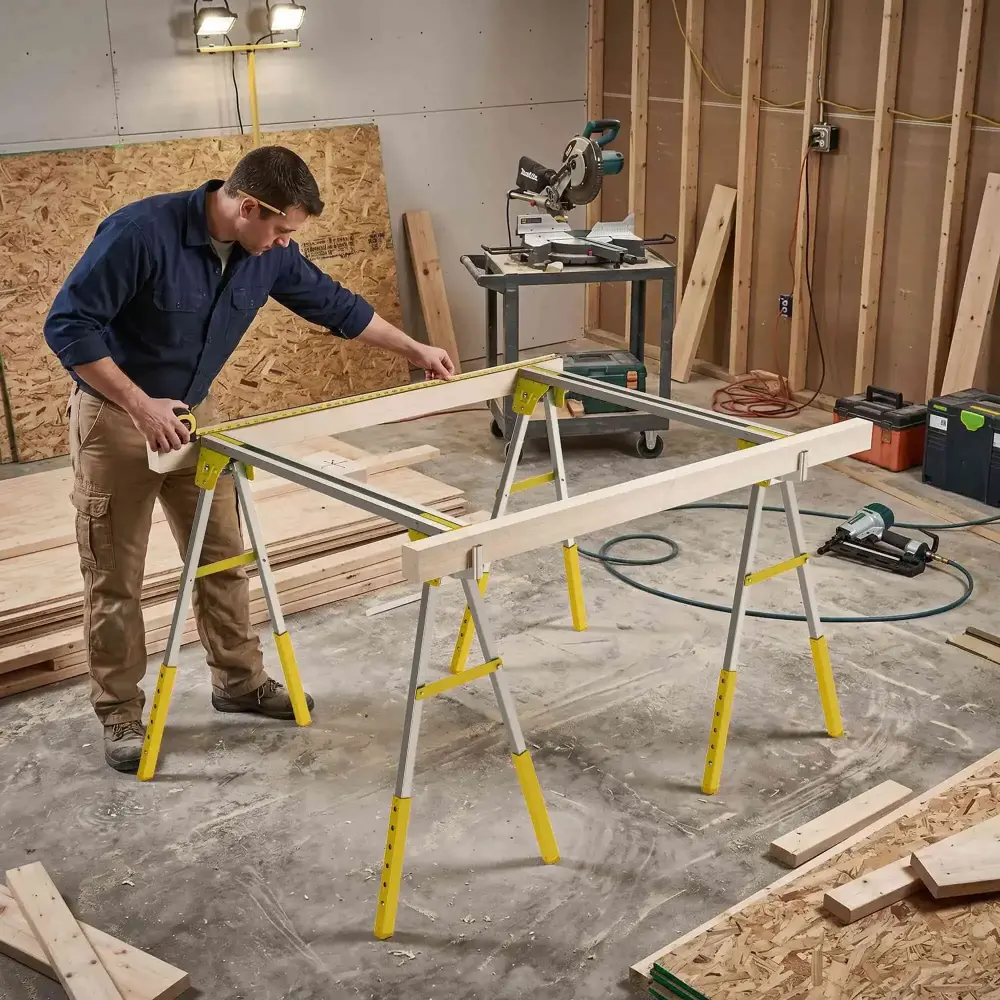
In the global tool market, folding sawhorses are widely used in woodworking, construction, renovation, maintenance, and workshop applications. They provide a stable working platform for supporting boards, panels, and various materials during cutting, assembly, and processing operations.
However, choosing a suitable folding sawhorse for business purposes requires more than comparing product pictures or basic specifications.
For professional buyers, the wrong purchasing decision can create several problems:
Product quality complaints from customers
Higher return and replacement costs
Difficulty maintaining brand reputation
Increased after-sales service pressure
Unstable supply performance
This is especially important for companies purchasing hundreds or thousands of units. A product that performs well in a single sample may still experience quality problems if the supplier lacks reliable production processes and quality management systems.
A professional folding sawhorse should provide a balance between strength, portability, safety, and manufacturing consistency.
Important evaluation factors include:
Structural strength and load-bearing capability
Folding mechanism durability
Material selection
Product stability during operation
Manufacturing consistency
Supplier production capability
OEM and customization support
This Folding Sawhorse Buying Guide explains how professional buyers can evaluate product quality, understand performance standards, and select reliable manufacturers before making wholesale purchasing decisions.
By applying a systematic evaluation process, buyers can reduce procurement risks and choose folding sawhorse products that provide long-term value for their customers and markets.
Understanding Folding Sawhorse Structure Before Making a Purchase Decision
Before evaluating a folding sawhorse, buyers should first understand the basic structure and how each component influences product performance.
A folding sawhorse is not simply a temporary stand. It is a functional support system designed to maintain stability while users perform different types of work.
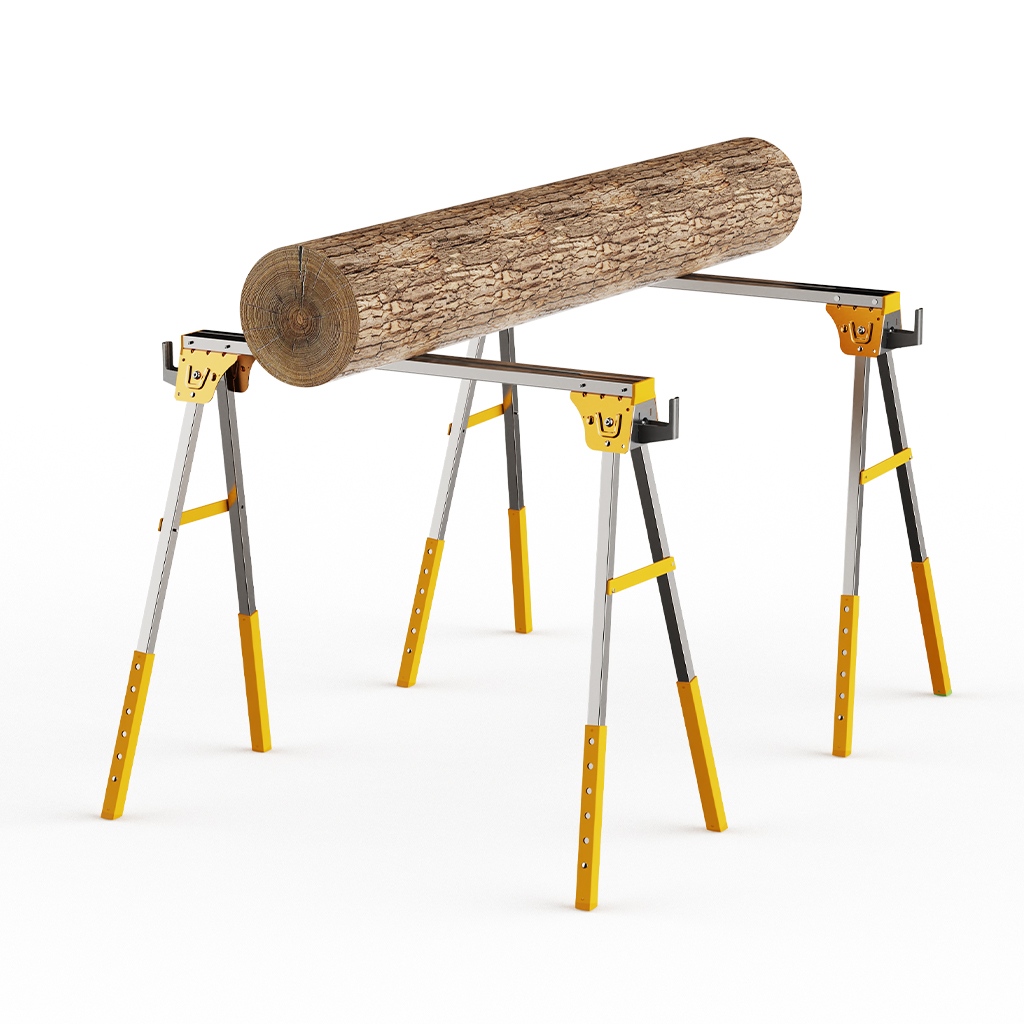
The main structural components usually include:
Supporting frame
Folding legs
Locking mechanism
Top support surface
Connection joints
Anti-slip feet
Additional accessories such as hooks or clamps
Each part has a different function and contributes to the overall user experience.
For example, the supporting frame determines the basic strength of the product. A strong frame allows the sawhorse to support heavier materials and maintain stability under working conditions.
The folding mechanism determines how easily the product can be transported, stored, and repeatedly used. A poorly designed folding system may reduce product lifespan even when other components are strong.
The connection points between different components are also critical. These areas experience repeated stress during opening, closing, transportation, and daily operation.
For wholesale buyers, product evaluation should focus on the complete structure instead of only one specification.
A folding sawhorse with an impressive load rating but weak joints may not provide reliable performance in real applications.
Professional buyers should evaluate how different components work together to create a durable and practical product.
The Importance of Balanced Product Design
A high-quality folding sawhorse requires balance between different performance requirements.
Increasing strength alone is not always the best solution. A product designed only for maximum load capacity may become too heavy, difficult to transport, or inconvenient for users.
Similarly, reducing weight without considering structural requirements may affect stability and durability.
A successful design should achieve a balance between:
Strength
Weight
Portability
Safety
Manufacturing efficiency
For example, combining metal structural components with reinforced plastic parts can help manufacturers create products that provide both durability and convenience.
This balanced approach is especially valuable for professional users who need products that can be transported between different job locations while maintaining reliable performance.
For distributors and retailers, balanced product design also improves market acceptance because customers usually look for products that combine practical usability with dependable quality.
Key Quality Factors to Evaluate When Choosing a Folding Sawhorse
When selecting a folding sawhorse for wholesale purchasing, buyers should evaluate several important quality factors.
A professional assessment should include product structure, materials, performance testing, and supplier manufacturing capability.
The following factors are essential for determining whether a folding sawhorse can meet professional application requirements.
1.Load Capacity and Structural Strength Evaluation
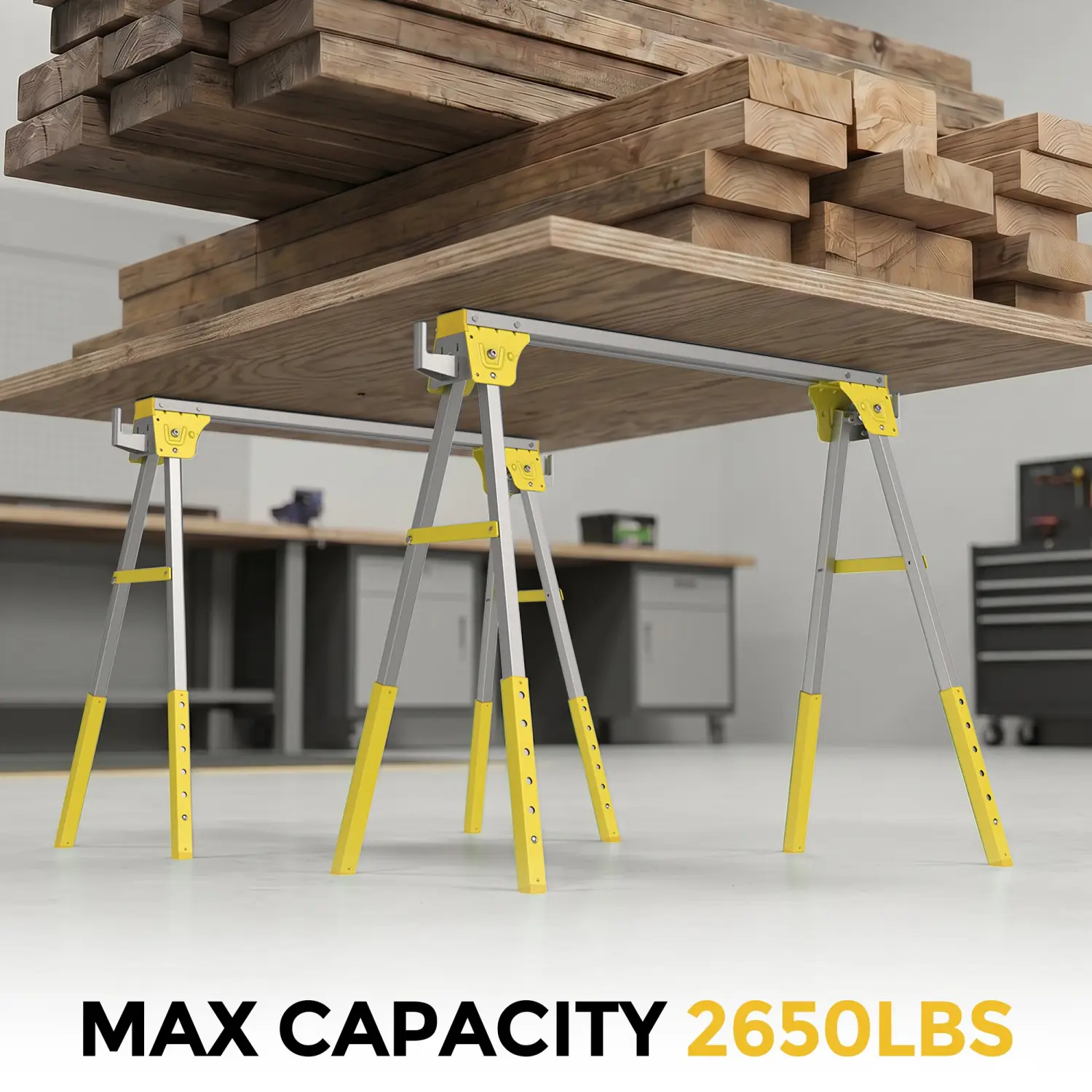
Load capacity is one of the most commonly compared specifications when buyers evaluate folding sawhorses.
However, professional purchasing decisions should not rely only on the maximum load number provided in product information.
The actual performance of a folding sawhorse depends on how the structure handles different working conditions.
Important evaluation factors include:
Frame design
Material strength
Joint structure
Weight distribution
Manufacturing accuracy
A professional folding sawhorse should maintain stability when supporting different materials, including:
Wooden boards
Construction materials
Large panels
Heavy workpieces
Workshop equipment
In real working environments, loads are not always perfectly balanced. Materials may be placed unevenly, moved during cutting, or exposed to additional pressure during operation.
Therefore, a quality evaluation should consider whether the product can maintain stability under realistic conditions.
Professional buyers should ask suppliers:
Is the load capacity tested?
What testing method is used?
Does the product maintain stability after repeated use?
Are production samples consistent with mass production units?
For bulk procurement, reliable testing information provides greater value than a simple specification label.
A manufacturer with strong engineering experience should be able to explain how the product achieves its load-bearing performance rather than only providing a final number.
2.Folding Mechanism Reliability and Long-Term Durability
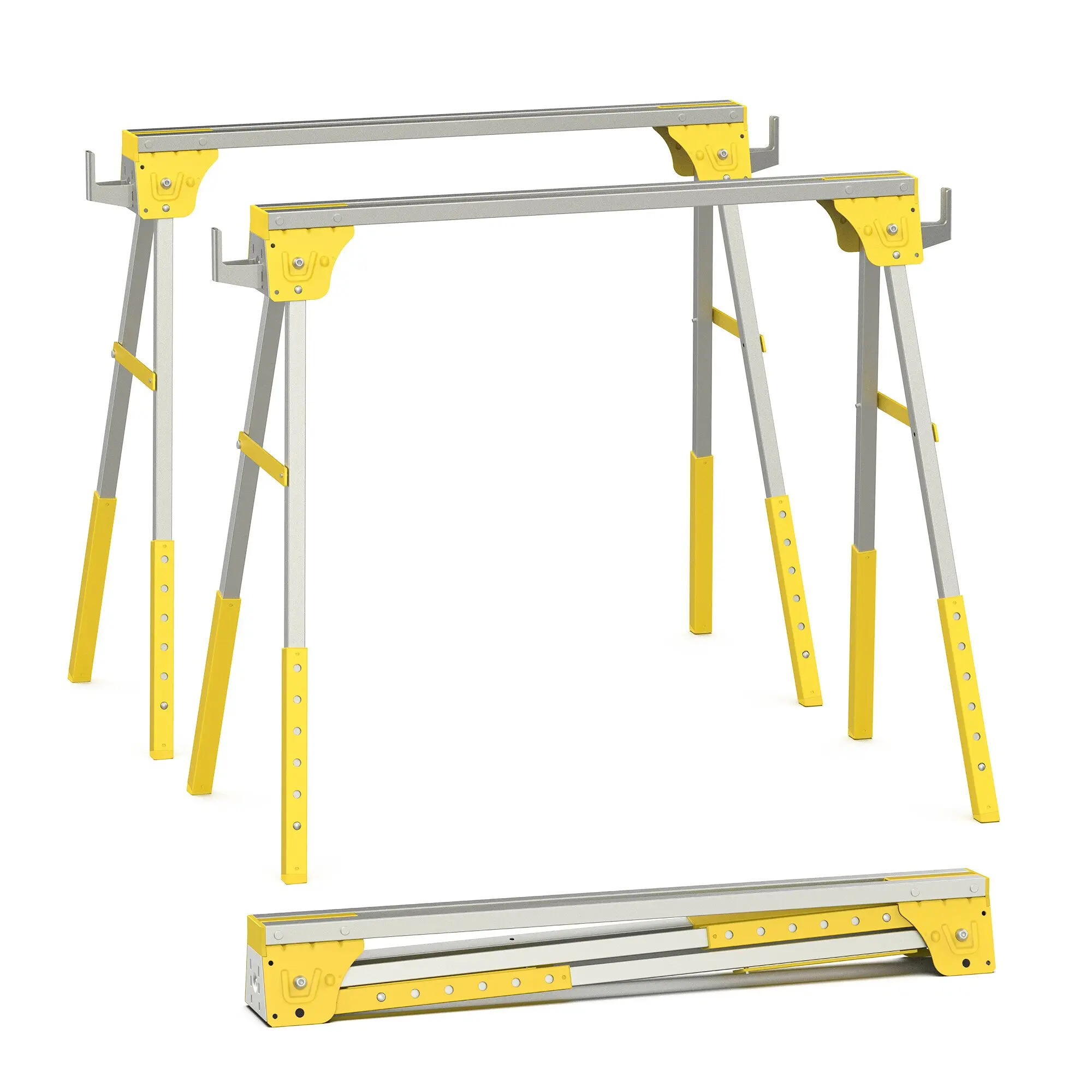
The folding mechanism is one of the defining features of a folding sawhorse.
Compared with fixed models, folding products provide advantages in transportation, storage, and space efficiency. However, the folding system must be designed carefully to ensure long-term reliability.
A durable folding mechanism should provide:
Smooth opening and closing
Secure locking after setup
Stable support during operation
Resistance to repeated folding cycles
For professional users, folding sawhorses may be transported frequently between different locations. They may also be opened and closed repeatedly during daily work.
Because of this, the hinge system and locking components become important indicators of product quality.
During evaluation, buyers should check:
Whether the legs lock firmly after unfolding
Whether the structure becomes loose after repeated operation
Whether moving parts show excessive wear
Whether the folding process is simple and safe
A reliable folding system improves user confidence and reduces potential complaints after products enter the market.
For distributors, this factor is particularly important because product reliability directly affects customer reviews and repeat purchasing decisions.
3.Material Selection and Manufacturing Quality Assessment
Material selection is one of the most important factors that determines the durability, performance, and market positioning of a folding sawhorse.
For professional buyers, evaluating materials should go beyond simply checking whether a product uses metal or plastic. The quality of raw materials, production processes, and component integration all influence the final product performance.
Common materials used in folding sawhorse manufacturing include:
Steel
Aluminum
Engineering plastics
Reinforced composite materials
Each material has different advantages.
Metal components are commonly used in structural areas because they provide strength and rigidity. Engineering plastics can help reduce overall weight while improving corrosion resistance and portability.
A well-designed folding sawhorse often combines multiple materials to achieve the best balance between strength and usability.
For example:
Metal frames provide structural support and load-bearing capability
PP components help reduce product weight and improve impact resistance
TPR materials improve anti-slip performance and user safety
For wholesale buyers, several material-related factors should be evaluated:
Material consistency between production batches
Component durability under repeated use
Resistance to environmental conditions
Surface finishing quality
Manufacturing accuracy
A supplier may use similar material names, but the actual performance can vary significantly depending on material grade and production control.
For example, two products may both claim to use steel frames, but differences in steel thickness, welding quality, surface treatment, and assembly precision can create completely different performance results.
Therefore, professional buyers should evaluate not only the product specification but also the supplier’s manufacturing capability.
A manufacturer with its own production facilities, engineering team, and quality control system can usually provide more stable products compared with suppliers that depend heavily on external factories.
4.Stability and Safety Performance During Real Applications
A folding sawhorse must provide reliable stability throughout the entire working process.
For users working with cutting tools, heavy materials, or large panels, product stability directly affects both efficiency and safety.
A stable folding sawhorse should minimize:
Unnecessary movement
Frame vibration
Side-to-side shaking
Structural deformation under load
Several design elements influence stability.
Frame Structure
The frame design determines how forces are distributed throughout the product.
A properly engineered structure helps maintain balance when supporting different materials and reduces the risk of instability.
Foot Design
The contact area between the sawhorse and the ground is another important factor.
Anti-slip feet can improve performance on different surfaces, including:
Workshop floors
Garage areas
Construction sites
Outdoor working environments
Weight Distribution
A well-designed folding sawhorse should distribute weight evenly across the supporting structure.
Poor weight distribution may create unnecessary pressure on specific connection points, reducing product lifespan.
For professional buyers, stability testing should be part of the product evaluation process.
A product may look strong in marketing images, but actual performance depends on how it performs under real working conditions.
For B2B buyers, performance evaluation is an essential step before placing large orders.
A product sample represents only one unit, while a wholesale order may contain hundreds or thousands of pieces. Therefore, buyers need confidence that mass production will maintain the same quality level.
A professional folding sawhorse evaluation process should include:
Product function testing
Structural inspection
Folding cycle testing
Load performance evaluation
Production consistency checks
These performance standards help buyers identify potential risks before they become customer problems.
1.Load Testing and Real-World Performance Verification
Load testing is one of the most important methods for evaluating folding sawhorse performance.
However, professional buyers should understand that maximum load capacity alone does not represent the complete product quality.
A reliable evaluation should consider:
How the load is distributed
How long the product supports weight
Whether the structure remains stable
Whether repeated use affects performance
For example, a folding sawhorse used in woodworking may support long boards where the pressure distribution changes during cutting.
A construction user may place heavier materials that create different stress points.
Therefore, performance testing should reflect real application conditions rather than only laboratory situations.
Before bulk purchasing, buyers can request:
Product test information
Sample evaluation procedures
Quality inspection documents
Production quality standards
These documents help create a clearer understanding of supplier capability.
2Folding Cycle Testing for Long-Term Product Reliability
One of the biggest advantages of a folding sawhorse is portability.
However, portability also means the product must withstand repeated folding and transportation.
A professional folding cycle test evaluates whether the product maintains performance after repeated operation.
Important inspection points include:
Hinge durability
Locking mechanism reliability
Joint strength
Component wear resistance
A product that works well when new may not maintain the same performance after months of regular use.
For distributors and retailers, long-term reliability is especially important because customer satisfaction depends on product performance after purchase.
A durable folding mechanism can reduce warranty claims and improve customer confidence.
How to Evaluate a Folding Sawhorse Supplier Before Cooperation
Choosing the right folding sawhorse supplier is as important as choosing the product itself.
For importers, distributors, and brands, supplier capability directly influences:
Product quality
Delivery reliability
Customization flexibility
Long-term business development
A professional supplier evaluation should include several key areas:
Manufacturing experience
Production capacity
Quality management system
OEM and ODM capability
Export experience
Technical support
1.Manufacturing Experience and Production Capability
An experienced manufacturer usually has better control over product development, production processes, and quality consistency.
Ningbo Jingyan Tool Industrial Co., Ltd. was founded in 2003 and specializes in tool-related manufacturing solutions, including workbenches, plastic products, metal stamping parts, and tool storage products.
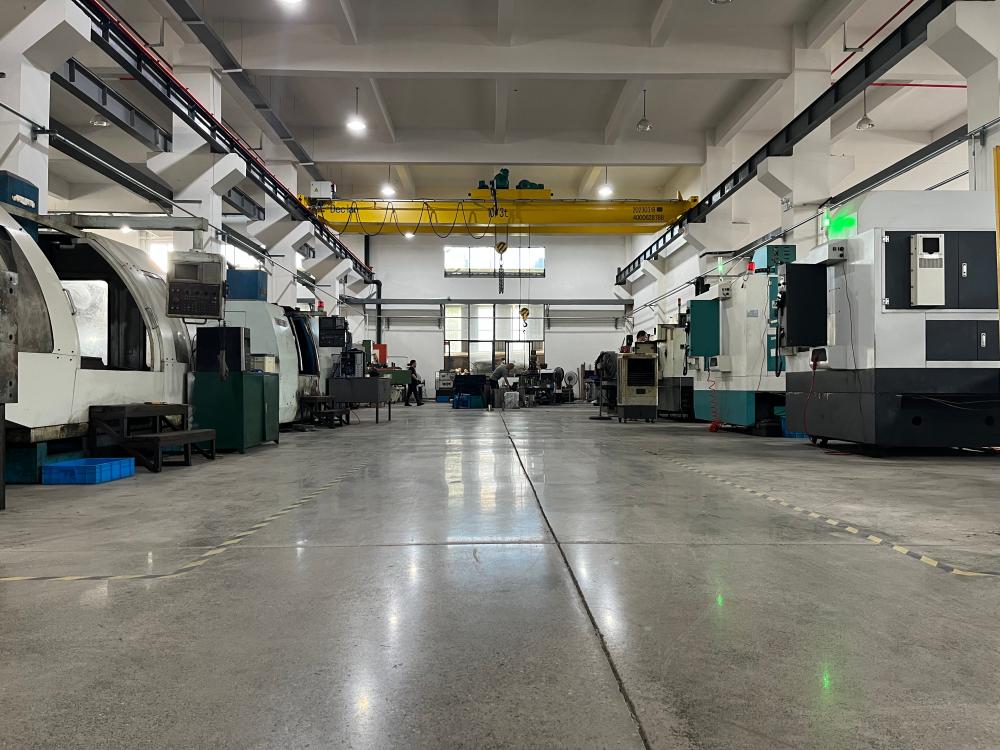
With a self-owned production base and professional manufacturing system, Jingyan provides integrated production capabilities from product development to mass production.
The company operates:
A 16,000㎡ production facility
More than 140 professional employees
Injection molding production equipment
Metal processing capabilities
Mold development capabilities
Quality inspection systems
This integrated production structure allows manufacturers to better control product consistency, especially for customers requiring large-volume orders.
For professional buyers, working with a manufacturer that understands both product engineering and production management can reduce sourcing risks.
2.OEM and ODM Customization Capability
For many distributors and private brands, product differentiation is an important factor in competitive markets.
A reliable folding sawhorse manufacturer should be able to provide customization support according to different market requirements.
Common customization options include:
Custom colors
Brand logos
Packaging solutions
Product modifications
Accessory configurations
OEM and ODM services allow buyers to create products that better match their target customers.
For example, a hardware retailer may require specific packaging for local retail channels, while a professional tool brand may need customized colors and branding elements.
A supplier with internal R&D capability can respond more efficiently to these requirements.
This reduces communication costs and improves product development efficiency.
3.Quality Control System and International Certifications
For professional buyers, supplier quality management capability is one of the most important indicators when evaluating a folding sawhorse manufacturer.
A reliable supplier should not only produce products according to specifications but also maintain consistent quality throughout the entire manufacturing process.
A complete quality control system should cover:
Incoming material inspection
Production process monitoring
Assembly inspection
Finished product testing
Packaging inspection
Without a standardized quality management process, product quality may vary between different production batches.
This can create problems for distributors and retailers, especially when customers expect consistent performance across multiple purchases.
For example, if one production batch has stronger folding mechanisms while another batch experiences looseness issues, the buyer may face:
Increased customer complaints
Additional inspection costs
Difficult inventory management
Reduced customer trust
Therefore, before cooperation, professional buyers should evaluate whether a supplier has:
Documented quality procedures
Professional inspection personnel
Testing equipment
Traceable production management
Ningbo Jingyan Tool Industrial Co., Ltd. has established a comprehensive quality management system supported by professional production and inspection processes.
The company has obtained international certifications including:
ISO 9001
CE
RoHS
FDA
BSCI
CPC
These certifications demonstrate the company’s commitment to standardized production, quality management, and international market requirements.
For global buyers, working with a manufacturer that understands international compliance requirements can reduce potential risks during importing and distribution.
4.International Export Experience and Market Understanding
A supplier’s export experience is another important factor that should be considered during supplier evaluation.
Manufacturing products for international markets requires more than production capability.
Experienced exporters understand:
Different market requirements
Packaging standards
Documentation requirements
Transportation considerations
Customer communication expectations
For example, buyers from North America, Europe, and other regions may have different expectations regarding:
Product labeling
Safety requirements
Packaging methods
Product specifications
A manufacturer with international experience can provide better support throughout the purchasing process.
Ningbo Jingyan Tool Industrial Co., Ltd. has exported products to more than 30 countries and regions, including markets in Europe, America, Southeast Asia, the Middle East, and Oceania.
The company has also maintained long-term cooperation with internationally recognized brands, including Stanley and Bosch.
This experience helps the company better understand the expectations of global customers and provide more reliable manufacturing solutions.
For importers and distributors, choosing an experienced export manufacturer can improve communication efficiency and reduce potential sourcing challenges.
Why Supplier Evaluation Matters for Long-Term Business Growth
For B2B buyers, selecting a folding sawhorse supplier is not only a purchasing decision. It is also a long-term business decision.
A supplier affects many aspects of market performance, including:
Product quality
Customer satisfaction
Brand reputation
Supply stability
Profitability
Choosing a supplier based only on the lowest price may create hidden costs in the future.
A low-cost product may result in:
Higher defect rates
More customer complaints
Additional replacement expenses
Lower customer loyalty
Instead, professional buyers should focus on total value.
A reliable supplier can provide:
Stable product quality
Consistent production capacity
Technical support
Flexible customization
Long-term cooperation opportunities
For distributors and brands, product reliability becomes part of their own market reputation.
When customers purchase a folding sawhorse, they are not only evaluating the product itself. They are also judging the brand behind the product.
Therefore, selecting a manufacturer with strong engineering capability, production experience, and quality management systems is an important step toward sustainable business growth.
Folding Sawhorse Selection Checklist for Professional Buyers
Before confirming a folding sawhorse purchase, buyers can use the following checklist to evaluate both products and suppliers.
1.Product Evaluation Checklist
Check whether the product provides:
Suitable load capacity for target applications
Stable structure during operation
Reliable folding mechanism
Durable materials
Convenient transportation and storage
Consistent appearance quality
Safe locking system
A product that meets these requirements is more likely to provide long-term customer satisfaction.
2.Supplier Evaluation Checklist
Before cooperation, buyers should evaluate:
Manufacturing history
Production facilities
Quality control procedures
Certification availability
OEM and ODM capability
Export experience
Delivery capability
These factors help buyers identify suppliers that can support long-term business cooperation.
Frequently Asked Questions About Choosing a Folding Sawhorse
1.What should I consider when buying folding sawhorses in bulk?
When purchasing folding sawhorses in bulk, buyers should evaluate more than product price.
Important factors include:
Structural strength
Folding mechanism quality
Material durability
Supplier manufacturing capability
Quality inspection process
Customization options
A reliable supplier should be able to provide samples, technical information, and production support before large orders.
2.How can I evaluate folding sawhorse quality before placing an order?
Professional buyers can evaluate quality through several methods:
Reviewing product specifications
Testing samples
Checking material quality
Evaluating folding performance
Reviewing supplier quality procedures
For large-volume purchases, sample approval and production inspection are recommended before final shipment.
3.What makes a folding sawhorse suitable for professional applications?
A professional folding sawhorse should combine:
Strong structural design
Stable working performance
Durable materials
Reliable folding operation
Consistent manufacturing quality
These characteristics allow the product to perform effectively in workshops, construction environments, and industrial applications.
4.Can folding sawhorses be customized for wholesale orders?
Yes. Many manufacturers provide OEM and ODM customization services for business customers.
Customization options may include:
Product colors
Brand logos
Packaging design
Product configuration
Accessories
Customization allows distributors and brands to create products that better match their market positioning.
5.Why should I buy folding sawhorses directly from a manufacturer?
Working directly with a manufacturer provides several advantages:
Better control over product quality
More flexible customization options
Direct communication with engineering teams
More stable supply capability
Better cost management
For long-term cooperation, a direct factory partnership can provide more value compared with temporary sourcing channels.
Conclusion: Making a Better Decision When Choosing a Folding Sawhorse
A folding sawhorse is more than a simple support tool. For professional users and B2B buyers, it represents a combination of engineering design, manufacturing quality, and supplier reliability.
Choosing the right product requires a complete evaluation process.
Buyers should consider:
Structural performance
Folding durability
Material quality
Safety standards
Manufacturing capability
Supplier reliability
A successful purchasing decision is not based only on choosing the cheapest option. The best choice is a folding sawhorse that provides consistent performance, dependable quality, and long-term commercial value.
For distributors, importers, and professional tool brands, cooperating with an experienced manufacturer with OEM and ODM capabilities can create stronger market advantages.
By applying professional evaluation standards, buyers can reduce procurement risks, improve customer satisfaction, and build more sustainable business growth.
Contact us for bulk pricing, OEM requirements and customized folding sawhorse solutions.