Why Multi-Layer Toolboxes Are Designed for Better Tool Organization and Access

A toolbox becomes increasingly important as the number of tools, accessories, fasteners, and small components grows. When only a few basic tools are involved, almost any container can provide enough storage. However, once different categories of tools need to be carried, stored, and accessed regularly, the internal organization of the toolbox becomes just as important as its overall capacity.
This is where a multi-layer toolbox provides a different approach to tool storage.
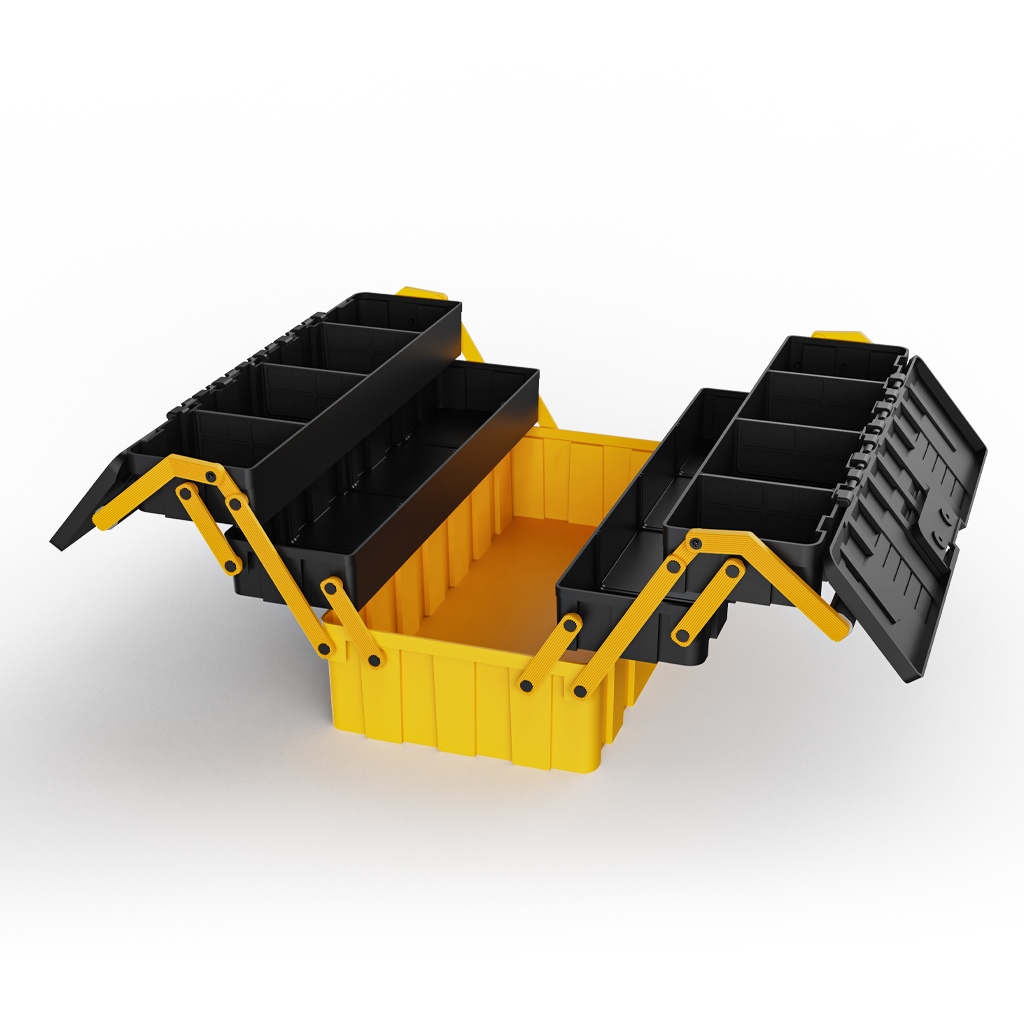
Instead of placing everything inside one large compartment, a multi-layer design divides the available space vertically into several storage levels. Each layer can serve a different purpose, allowing users to separate hand tools, accessories, small components, and less frequently used items.
For professional users, maintenance workers, repair technicians, workshop users, contractors, and people working on practical projects at home, this structure can make everyday tool handling more organized. It can also help users establish a consistent storage routine: tools have designated areas, frequently used items can remain accessible, and small components do not have to compete for space with larger equipment.
At the same time, the structure has value from a B2B product perspective. Distributors, importers, and tool companies do not necessarily use the toolbox themselves, but they need to understand why an end user would choose one configuration over another. A well-designed product therefore needs to make sense from both sides: it should solve a real storage problem for the user while offering meaningful product differentiation for the buyer and seller.
The value of a multi-layer toolbox is therefore not simply the number of layers. Its real value lies in how the structure organizes tools, improves access, uses vertical space, and adapts to different working requirements.
Table of Contents
- Why Tool Organization Becomes More Important as Tool Collections Grow
- How a Multi-Layer Structure Changes the Way Tools Are Organized
- What Can Be Stored in a Multi-Layer Toolbox?
- Choosing Between Three-Layer and Five-Layer Configurations
- Multi-Layer Toolboxes for Different Working Environments
- Structural Features That Support Everyday Tool Storage
- What Makes a Multi-Layer Toolbox Practical?
- How Multi-Layer Toolbox Configurations Can Support B2B Product Assortments
- Jingyan Tools Multi-Layer Toolbox Solutions
- How to Evaluate the Practical Value of a Multi-Layer Toolbox
- Frequently Asked Questions About Multi-Layer Toolboxes
- Conclusion
Why Tool Organization Becomes More Important as Tool Collections Grow

A simple storage box can be perfectly adequate for a small collection of tools. The situation changes when the tool collection becomes larger and more diverse.
A typical working tool set may contain screwdrivers, pliers, wrenches, cutting tools, accessories, fasteners, replacement components, and other small items. These products differ significantly in size and frequency of use.
Putting everything into one large compartment may provide sufficient volume, but it does not necessarily provide efficient organization.
1.Mixed Tools Can Increase Search Time
When different tools are placed together without a clear structure, users may have to move several items before finding the one they need.
The problem becomes more noticeable during repetitive work. A technician who needs the same screwdriver, wrench, or accessory several times during a task does not benefit from having to search through unrelated tools each time.
A structured storage system allows users to develop a predictable arrangement. Once a particular tool has a defined location, finding it becomes more straightforward.
The goal is not to make every tool occupy a separate slot. Instead, it is to create logical groups that make the contents easier to understand.
2.Small Components Need Different Storage
Small components create another organization challenge.
Screws, nuts, bolts, fittings, connectors, bits, blades, and other accessories can easily disappear underneath larger tools when they are stored in a single open compartment.
A dedicated small parts storage area allows these items to remain separated from larger equipment.
For repair and maintenance users, this can be especially useful because small components are often used together with the main tool set.
3.Different Tools Have Different Access Frequencies
Not every item in a toolbox needs to be accessed equally often.
Some tools may be used throughout the day, while others may only be required for a specific repair or occasional project.
A useful organization system should therefore consider access frequency as well as tool size.
Frequently used tools can be positioned in more accessible areas, while less frequently used items can occupy other levels.
This approach makes better use of the available space without requiring the entire toolbox to become larger.
How a Multi-Layer Structure Changes the Way Tools Are Organized
The defining feature of a multi-layer toolbox is its vertical storage arrangement.
Rather than relying on one large compartment, the product creates multiple levels that can be assigned according to different tool categories.
This gives users more flexibility when establishing their own storage system.
1.Separate Tools by Category
One practical method is to organize tools according to their function.
For example, a user could place commonly used hand tools in one section, accessories in another, and less frequently used items in another layer.
This creates a simple visual system.
Users do not necessarily need to remember the exact position of every individual tool. They only need to remember which category belongs to which area.
That difference can make a toolbox easier to manage over time.
2.Use Vertical Space Instead of Only Increasing the Footprint
Adding more storage capacity does not always mean making a toolbox wider or deeper.
A multi-layer structure makes use of vertical space.
This can be particularly useful when the toolbox needs to remain relatively compact while still accommodating a wider variety of tools.
Instead of creating one very large compartment, the storage volume is distributed across several levels.
The result is a different approach to capacity: more structured space rather than simply more empty space.
3.Create a Repeatable Organization System
One of the overlooked benefits of structured storage is consistency.
When tools have defined locations, users can return them to the same places after use.
Over time, this creates a repeatable workflow:
use → return → locate → use again
For people who work with tools regularly, this simple routine can make everyday tool management more efficient.
What Can Be Stored in a Multi-Layer Toolbox?
A multi-layer toolbox can accommodate different categories of tools and accessories depending on the configuration and the user’s needs.
The purpose is not to prescribe one fixed arrangement, but to provide enough flexibility for users to create their own organization method.
1.Hand Tools
Screwdrivers, pliers, wrenches, and other hand tools can be distributed across different levels according to size or function.
For example, frequently used hand tools can be kept in a more accessible section, while less frequently used tools can be stored elsewhere.
This makes it easier to identify the general location of a tool before opening and searching through the entire toolbox.
2.Small Accessories
Accessories often occupy much less physical space than full-size tools, but they can be more difficult to organize.
Bits, connectors, fasteners, replacement components, and similar items can benefit from dedicated compartments.
A separate area helps prevent small parts from being buried underneath larger tools.
3.Maintenance Components
Maintenance tasks often involve a combination of standard tools and replacement components.
For example, a user may need a screwdriver, pliers, fasteners, and replacement parts during the same task.
A multi-layer arrangement allows these items to remain within one overall storage system while still being separated internally.
4.Mixed Tool Collections
Not every toolbox is used for a single type of tool.
A user may combine general-purpose hand tools with accessories and occasional-use equipment.
A multi-layer structure can accommodate this variety by allowing each level to have a different storage role.
This makes the configuration particularly flexible for users whose tool collections change over time.
Choosing Between Three-Layer and Five-Layer Configurations
The number of layers is not simply a measure of whether one toolbox is better than another.
Different configurations are useful for different storage requirements.
A user with a relatively focused tool collection may not need five levels, while someone managing a broader range of equipment may benefit from additional storage sections.
1.Three-Tier Toolbox Configuration

A three-tier configuration provides several organized storage levels without creating a particularly tall structure.
It can be appropriate for users who need more separation than a single-compartment box provides but do not require a large number of storage sections.
The Jingyan Tools three-layer configuration measures 46 × 26.5 × 15.8 cm.
Its stated product weight is approximately 9.5 kg, with a 30 kg load capacity.
The configuration includes dedicated storage areas for smaller items and a folding multi-layer structure.
For a relatively focused tool collection, this format can provide a practical balance between organization and overall product size.
2.Five-Tier Toolbox Configuration

A five-tier configuration provides additional vertical storage space.
This can be useful when users need to separate more tool categories or manage a broader collection.
The Jingyan Tools five-layer configuration measures 46 × 26.5 × 20.8 cm.
Its stated product weight is approximately 11 kg, with a 30 kg load capacity.
The additional storage level provides more flexibility without significantly increasing the width or depth of the toolbox.
3.The Right Configuration Depends on the Application
There is no universal rule that five layers are always better than three.
The appropriate configuration depends on:
- The number of tools
- The variety of tools
- Frequency of access
- Number of small components
- Required storage separation
- Transportation requirements
- Available storage space
This application-based approach is also important for B2B buyers.
A distributor may find that different customers require different configurations, making a product family more commercially useful than a single standardized version.
Multi-Layer Toolboxes for Different Working Environments
The need for organized tool storage appears in many different working environments.
The specific organization method may change, but the underlying requirement remains similar: users need to keep tools accessible, separated, and easy to manage.
1.Workshops and Repair Areas
Workshop users often work with several tools during the same project.
A structured storage system can help separate common hand tools from accessories and small components.
When the toolbox moves between a workbench, storage area, and working location, maintaining a consistent internal layout becomes even more useful.
2.Maintenance Applications
Maintenance work often requires different tools to be used together.
A multi-layer toolbox allows related items to remain within one storage system while preventing smaller components from becoming mixed with larger equipment.
This is especially useful when a user needs to repeat similar maintenance tasks.
3.Jobsites and Mobile Work
On a jobsite, tools may need to move between different work areas.
The value of a structured toolbox in this environment is not limited to carrying capacity.
Users can develop a familiar arrangement and quickly check whether important tools and accessories are still present.
This creates an additional benefit: easier tool accountability.
4.Home and DIY Applications
Multi-layer storage can also be useful outside professional environments.
Users with larger household tool collections may want to separate frequently used hand tools from occasional-use items and small accessories.
The same organizational principle applies even though the working environment is different.
Structural Features That Support Everyday Tool Storage
A toolbox cannot provide useful organization if its structure does not support repeated opening, folding, carrying, and handling.
For this reason, the physical components of a multi-layer toolbox should be considered alongside its storage layout.
1.Sliding Latch
A sliding latch helps secure the toolbox during handling and transportation.
Because multi-layer products may be opened and closed frequently, the locking mechanism also needs to be practical for repeated use.
2.Reinforced Connecting Components
The different layers are connected through structural components such as supports, struts, and rivets.
These components help maintain the relationship between the storage levels while allowing the product to fold.
For products that are regularly transported, the connection system plays an important role in the overall user experience.
3.Stainless Steel Handle
The handle is one of the most frequently handled components of a toolbox.
A riveted stainless steel handle provides a stable connection point and gives users a practical grip when moving the product.
The handle is therefore not merely an accessory. It is part of the product’s usability.
4.Dedicated Small-Parts Area
A dedicated small-parts area provides another layer of organization.
Users can place screws, fittings, accessories, and other small items separately from larger tools.
This makes the internal storage system more structured without requiring every item to have an individual molded position.
5.ABS + PA Construction
The toolbox configurations described by Jingyan Tools use ABS + PA materials.
ABS provides a rigid structural plastic, while PA is incorporated into the product construction.
For B2B buyers evaluating the product, material should be considered together with the overall structure, connecting components, handle, folding mechanism, and storage configuration.
A material specification alone does not determine whether a toolbox is suitable for a particular application.
What Makes a Multi-Layer Toolbox Practical?
The practical value of a toolbox comes from how several features work together.
Capacity is important, but capacity without organization does not necessarily create a better user experience.
1.Organized Storage
Multiple layers create natural separation between tool categories.
This gives users a clearer view of where different items belong.
2.Easier Access
A good storage layout should allow commonly used items to be accessed without disturbing everything else.
This can reduce unnecessary searching and rearranging.
3.Efficient Use of Space
Vertical storage provides additional levels without requiring the footprint to expand proportionally.
This is one of the defining characteristics of a multi-layer design.
4.Convenient Transportation
A folding structure allows the toolbox to become more compact when not in use.
Combined with a dedicated handle, this can make transportation between storage and working areas more convenient.
5.Flexible Configuration
Different layer counts allow the same product concept to address different tool storage requirements.
For manufacturers and distributors, this flexibility can also support a broader product assortment.
How Multi-Layer Toolbox Configurations Can Support B2B Product Assortments
Although end users experience the practical benefits of a toolbox, B2B buyers evaluate the product from another perspective.
A distributor or importer may ask:
- Which users need this configuration?
- What applications can it serve?
- Can different versions be offered?
- Can the product be differentiated?
- Can the supplier support customization?
- Can multiple configurations be developed within one product family?
These questions make product structure commercially relevant.
1.Different Configurations Can Address Different Users
Three-layer and five-layer versions can target different storage requirements.
A distributor may therefore offer a more compact configuration alongside a higher-capacity configuration.
This gives customers a choice without requiring the seller to introduce completely unrelated products.
2.Color Options Can Create Product Differentiation
The current configurations include color options such as red and green.
For B2B buyers, color can support product differentiation, packaging strategies, or alignment with an existing product range.
Color is not the primary function of the toolbox, but it can become part of the commercial presentation.
3.A Product Family Can Simplify Assortment Expansion
When multiple configurations share a common product concept, distributors can build a more coherent product family.
For example, a product range could include:
- A more compact three-layer configuration
- A larger five-layer configuration
- Different color options
- Customized packaging
- Customized product specifications where appropriate
This allows the product line to expand without losing consistency.
Jingyan Tools Multi-Layer Toolbox Solutions
Jingyan Tools develops multi-layer toolbox configurations around practical storage organization and structural usability.
The current range includes three-layer and five-layer configurations designed around different storage requirements.
1.Three-Layer Configuration
The three-layer model features:
- ABS + PA construction
- 46 × 26.5 × 15.8 cm dimensions
- Approximately 9.5 kg product weight
- 30 kg load capacity
- Multi-function small-parts storage
- Folding multi-layer structure
- Riveted handle connection
- Sliding latch system
The configuration is designed for users who want organized storage while keeping the overall structure relatively compact.
2.Five-Layer Configuration
The five-layer model features:
- ABS + PA construction
- 46 × 26.5 × 20.8 cm dimensions
- Approximately 11 kg product weight
- 30 kg load capacity
- Additional vertical storage level
- Multi-function small-parts storage
- Folding structure
- Stainless steel handle
- Sliding latch
The additional layer provides more flexibility for users managing a larger or more diverse collection.
3.Product Development for Different B2B Requirements
For distributors, importers, and other B2B buyers, the standard product configuration is only one part of the sourcing decision.
Other factors can include:
- Product colors
- Packaging
- Order quantities
- Product documentation
- Market requirements
- Customization
- OEM and ODM development
Jingyan Tools supports OEM and ODM projects, allowing B2B buyers to discuss requirements beyond standard configurations where appropriate.
How to Evaluate the Practical Value of a Multi-Layer Toolbox
Before choosing a configuration, users and buyers can evaluate the product according to several practical questions.
1.How Many Tool Categories Need to Be Separated?
If a tool collection contains several clearly different categories, multiple storage levels can provide better organization.
2.Which Items Need the Fastest Access?
Frequently used tools should be positioned where they can be reached easily.
This is more useful than simply increasing storage volume.
3.Are Small Components Part of the Normal Workflow?
If screws, fittings, connectors, or accessories are regularly used, dedicated small-parts storage can provide additional value.
4.Will the Toolbox Be Transported Frequently?
For mobile use, handle construction, folding design, product weight, and structural stability should be considered together.
5.Does the Product Need to Fit a Larger Product Range?
For B2B buyers, the ability to offer several related configurations can make the product more useful as part of a larger assortment.
Frequently Asked Questions About Multi-Layer Toolboxes
1.What is a multi-layer toolbox?
A multi-layer toolbox is a storage product with multiple vertically arranged storage levels. Instead of placing all tools in one large compartment, the structure separates different categories or sizes of tools into different areas.
2.What are the main benefits of a multi-layer toolbox?
The main benefits include organized storage, easier access, separation of small components, more efficient use of vertical space, and flexible organization for different tool categories.
3.Is a multi-layer toolbox suitable for professional users?
Yes. The structure can be useful for maintenance, repair, workshop, jobsite, and other applications where users regularly handle multiple tools and accessories.
4.What is the difference between three-layer and five-layer configurations?
The main difference is the amount of vertical storage and the number of levels available for organization. A three-layer configuration can suit a more focused tool collection, while a five-layer configuration provides more flexibility for broader collections.
5.Can multi-layer toolbox configurations be supplied for different markets?
Yes. B2B buyers can evaluate different configurations, colors, packaging requirements, and customization options according to their market needs. OEM and ODM development can also be discussed when requirements extend beyond standard configurations.
Conclusion
A well-designed toolbox should do more than contain tools.
It should help users understand where different items belong, separate small components from larger tools, and make frequently used equipment easier to access.
That is the practical value of a multi-layer toolbox.
By dividing storage vertically, a multi-layer structure creates a clearer organization system without relying only on a larger footprint. Three-layer and five-layer configurations can then address different requirements according to tool quantity, tool variety, frequency of access, and working environment.
For professional users, the primary benefit is practical: better organization and easier access.
For distributors, importers, and other B2B buyers, the same structure can provide opportunities to build different configurations around a consistent product family.
Jingyan Tools offers three-layer and five-layer toolbox configurations using ABS + PA construction, dedicated small-parts storage, folding multi-layer structures, reinforced connecting components, and practical handling features.
For businesses looking to source or develop multi-layer toolbox products, the most useful evaluation is therefore not simply based on storage capacity. Product configuration, application requirements, customization possibilities, and supply capabilities should all be considered together.
A toolbox that is easier to organize for the end user can also become a more differentiated product for the B2B market.
Related products