Folding Sawhorse vs Traditional Sawhorse: Which Is Better for Buyers?
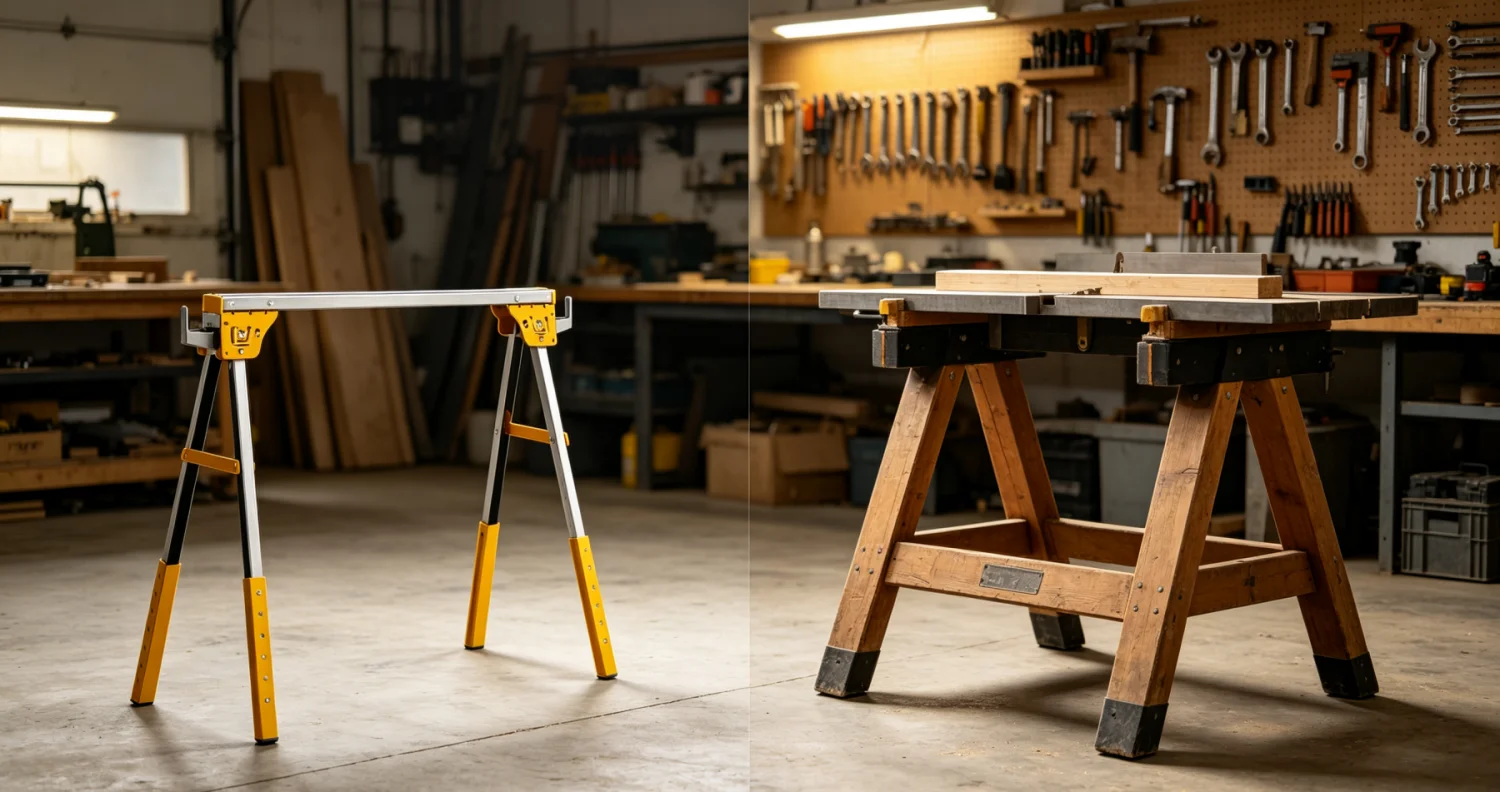
Table of Contents
- Introduction: Why Sawhorse Comparison Matters for Professional Buyers
- Understanding Traditional Sawhorses: Design, Strengths and Limitations
- Understanding Folding Sawhorses: Design Advantages and Practical Benefits
- Folding Sawhorse vs Traditional Sawhorse: Key Design Differences
- Performance Standards Buyers Should Consider
- Cost Comparison: More Than Just Product Price
- Which Sawhorse Solution Is Better for Different Business Needs?
- Supplier Perspective: Why Product Design Capability Matters
- Folding Sawhorse vs Traditional Sawhorse: Comparison Summary for Buyers
- Frequently Asked Questions About Folding and Traditional Sawhorses
- Conclusion: Choosing the Right Sawhorse Solution for Long-Term Value
Introduction: Why Sawhorse Comparison Matters for Professional Buyers
Choosing the right sawhorse is an important decision for businesses involved in tool distribution, construction supply, woodworking equipment, and industrial product sourcing. Although traditional sawhorses and folding sawhorses serve a similar basic purpose — providing a stable support platform for cutting, assembling, and handling materials — their designs, performance characteristics, and commercial value can be significantly different.
For individual users, the choice between a folding sawhorse and a traditional sawhorse may depend mainly on personal preference, available workspace, or occasional usage. However, for professional buyers, importers, and distributors, the decision requires a broader evaluation. Factors such as product design, transportation efficiency, storage requirements, durability, market demand, and supplier capability all influence the long-term value of a product.
The global tools market continues to place greater emphasis on portable, space-saving, and multifunctional equipment. Customers increasingly expect products that can provide professional performance while also offering convenient storage and transportation. This trend has made folding sawhorses an attractive option for many brands and distributors looking to expand their tool product portfolios.
A traditional sawhorse remains valuable because of its simple structure and proven reliability. However, folding sawhorses introduce additional advantages through improved mobility, compact storage, and flexible applications. Understanding the differences between these two product categories allows buyers to make more informed sourcing decisions and select products that better match their target markets.
This comparison explores the differences between folding sawhorses and traditional sawhorses from three key perspectives: design, performance, and cost. By analyzing these aspects, professional buyers can better understand which solution creates greater commercial value for their customers.
Understanding Traditional Sawhorses: Design, Strengths and Limitations
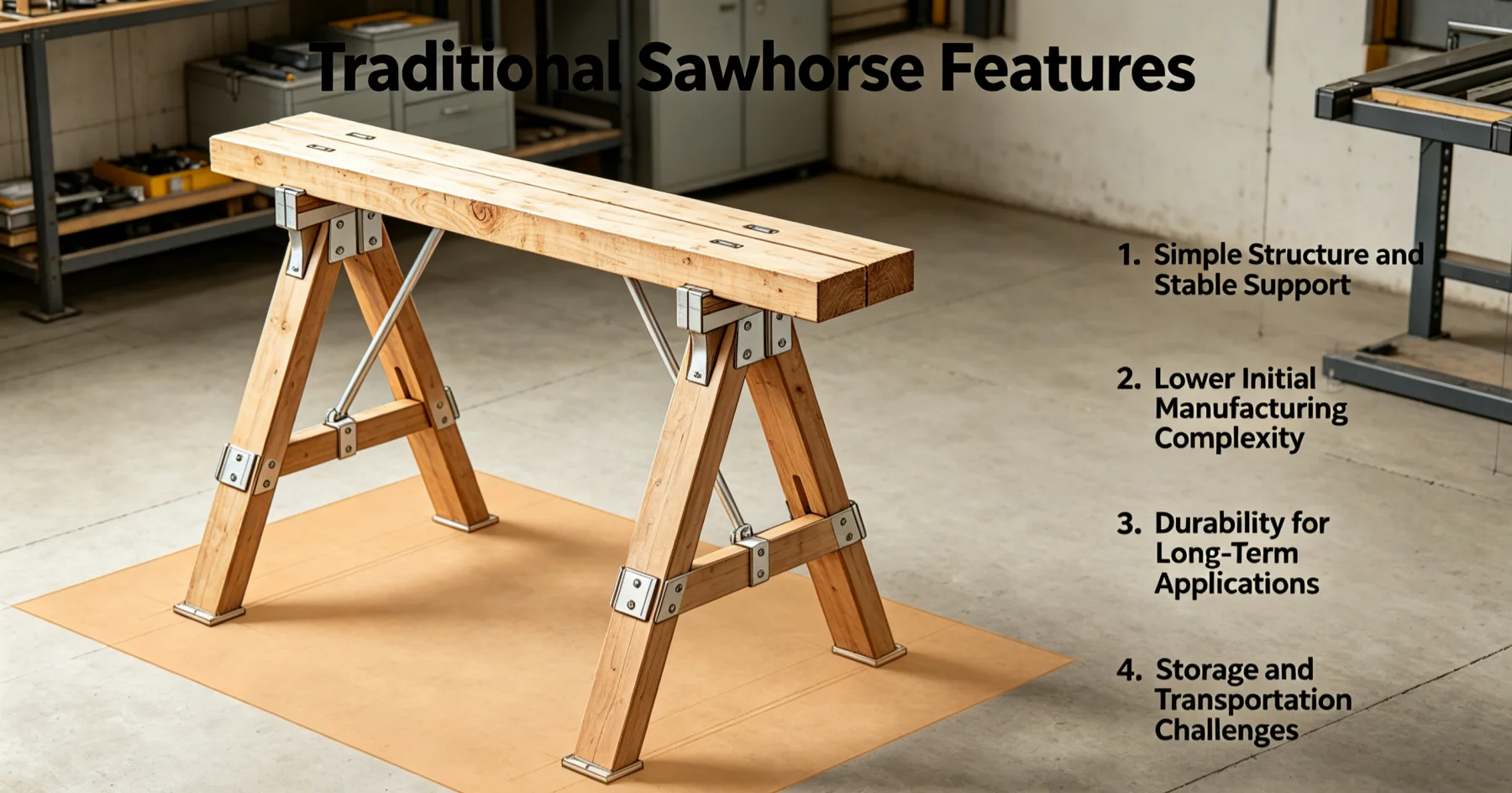
Traditional sawhorses have been used for decades in woodworking, construction, and general maintenance applications. Their popularity comes from their straightforward design, stable structure, and relatively simple manufacturing process.
A traditional sawhorse typically consists of a fixed frame with supporting legs and a top surface designed to hold materials such as wooden boards, panels, pipes, or construction components. Because of its simple construction, traditional designs are often recognized for reliability and ease of production.
1.Simple Structure and Stable Support
One of the biggest advantages of traditional sawhorses is structural simplicity.
With fewer moving components, traditional designs generally have:
- A fixed support frame
- Simple connection points
- Limited mechanical parts
- Straightforward assembly
This simple structure can provide excellent stability during applications where the sawhorse remains in one fixed location for extended periods.
For workshops or construction sites where equipment does not need to be moved frequently, traditional sawhorses can provide a practical working solution.
2.Lower Initial Manufacturing Complexity
Industrial workbenches are designed with stronger structures to provide stable support during demanding operations.
A professional workstation should maintain stability when workers:
- Install components
- Handle tools
- Perform maintenance work
- Process materials
A strong structure reduces movement and improves workplace safety.
3.Durability for Long-Term Applications
From a production perspective, traditional sawhorses usually require fewer components compared with folding models.
The manufacturing process may involve:
- Basic frame fabrication
- Welding or mechanical assembly
- Surface treatment
- Final inspection
Because the design is relatively simple, production costs can sometimes be lower.
However, professional buyers should understand that the lowest initial product cost does not always represent the best overall business value. Additional factors such as shipping efficiency, warehouse requirements, and customer expectations also influence profitability.
4.Storage and Transportation Challenges
Although traditional sawhorses offer reliable support, their fixed structure creates several challenges.
For distributors and importers, common limitations include:
Larger Storage Requirements
Traditional sawhorses usually occupy more space when stored because they cannot be reduced significantly in size.
For companies managing warehouse inventory, this means:
- More storage space required
- Higher warehouse utilization pressure
- Lower inventory flexibility
Higher Transportation Volume
The fixed structure can increase packaging dimensions and shipping volume.
For international buyers, transportation efficiency is an important consideration because logistics costs directly affect product competitiveness.
Products with larger packaging dimensions may result in:
- Higher container usage
- Increased shipping expenses
- Reduced profit margins
Therefore, while traditional sawhorses remain useful in many applications, their fixed design may create disadvantages in modern supply chain environments.
Understanding Folding Sawhorses: Design Advantages and Practical Benefits
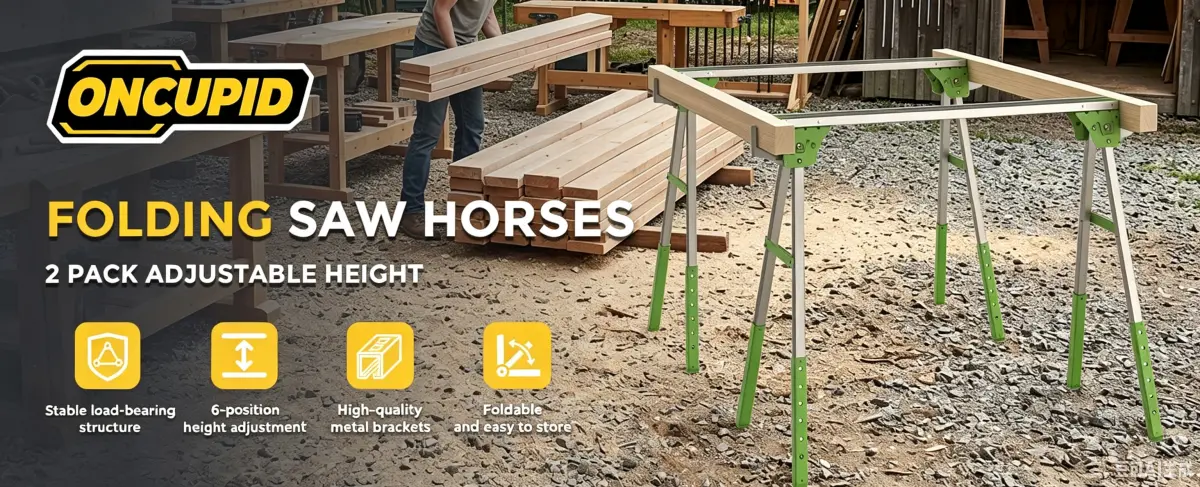
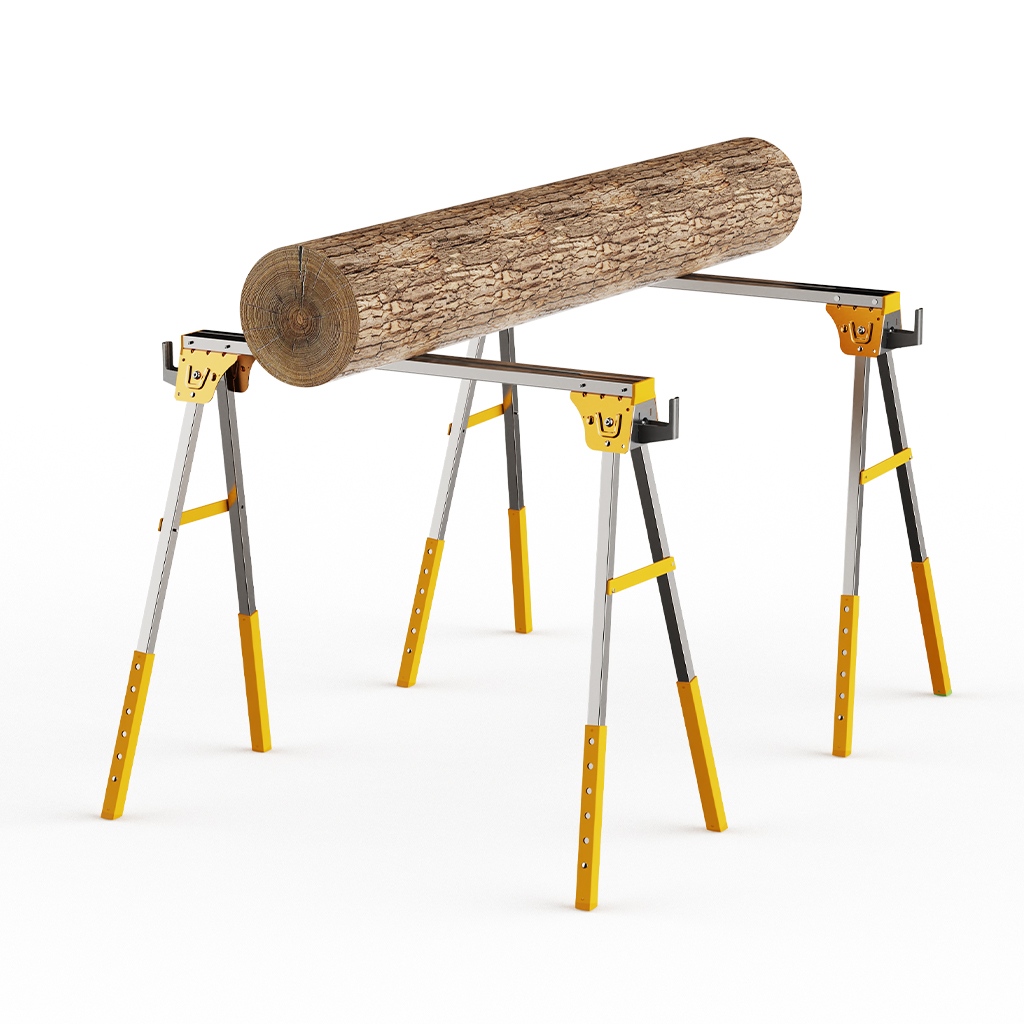
Folding sawhorses are developed to address many limitations associated with fixed traditional designs. By introducing folding mechanisms and space-efficient structures, these products provide greater flexibility for both users and businesses.
For professional buyers, the value of folding sawhorses is not only related to convenience. Their design can influence transportation efficiency, product positioning, and market competitiveness.
1.Compact Folding Structure
The defining feature of a folding sawhorse is its ability to reduce its overall size when not in use.
A well-designed folding structure allows the product to:
- Save storage space
- Improve transportation efficiency
- Support mobile applications
- Provide easier handling
This feature is particularly valuable for customers who work in different locations, including:
- Construction contractors
- Maintenance teams
- Mobile workshops
- Professional woodworking users
For distributors, compact product design also creates advantages throughout the supply chain.
More compact packaging can help optimize:
- Warehouse capacity
- Container loading efficiency
- Retail display space
2.Improved Portability and Application Flexibility
Unlike traditional fixed sawhorses, folding models are designed for users who require mobility.
The ability to fold and transport the product easily makes it suitable for multiple working environments.
For example:
A construction company may need equipment that can be moved between different job sites.
A professional installer may require tools that can be transported in a vehicle.
A retailer may prefer products that appeal to customers with limited workshop space.
In these situations, folding sawhorses provide a stronger value proposition.
3.Multi-Functional Product Positioning
Modern folding sawhorses are often designed with additional features that increase usability.
Depending on the model, features may include:
- Adjustable height options
- Anti-slip surfaces
- Integrated support areas
- Quick folding mechanisms
- Enhanced load capacity
These improvements allow folding sawhorses to serve a wider range of applications compared with basic traditional designs.
For brands and distributors, products with broader application potential can create more opportunities in different market segments.
Folding Sawhorse vs Traditional Sawhorse: Key Design Differences
When comparing folding sawhorses and traditional sawhorses, product design is one of the most important factors affecting overall value.
Although both products serve the same basic purpose of supporting materials during cutting, assembly, and construction work, they are based on different design concepts.
For professional buyers, understanding these design differences helps determine which product better matches their target customers and market requirements.
1.Structure Flexibility and Product Adaptability
Traditional sawhorses mainly focus on fixed support performance.
Their rigid frame structure makes them suitable for:
- Permanent workshops
- Fixed working areas
- Applications where frequent movement is unnecessary
Folding sawhorses, however, are designed around flexibility.
Their structure allows users to:
- Quickly set up the product when needed
- Fold it after completing work
- Transport it between different locations
- Adapt to changing working environments
This flexibility creates additional value for modern users.
For distributors and importers, products with stronger adaptability often have wider market potential because they can meet the requirements of different customer groups, including:
- Professional contractors
- Woodworking users
- Maintenance workers
- Advanced DIY customers
2.Folding Mechanism and Engineering Requirements
The folding mechanism represents one of the biggest differences between the two product categories.
Traditional sawhorses use a fixed structure, while folding sawhorses require precise engineering to achieve:
- Smooth opening and closing
- Reliable locking performance
- Long-term mechanical durability
- Stable support after deployment
A high-quality folding sawhorse must achieve two goals at the same time:
- Convenient operation
- Reliable structural strength
If the folding system is poorly designed, it may negatively affect:
- Product stability
- User experience
- Long-term reliability
Therefore, professional buyers should not only consider whether a sawhorse can fold. They should also evaluate how well the folding mechanism performs during repeated daily use.
Manufacturers with strong engineering capabilities usually optimize key components including:
- Hinge structure design
- Connection strength
- Locking systems
- Material selection
These factors determine whether the product can maintain stable performance throughout its service life.
3.Material Selection and Construction Approach
Both folding and traditional sawhorses can be manufactured using different materials, including:
- Steel
- Aluminum
- Plastic composite materials
- Multi-material structures
However, modern folding sawhorses increasingly use combined material solutions to achieve a balance between strength and portability.
For example:
Reinforced metal frames can improve load-bearing performance.
PP or composite components can reduce product weight and improve handling convenience.
Anti-slip materials can enhance working safety.
This combination allows folding sawhorses to maintain professional performance without becoming unnecessarily heavy.
For international buyers, material selection also influences:
- Product positioning
- Shipping weight
- Customer expectations
- Market price range
A supplier with strong material engineering capabilities can help buyers achieve a better balance between performance and commercial competitiveness.
Performance Standards Buyers Should Consider
Design differences directly influence product performance in real working environments.
For professional buyers, performance evaluation should focus on several important factors:
- Load capacity
- Stability
- Durability
- Working efficiency
- User convenience
Products that perform well in these areas are more likely to achieve market acceptance and generate long-term sales value.
1.Load Capacity and Structural Stability Comparison
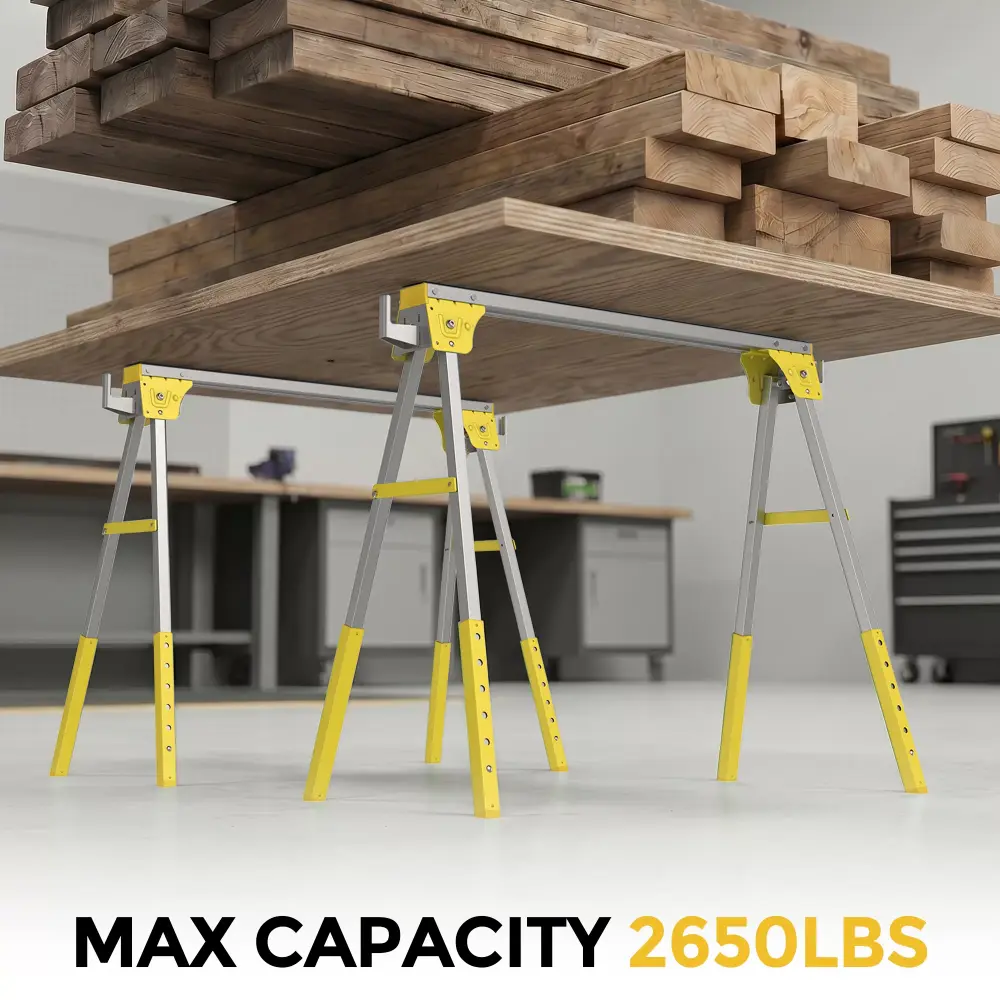
Load capacity is one of the most important purchasing considerations for sawhorse buyers.
Traditional sawhorses often provide reliable stability due to their fixed frame structure, especially when used in permanent locations.
However, modern folding sawhorses have improved significantly through:
- Reinforced frame designs
- Optimized connection structures
- Better material combinations
- Advanced manufacturing processes
Professional folding sawhorses can now provide strong load-bearing performance while maintaining portability.
A reliable folding sawhorse should provide:
- Strong supporting capacity
- Minimal movement during operation
- Stable contact with working materials
- Secure locking after opening
For distributors, the combination of high load capacity and portability creates a stronger sales advantage because customers no longer need to choose between strength and convenience.
2.Working Efficiency in Different Applications
Different customer groups have different expectations for sawhorse performance.
Traditional sawhorses may be more suitable for:
- Permanent workshops
- Fixed production areas
- Long-term stationary applications
Folding sawhorses are often better suited for:
- Construction projects
- On-site maintenance
- Mobile woodworking operations
- Equipment rental businesses
- Professional contractors
The ability to transport and deploy equipment quickly can significantly improve working efficiency.
For professional users, reducing setup time and improving mobility directly contributes to higher productivity.
3.Durability and Long-Term Usage
Durability is another important factor when comparing the two product categories.
Traditional designs may have fewer mechanical components, which can reduce potential failure points.
However, a well-engineered folding sawhorse can also achieve excellent durability through proper design and strict quality control.
Key factors affecting product durability include:
- Frame strength
- Connection quality
- Folding mechanism reliability
- Material durability
- Surface protection treatment
For bulk buyers, durability is especially important because product quality directly affects:
- Customer satisfaction
- After-sales costs
- Brand reputation
A reliable supplier should be able to maintain consistent quality across different production batches.
Cost Comparison: More Than Just Product Price
When businesses compare folding sawhorses and traditional sawhorses, focusing only on unit purchase price may lead to an incomplete evaluation.
Professional buyers should consider total cost factors, including:
- Product purchasing cost
- Packaging cost
- Transportation cost
- Warehouse cost
- Inventory efficiency
- Market value
A product with a slightly higher purchase price may create greater overall value if it provides better logistics efficiency and stronger customer demand.
1.Manufacturing Cost Considerations
Traditional sawhorses generally have an advantage in manufacturing simplicity.
Compared with folding models, they usually require fewer components and less complex assembly processes.
Folding sawhorses require additional elements such as:
- Folding mechanisms
- Locking systems
- Additional structural components
Therefore, production complexity is usually higher.
However, these additional designs also create higher market value.
For brands and distributors, products with improved functionality can achieve stronger positioning and better customer acceptance.
2.Shipping and Warehouse Cost Advantages
For international buyers, logistics efficiency is a critical factor.
Due to their compact design, folding sawhorses can help reduce:
- Packaging volume
- Container space usage
- Warehouse requirements
This creates practical cost advantages throughout the supply chain.
For example:
A distributor importing large quantities of sawhorses may improve container utilization and reduce average transportation costs.
Retailers may also manage inventory more efficiently by storing more products within limited warehouse space.
3.Market Positioning and Customer Value
Cost evaluation should also consider how customers perceive product value.
Traditional sawhorses are often positioned as:
- Basic support tools
Folding sawhorses can be positioned as:
- Professional portable equipment
- Space-saving solutions
- Multi-application tools
- Higher-value tool products
This difference allows businesses to serve different customer segments.
For tool brands and distributors, offering products with additional functionality can create stronger differentiation in competitive markets.
Which Sawhorse Solution Is Better for Different Business Needs?
There is no absolute answer regarding whether folding sawhorses or traditional sawhorses are always better.
For professional buyers, the right choice depends on several factors, including:
- Target market
- Customer expectations
- Working environment
- Product positioning strategy
The goal of sourcing should not simply be selecting the lowest-cost product. Instead, businesses should choose the solution that creates long-term commercial value.
1.Folding Sawhorses for Mobile and Professional Applications
Folding sawhorses are particularly suitable for markets that value portability and flexibility.
Typical application areas include:
- Construction tool supply
- Professional woodworking markets
- Maintenance service industries
- Home improvement markets
- Equipment rental businesses
- Hardware tool retail
Contractors and mobile work teams often require equipment that can be transported between different locations.
The main advantages of folding sawhorses include:
- Easier transportation
- Faster setup
- Convenient storage after use
- Adaptability to different working environments
For distributors, broader application scenarios mean more potential sales opportunities because the product can satisfy a wider customer base.
2.Traditional Sawhorses for Fixed Working Environments
Traditional sawhorses still provide value in specific applications.
They are suitable for:
- Permanent workshops
- Fixed production areas
- Low-frequency usage
- Customers who prefer simple structures
Their advantages include:
- Simple design
- Easy understanding for customers
- Reliable fixed support
For some markets, traditional designs remain a practical and economical solution.
However, businesses should also consider future market trends.
As customers increasingly value:
- Convenience
- Portability
- Space efficiency
the demand for more flexible tool solutions continues to grow.
Supplier Perspective: Why Product Design Capability Matters
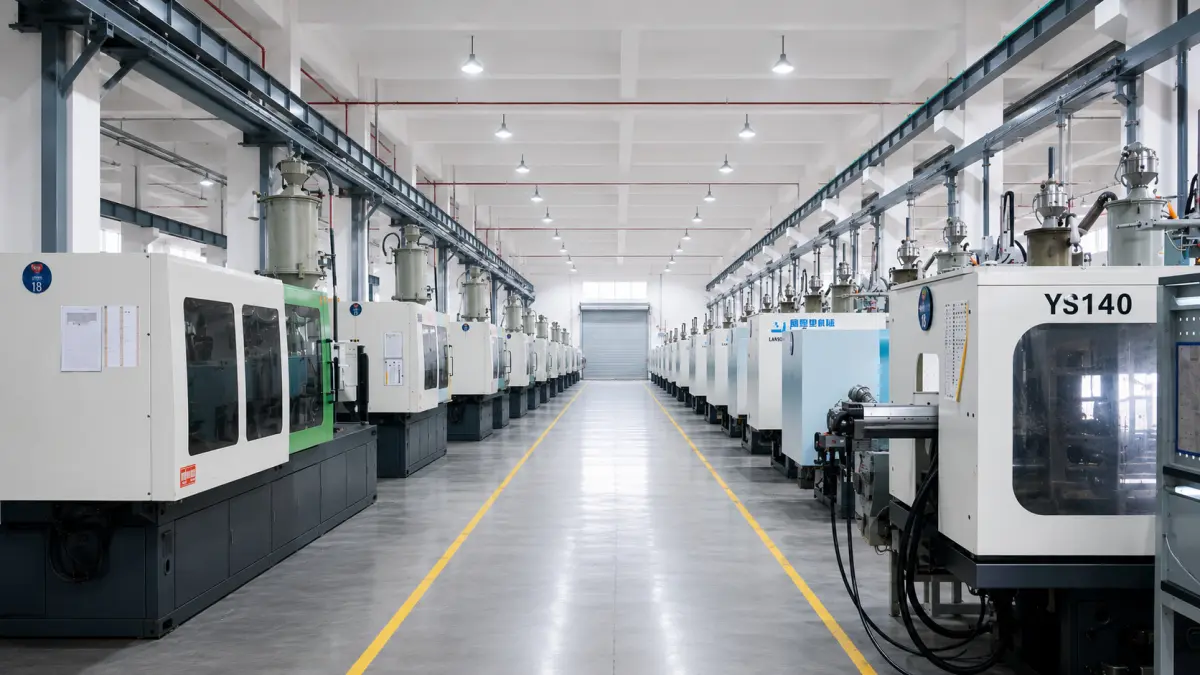
For companies purchasing sawhorses in bulk, choosing between folding and traditional models is not only a product decision. It is also a supplier capability decision.
A professional manufacturer should provide more than finished products. They should also demonstrate capabilities in:
- Product development
- Engineering design
- Material control
- Production consistency
- Quality management
- Customization support
This is especially important for folding sawhorses because product performance depends heavily on:
- Structural design accuracy
- Component quality
- Manufacturing processes
1.Manufacturing Experience and Quality Control
A reliable supplier should have a complete manufacturing system covering:
- Product development
- Mold design
- Component production
- Product assembly
- Quality inspection
Ningbo Jingyan Tool Industrial Co., Ltd. is a professional tools manufacturer specializing in industrial workbenches, plastic products, metal stamping parts, and tool storage solutions.
With a self-owned production base, professional production equipment, and experienced manufacturing teams, the company provides integrated solutions from product design to mass production.
Its manufacturing capabilities include:
- Injection molding
- Metal processing
- Product assembly
- Quality control testing
A complete production system helps international buyers achieve more stable product quality and reliable supply.
For global distributors and brands, supplier manufacturing capability is a key factor in building long-term cooperation.
2.OEM and ODM Opportunities
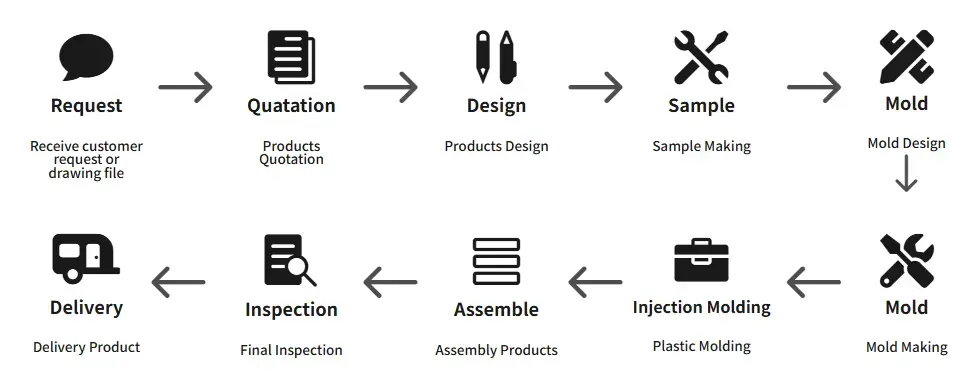
For brands and distributors, product differentiation is becoming increasingly important.
A manufacturer with strong R&D capabilities can support:
- Product color customization
- Brand logo customization
- Packaging customization
- Product specification adjustments
- Market-specific improvements
OEM and ODM services allow businesses to develop products that better match their sales channels and customer requirements.
For example:
A hardware distributor may require packaging that meets retail channel standards.
A professional tool brand may need exclusive colors and branding elements.
A regional supplier may require product adjustments based on local market preferences.
Compared with trading companies, manufacturers with engineering and production capabilities can provide more flexible solutions.
Folding Sawhorse vs Traditional Sawhorse: Comparison Summary for Buyers
The following table summarizes the major differences between folding sawhorses and traditional sawhorses:
| Comparison Factor | Folding Sawhorse | Traditional Sawhorse |
|---|---|---|
| Product Design | Flexible folding structure | Fixed structure |
| Storage Efficiency | Excellent space-saving capability | Requires more storage space |
| Transportation | Easier shipping and movement | Lower transportation efficiency |
| Setup and Usage | Quick deployment and folding | Simple but less flexible |
| Applications | Professional and mobile applications | Fixed working environments |
| Manufacturing Complexity | More engineering requirements | Simpler production process |
| Market Position | Portable professional tool solution | Basic support equipment |
| Commercial Flexibility | Suitable for wider customer groups | More limited applications |
For modern tool markets, folding sawhorses often provide stronger adaptability because they combine:
- Professional performance
- User convenience
- Space efficiency
These advantages allow businesses to better respond to changing customer expectations.
Frequently Asked Questions About Folding and Traditional Sawhorses
1.Which is better for professional users, folding or traditional sawhorses?
The better choice depends on the working environment and customer requirements.
Traditional sawhorses are suitable for fixed locations where equipment does not need to be moved frequently.
Folding sawhorses are more suitable for professional users who require:
- Mobility
- Flexible deployment
- Space-saving storage
For contractors, installers, and mobile woodworking professionals, folding designs usually provide greater convenience.
2.Are folding sawhorses strong enough for heavy-duty applications?
Yes.Modern folding sawhorses designed and manufactured with proper engineering can provide excellent load-bearing performance.
Important factors include:
- Frame construction
- Material quality
- Locking mechanism design
- Load testing standards
Professional folding sawhorses can combine portability with strong supporting capability.
3.Do folding sawhorses cost more than traditional models?
In many cases, folding sawhorses may have higher manufacturing costs.
This is because they require additional:
- Structural components
- Folding mechanisms
- Engineering development
However, businesses should evaluate total value instead of only purchase price.
Important considerations include:
- Reduced shipping costs
- Improved warehouse efficiency
- Customer demand
- Product positioning
For many distributors and brands, additional functionality can justify a higher market price.
4.What should buyers consider when sourcing folding sawhorses from manufacturers?
Professional buyers should evaluate:
- Manufacturing experience
- Production capacity
- Quality control systems
- OEM and ODM capability
- Delivery reliability
- Product consistency
A supplier with complete manufacturing capabilities can help businesses establish more stable long-term partnerships.
5.Can folding sawhorses be customized for wholesale orders?
Yes.Many professional manufacturers can provide customization services, including:
- Product colors
- Brand logos
- Packaging design
- Product configuration adjustments
Customization helps distributors and brands create products that better match their target markets.
Conclusion: Choosing the Right Sawhorse Solution for Long-Term Value
The comparison between folding sawhorses and traditional sawhorses is not only about product design differences.
For professional buyers, the decision involves:
- Product performance
- Logistics efficiency
- Market demand
- Long-term commercial value
Traditional sawhorses continue to provide reliable solutions because of their simple and stable structures.
However, folding sawhorses demonstrate stronger competitiveness in modern tool markets through advantages such as:
- Space-saving design
- Better transportation efficiency
- Flexible applications
- Professional functionality
- Stronger market adaptability
For importers, distributors, and tool brands, selecting the right sawhorse solution requires understanding:
- Product performance
- Customer expectations
- Market development trends
Working with an experienced manufacturer can provide additional advantages, including:
- Stable product quality
- Reliable production capability
- Customization support
- Long-term supply security
As professional tool markets continue moving toward portability and efficiency, folding sawhorses are becoming a practical solution that combines performance and commercial value.
For businesses looking to expand their tool product portfolio, choosing a reliable folding sawhorse supplier can create new market opportunities and support sustainable business growth.
Ralated Products