Portable Workbench Buying Guide for Retailers and Workshop Users

Buying a portable workbench for a retail assortment, distribution business, or professional workshop involves more than comparing product dimensions and unit prices.
For commercial buyers, the real question is whether a workbench provides the right combination of working capacity, portability, stability, storage efficiency, product positioning, and supply support for the market it is intended to serve.
A product that works well for a homeowner may not necessarily be the right choice for a hardware retailer. A workbench suitable for occasional garage projects can also be very different from one expected to support professional workshop activities. For distributors, importers, and private-label brands, supplier capability adds another important layer to the purchasing decision.
This portable workbench buying guide explains how retailers and workshop users can evaluate a product from both practical and commercial perspectives. It also uses real product specifications and manufacturing considerations from Jingyan Tools as examples, allowing buyers to understand how product design, production capability, customization, MOQ, lead time, and quality documentation fit into a real sourcing process.
The goal is not simply to identify the workbench with the most impressive specification sheet.
The goal is to choose a workbench that fits the target market, performs as expected, can be positioned clearly, and can be supplied consistently over time.
Start With the Buying Scenario, Not the Product Name
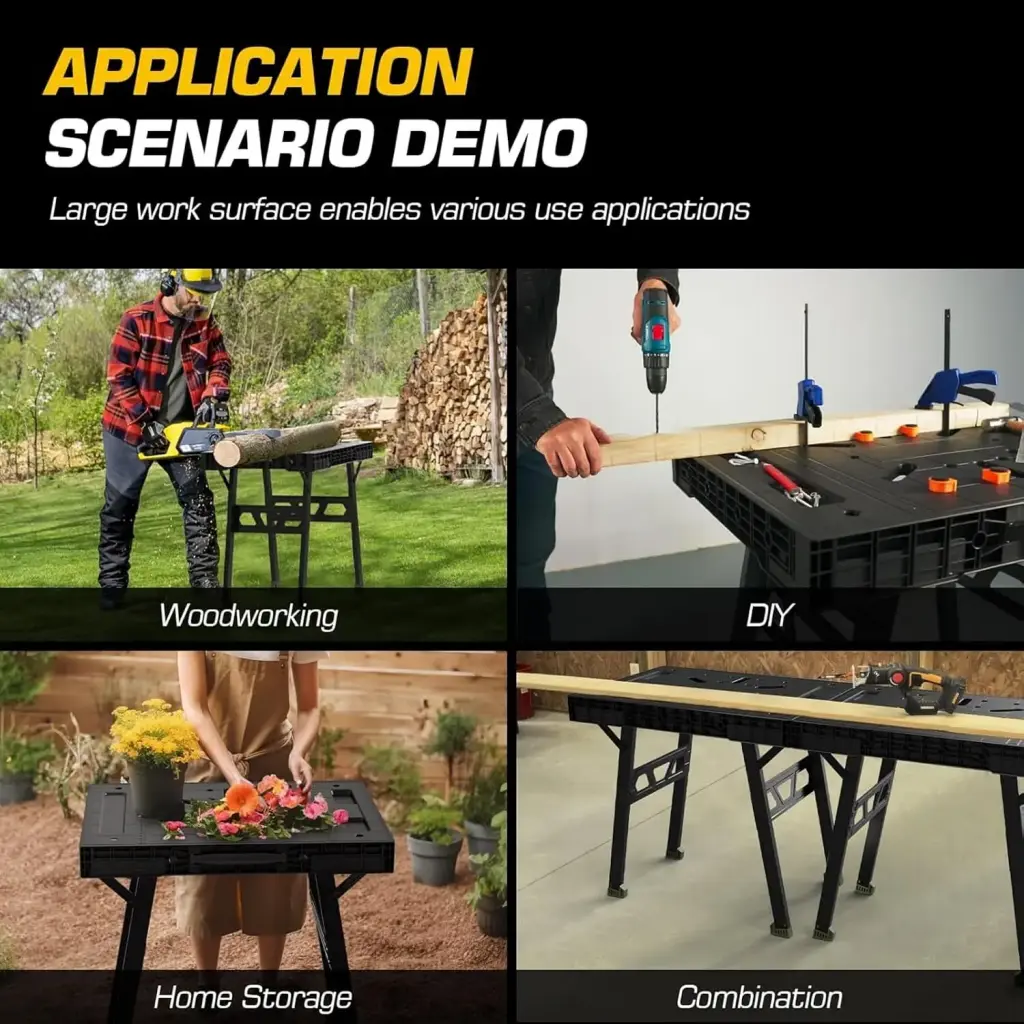
Four Questions to Define the Product Position
Who Will Use the Workbench?
The first question is the target user.
Potential users may include:
- DIY customers
- Garage users
- Contractors
- Workshop professionals
- Maintenance teams
- Woodworking users
- General repair users
- Retail customers looking for multi-purpose equipment
A retailer should avoid selecting a product simply because it has strong specifications. Those specifications need to match what the target customer actually values.
Where Will It Be Used?
The intended environment also influences product selection.
A garage workbench may need to prioritize compact storage and general-purpose functionality.
A woodworking bench may require greater attention to working surface characteristics and stability.
A portable workshop product may need to balance mobility, working capacity, setup speed, and storage efficiency.
How Frequently Will It Be Used?
Frequency of use is another important purchasing factor.
A workbench designed for occasional home projects does not necessarily need the same positioning as a product intended for daily professional use.
Retail buyers should therefore understand whether their customers are purchasing for occasional projects, regular workshop work, or professional applications.
How Will the Product Be Sold?
The sales channel can also influence product selection.
Retail stores, distributors, importers, online sellers, private-label brands, and project procurement companies may have different requirements for:
- Packaging
- Branding
- MOQ
- Product documentation
- Product differentiation
- Lead time
- Replenishment
Defining these requirements early makes the sourcing process much more efficient.
What Makes a Portable Workbench Commercially Attractive?
For commercial buyers, portability is only one part of a product’s value.
A successful portable workbench should offer a clear combination of benefits that retailers can communicate and customers can understand.
Depending on the target market, useful characteristics may include:
- A practical working surface
- Stable structural support
- High static load capacity
- Folding or compact storage
- Manageable product weight
- Durable materials
- Simple setup
- Convenient transportation
- Suitable packaging
- Clear product positioning
- Consistent manufacturing quality
- OEM or ODM customization options
The strongest product is not necessarily the one that maximizes every specification.
Instead, it should create an appropriate balance between performance, portability, cost, and commercial usability.
Portability Does Not Mean Lightweight at Any Cost
One common mistake in product selection is assuming that a portable workbench should simply be as light as possible.
Reducing weight can improve handling, but excessive weight reduction may compromise stability, load capacity, or structural durability.
On the other hand, a workbench that becomes too heavy can lose part of its portability advantage.
Therefore, buyers should evaluate the relationship between:
Load Capacity + Structural Strength + Product Weight + Folding Efficiency
rather than judging one number independently.
This relationship is particularly important for retailers because customers often want a product that feels portable while still being capable of handling serious work.
The Five Specification Areas Buyers Should Compare
Rather than comparing dozens of specifications independently, commercial buyers can organize their workbench purchasing criteria into five major categories.
1.Working Surface
The working surface directly influences how useful the product will be during real tasks.
A compact surface may be easier to transport and store but may restrict larger projects. A larger surface can improve usability but may increase product dimensions, packaging volume, storage requirements, and transportation costs.
When evaluating a portable work table, buyers should consider:
- Overall dimensions
- Usable working area
- Surface material
- Surface texture
- Clamping options
- Measurement markings
- Resistance to everyday wear
- Ease of cleaning
The right surface depends on the intended application.
A general-purpose model may need flexibility, while a woodworking-oriented product may require different surface characteristics.
2.Load Capacity
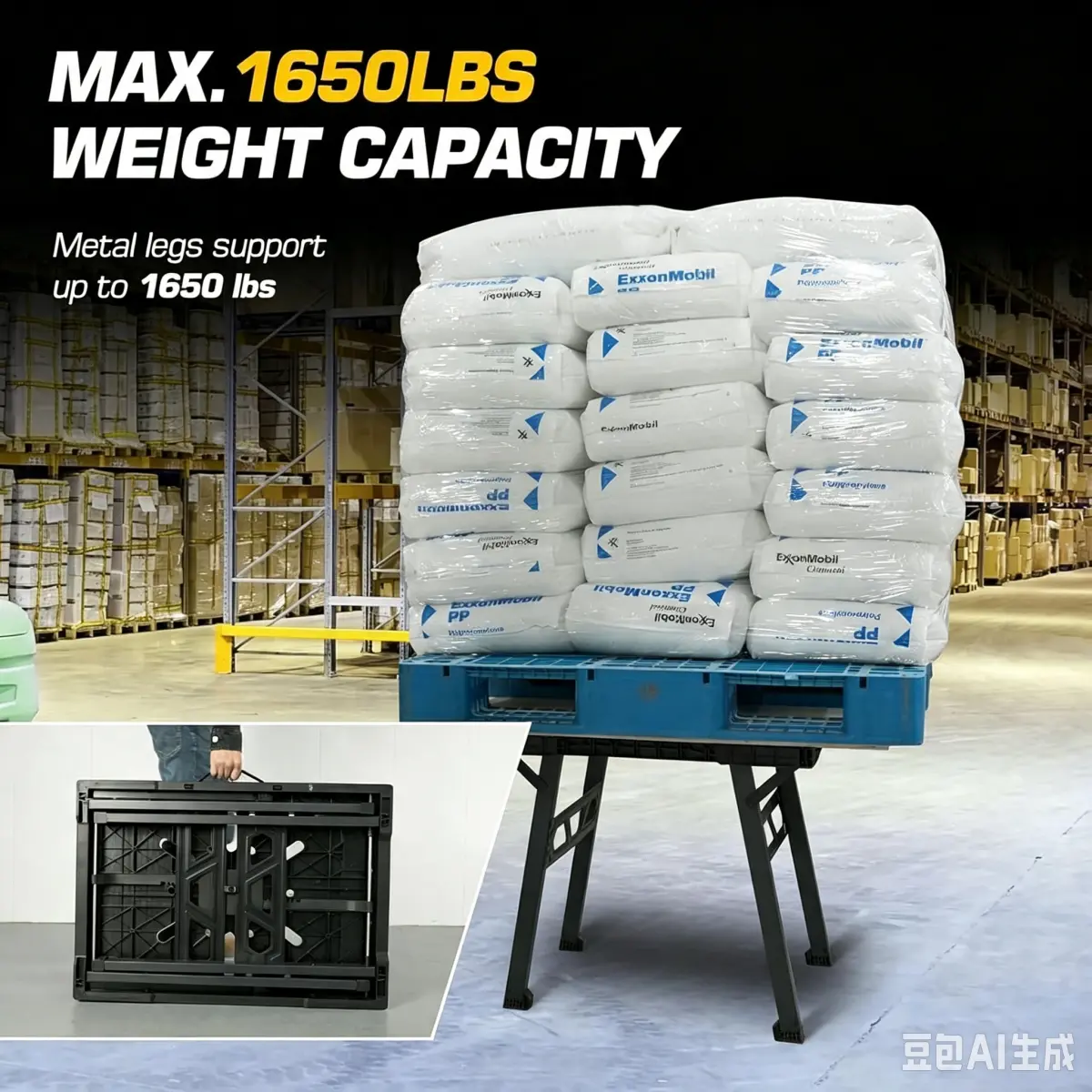
Load capacity is one of the most important specifications when comparing workbenches.
However, buyers should not evaluate the number without understanding what it represents.
Important questions include:
- Is the rating static or dynamic?
- Does the stated capacity apply to the complete assembled product?
- How was the load capacity tested?
- Does the frame remain stable under load?
- Is the capacity suitable for the intended application?
For example, selected Jingyan Tools workbench models are designed with a static load capacity of up to 750 kg.
For a commercial buyer, however, “750 kg” should not simply be treated as a marketing number.
The more useful question is how that capacity works together with the frame structure, tabletop material, support points, folding mechanism, and product weight.
This is the difference between reading a specification and evaluating a product.
3.Folding and Storage Mechanism
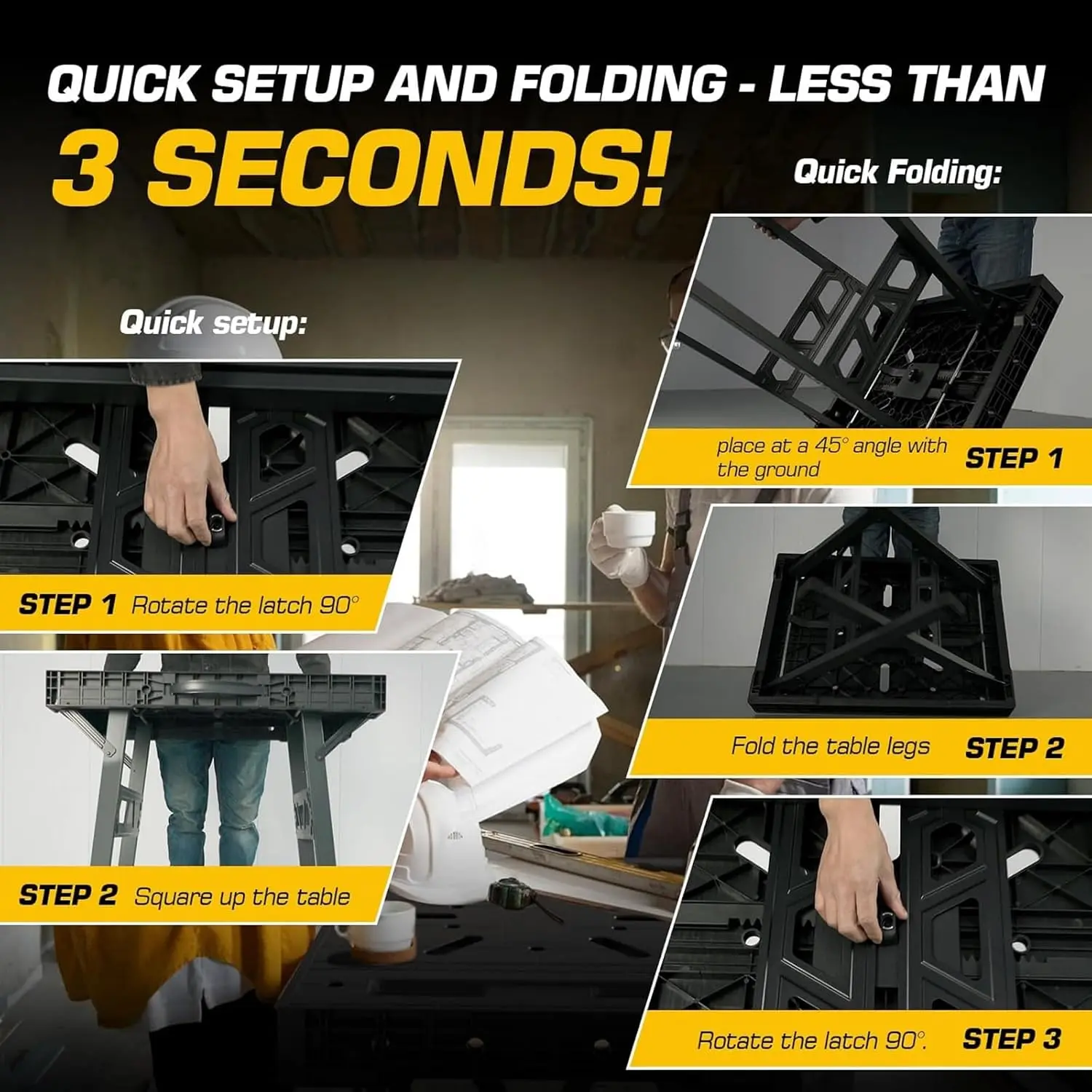
For a portable workbench, folding design can directly affect both user experience and commercial value.
A well-designed folding structure can reduce storage space, simplify transportation, and make it easier for users to move the product between work areas.
But buyers should look beyond the word “folding.”
Important factors include:
- Folding steps
- Locking mechanism
- Hinge construction
- Stability after unfolding
- Folded dimensions
- Carrying convenience
- Repeated setup
- Safety during operation
A folding mechanism that is complicated or difficult to use may reduce the practical value of an otherwise strong product.
4.Material and Structural Design
Material selection should be evaluated as part of the entire product structure.
Portable workbenches often need to balance:
- Strength
- Weight
- Durability
- Production efficiency
- Cost
- Portability
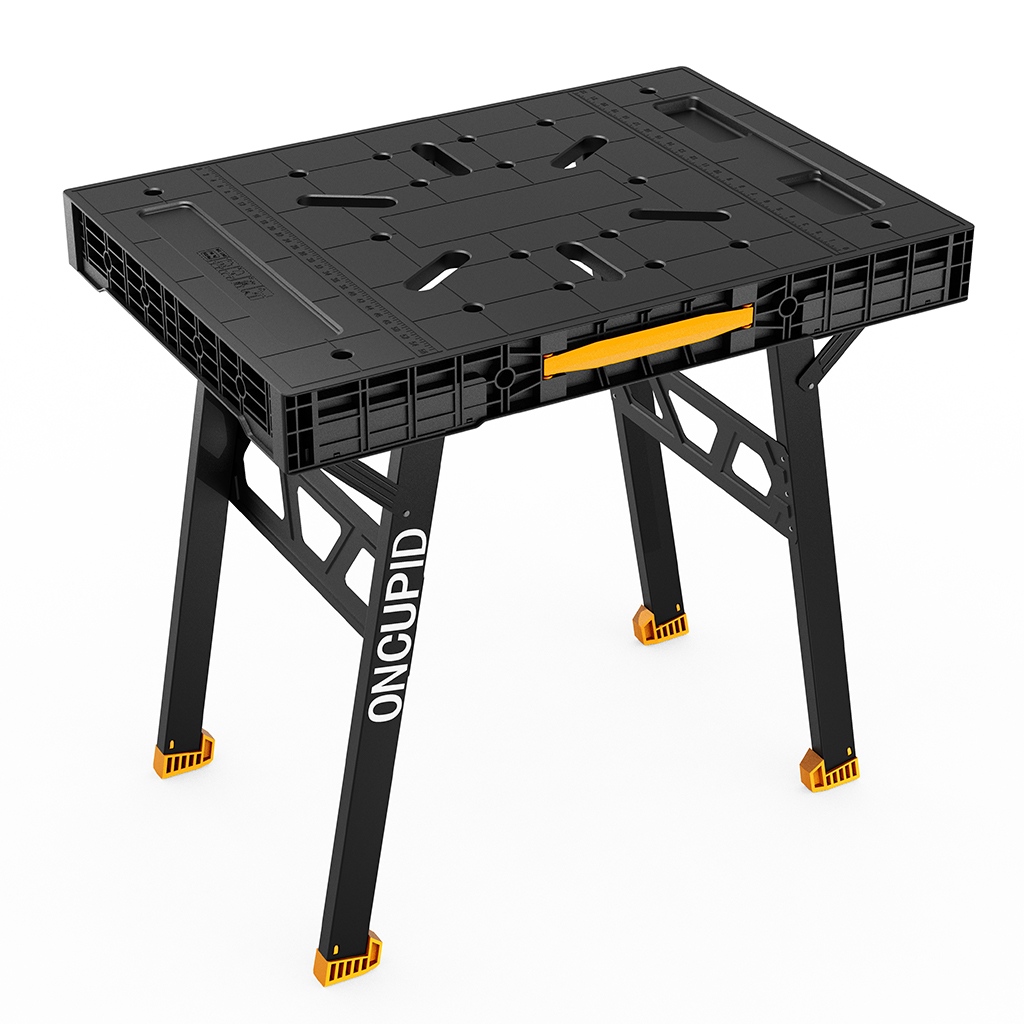
For example, a PP tabletop combined with a reinforced carbon steel frame can provide a practical structural combination for a portable design.
However, buyers should not evaluate materials by name alone.
They should also examine:
- Frame construction
- Connection points
- Structural reinforcement
- Hinge design
- Material thickness
- Surface treatment
- Production consistency
- Quality inspection
Two products can use similar material descriptions while delivering different results because of differences in engineering and manufacturing control.
5.Product Weight and Handling
A portable workbench needs to remain realistically portable.
One Jingyan Tools workbench configuration has a product weight of approximately 10.5 kg while supporting up to 750 kg of static load.
For commercial buyers, the important point is not simply the weight.
It is the relationship between working capacity and handling.
A product that provides substantial load capacity without becoming unnecessarily heavy can be easier to position as a portable professional work solution.
Product weight can also influence:
- Warehouse handling
- Packaging
- Transportation
- Shipping calculations
- Inventory movement
- Customer perception
This makes the load-to-weight relationship an important part of workbench product selection.
A Real-World Portable Workbench Example
Technical specifications become more meaningful when buyers can see how they work together in an actual product.
Jingyan Tools’ workbench platform provides a useful example.
A selected configuration combines a PP working surface, reinforced metal frame, folding structure, approximately 10.5 kg product weight, and static load capacity of up to 750 kg.
From the end user’s perspective, the product is designed to provide substantial working capacity while remaining practical to move and store.
From the retailer’s perspective, the same specifications create several commercial selling points.
The folding construction supports a space-saving proposition.
The 750 kg load rating provides a measurable performance characteristic.
The approximately 10.5 kg product weight reinforces the portability proposition.
The PP tabletop and reinforced metal frame provide a straightforward material story for sales teams.
This demonstrates an important principle:
The commercial value of a specification comes from how it works with the other specifications.
A high load rating alone does not determine whether a product is commercially suitable.

How Retailers Should Evaluate a Workbench Product Range
Retail buyers usually do not purchase a workbench in isolation.
They are building a product assortment.
Therefore, the question is not only:
“Is this a good workbench?”
It is also:
“What role will this workbench play in our product range?”
1.Avoid an Assortment With No Clear Differentiation
Imagine a retailer already sells:
- A fixed workshop table
- A heavy-duty workbench
- A basic DIY table
Adding another product with almost identical positioning may create unnecessary SKU overlap.
A portable workbench should have a clearly identifiable role.
Its differentiation could come from:
- Folding convenience
- Compact storage
- Mobility
- Professional portability
- High load capacity
- Multi-purpose use
- Adjustable height
- Private-label customization
The objective is not simply to add another SKU.
The objective is to fill a genuine market gap.
2.Consider the Customer Journey
Retailers should also consider how easily customers can understand the product.
A product listing should answer:
- What is it?
- Who is it designed for?
- What problems does it solve?
- What is the load capacity?
- How large is the working surface?
- How does it fold?
- How easy is it to move?
- What makes it different?
A clear product position makes the workbench easier for sales teams to merchandise and easier for customers to compare.
When Buyers Need More Than a Standard Folding Workbench
Not every market needs exactly the same configuration.
Some buyers prioritize compact folding.
Others require greater flexibility in working height.
For this reason, product development capability can become an important supplier selection factor.
1.Adjustable Height as a Product Differentiator
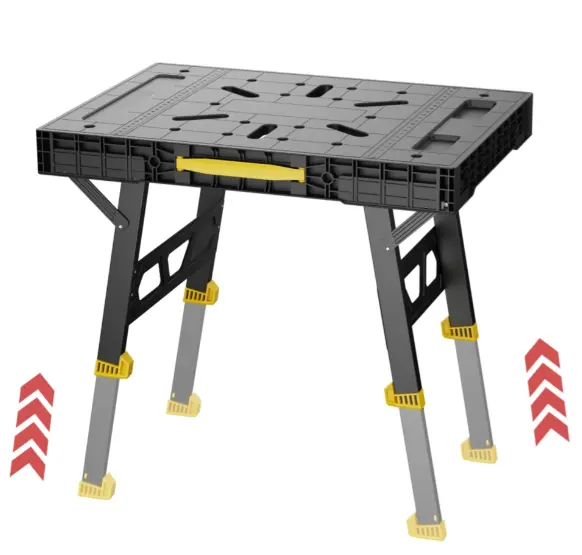
Jingyan Tools also develops adjustable-height mobile work table solutions.
One model provides eight height settings from 34.25 inches to 48.03 inches and combines a PP tabletop with a reinforced carbon steel frame.
For retailers, adjustable height creates a different product position from a conventional fixed-height folding workbench.
It can potentially appeal to customers who require greater flexibility in working position, task type, or user height.
More importantly, from a B2B sourcing perspective, the availability of different product configurations demonstrates that a manufacturer can develop products around different market requirements.
2.Why Product Development Capability Matters
For private-label buyers and distributors, the purchasing process may involve:
Market Requirement → Sample → Evaluation → Trial Order → Feedback → Modification → Mass Production
A supplier capable of participating throughout this process can simplify communication.
Possible customization requirements may include:
- Product colors
- Branding
- Packaging
- Product configuration
- Selected structural changes
- Working height
- Accessories
- Product specifications
This is where OEM and ODM capability becomes commercially valuable.
Garage Workbench, Woodworking Bench, or General-Purpose Model?
The word “workbench” does not describe a single application.
A garage workbench may be used for:
- Household repair
- DIY projects
- Automotive maintenance
- General workshop tasks
A woodworking bench may be evaluated more heavily according to:
- Stability
- Working surface
- Clamping compatibility
- Working height
- Available working area
A general-purpose portable model needs to communicate flexibility.
1.When a Garage-Focused Position Makes Sense
For garage-oriented products, customers may value:
- Compact storage
- Easy movement
- General repair capability
- Multi-purpose functionality
- Convenient setup
The product should be positioned according to its actual capabilities.
2.When a Woodworking Position Makes Sense
Woodworking customers may place greater emphasis on:
- Stable support
- Working surface
- Suitable working height
- Clamping options
- Available space
- Compatibility with woodworking tasks
Retailers should therefore understand the difference between application categories before selecting a product.
The same basic workbench platform may serve several markets, but the marketing message should match the actual product capability.
How to Evaluate a Workbench Supplier Before Bulk Purchasing

A product specification sheet is only one part of supplier evaluation.
For B2B buyers, manufacturing capability can influence:
- Product consistency
- Lead time
- Customization
- Packaging
- Quality control
- Replenishment
1.Look Beyond the Product Catalog
A professional supplier should be able to explain more than product photographs.
Buyers should ask:
- Does the supplier operate its own manufacturing facilities?
- Which processes are controlled internally?
- How are components produced?
- How is assembly controlled?
- What quality inspections are performed?
- Can samples be provided?
- Can specifications be customized?
- Can packaging be customized?
- Can OEM and ODM projects be supported?
- What is the production capacity?
- How are repeat orders handled?
These questions help buyers understand whether they are working directly with a manufacturer or purchasing through an intermediary.
2.Manufacturing Capability Should Support Replenishment
Production capacity becomes particularly important once a product performs well in the market.
The first order may be relatively small.
The more important test is what happens when demand increases.
Jingyan Tools was established in 2003 and has experience in tool product development, manufacturing, quality control, and international B2B supply.
Its workbench production capability is approximately 7,000 units per month, with component production capacity of approximately 100,000 parts per month.
For buyers, these numbers are relevant because a successful product needs to move through:
Sample → Trial Order → Larger Order → Repeat Production
without unnecessary disruption.
Production capacity therefore becomes part of commercial product reliability.
Why OEM and ODM Capability Matters to Retail Buyers
Retailers and private-label brands do not always want to sell products that are identical to what competitors already carry.
Product differentiation can help create a more distinct assortment.
OEM and ODM projects may involve:
- Brand identity
- Product colors
- Packaging
- Product configuration
- Selected structural modifications
- Market-specific requirements
- Product positioning
Jingyan Tools supports OEM and ODM workbench projects, allowing buyers to discuss requirements beyond standard catalog products.
What to Look for Behind an OEM/ODM Claim
The important question is not simply:
“Does the supplier offer OEM?”
The more important question is:
“Can the supplier execute the requested customization consistently?”
Buyers should evaluate:
- Product development capability
- Sample development
- Engineering communication
- Mold or tooling capability where applicable
- Production control
- Quality inspection
- Packaging development
- Custom color management
- Repeated production consistency
A supplier with these capabilities can potentially make the transition from product concept to commercial production more efficient.
MOQ and Lead Time: What Retailers Should Consider
Unit price matters, but it should not be the only purchasing metric.
MOQ and lead time can have a significant effect on inventory risk and product availability.
1.MOQ and Inventory Risk
A very high MOQ may force a retailer to hold more inventory than the market currently requires.
For suitable workbench projects, Jingyan Tools can support orders from approximately 100 pcs MOQ, depending on product configuration, packaging, customization, and order requirements.
For retailers testing a new product, an achievable initial order quantity can make market validation easier.
However, buyers should confirm the final MOQ for the exact project before ordering.
Custom packaging, custom colors, structural modifications, or other requirements may influence commercial terms.
2.Lead Time and Replenishment Planning
Lead time becomes increasingly important once a product starts selling.
A supplier may offer an attractive first-order price, but slow replenishment can create stock-out problems.
Jingyan Tools’ standard production lead time is approximately 30 days, with an urgent production option of around 20 days for suitable orders, subject to product configuration and production planning.
Retailers should confirm the exact lead time for each order, especially when customization is involved.
Documentation and Compliance for International Buyers
International buyers should also evaluate whether a supplier can provide suitable product and manufacturing documentation.
Depending on the destination market, sales channel, and product requirements, buyers may need:
- Product specifications
- Material information
- Test reports
- Compliance documentation
- Factory certifications
- Third-party inspection records
- Packaging information
- Quality-control documentation
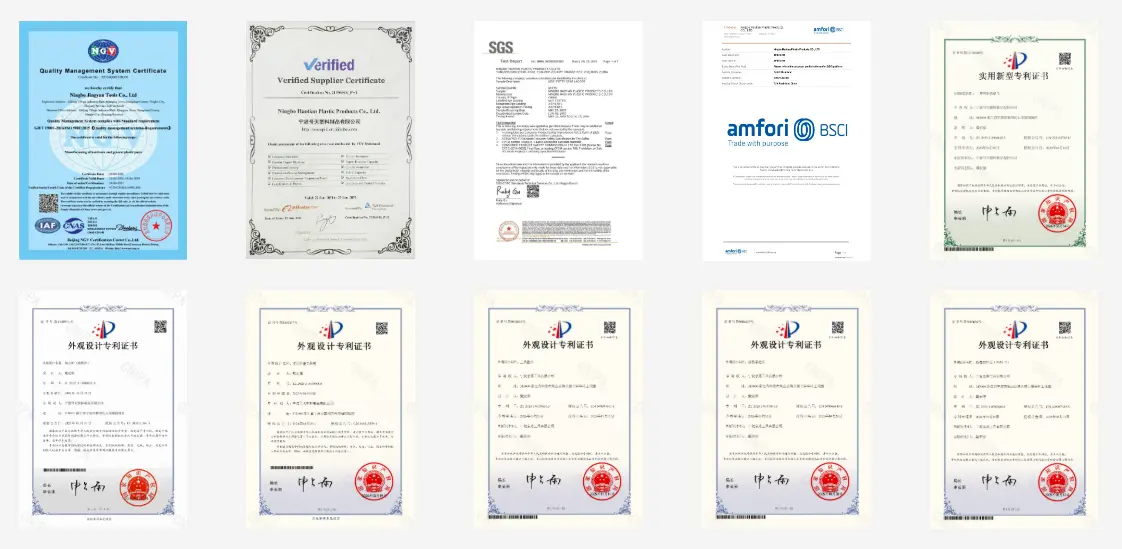
Jingyan Tools has experience supporting international B2B customers and maintains certifications and documentation including CE, RoHS, REACH, ISO, BSCI, and SGS-related documentation, where applicable to the relevant product or project.
Buyers should confirm which certifications and documents apply to the exact model and destination market.
This avoids a common sourcing mistake: assuming that every certification automatically applies to every product.
What Retail Buyers Should Request Before Placing an Order
A professional purchasing process should produce more than a quotation.
Before confirming a bulk order, buyers should request a complete product information package.
This can include:
- Product specification sheet
- Product dimensions
- Product weight
- Load capacity
- Materials
- Folded dimensions
- Packaging dimensions
- Carton quantity
- Sample information
- MOQ
- Production lead time
- OEM/ODM options
- Quality-control information
- Relevant certifications
- Test reports where applicable
- Warranty or after-sales information
Why Documentation Matters
Clear technical information reduces misunderstandings between:
Supplier → Purchasing Team → Warehouse → Sales Team → End Customer
It also makes it easier for retailers to create accurate product listings.
For distributors, standardized documentation can simplify communication with downstream customers.
A supplier that provides clear documentation is therefore reducing part of the buyer’s operational workload.
A Practical Workbench Specification Checklist
Before selecting a model, buyers can use this checklist.
1.Product Fit
- Target customer defined
- Main application identified
- Product positioning differentiated
- Working surface suitable
- Load capacity suitable
- Product weight manageable
- Folding design appropriate
2.Operational Fit
- Setup procedure straightforward
- Folding mechanism reliable
- Folded dimensions practical
- Storage requirements acceptable
- Packaging suitable
- Warehouse handling manageable
3.Supplier Fit
- MOQ commercially acceptable
- Lead time suitable
- Samples available
- Quality control clearly explained
- Relevant compliance documents available
- OEM/ODM support available
- Production capacity sufficient
- Repeat-order capability reliable
From Sample to Mass Production: What a Reliable Supplier Should Support
For commercial buyers, the first sample is only the beginning.
A professional sourcing process should allow the buyer to move through several stages without repeatedly changing suppliers.
1.Stage 1 — Sample Evaluation
Evaluate:
- Appearance
- Dimensions
- Working surface
- Stability
- Folding operation
- Product weight
- Load capacity
- Packaging
2.Stage 2 — Trial Order
The trial order helps determine whether the supplier can reproduce the approved sample consistently at production scale.
3.Stage 3 — Market Feedback
Retailers can evaluate:
- Customer response
- Product returns
- Common customer questions
- Packaging feedback
- Sales performance
- Demand by customer segment
4.Stage 4 — Product Modification
If market feedback identifies an opportunity, the supplier should be able to discuss practical modifications such as:
- Color
- Packaging
- Branding
- Configuration
- Selected structural details
5.Stage 5 — Mass Production and Replenishment
Once the product is established, repeat production becomes more important than the initial sample.
This is where production capacity, quality control, lead time, and communication become part of the product’s commercial value.
Frequently Asked Questions About Portable Workbench Purchasing
1.What is the most important specification when buying a portable workbench?
There is no universal single specification.
Working surface, load capacity, stability, folding design, product weight, materials, and intended application should be evaluated together.
The most important specification is the one most directly connected to the end user’s actual needs.
2.Is a folding workbench suitable for professional users?
It can be, provided the product is designed and tested for the intended application.
Professional suitability should be evaluated according to structural design, stability, load capacity, material quality, and manufacturing consistency rather than the folding function alone.
3.How should retailers compare different portable workbench models?
Start with the target customer and application.
Then compare:
- Working surface
- Load capacity
- Stability
- Folding mechanism
- Product weight
- Materials
- Folded dimensions
- Packaging
- MOQ
- Lead time
- Customization
- Supplier capability
This creates a more meaningful comparison than simply choosing the lowest price.
4.Should retailers prioritize price or quality?
Neither should be considered independently.
A commercially successful workbench needs an appropriate cost structure while meeting the quality expectations of the target market.
A low unit price does not necessarily create value if the product generates excessive returns, inconsistent quality, or replenishment problems.
5.What should buyers ask a workbench manufacturer?
At minimum, buyers should ask about:
- Product specifications
- Samples
- Load capacity
- Materials
- MOQ
- Lead time
- Quality control
- Testing
- Certifications
- Packaging
- OEM/ODM capability
- Production capacity
- Repeat-order capability
The quality and clarity of the supplier’s answers can itself provide useful information about its manufacturing professionalism.
The Bottom Line: Buy for the Market, Not Just the Specification Sheet
The best portable workbench is not necessarily the one with the highest load capacity or lowest unit price.
For retailers, distributors, workshop equipment buyers, importers, and private-label brands, the stronger choice is the product that fits a clearly defined market and can be supplied consistently over time.
A practical purchasing decision should connect:
Customer → Application → Product Position → Specifications → Supplier → MOQ → Lead Time → Customization → Replenishment
Jingyan Tools’ workbench products provide a practical example of how these factors can work together.
The product platform combines folding construction, PP working surfaces, reinforced metal structures, substantial load capacity, and manageable product weight. Adjustable-height configurations provide another option for buyers looking to build a more differentiated product range.
For private-label and distribution projects, OEM and ODM support provides additional flexibility.
For commercial sourcing, manufacturing capability, production capacity, quality documentation, MOQ, and lead time help determine whether a supplier can support the product beyond the first order.
Ultimately, a workbench should not be evaluated only as a physical table.
It should be evaluated as a commercial product that needs to satisfy the end user, fit the retailer’s assortment, and remain supportable throughout the supply cycle.
If you are evaluating a portable workbench for a retail, distribution, workshop, or private-label program, the next step is to compare the exact product configuration, required specifications, order quantity, packaging requirements, and customization needs with the manufacturer.
Request a workbench sourcing quotation from Jingyan Tools to discuss product specifications, samples, OEM/ODM requirements, MOQ, and production planning.
Related products