How to Choose the Right Folding Sawhorse for Different Workloads

Choosing a sawhorse is not simply a matter of finding the strongest model available. For professional users, the better question is whether the sawhorse matches the type of work, material being handled, working environment, and frequency of use.
A woodworking shop may prioritize a stable support surface for boards and panels, while a construction crew may need a more durable setup that can handle repeated cutting, framing, and material handling. A contractor who frequently paints doors or trim may care more about accessible working height and easy repositioning. For general workshop applications, portability and storage can be just as important as load capacity.
This is why selecting the right sawhorse for woodworking, construction, cutting, painting, or general work requires looking beyond a single load-rating number.
For distributors, importers, and professional buyers, the decision also involves product consistency, material selection, packaging, customization, minimum order quantities, and the supplier’s ability to support repeat orders.
This guide explains how to evaluate a folding sawhorse according to different workloads and application requirements, using practical selection criteria that can also help B2B buyers compare products before placing an order.
Table of Contents
- Start With the Workload, Not Just the Load Rating
- Sawhorse for Woodworking: Stability and Material Support Come First
- Sawhorse for Construction: Consider Repeated Handling and Site Conditions
- Sawhorse for Cutting: Build the Support Around the Task
- Sawhorse for Painting: Think About Access and Repositioning
- Sawhorse for General Work: Balance Portability and Versatility
- Woodworking Sawhorse vs. Construction Sawhorse: What Should Buyers Prioritize?
- What Specifications Should B2B Buyers Check Before Ordering?
- Why Product Consistency Matters to Distributors and Importers
- When OEM and ODM Support Becomes Important
- Choosing the Right Sawhorse Based on Your Customer's Workload
- How to Evaluate a Folding Sawhorse Supplier
- FAQ: Choosing a Sawhorse for Different Workloads
- Final Takeaway: Match the Sawhorse to the Work, Not Just the Number
Start With the Workload, Not Just the Load Rating
The first step in choosing a sawhorse is understanding what users will actually do with it.
Two products may have similar load capacities but perform differently in real working conditions. A sawhorse used primarily for woodworking may support long boards and sheet materials for extended periods, whereas one used on construction sites may be folded, transported, opened, repositioned, and loaded repeatedly throughout the day.
The workload therefore includes more than the weight placed on the support.
Consider these factors:
- What type of material will be supported?
- How frequently will the sawhorse be moved?
- Will it be used indoors, outdoors, or in both environments?
- Does the user need a pair of supports for long materials?
- Is the working surface primarily for cutting, assembly, painting, or temporary support?
- How often will the product be folded and stored?
- Does the buyer require OEM, ODM, private labeling, or color customization?
For professional applications, a useful selection process should evaluate load capacity, structural stability, material construction, portability, folding design, working compatibility, and expected frequency of use together.
That approach is more useful than choosing a model solely because its advertised load rating is higher.
Sawhorse for Woodworking: Stability and Material Support Come First
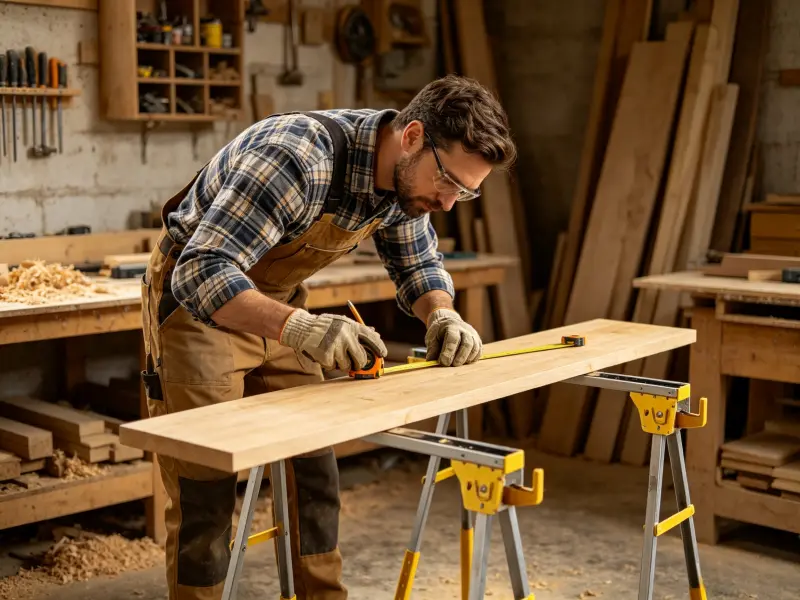
Woodworking creates a different set of requirements from general construction work.
When working with timber, plywood, panels, trim, or other long materials, the sawhorse needs to provide a dependable support point without creating unnecessary movement. The problem is not always the total weight of the material. Long boards can distribute weight unevenly, and cutting or positioning them can introduce additional movement.
For this reason, a sawhorse for woodworking should be evaluated according to how well it supports the user’s working process.
1.Supporting Long Boards and Panels
Woodworkers frequently need two support points rather than a single stand. A pair of properly positioned sawhorses can create a temporary working platform for boards, sheet materials, and other components.
The distance between the supports also matters. If the supports are too close together, long material may become unstable or flex excessively. If they are positioned too far apart, transportation and repositioning can become inconvenient.
A practical woodworking setup should therefore balance:
- Support stability
- Suitable working height
- Compatibility with long materials
- Ease of repositioning
- Folding and storage requirements
A folding design can be particularly useful for workshops where floor space is limited. Instead of permanently occupying valuable production or assembly space, the sawhorses can be folded when the task is finished.
2.Why Material Construction Matters in Woodworking
The material combination also affects how a sawhorse behaves during repeated use.
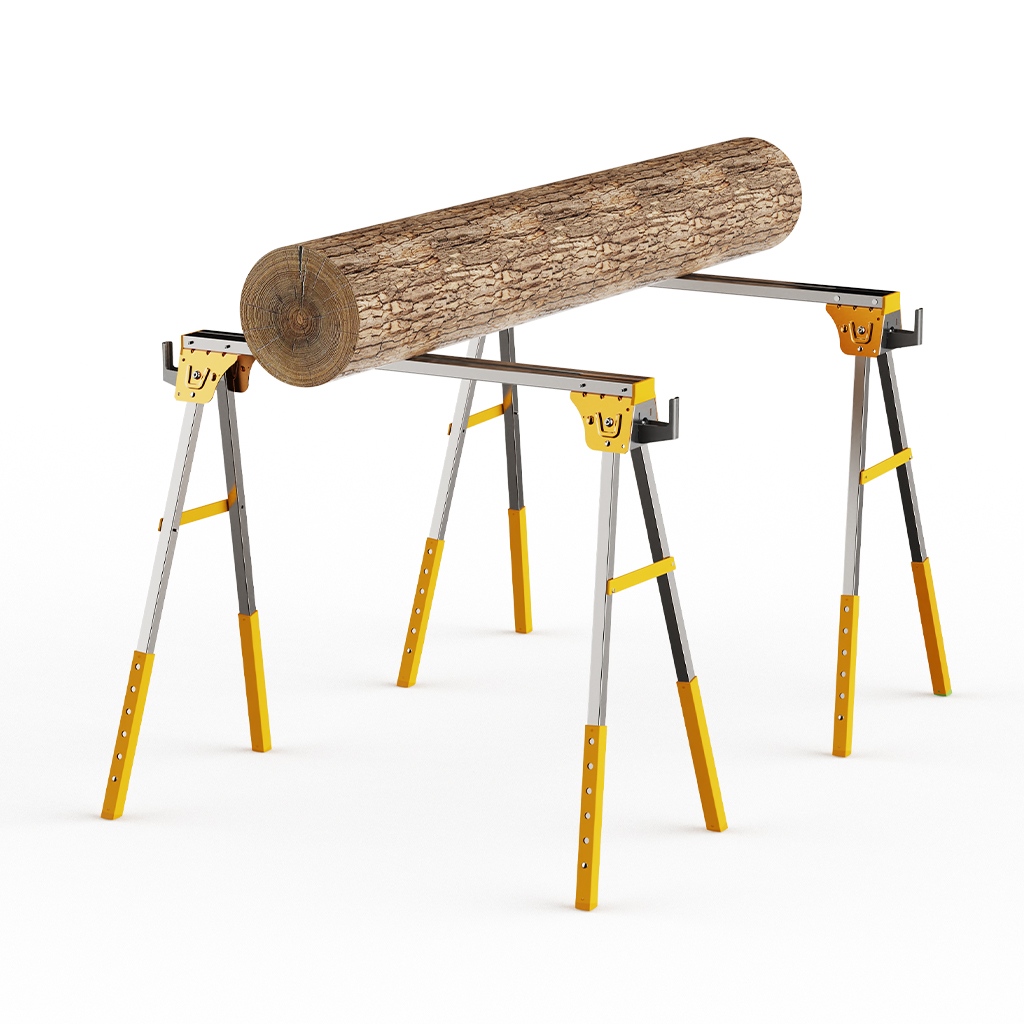
Our folding sawhorse uses a metal + PP + TPR construction, combining a metal structural frame with polymer components and TPR contact elements. This configuration is intended to balance structural strength, product weight, handling convenience, and practical contact performance.
The product weighs approximately 4.5 kg, allowing professional users to move a pair around a workshop without treating the sawhorse as permanent equipment.
For woodworking distributors, this combination can also create a practical product position between basic lightweight supports and significantly heavier workshop equipment.
Sawhorse for Construction: Consider Repeated Handling and Site Conditions
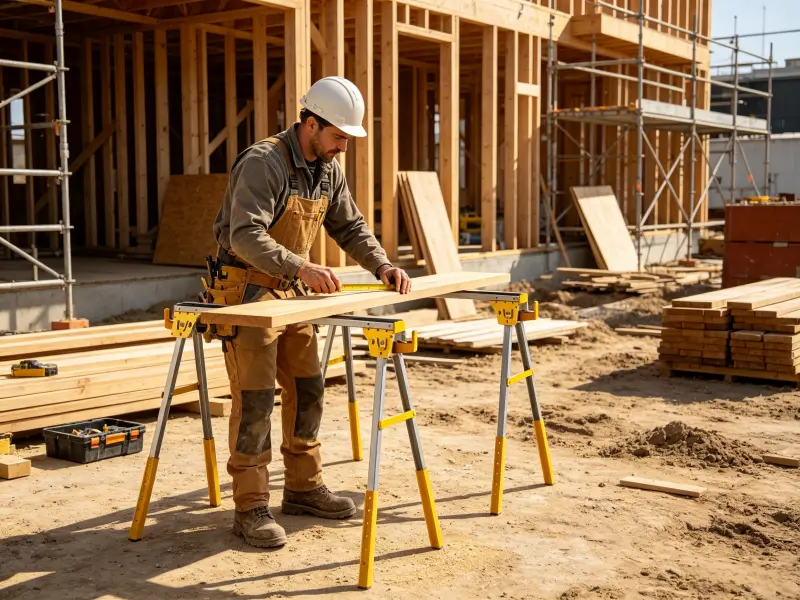
Construction applications place different demands on support equipment.
A construction worker may use the same sawhorse for cutting lumber in the morning, supporting materials during assembly later, and then fold and transport it at the end of the working period.
The equipment therefore needs to tolerate repeated handling rather than simply carrying a heavy load once.
A sawhorse for construction should be assessed using several criteria.
1.Repeated Setup and Folding
Construction work often changes locations. Equipment may need to be loaded into a vehicle, carried into a building, opened at the work area, moved to another position, and stored again.
This makes folding performance important.
A folding sawhorse that requires complicated assembly every time it is used can reduce productivity. By comparison, a practical folding structure allows workers to move between tasks without treating setup as a separate project.
For professional buyers, the folding mechanism is therefore not just a convenience feature. It can influence the product’s usability throughout its working life.
2.Load Capacity Is Only One Part of Construction Performance
Our folding sawhorse is rated for a 2,650 lb load capacity per pair.
That figure provides an important reference for procurement, but professional users should still consider how the load is distributed and what type of material is being supported.
A load rating should not be interpreted as permission to exceed safe working practices. Actual use should follow the manufacturer’s instructions and appropriate jobsite safety requirements.
For distributors, clearly communicating the rated capacity and intended applications is also important because customers may use the same product for different tasks.
A product positioned for construction should therefore have specifications that are easy for buyers to understand, compare, and communicate to their own customers.
Sawhorse for Cutting: Build the Support Around the Task
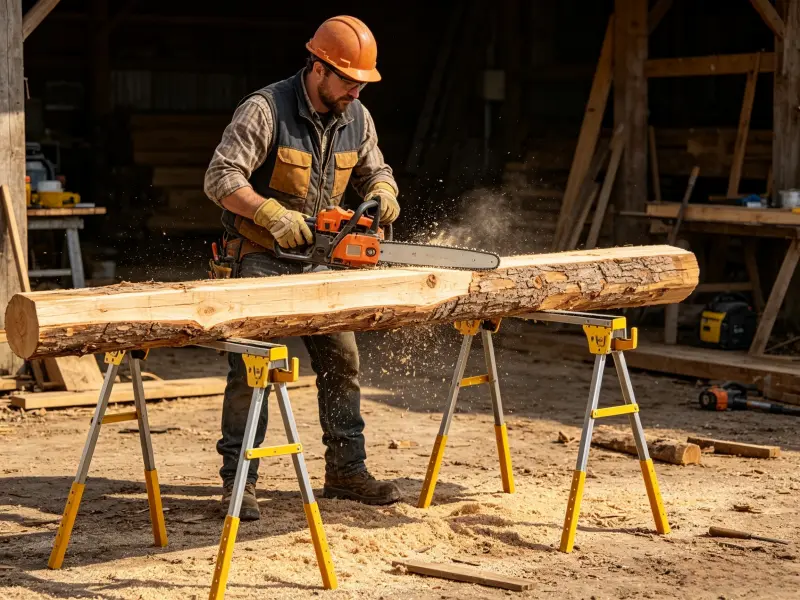
Cutting is one of the most common reasons users purchase sawhorses, but “cutting” covers several different working conditions.
A user may cut dimensional lumber, plywood, trim, panels, or other materials. The support requirements change depending on material length, weight, cutting method, and whether the user needs to repeatedly reposition the workpiece.
A sawhorse for cutting should provide a stable foundation while allowing the operator enough working space to handle the material.
1.Support Long Materials at Multiple Points
Long boards can create leverage at the ends. When a board extends significantly beyond the support points, movement can increase as the user cuts or adjusts the material.
Using a pair of sawhorses allows the user to establish a more balanced support arrangement.
The practical objective is not simply to maximize the weight rating. It is to create a working setup where the material remains adequately supported during the intended task.
This is especially relevant for professional workshops and construction environments where cutting may be performed repeatedly throughout the day.
2.Keep Portability in the Workflow
Cutting stations are not always permanent.
In a workshop, the user may move a support between the cutting area and assembly area. On a construction site, the entire setup may need to be relocated several times.
A folding structure makes this transition easier. Once folded, the product occupies substantially less space than an equivalent fixed support structure.
This can be particularly useful for contractors and distributors serving customers who transport equipment between multiple job locations.
Sawhorse for Painting: Think About Access and Repositioning
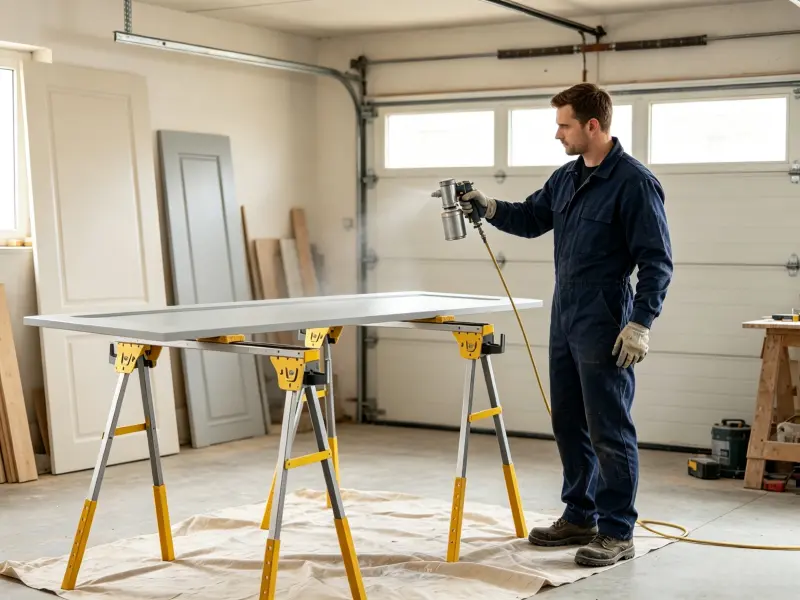
Painting applications have a different priority from cutting.
The user may need to support doors, panels, trim, boards, or other components while maintaining access to different surfaces. The working process can involve repeated repositioning rather than high-impact cutting operations.
A sawhorse for painting should therefore be considered in terms of accessibility, stability, working height, and mobility.
1.Supporting Components at a Practical Working Height
When a panel or door is placed too close to the floor, the user may need to bend repeatedly. A suitable support system can raise the workpiece to a more practical working position.
The exact working height should still be matched to the user’s task and the dimensions of the material being handled.
For professional painters, workshop operators, and contractors, the ability to move the support between different areas can also be valuable.
2.Surface Protection Matters
Painting also creates a different concern: contact between the support and the finished workpiece.
The support surface should be considered according to the material being painted and the finishing process being used. Users may need protective layers or appropriate setup methods depending on the coating system and workpiece.
This is another reason why product selection should be based on the entire workflow rather than simply searching for the highest load rating.
Sawhorse for General Work: Balance Portability and Versatility
Not every user has one specific application.
In professional workshops, maintenance environments, garages, and jobsite operations, the same support equipment may be used for cutting, assembly, temporary material support, repair work, or other tasks.
For these users, a sawhorse for work should provide a useful balance between strength, portability, storage, and adaptability.
1.When a Folding Design Makes More Sense
A permanent support structure may make sense in a dedicated production area. However, many professional users work in environments where floor space has to serve multiple purposes.
A folding sawhorse can be opened when required and stored afterward.
This makes it suitable for:
- Mobile workshops
- Construction crews
- Maintenance teams
- Garage workshops
- Contractors
- Temporary workstations
- Material preparation areas
The key benefit is not simply that the product folds. It is that folding changes how the product fits into the user’s workflow.
Woodworking Sawhorse vs. Construction Sawhorse: What Should Buyers Prioritize?
Although a woodworking sawhorse and a construction sawhorse may look similar, the purchasing priorities can be different.
What Specifications Should B2B Buyers Check Before Ordering?
For distributors, importers, and professional procurement teams, product selection does not end with application suitability.
A product also needs to work commercially.
Before placing an order, buyers should check at least the following specifications.
| Requirement | Woodworking | Construction |
|---|---|---|
| Material support | Very important | Very important |
| Stability | High priority | High priority |
| Repeated transport | Moderate to high | Very high |
| Folding/storage | Important | Very important |
| Load capacity | Important | Very important |
| Weight of the product | Important | Important |
| Jobsite adaptability | Moderate | High |
| Product customization | Important for distributors | Important for distributors |
This does not mean that one product must be designed exclusively for one industry.
A well-designed folding support can serve several markets when its structural specifications and product positioning are clear.
For B2B buyers, the more important question is whether one model can cover several customer segments without creating unnecessary product complexity.
That can make a versatile product easier to distribute.
1.Load Capacity
Confirm whether the manufacturer’s stated capacity applies to one unit or a pair.
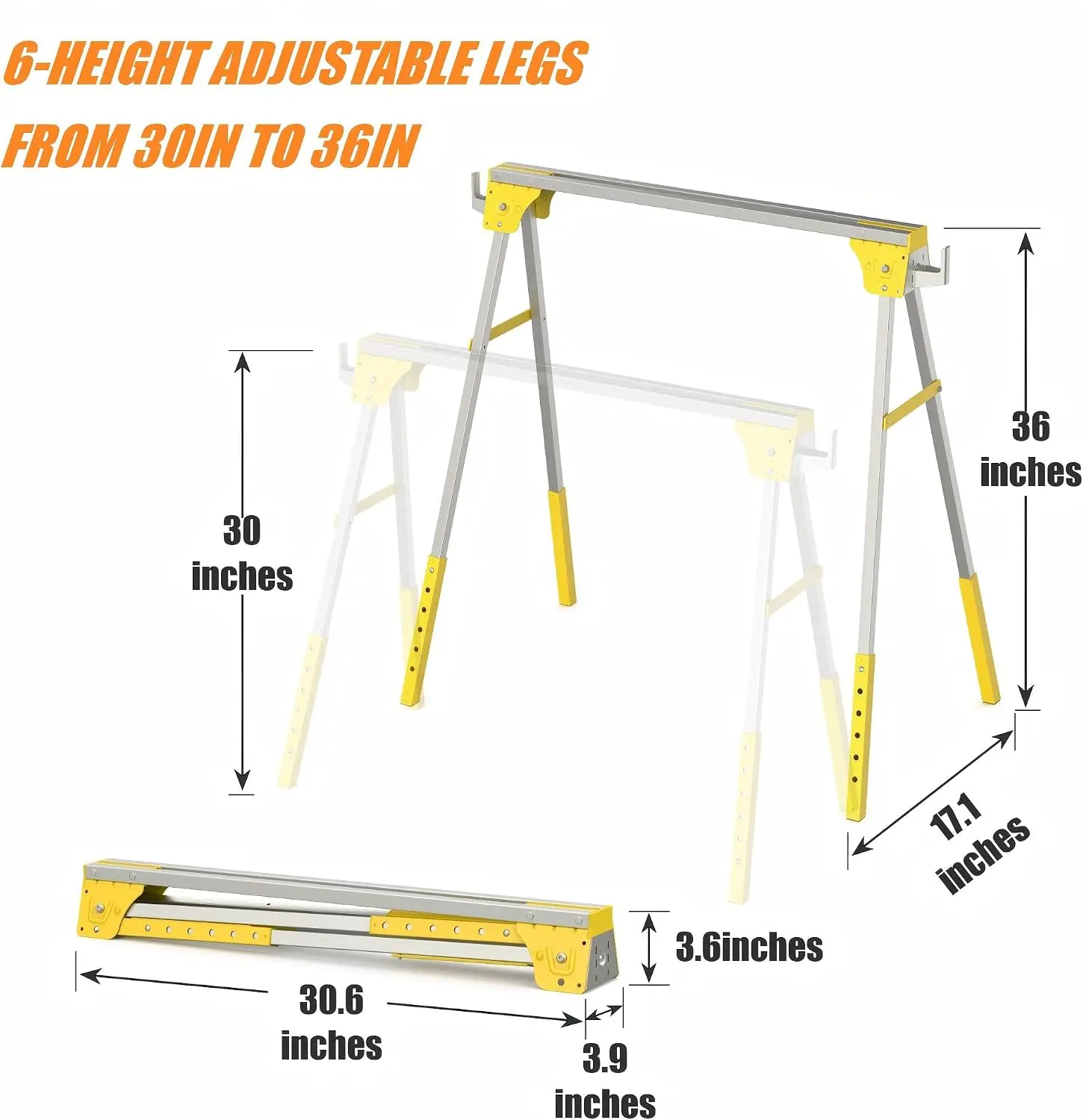
Our folding sawhorse is specified at 2,650 lbs per pair, which should be clearly communicated in product listings and sales materials to avoid misunderstandings.
2.Product Weight
A lighter product can be easier to handle and transport, but reducing weight should not come at the expense of the intended structural performance.
Our model weighs approximately 4.5 kg, providing a practical balance for users who need to move and store the equipment regularly.
3.Materials
Material selection influences structural performance, durability, product weight, and manufacturing cost.
The combination of metal + PP + TPR provides a differentiated material configuration for buyers looking for a folding support that combines a metal structure with polymer components.
4.Folded Dimensions
Folded size is especially important for distributors serving contractors and mobile users.
Our product folds to approximately 78 × 10.7 × 9.7 cm, making storage and transportation easier than a permanently assembled support.
For importers, folded dimensions can also influence carton planning, warehouse utilization, and shipping efficiency.
Why Product Consistency Matters to Distributors and Importers
For a professional buyer, choosing a sawhorse is not only about whether the first shipment meets expectations.
The bigger question is whether the supplier can continue delivering consistent products.
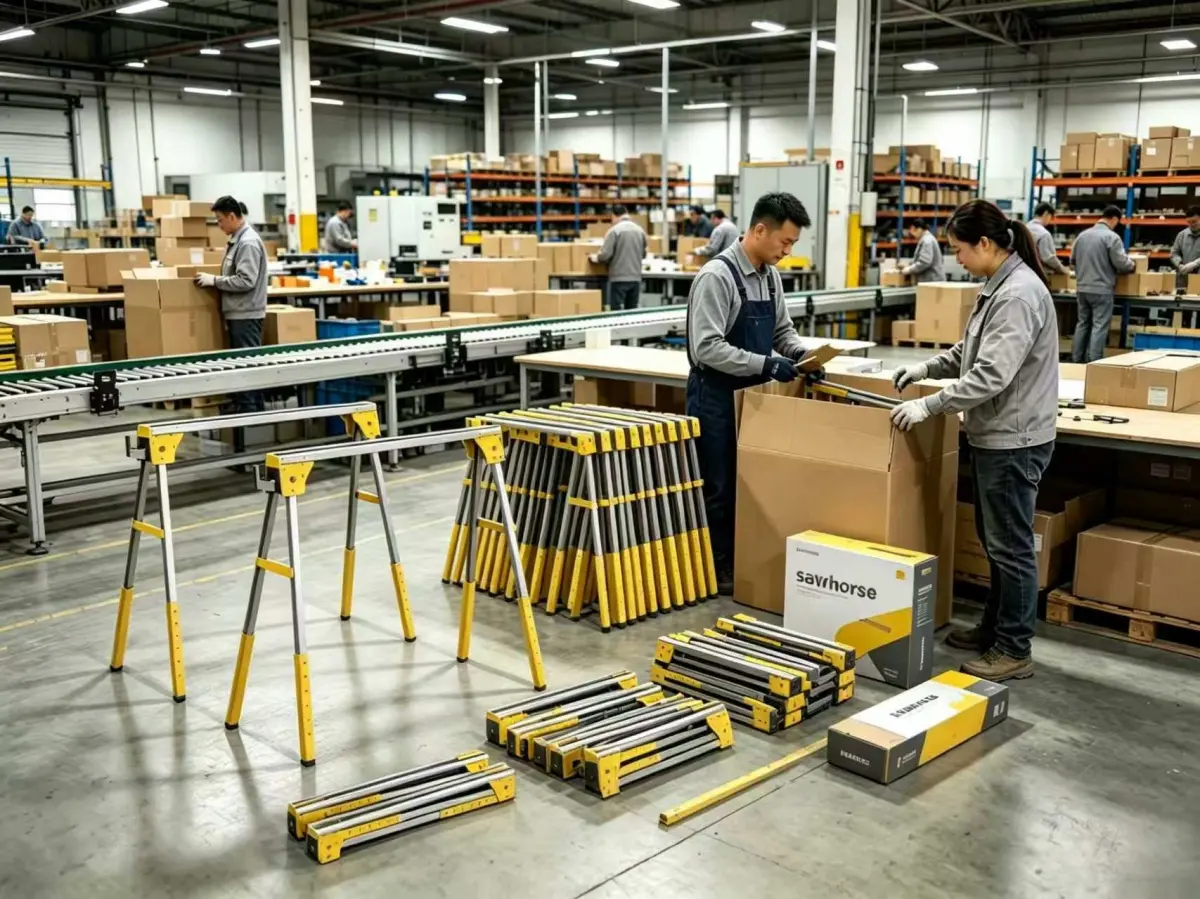
A distributor may need the same specifications, colors, packaging, labeling, and performance across multiple purchase orders. Inconsistent production can create customer complaints even when the original product was satisfactory.
This is where factory capability becomes part of the product decision.
At Jingyan Tools, our manufacturing background allows us to support B2B customers looking for stable supply rather than one-time retail purchases.
For customers developing their own product range, we can support OEM and ODM projects, including customized branding and product requirements.
This is particularly relevant for distributors that want to establish a private-label sawhorse line instead of competing only with generic products.
When OEM and ODM Support Becomes Important
Not every buyer needs customization.
If a distributor is purchasing an existing product for immediate resale, standard specifications may be sufficient.
However, OEM and ODM become more valuable when the buyer wants to create differentiation.
Examples include:
- Private-label branding
- Customized colors
- Retail packaging
- Market-specific product positioning
- Product combinations for a wider tool range
- Adjustments for specific distribution channels
A manufacturer that understands both product specifications and production requirements can make the development process more straightforward.
For B2B buyers, this can reduce the need to coordinate separately with a product designer, sourcing company, and factory.
Choosing the Right Sawhorse Based on Your Customer's Workload
If you are purchasing sawhorses for distribution, the best model is not necessarily the one with the longest feature list.
Instead, match the product to the customer groups you actually serve.
For woodworking customers, emphasize material support, stability, portability, and workshop storage.
For construction customers, emphasize repeated setup, load capacity, folding convenience, and jobsite mobility.
For contractors and painters, focus more on repositioning, working height, accessibility, and compact storage.
For general workshop users, emphasize versatility and the ability to use the same product across different tasks.
This approach can also help distributors build clearer product categories instead of presenting every model with the same marketing message.
How to Evaluate a Folding Sawhorse Supplier
Once the product itself meets the application requirements, evaluate the supplier.
A reliable B2B supplier should be able to provide clear product specifications, consistent manufacturing, customization options, quality documentation where applicable, and realistic production lead times.
Jingyan Tools is a China-based tools manufacturer serving international B2B customers. Our product range includes work support equipment and other tools designed for professional and commercial markets.
For buyers building a broader product portfolio, a supplier capable of supporting multiple complementary categories can also simplify sourcing.
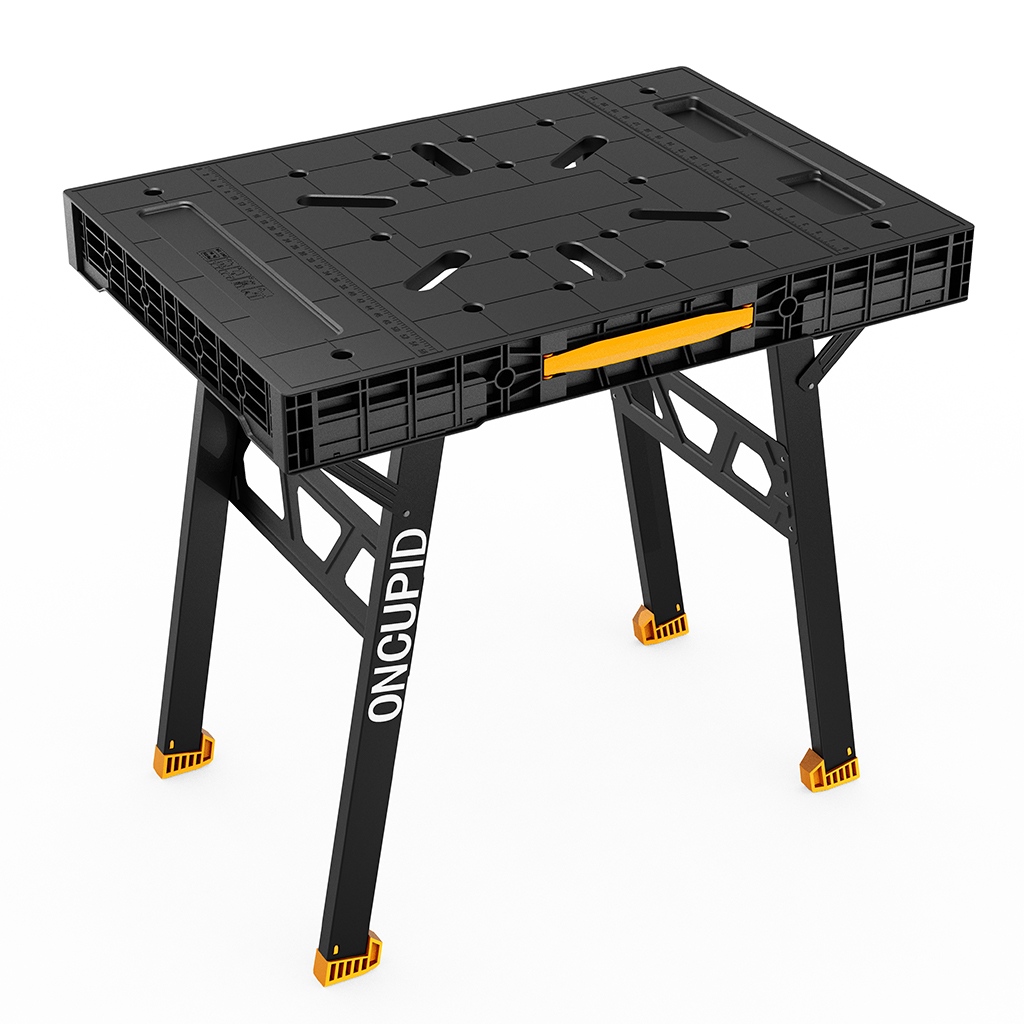
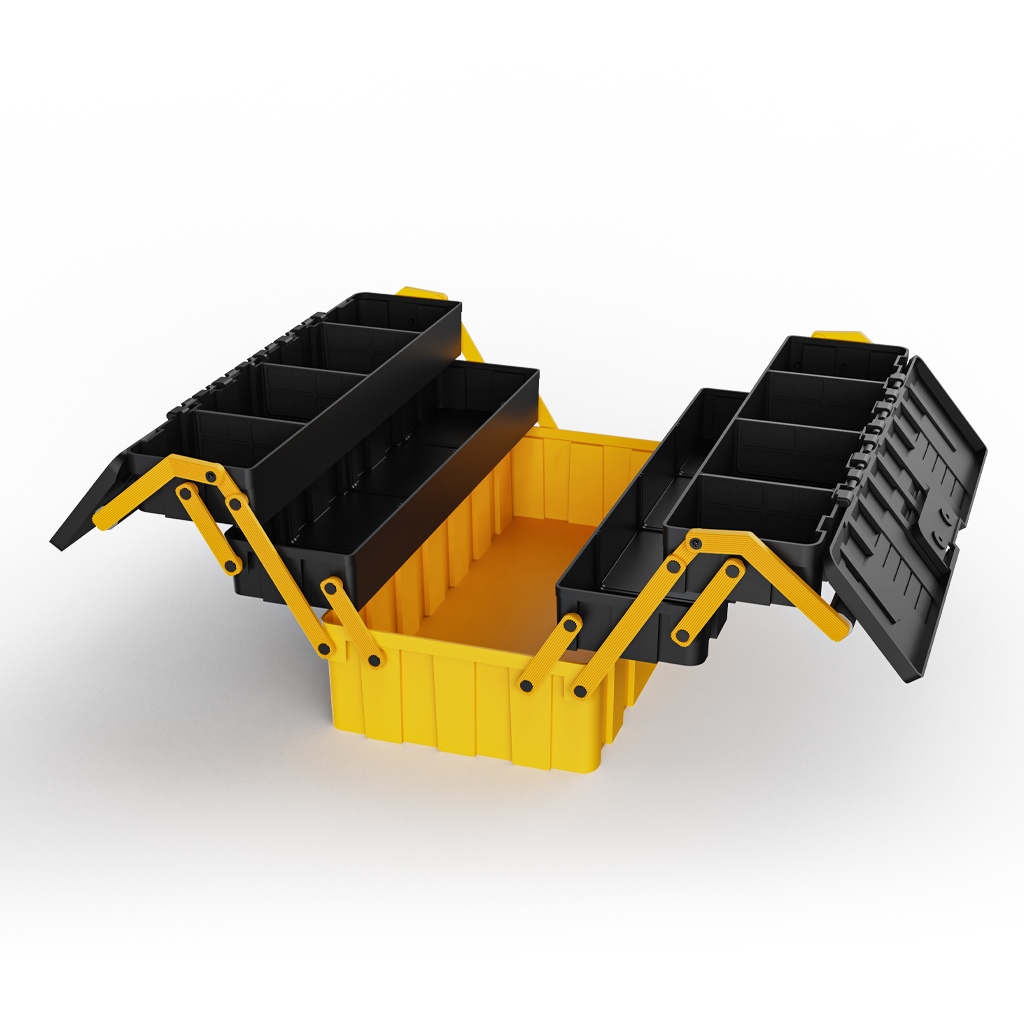
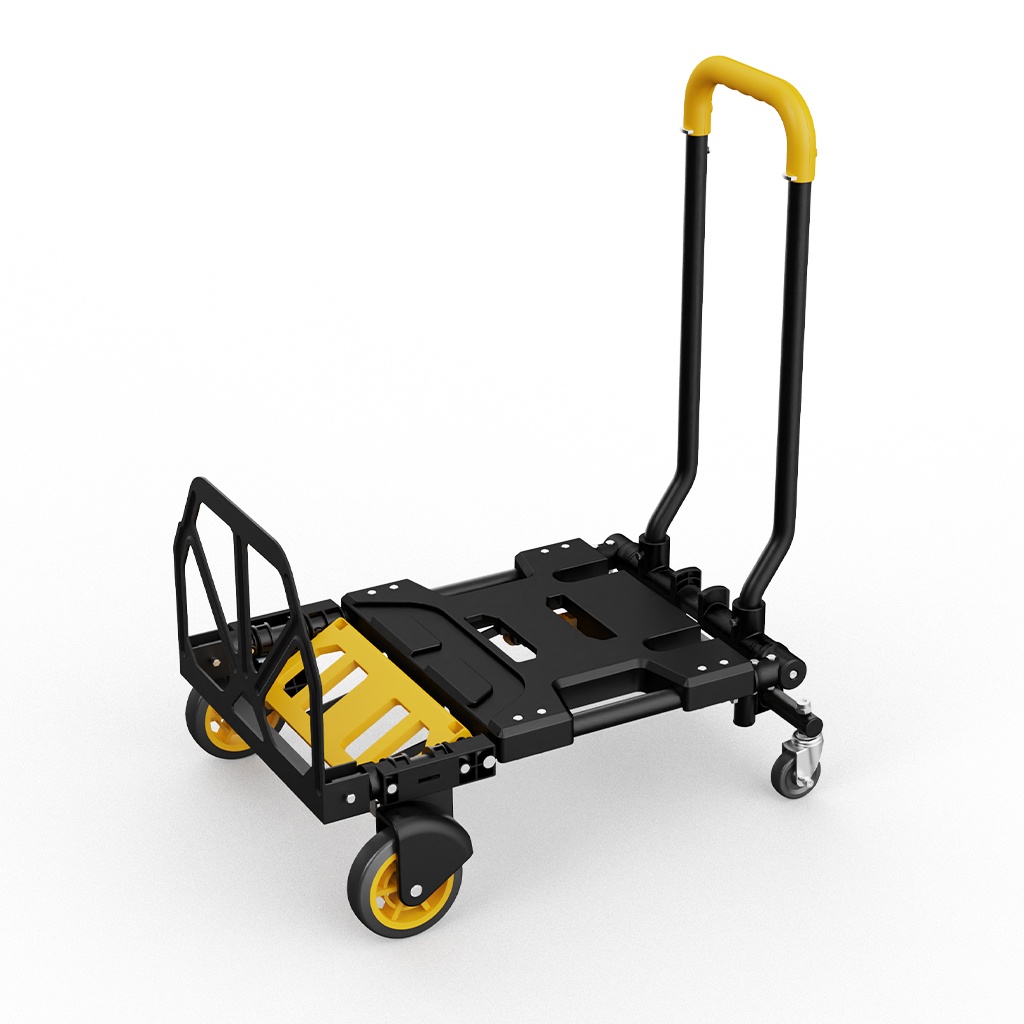
For example, customers purchasing work supports may also require portable workbenches, tool storage products, or material-handling equipment for their own customers.
This creates an opportunity to develop a broader sourcing relationship instead of treating every product as an isolated purchase.
FAQ: Choosing a Sawhorse for Different Workloads
1.What is the best sawhorse for woodworking?
The best choice depends on the material and working process. For woodworking, prioritize stability, material support, suitable working height, portability, and compatibility with long boards or panels.
2.What should I look for in a sawhorse for construction?
Construction users should consider load capacity, structural stability, folding performance, product weight, durability, and ease of transportation between work areas.
3.Is a folding sawhorse suitable for professional use?
Yes, a folding design can be suitable for professional applications when its construction and load rating match the intended workload. Folding capability can also make transportation and storage easier for contractors and mobile work teams.
4.How much weight can your folding sawhorse hold?
Our folding sawhorse has a rated load capacity of 2,650 lbs per pair. Users should always follow the manufacturer’s instructions and applicable safety requirements when determining the appropriate working load.
5.What material is the sawhorse made from?
Our folding sawhorse uses Metal + PP + TPR construction, combining a metal structural component with polymer materials.
6.Can distributors order customized sawhorses?
Yes. Jingyan Tools supports B2B customers with OEM and ODM services, allowing suitable customization options to be discussed according to the project requirements.
Final Takeaway: Match the Sawhorse to the Work, Not Just the Number
Choosing the right sawhorse starts with understanding how the product will actually be used.
A woodworking application may place greater emphasis on stable material support and workshop storage. Construction work can require repeated setup, transportation, and dependable load performance. Cutting applications benefit from practical support arrangements for long materials, while painting tasks can prioritize access and repositioning.
For general professional work, a folding design can provide a useful combination of portability, storage efficiency, and versatility.
For B2B buyers, however, the decision goes one step further. Product specifications, material construction, folded dimensions, manufacturing consistency, customization capabilities, and supplier reliability all influence whether a sawhorse can become a successful product in a distributor’s range.
With a 2,650 lb per-pair load capacity, Metal + PP + TPR construction, approximately 4.5 kg product weight, and compact folded dimensions, Jingyan Tools’ folding sawhorse is designed to serve a range of professional working environments while remaining practical to transport and store.
If you are sourcing sawhorses for woodworking, construction, contractors, workshops, or other professional markets, the next step is to compare your required workload, specifications, packaging, and customization needs with the available production solution.
Contact Jingyan Tools to discuss your folding sawhorse sourcing, OEM, or ODM requirements.
Related products