Portable Hand Truck: How Compact Storage Can Improve Product Positioning
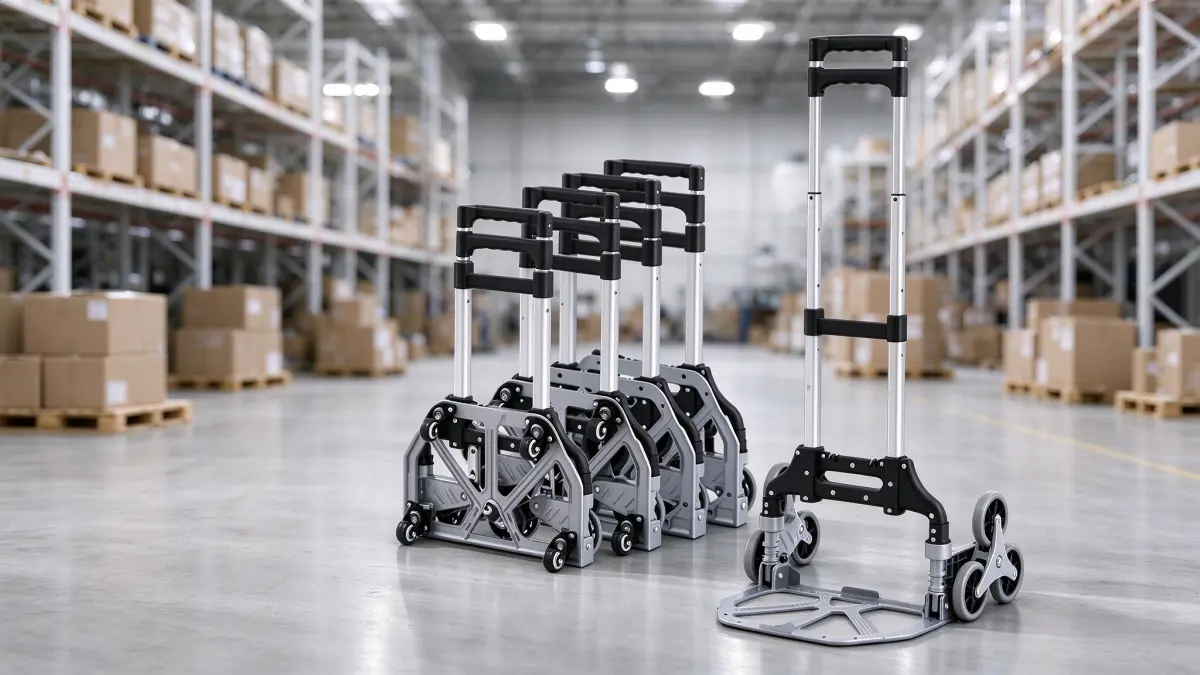
When buyers search for a portable hand truck, they may initially think about one simple characteristic: how easy the product is to carry and move.
For a consumer, that may be enough.
For a retailer, distributor, wholesaler, or private-label buyer, it is not.
A B2B buyer also has to think about what happens when the hand truck is not being used. Where will it be stored? How much space will it occupy? How will it be packaged? Can the SKU fit into an existing product range? Will the product be easy to present as a clearly differentiated item?
This is where compact storage can become part of product positioning.
A foldable design is not automatically a strong market proposition simply because the product folds. The commercial value comes from what the folding structure changes. A product that moves from a larger working configuration to a slimmer stored configuration can offer a more specific story around space efficiency, product assortment, packaging, storage planning, and channel fit.
For B2B buyers, this leads to a more useful question:
Can the compact storage characteristics of a portable hand truck make the product easier to position in a target market?
The answer depends on the product design and the channel, but the relationship is worth examining closely.
- Why Portability Should Be Treated as a Product Positioning Issue
- How Compact Storage Can Strengthen Portable Hand Truck Positioning
- Why Folded Dimensions Matter to B2B Buyers
- How Compact Storage Can Influence Different Sales Channels
- Portable Hand Truck, Portable Hand Cart, or Portable Dolly Cart?
- Compact Storage Can Affect Packaging and Merchandising
- What the Product Design Needs to Support
- A Practical Product Positioning Framework for Portable Hand Trucks
- Real Product Example: 3.69 kg Foldable Hand Truck
- Why the Manufacturer Matters to the Product Positioning Strategy
- Common Product Positioning Mistakes
- How Retailers and Distributors Can Use This Positioning
- FAQ: Portable Hand Truck Product Positioning
- Final Takeaway: Compact Storage Can Give Portability a Stronger Commercial Meaning
Why Portability Should Be Treated as a Product Positioning Issue
“Portable” is a useful product description, but by itself it is too broad to create a strong commercial position.
A portable hand truck may be lighter than a larger fixed model. It may also be easier to move between locations. But those characteristics describe the product in operation. They do not necessarily explain why a distributor should add the product to its portfolio or why a retailer should allocate inventory space to it.
A stronger product position connects a physical feature with a business consequence.
For example:
Foldable design is a feature.
Compact storage for space-conscious product programs is a positioning idea.
The difference is important.
B2B buyers do not simply purchase physical products. They purchase products that have to fit into a larger commercial system. That system may include warehousing, packaging, transportation, merchandising, assortment planning, and customer expectations.
A portable hand truck therefore becomes more commercially distinctive when portability is explained through more than weight.
The positioning can be built around:
- how the product handles when open;
- how much space it occupies when folded;
- how easily it can be stored;
- how it can be packaged;
- how it fits into a retailer or distributor’s assortment.
The central idea is simple:
Portability becomes more commercially useful when the product remains manageable after the handling task is finished.
That is where compact storage adds another layer of value.
1.Lightweight and Compact Are Not the Same Position
A lightweight product and a compact product can overlap, but they do not communicate the same benefit.
Weight primarily describes physical handling.
Folded dimensions primarily describe physical storage.
Those two characteristics may support each other, but they answer different buyer questions.
A purchasing manager may ask:
“Can one person move the product easily?”
That points toward weight.
Another buyer may ask:
“Where will we keep several units between sales or deliveries?”
That points toward folded dimensions.
A third buyer may ask:
“Can the product be packaged and distributed without creating an oversized SKU?”
That brings both physical design and packaging into the discussion.
For this reason, a portable hand truck should not be positioned only as a lightweight product unless lightweight design is genuinely the central commercial proposition.
When compact storage is also meaningful, the market message can become much more specific.
How Compact Storage Can Strengthen Portable Hand Truck Positioning
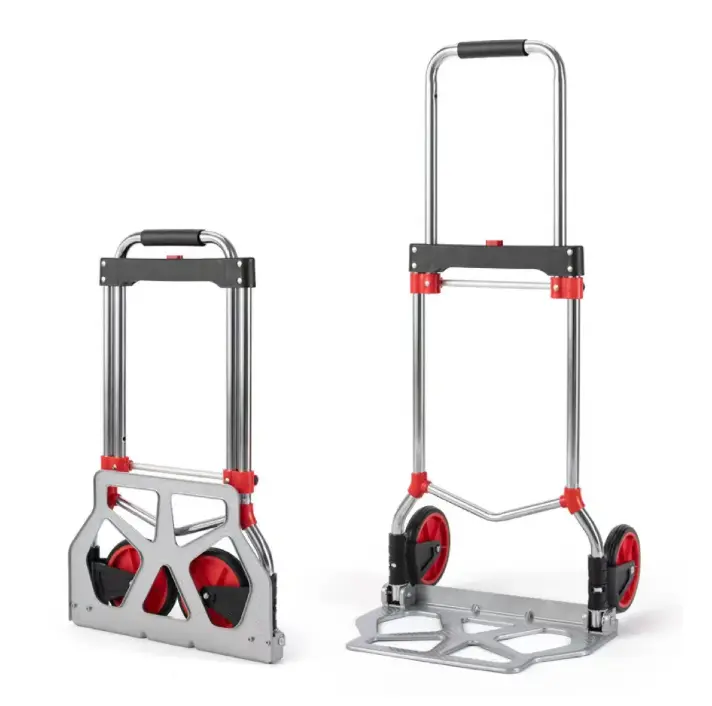
Compact storage matters because it gives the product another dimension of differentiation.
The product still needs to perform its primary handling function, but its stored configuration can affect how a buyer thinks about the SKU.
1. It Gives the Product a Clearer Space-Efficiency Story
Storage space has a cost, whether the space is a warehouse shelf, retail stockroom, vehicle compartment, or service area.
A fixed hand truck uses essentially the same physical footprint during operation and storage.
A foldable model creates two states:
working state and stored state.
That difference can become part of the product story.
Instead of simply saying that the hand truck is portable, a supplier can explain that the product is designed to offer a practical operating configuration while reducing its footprint when stored.
That is a more concrete value proposition.
For a distributor, the message may be:
A handling product that is easier to accommodate in a space-conscious assortment.
For a retailer:
A product that can be managed more flexibly between display and backroom storage.
For a wholesaler:
A compact SKU that remains easier to handle through inventory cycles.
The product feature remains the same. The commercial meaning becomes clearer.
2. It Helps Separate the Product From Larger Fixed Designs
table hand truck that folds to a slimmer configuration can be positioned differently from a fixed-frame product that always occupies its full operating footprint.
This does not mean the foldable model is automatically better for every customer.
Instead, it means the buyer can understand what type of problem the product is designed to address.
That is important for assortment planning.
A distributor may already carry larger handling equipment for customers who prioritize maximum structural capacity.
A compact portable model can occupy a different position within the range by emphasizing portability and manageable storage.
The goal is not to replace every other hand truck.
The goal is to give the buyer a reason for the SKU to exist.
3. It Creates a More Useful Commercial Story Than “Small Size”
Simply saying that a product is small does not create strong positioning.
A much more useful approach is to explain the relationship between size and function.
A portable hand truck can be:
full-size enough to perform its intended handling task, yet compact enough to store more efficiently when idle.
That is a clearer product story because it describes the transition between two states.
For B2B buyers, the transition itself can be commercially meaningful.
Why Folded Dimensions Matter to B2B Buyers
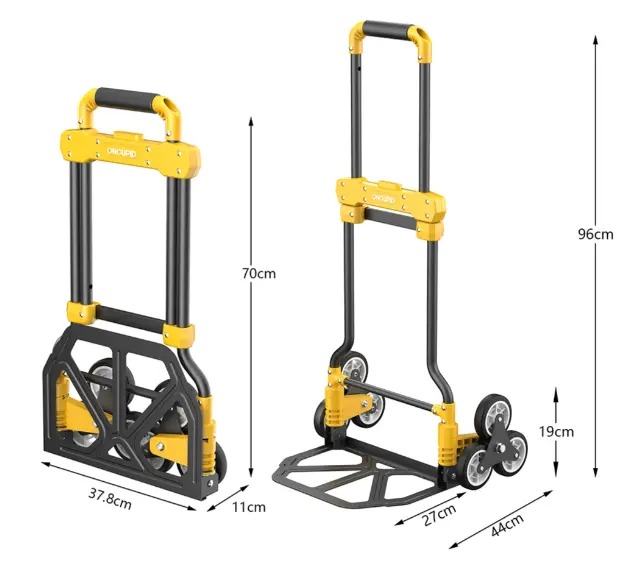
Folded dimensions are often treated as a specification at the bottom of a product page.
For a portable hand truck, they deserve more attention.
Open dimensions tell the buyer what the product looks like when it is being used.
Folded dimensions tell the buyer what the product looks like after the task is finished.
That second state has commercial consequences.
A buyer may need to estimate whether units can fit into existing storage areas, whether cartons can be arranged efficiently, or whether the product can remain in a vehicle without taking up unnecessary room.
This does not mean folded dimensions alone determine logistics cost. Packaging, carton dimensions, packing quantity, freight method, and delivery destination still matter.
But folded dimensions create a starting point for those calculations.
1.From Product Specification to Commercial Meaning
Consider a simple example:
Open dimensions: 37.8 × 27 × 96 cm
Folded dimensions: 37.8 × 10 × 70 cm
The numbers themselves are not the marketing argument.
The important point is that the product changes substantially between its operating state and stored state.
That allows the buyer to think about the product in two ways:
How does it work?
and
How does it fit into my storage environment?
This is exactly the type of transition that makes a specification commercially useful.
Instead of putting folded dimensions into a table and leaving them unexplained, a B2B product page or catalog can connect the numbers to storage planning.
That improves understanding without making an exaggerated claim.
How Compact Storage Can Influence Different Sales Channels
The same portable hand truck can be positioned differently depending on who purchases it.
The product does not necessarily need to change. The emphasis changes.
1.Retailers: Position Around Assortment and Storage Flexibility
Retailers often need to balance product variety with limited physical space.
For that reason, compact storage can become part of the SKU’s retail story.
The message is not simply:
“Customers can fold this product.”
The stronger message is:
The product has a smaller stored footprint that can be easier to accommodate within a space-conscious assortment.
This can influence how the product is presented in catalogs, online listings, merchandising plans, and internal purchasing discussions.
A retailer may also use folded-state photography to make the storage benefit easier for customers to understand.
The result is a clearer product proposition without having to rely on a generic “portable” label.
2.Distributors: Position Around Portfolio Differentiation
Distributors often need product lines that cover different price points and product priorities.
A compact portable hand truck can occupy a specific position between large fixed handling equipment and ultra-minimal lightweight products.
Its differentiation can be based on the combination of:
practical handling + foldable structure + compact storage
That gives the sales team another way to explain the SKU.
Instead of competing only on load capacity or price, the distributor can communicate a different product attribute that matters to certain customers.
3.Wholesalers and Importers: Position Around Product Manageability
For wholesalers and importers, product positioning is closely connected to physical manageability across the supply chain.
A portable hand truck may have to move through several stages:
manufacturer → export packaging → inbound logistics → warehouse → distribution → retail or business customer.
A product with a clearly defined folded state gives the buyer useful information throughout this process.
Again, this is not a guarantee of lower freight cost.
It simply means the product has a more manageable physical proposition that can be considered during supply-chain planning.
That distinction is more accurate and more useful than promising a fixed logistics saving without actual carton data.
Portable Hand Truck, Portable Hand Cart, or Portable Dolly Cart?
The terms portable hand truck, portable hand cart, and portable dolly cart can overlap in commercial search behavior.
However, they should not be treated as three completely different products just for SEO purposes.
A product page needs one consistent product definition.
The main keyword for this article is portable hand truck because that is the primary product concept.
Related phrases such as portable hand cart and portable dolly cart can appear naturally where they describe the same general product category.
This helps create broader semantic relevance without turning the article into a keyword list.
More importantly, the terminology should support the product positioning instead of replacing it.
The question is not:
“How many related phrases can we add?”
The better question is:
“What physical and commercial characteristic makes this portable product distinct?”
In this article, that characteristic is compact storage.
Compact Storage Can Affect Packaging and Merchandising
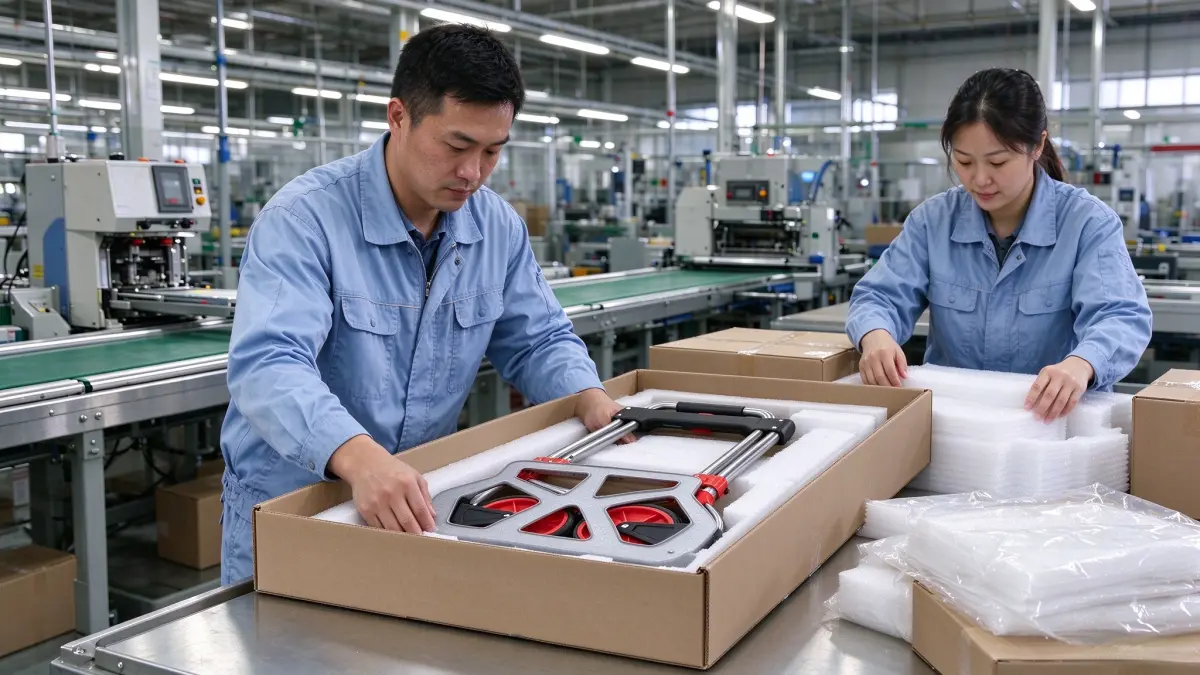
The value of a compact portable hand truck does not stop at the product itself.
The folded configuration can also influence packaging discussions.
A product that changes shape for storage gives a manufacturer and buyer more flexibility when reviewing how the item should be packed, displayed, and transported.
1.Packaging Opportunities for B2B Product Programs
Packaging requirements vary by market and sales channel.
A retailer may need a retail-ready presentation.
A distributor may prioritize efficient master-carton packing.
A private-label brand may require specific branding, graphics, or product communication.
The foldable structure can therefore become part of the packaging conversation.
The important point is not to promise a particular carton reduction unless it has been calculated.
Instead, the product can be presented as having a compact stored configuration that can be considered when developing the final packaging system.
That is a fact-based positioning approach.
2.Folded-State Images Can Make the Positioning Easier to Understand
Product positioning becomes much stronger when the visual content proves the claim.
For a portable hand truck, the most useful sequence is not seven nearly identical product shots.
A better sequence is:
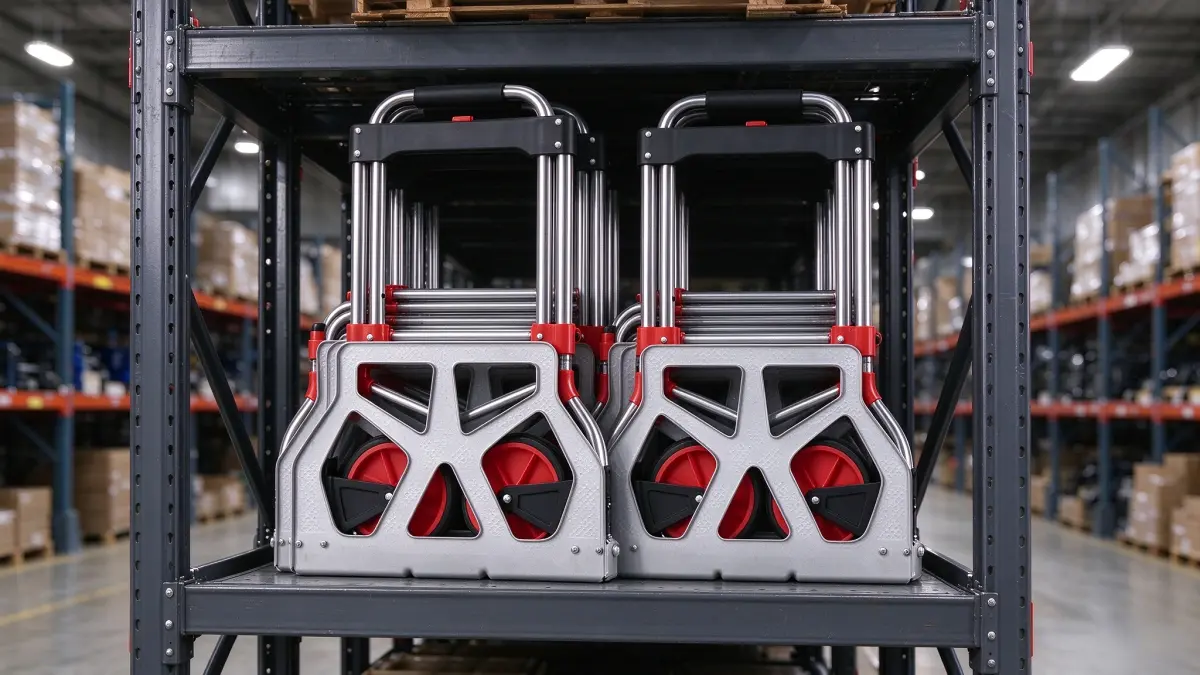
Open → folding action → folded → open/folded comparison → storage context
This visual flow lets the buyer understand the product transformation immediately.
A simple comparison image can often explain the concept more effectively than a paragraph of text:
Working footprint vs. stored footprint
That is particularly useful in B2B catalogs, distributor presentations, product listings, and trade-show materials.
What the Product Design Needs to Support
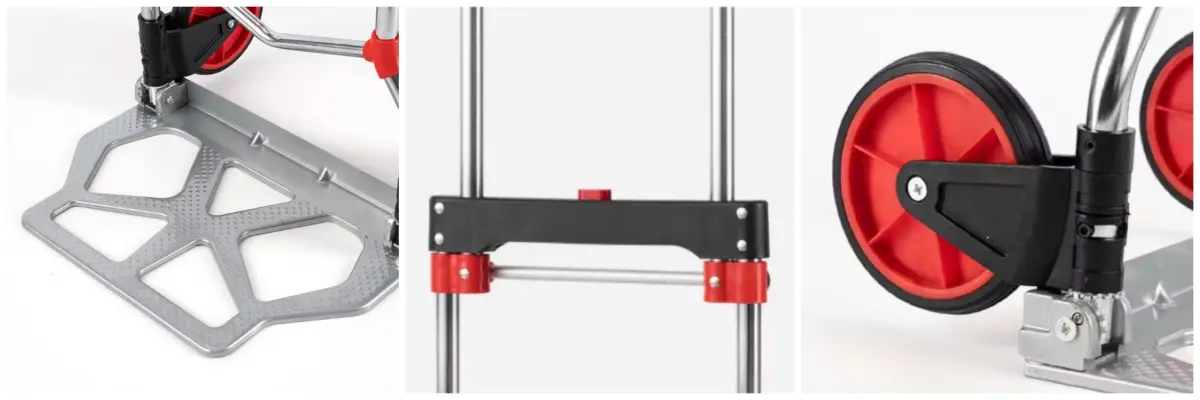
Marketing cannot create a strong compact-storage position if the physical design does not support it.
The folding structure has to create a meaningful change in stored size while remaining appropriate for the intended operating requirements.
For buyers evaluating a portable hand truck, several design relationships are relevant.
First, the frame must provide the required support in the operating configuration.
Second, the folding system must allow the product to move into its stored state without undermining the intended user experience.
Third, the final folded form needs to create a storage benefit that is meaningful enough to communicate.
This is why compactness should be treated as a design objective rather than just a marketing adjective.
A product should not be called compact simply because it folds.
The folded state should be considered in relation to the open state.
That makes the positioning more defensible.
A Practical Product Positioning Framework for Portable Hand Trucks
For B2B buyers, one useful way to structure the product story is:
Product → Feature → Physical Benefit → Commercial Value
For example:
Portable hand truck → folding structure → compact stored footprint → easier storage and assortment planning
This framework can then be adapted to different channels.
For a retailer:
Portable hand truck → foldable design → reduced stored footprint → easier stockroom and assortment planning
For a distributor:
Portable hand truck → compact folding structure → manageable storage → clearer SKU differentiation
For a private-label brand:
Portable hand truck → compact product architecture → packaging flexibility → stronger product positioning
Notice that none of these versions require exaggerated claims.
The positioning comes from connecting a real physical characteristic with a relevant commercial consideration.
That is a useful principle for B2B product marketing in general.
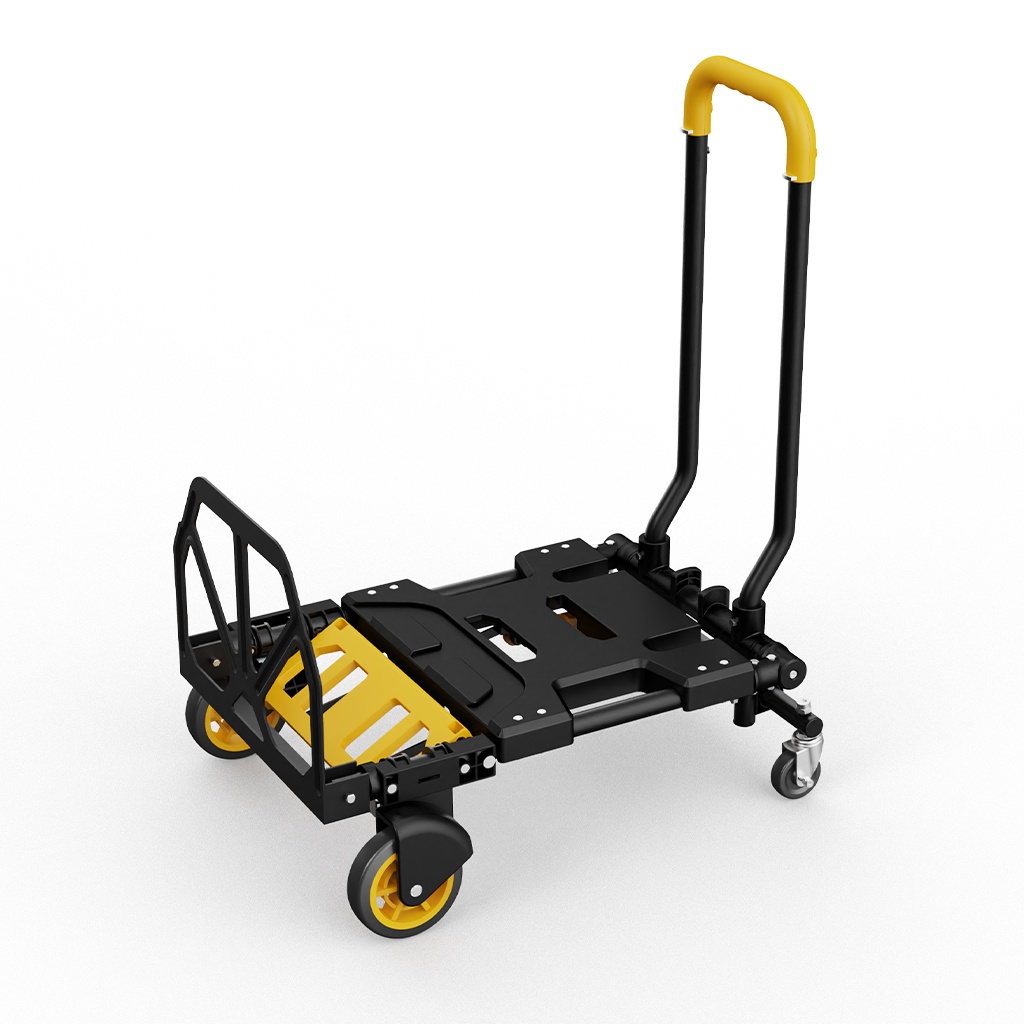
Real Product Example: 3.69 kg Foldable Hand Truck
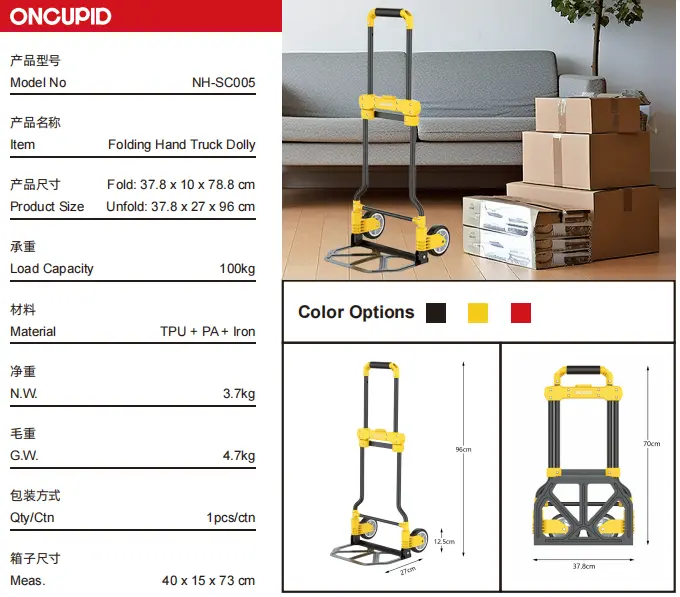
A real specification set makes the positioning framework easier to understand.
The Foldable Hand Truck and Dolly discussed in this article has the following specifications:
| Specification | Product Detail |
|---|---|
| Material | TPU + PA + Iron |
| Color | Yellow |
| Open Dimensions | 37.8 × 27 × 96 cm |
| Folded Dimensions | 37.8 × 10 × 70 cm |
| Product Weight | 3.69 kg |
| Load Capacity | 100 kg |
For this article, the most relevant relationship is not the product weight by itself.
It is the combination of product weight, open dimensions, and folded dimensions.
At 3.69 kg, the unit has a relatively manageable physical weight.
At the same time, the product changes from 37.8 × 27 × 96 cm open to 37.8 × 10 × 70 cm folded.
That gives the buyer a clear example of how a product can have a practical operating state and a different storage state.
The 100 kg stated load capacity is also useful because it provides context for the product’s intended performance range.
But the product should not be marketed by claiming that these numbers make it universally superior to every competitor.
Instead, the data should be used to explain what kind of product proposition this particular design creates.
For a buyer building a retail or distribution assortment, that may be precisely what matters.
Why the Manufacturer Matters to the Product Positioning Strategy
Product positioning is easy to describe on a webpage.
It is much harder to maintain when the product moves from sample stage to commercial production.
For a portable hand truck, the design may include molded components, metal structural parts, wheels, folding joints, and packaging considerations.
If a buyer wants to customize the product, these elements may also need to remain consistent after changes to color, branding, packaging, or structure.
That is where manufacturing capability becomes part of the sourcing decision.
According to Jingyan Tools’ current company information, Ningbo Jingyan Tool Industrial Co., Ltd. was founded in 2003 and operates a 16,000㎡ self-owned production base with more than 140 professionals and more than 50 sets of production equipment. The company states that its manufacturing functions include R&D, mold design, production, quality control, and customer service, and that it provides OEM/ODM services.
For a buyer developing a portable hand truck program, that matters because the project may eventually involve more than purchasing an existing SKU.
The buyer may need to discuss:
- product color;
- branding;
- packaging;
- engineering changes;
- tooling;
- sample development;
- production consistency;
- bulk orders.
The better commercial question is therefore not simply:
“Can the supplier make this hand truck?”
It is:
“Can the supplier support the product positioning from sample development through repeat production?”
That is particularly important for retailers and distributors building a long-term product line.
Common Product Positioning Mistakes
Mistake 1: Making “Portable” the Entire Message
Portable describes one aspect of the product.
It does not explain what differentiates the SKU commercially.
A stronger approach is to connect portability with a concrete physical characteristic such as compact storage.
Mistake 2: Showing Folded Dimensions Without Explaining Them
A specification table may say:
37.8 × 10 × 70 cm folded.
But the buyer still needs to understand why that matters.
Explain what changes in the product’s storage state and where that change may be relevant.
Mistake 3: Claiming the Product Is the Smallest Without Evidence
Avoid phrases such as:
“the world’s smallest hand truck”
or
“the most compact hand truck available”
unless there is reliable evidence to support such a market-wide statement.
A more credible statement is:
compact folded configuration
That is specific to the product and easier to verify.
Mistake 4: Turning the Article Into a Generic Hand Truck Guide
This is especially important for SEO.
A page targeting portable hand truck should not suddenly spend half the article discussing:
- stair-climbing hand trucks;
- pallet trucks;
- heavy industrial platforms;
- warehouse equipment in general;
- every possible type of trolley.
Those topics can become separate content assets.
For this article, they are distractions unless they directly explain product positioning.
Mistake 5: Using Every Related Keyword as a Separate Topic
Portable hand cart and portable dolly cart are useful semantic variants.
They do not need separate sections explaining slightly different keyword meanings.
Over-separating them can make the article look artificially SEO-driven.
The stronger approach is to keep one central product concept and one central commercial question.
How Retailers and Distributors Can Use This Positioning
Once the positioning is clear, it can be transferred into actual sales materials.
A product page can state the functional proposition.
A product catalog can summarize the commercial benefit.
A sales representative can use folded dimensions when speaking with distributors.
A private-label buyer can use the product architecture as a starting point for packaging and branding discussions.
The key is consistency.
1.Product Page Positioning
The product page should not merely say:
“Portable hand truck.”
It can communicate:
Portable handling design with compact folded storage.
Then the actual specifications provide evidence.
This is stronger than loading the opening paragraph with numerous adjectives.
2.Catalog Positioning
A catalog can reduce the idea to one short message:
Portable handling design. Compact folded storage.
Then show:
open dimensions;
folded dimensions;
weight;
load capacity;
material;
packaging options.
The buyer can understand the proposition quickly.
3.Private-Label Positioning
For a private-label brand, compact storage can become part of the product concept itself.
The brand might position the item around:
easy handling + easy storage
rather than competing only on price.
The manufacturer then needs to support the physical product, packaging, branding, and production requirements behind that message.
That is where OEM/ODM cooperation becomes more valuable than a simple catalog purchase.
FAQ: Portable Hand Truck Product Positioning
1.Why is compact storage important for a portable hand truck?
Because portability does not end when the product stops moving. The stored footprint can affect warehouse space, stockroom organization, packaging, transportation planning, and assortment decisions.
2.Is a lightweight portable hand truck automatically a compact hand truck?
No.
A product can be lightweight while still occupying considerable space when stored. Weight and folded dimensions describe different physical characteristics.
3.Should folded dimensions be shown on a B2B product page?
Yes, when the folding structure is an important part of the product design.
Showing both open and folded dimensions helps buyers understand the relationship between working size and storage size.
4.Can compact storage help differentiate a portable hand truck from larger models?
Yes.
The compact stored footprint can become part of the reason for including the SKU in a product assortment, especially where storage flexibility matters.
5.Does a compact folding design automatically lower shipping costs?
No.
Actual shipping cost depends on packaging, carton dimensions, packing quantity, freight method, destination, and other logistics variables.
Compact folding dimensions can create optimization opportunities, but those savings should be calculated from actual packaging data.
6.Can portable hand trucks be developed for private-label brands?
Depending on the supplier’s capabilities, OEM/ODM development may include colors, logos, packaging, tooling, and selected product changes.
The exact scope should be confirmed for the specific model.
7.Which specifications are most useful when positioning a portable hand truck?
The most useful starting set is:
open dimensions, folded dimensions, product weight, load capacity, material, and packaging information.
Together, these specifications give the buyer a clearer view of the product in both operating and storage states.
Final Takeaway: Compact Storage Can Give Portability a Stronger Commercial Meaning
A portable hand truck does not become commercially distinctive simply because it is easy to carry.
For B2B buyers, the more useful question is what the product’s portability changes across the complete product lifecycle.
When a hand truck folds into a more compact stored configuration, the benefit can extend beyond the user.
It can influence:
storage planning, assortment decisions, packaging discussions, merchandising, and distribution management.
That does not mean every foldable product should be positioned in exactly the same way.
The right positioning depends on the product’s actual design and the market it serves.
But the underlying principle is clear:
Portability describes movement. Compact storage explains what happens when movement stops.
For retailers and distributors, that distinction can create a more precise reason for a portable hand truck to exist within an assortment.
For wholesalers and importers, it can provide another factor to evaluate when considering product manageability.
For private-label buyers, it can become part of the product concept, packaging story, and customer-facing value proposition.
The most credible way to communicate that benefit is to show the evidence:
open dimensions, folded dimensions, product weight, load capacity, and the actual folding configuration.
Then connect those facts to the commercial environment in which the product will be sold.
That is how compact storage can improve the positioning of a portable hand truck without turning the article into a generic product guide or an oversized sales pitch.
For buyers evaluating a compact folding hand truck for a retail, wholesale, distribution, or private-label program, the next step is to compare the product specifications with the requirements of the target market and discuss customization, packaging, and bulk supply with the manufacturer.
Need a Portable Work Bench with Fast, Tool-Free Setup?
Tell us your target market, required quantity, packaging requirements, and customization needs.
Related products