OEM/ODM Toolbox RFQ: What Importers Should Specify Before Requesting a Quote
Requesting a quotation for a toolbox may seem straightforward. A buyer sends a product photo, asks for the unit price, and waits for the supplier to respond. However, this approach often produces quotations that are difficult to compare, because different manufacturers may make different assumptions about product configuration, materials, branding, packaging, order quantity, and quality requirements.
For importers, wholesalers, distributors, retailers, and private-label brands, a well-prepared toolbox RFQ (Request for Quotation) is more than a price request. It is a way to communicate the commercial and technical requirements of a purchasing project before samples, production plans, and delivery arrangements are finalized.
When contacting a custom toolbox manufacturer, buyers should provide enough information for the supplier to identify the intended product, understand the scope of customization, calculate the quotation on a consistent basis, and identify any details that require confirmation.
This article provides a practical toolbox RFQ checklist for buyers preparing an OEM or ODM sourcing project. It focuses on the information that should be included in the first inquiry, the questions that need to be resolved before production, and the details that make supplier quotations more useful for commercial decision-making.
- • Why a Toolbox RFQ Should Include More Than the Product Name
- • Define the Target Market and Purchasing Project
- • Identify the Exact Toolbox Model and Configuration
- • Specify Technical Requirements That Can Be Checked
- • Define the OEM/ODM Scope Before Asking for a Final Price
- • Specify Packaging, Labels, and Required Documents
- • Provide Order Quantity and Quotation Assumptions
- • Define Sample Approval and Quality Requirements
- • Confirm Delivery, Commercial Terms, and Responsibilities
- • A Toolbox RFQ Template Buyers Can Copy and Use
- • How to Compare Toolbox Manufacturer Quotations Fairly
- • Discussing a Toolbox RFQ with Jingyan Tools
- • Frequently Asked Questions About Toolbox RFQs
- • Conclusion: A Clear RFQ Helps Buyers Make Better Sourcing Decisions
Why a Toolbox RFQ Should Include More Than the Product Name
A product name rarely describes a complete purchasing requirement.
For example, requesting a quotation for a “plastic toolbox” does not establish the exact model, dimensions, material specification, color, accessories, logo requirements, packaging, or order quantity. Even when two suppliers appear to offer similar products, their quotations may cover different configurations.
The same problem occurs when a buyer sends only a photograph. The photograph may show the external appearance, but it cannot reliably establish the exact material grade, component details, packaging arrangement, manufacturing tolerances, or whether the pictured configuration is available for production.
A useful RFQ should help both parties answer four questions:
-
What exactly is being purchased?
-
Which requirements are fixed, and which may be customized?
-
What is included in the quoted price?
-
What must be approved before mass production begins?
These questions are particularly important for OEM and ODM projects because the price may depend on more than the standard product itself. Branding, packaging changes, tooling, sample development, inspection requirements, and order volume can all affect the final quotation.
The objective is not to create a complicated document. It is to prevent avoidable assumptions. A concise specification sheet, reference images, a quantity estimate, and a clearly written list of requirements can make the initial discussion much more productive.
Define the Target Market and Purchasing Project
Before requesting a quote, explain how the toolbox will be sold and who the intended customers are.
A manufacturer does not necessarily need a complete marketing strategy to prepare a quotation. However, the target market can help clarify relevant product, packaging, labeling, and documentation requirements.
1.Identify the customer and sales channel
Specify whether the toolbox is intended for:
-
Hardware retailers and retail chains.
-
Wholesale distributors and importers.
-
Industrial tool suppliers.
-
A private-label tool brand.
-
An existing product range that requires an additional model.
-
A new product line being developed for a particular market.
This information helps frame the project. For example, a private-label brand may need its own logo and retail packaging, while a distributor adding a standard model to an existing range may prioritize established specifications, carton information, and repeat-order consistency.
2.Explain the intended market and any applicable requirements
State the destination country or countries and identify any requirements that must be confirmed before production.
These may include product labeling, language requirements, packaging marks, requested test reports, or applicable regulatory and customer-specific requirements.
Do not simply write “must meet all European standards” or “suitable for the US market.” Those phrases may be too broad to define a verifiable scope. Identify the particular requirement or provide the buyer’s specification whenever possible.
If the applicable requirements have not yet been confirmed, mark them as items requiring discussion. The manufacturer and buyer can then establish which documents or checks are relevant to the particular product and destination.
3.State the intended commercial position
A short project description can also be useful. Is the toolbox intended as an entry-level product, a mid-range retail item, or a premium branded offering?
The answer does not automatically determine the design or price. It helps the buyer and supplier understand the commercial priorities and identify which specifications must remain unchanged.
Identify the Exact Toolbox Model and Configuration
The next step is to identify the product that the quotation should cover.
Provide a model number, product link, reference photograph, drawing, or approved sample wherever available. If the project is based on a supplier’s existing product, identify the exact configuration rather than using only a general product category.
1.Specify the standard model
Your RFQ should identify:
-
Product name and model number.
-
Number of trays or layers, where applicable.
-
Overall dimensions and relevant component dimensions.
-
Material specification, if already established.
-
Required color or color options.
-
Standard accessories and included components.
-
Any visible differences between the requested version and the reference product.
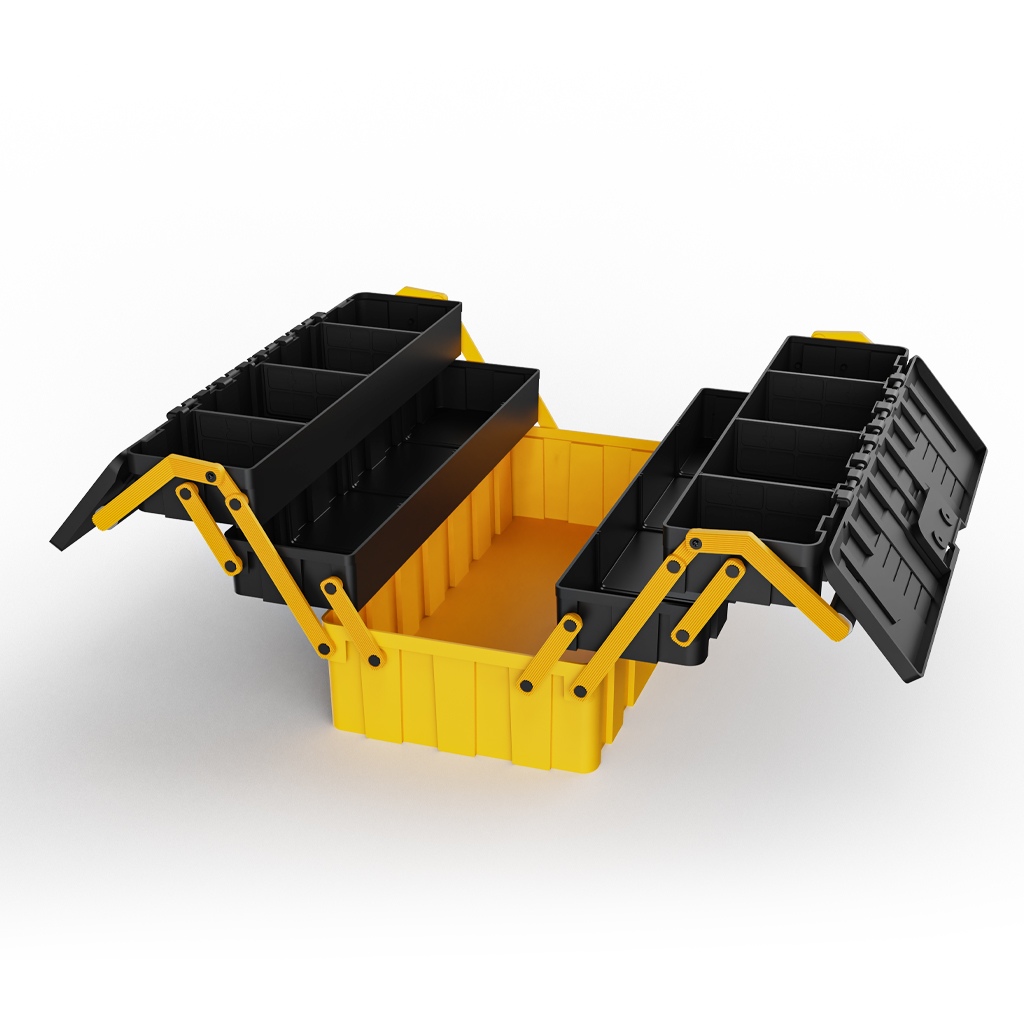
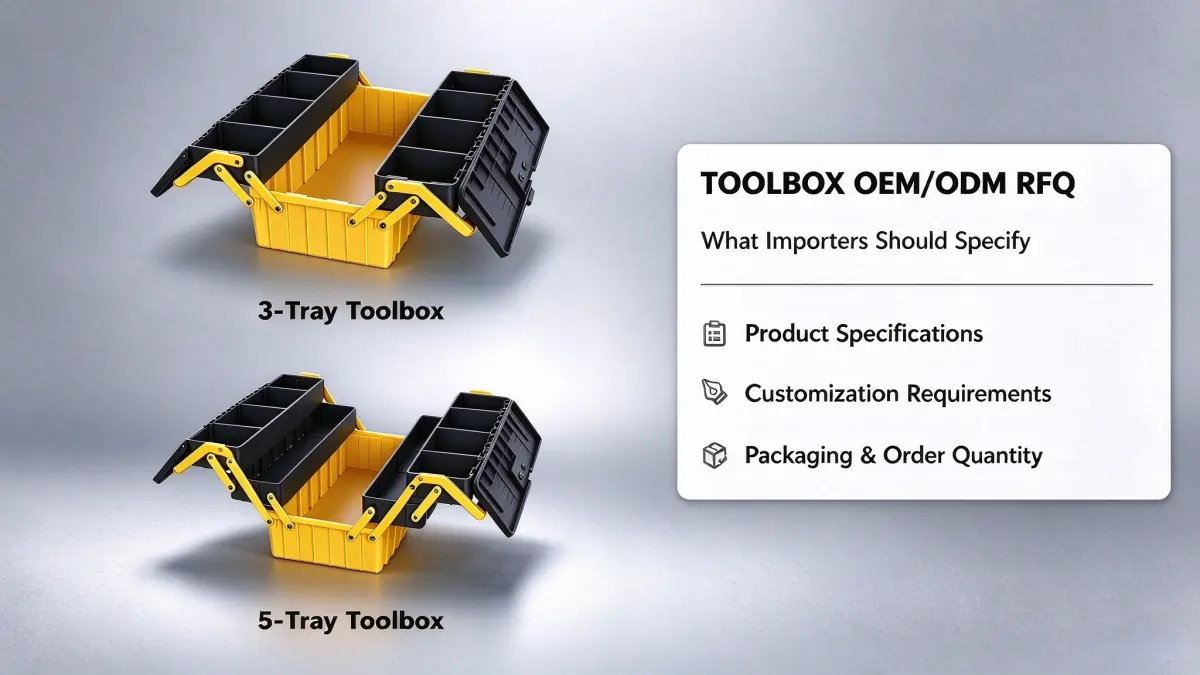
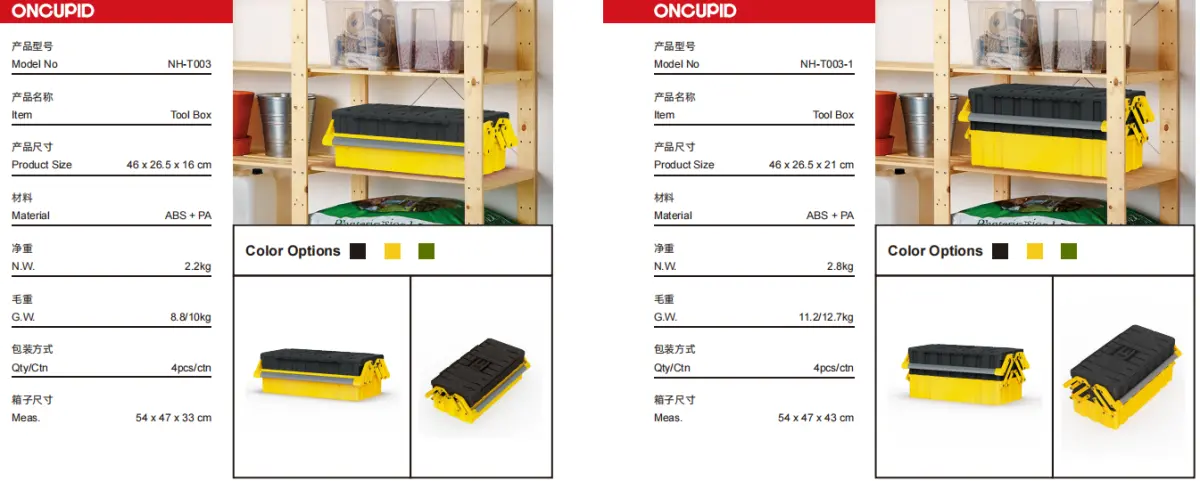
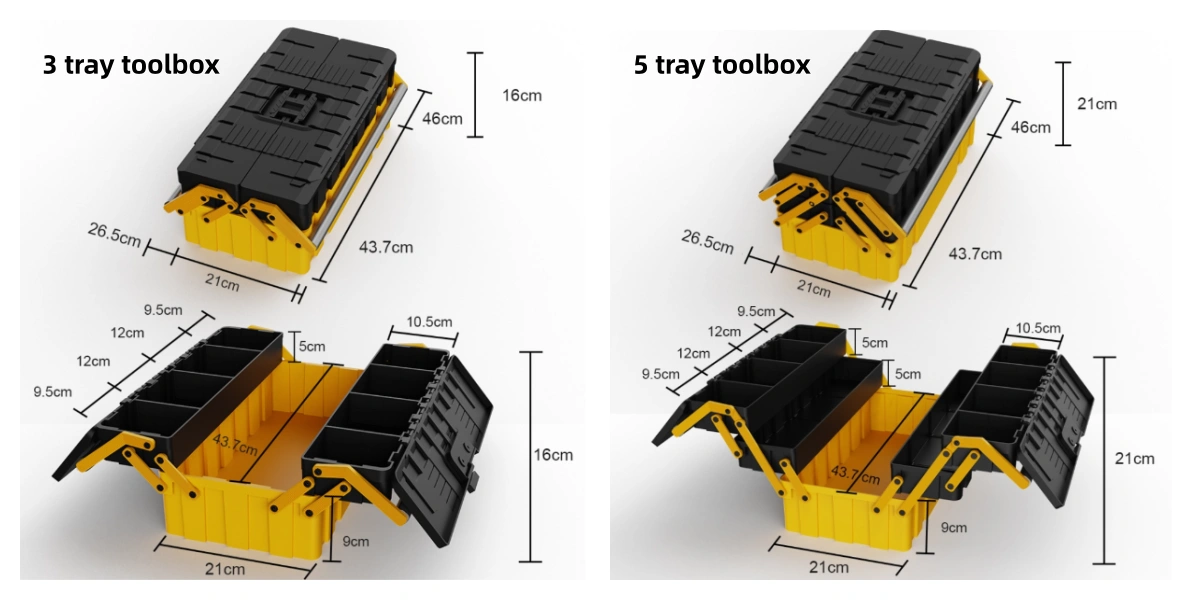
For instance, Jingyan Tools publishes both 3-tray and 5-tray toolbox configurations. Buyers can refer to the company’s toolbox product range and identify the specific model they wish to quote, rather than asking for a generic toolbox price.
The published specifications provide a reference for the existing configurations, but the buyer should still confirm the exact material, color, weight, dimensions, and other details for the selected model and variant before placing an order.
2.Separate the base product from requested changes
If you want to modify an existing model, list each requested change separately.
A useful format is:
|
Specification item |
Required information |
|---|---|
|
Base model |
Exact model number or reference product |
|
Dimensions |
Existing dimensions or requested dimensions |
|
Material |
Required material or supplier specification for review |
|
Color |
Standard color or requested color |
|
Components |
Required changes to parts, hardware, or accessories |
|
Appearance |
Reference image or drawing showing the requested difference |
|
Unconfirmed details |
Questions that the supplier must answer |
This format allows the supplier to distinguish the cost of the existing model from the additional work associated with customization.
It also reduces the risk of receiving a quotation based on the standard product when the buyer actually needs a modified version.
Specify Technical Requirements That Can Be Checked
A quotation becomes more useful when important requirements are stated in measurable terms.
Not every buyer needs a complete engineering drawing. However, if a specification is important to the purchase decision, it should be described clearly enough for both parties to confirm whether it has been met.
1.Confirm dimensions and material requirements
Provide the required dimensions and identify which measurements are critical. For a toolbox, these may include overall length, width, height, and any internal or external dimensions that affect compatibility with the intended application or packaging.
If the material has already been specified, identify the material requirement and whether substitutions are permitted. If the buyer has not established the appropriate material, request the supplier’s proposed specification and any available supporting documentation.
For an OEM/ODM project, distinguish between a fixed requirement and a preference. For example:
-
Required: a specific external dimension must be maintained.
-
Preferred: a particular color is requested, subject to availability or confirmation.
-
To be confirmed: the supplier should recommend a suitable material based on the agreed design and use conditions.
This distinction helps the manufacturer quote the actual requirement rather than make assumptions.
2.Define important performance requirements
If the purchase depends on load capacity, repeated opening and closing, component performance, or another measurable characteristic, ask what specification applies and how it is verified.
Do not assume that a marketing statement automatically establishes a test method. For example, a stated load capacity should be accompanied by a clear definition of what the rating represents and, where relevant, the test conditions or supporting evidence.
A buyer may specify a required result, request an existing test report, or ask the manufacturer to propose a suitable evaluation method. The appropriate approach depends on the requirement and the evidence available for that product.
3.Identify required evidence
If documentation is important to the purchasing decision, include it in the RFQ.
Depending on the project, this could mean a product specification sheet, material information, an applicable test report, inspection records, or approved sample documentation.
Be specific about the requested document and whether it is required before sampling, before production, or before shipment. This makes the expected scope clearer and helps the manufacturer identify any additional time or cost.
Define the OEM/ODM Scope Before Asking for a Final Price
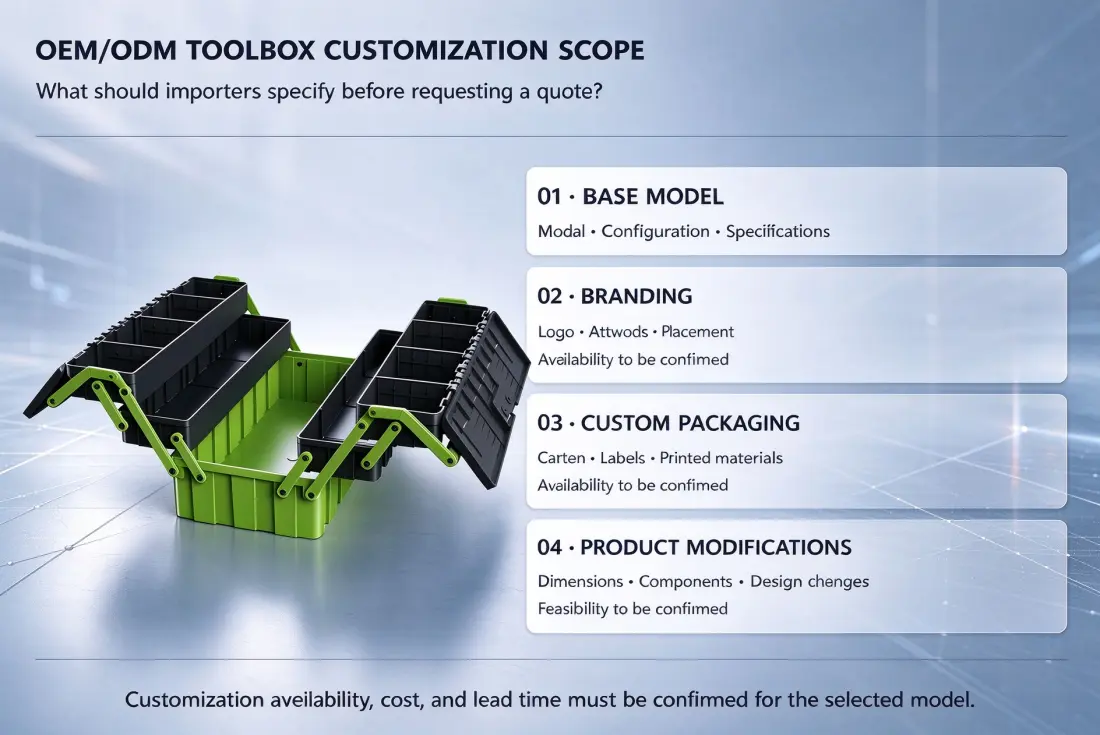
OEM and ODM are often used together, but a quotation still needs to explain what work is actually required.
For an OEM project based on an existing product, the buyer may need branding, packaging, or defined changes to the standard configuration. For an ODM project, the buyer may require product design, development, engineering changes, or a more substantial adaptation to the intended market.
The exact division of work depends on the project. Do not rely on the acronym alone to communicate the requirements.
1.Specify what the manufacturer is expected to provide
Mark the applicable items in your RFQ:
-
Standard product with the buyer’s logo.
-
Customized product color.
-
Customized packaging or printed materials.
-
Changes to the product’s dimensions or structure.
-
New components or accessories.
-
Design or drawing support.
-
Mold or tooling development, if required.
-
Prototype or sample development.
-
Other clearly described modifications.
Not every request is available for every standard model. Ask the manufacturer to confirm feasibility rather than assuming that all modifications can be completed without design changes, tooling, or additional cost.
2.Explain the status of the design files
If you already have drawings, photographs, CAD files, logos, or packaging artwork, identify the file format and revision where applicable.
If you do not have complete drawings, explain whether the supplier should quote an existing model, review reference images, or help develop the specifications.
It is also useful to identify who will approve proposed changes. If multiple teams are involved, such as purchasing, product management, and brand design, agree internally on who can approve the final version before requesting a production quotation.
3.Request separate pricing for different customization scenarios
When the scope is uncertain, ask for separate options instead of combining everything in one price.
For example, the supplier might be asked to quote the standard model, the standard model with custom branding, and a more extensively modified version as separate alternatives, where those options are technically feasible.
This makes it easier to compare the cost and commercial implications of each route. It also prevents the buyer from rejecting a supplier’s price simply because the supplier included a customization requirement that another supplier excluded.
Specify Packaging, Labels, and Required Documents
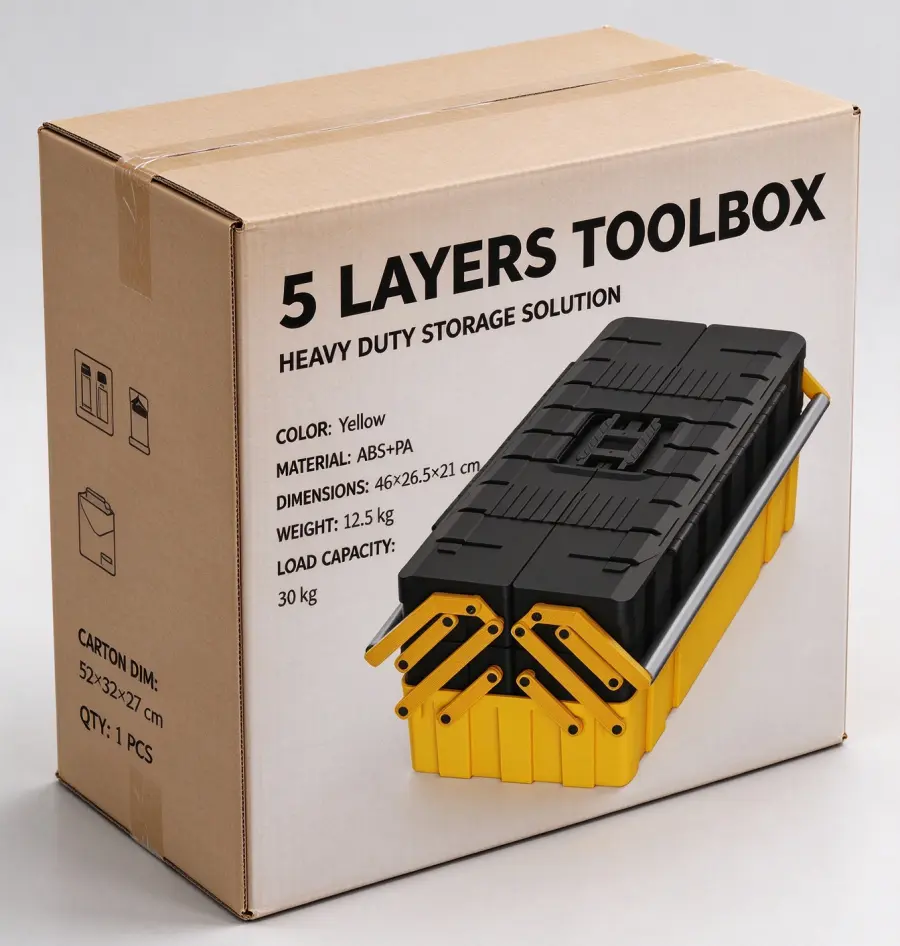
Packaging should be defined before the quotation is finalized, particularly when the toolbox will be sold under a private label or delivered through a retail distribution network.
A price based on standard packaging may not cover custom-printed cartons, retail-ready presentation, additional inserts, or customer-specific labeling.
1.Describe the requested packaging
Tell the supplier whether you need standard packaging or a customized arrangement. If you have requirements, identify them separately:
-
Individual product packaging.
-
Inner box or outer shipping carton.
-
Printed retail packaging or plain cartons.
-
Carton dimensions and packing quantities, if specified.
-
Protective materials or inserts.
-
Barcodes, SKU labels, or shipping marks.
-
Carton artwork or other printed materials.
If the requirements have not been finalized, mark them as pending confirmation. Ask the manufacturer to explain which packaging option the quotation includes and which changes would affect the price.
2.Provide label and artwork requirements
Send the logo file and artwork only when the correct version has been approved. State where the logo or label should appear and whether the supplier must prepare a proof for approval.
For printed packaging, identify the required languages, text, symbols, and customer-specific information. The buyer should verify the final artwork rather than relying solely on a supplier’s interpretation of a draft file.
3.Confirm documentation requirements in advance
Identify the documents needed for your purchasing and shipping process, such as a commercial invoice, packing list, product specification, or particular test documentation where applicable.
The exact list depends on the transaction and destination. The important point is to specify the requirement early so that the supplier can confirm availability, timing, and any additional work required.
Provide Order Quantity and Quotation Assumptions
A supplier cannot always provide a meaningful commercial comparison without knowing the intended quantity and the assumptions behind the request.
If you do not yet have a confirmed order, state that the figures are estimates for quotation purposes.
1.State the expected quantity
Include the intended quantity for the first order, the approximate annual demand if known, and whether the purchase will involve one model or several variants.
For example, a buyer may need separate quantities for the 3-tray model and the 5-tray model, or separate color quantities within the same model. The supplier should know whether the stated quantity applies to the total order or to each individual specification.
Ask the manufacturer to confirm the minimum order quantity (MOQ) for the selected product and whether different colors, models, or packaging configurations have separate minimums.
Do not assume that the MOQ for a standard product will also apply to a customized version.
2.Request a clear price basis
Ask the supplier to state the assumptions behind the quotation, including:
-
Quoted model and specification.
-
Quantity covered by the quoted price.
-
Currency and unit of measure.
-
Standard or customized packaging.
-
Any tooling, artwork, sampling, or development charges.
-
Whether shipping is included or excluded.
-
The validity period of the quotation.
Where different quantity levels are under consideration, request separate unit prices when the supplier can provide them. This helps the purchasing team assess how the unit price changes with order volume.
3.Separate recurring costs from one-time costs
If the project involves customization, ask which charges are one-time and which may recur with each order.
For example, artwork preparation or tooling may be quoted separately from the product’s recurring unit price, depending on the actual work required and the supplier’s terms.
The buyer should also ask what happens if the artwork, design, packaging, or specification changes after approval. Changes made later may affect cost, production time, or the need for another sample.
A clear quotation should help the buyer understand not only the initial purchase price but also the cost assumptions that could affect future orders.
Define Sample Approval and Quality Requirements
A sample is not simply a demonstration of what the supplier can make. It should establish an agreed reference for the product that will be ordered.
Before requesting a sample, identify which characteristics must be checked and how the buyer will approve the result.
1.Specify what the sample must represent
If the project is based on an existing product, confirm whether the sample will be a standard production model or a modified version.
For a private-label project, state whether the sample needs the final logo, packaging, color, accessories, or other customized elements. If an element will be added only during mass production, make that distinction explicit.
The buyer should also confirm the sample cost, shipping arrangements, estimated timing, and whether any development or tooling charge applies.
2.Agree on approval criteria
An approval process can cover the requirements relevant to the particular product:
-
Agreed model and dimensions.
-
Confirmed materials and color.
-
Required components and appearance.
-
Correct logo and packaging artwork.
-
Any defined functional or performance checks.
-
Required documentation.
-
Packaging and labeling details.
Not every project requires every check. The buyer and manufacturer should agree on what matters for the actual specification rather than relying on a generic approval list.
3.Link the approved sample to the production order
Keep a record of the approved sample, specification sheet, artwork, and quotation revision.
If changes are agreed after approval, record them in writing and confirm whether another sample is needed. This is particularly important when multiple versions or color variants are included in the same purchase.
For mass production, ask the manufacturer to confirm how the approved specification will be communicated to production and how relevant requirements will be checked. The purpose is to reduce ambiguity between the item approved by the buyer and the item ultimately delivered.
Confirm Delivery, Commercial Terms, and Responsibilities
An accurate product quotation is only part of a workable purchasing arrangement. The RFQ should also identify the expected delivery and commercial conditions.
1.State the delivery requirements
Tell the supplier the destination country and, where available, the delivery location or preferred shipping arrangements. If you have a required shipping window, state the target date and ask the supplier to confirm whether it is achievable.
Distinguish between sample lead time and mass-production lead time. If tooling, artwork approval, or product development is needed, ask whether those activities affect the production schedule.
Avoid treating an estimated lead time as a confirmed commitment before the specification, order quantity, and approval process have been agreed.
2.Clarify payment and shipping terms
Ask the supplier to state the proposed payment terms and the shipping or delivery term used in the quotation.
If you require a particular Incoterm or shipping arrangement, specify it in the RFQ. The supplier should identify what is included and excluded so that quotations can be compared on a consistent basis.
A lower unit price is not necessarily the lowest total purchasing cost if the quotations use different delivery terms, packaging assumptions, or additional charges.
3.Confirm who handles each outstanding task
For projects involving customized products, list any unresolved responsibilities:
-
Who supplies and approves logo artwork?
-
Who approves packaging proofs?
-
Who arranges sample shipping?
-
Who provides required product documents?
-
Who approves the final specification?
-
Who confirms the production schedule?
These questions may appear administrative, but unclear responsibility can delay sample approval and order confirmation. Resolving them early helps keep the purchasing process organized.
A Toolbox RFQ Template Buyers Can Copy and Use
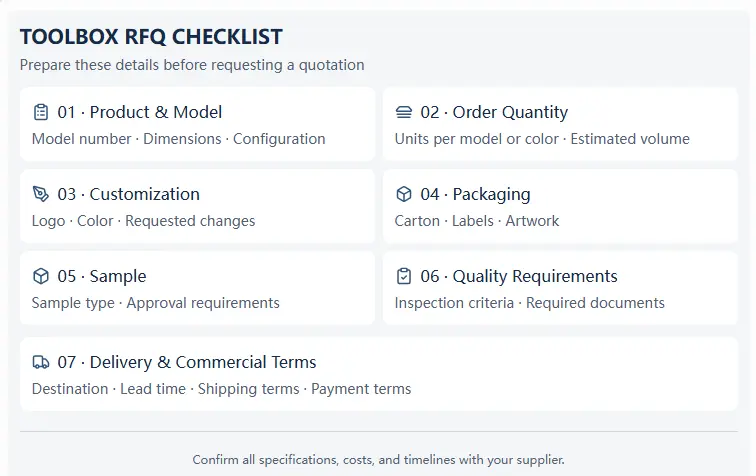
The following template provides a practical starting point. Replace the bracketed fields with your project information and remove any items that do not apply.
Subject: RFQ – [Toolbox Model / Project Name] – [Estimated Quantity]
Dear Sales Team,
We are looking for a supplier for a toolbox project and would like to request a quotation based on the following requirements.
1. Product information
-
Product/model: [Model number or reference link]
-
Required configuration: [Model / tray count / version]
-
Reference drawing or photos: [Attached / link]
-
Required specifications: [Dimensions, material, color, and other confirmed details]
2. Customization requirements
-
Branding/logo: [None / required; details attached]
-
Product customization: [Describe changes or state “standard model”]
-
Packaging: [Standard / custom packaging; details attached]
-
Labeling and documents: [Specify requirements]
3. Order quantity
-
Estimated first order: [Quantity]
-
Quantity by model or color: [Breakdown]
-
Estimated repeat-order demand, if known: [Quantity or estimate]
4. Sampling and quality
-
Sample required: [Yes / no]
-
Sample configuration: [Standard / customized]
-
Required approval criteria: [List]
-
Required documents or test evidence: [List]
5. Quotation and delivery
-
Destination market: [Country]
-
Expected delivery date or window: [Date / estimate]
-
Requested shipping terms: [If applicable]
-
Please state MOQ, unit price, tooling or development charges, sample charges, production lead time, quotation validity, and payment terms.
Please identify any unclear specifications, unavailable options, or additional information needed to finalize your quotation.
Thank you. We look forward to reviewing your proposal.
Best regards, [Name] [Company] [Email / Contact Information]
1.Review the request before sending
Before submitting the RFQ, make sure the attachments match the written specification. If the drawing shows one size but the email describes another, the supplier may quote the wrong product even if both parties respond promptly.
It is also useful to give all suppliers the same information when comparing quotes. If one manufacturer receives more detailed requirements than another, the quotations may not represent equivalent products or services.
How to Compare Toolbox Manufacturer Quotations Fairly
Once the quotations arrive, compare the assumptions before comparing the final numbers.
Use the following table to review whether each supplier is quoting the same requirement.
|
Comparison item |
What to verify |
|---|---|
|
Product identity |
Same model, configuration, dimensions, and material specification |
|
Customization |
Same logo, color, components, and requested modifications |
|
Packaging |
Same packaging type, printed materials, labels, and quantities |
|
Order quantity |
Same quantity basis and model/color breakdown |
|
Price structure |
Unit price, sample cost, tooling, artwork, and other charges |
|
Quality approval |
Same agreed specification, approval process, and required documents |
|
Delivery |
Comparable production timing and shipping terms |
|
Commercial terms |
Payment terms, quotation validity, and outstanding conditions |
If a supplier excludes a required element, the quotation may look cheaper without actually offering better value. Conversely, a higher quotation may include packaging, documentation, or development work that another supplier has priced separately.
Ask each supplier to clarify any difference that materially affects the comparison. Keep the clarification in writing and update the quotation record if the scope changes.
For importers and distributors, this creates a more reliable basis for selecting a supplier and discussing the next stage of the project.
Discussing a Toolbox RFQ with Jingyan Tools
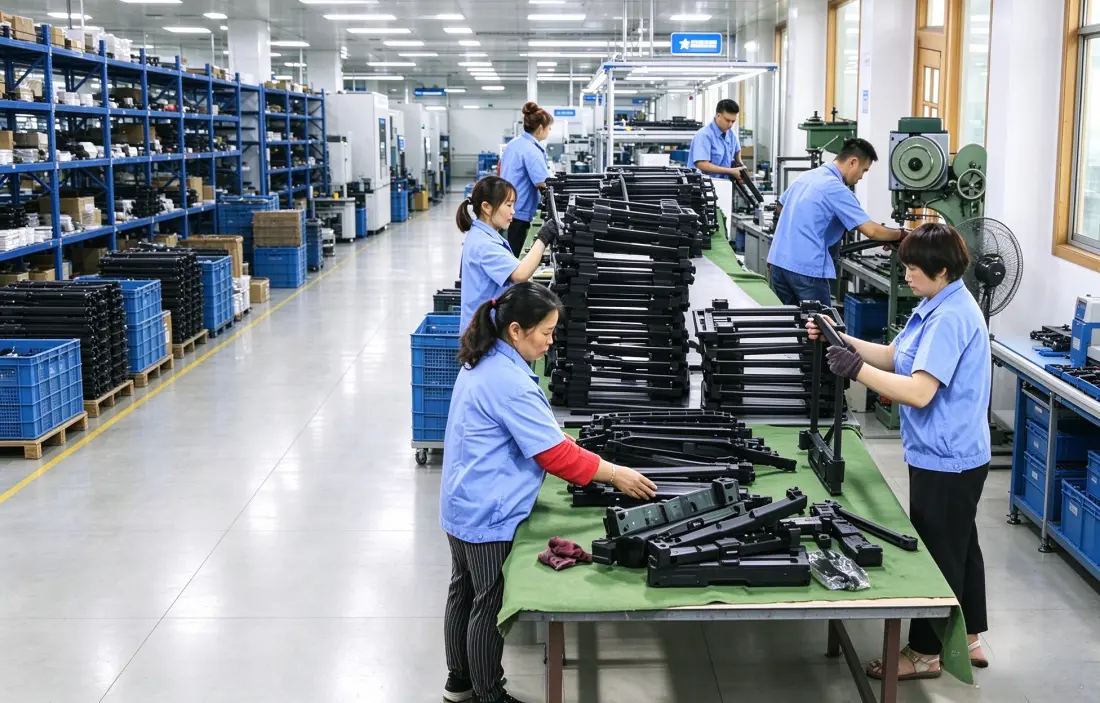
For buyers sourcing standard toolbox models or exploring a customized project, Jingyan Tools offers a starting point for discussing specifications and commercial requirements.
Ningbo Jingyan Tool Industrial Co., Ltd. was established in 2003. Company information published by Jingyan Tools describes a 16,000 m² self-owned production base, more than 140 professionals, and over 50 sets of production equipment. The company also describes OEM and ODM manufacturing services for business customers.
Its published product range includes 3-tray and 5-tray toolbox configurations. These can serve as reference models when a buyer wants to discuss an existing product before considering any changes.
For example, a buyer may begin with one of the standard toolbox models, identify which requirements should remain unchanged, and then list any requested branding, packaging, or other modifications separately. This gives both parties a clearer basis for confirming the quotation scope.
Before proceeding, buyers should confirm the exact model and variant, current specification, MOQ, customization feasibility, sample arrangements, quality requirements, quotation validity, and delivery schedule with the manufacturer. These details should be agreed for the individual project rather than inferred from a general product description.
To start a discussion, prepare your reference product, estimated quantity, target market, required packaging, and list of custom requirements. If some details are not yet known, state which items are fixed and which need the manufacturer’s input.
A clear initial request gives the supplier more useful information and helps the buyer move from an initial price inquiry toward a specific, reviewable proposal.
Frequently Asked Questions About Toolbox RFQs
1.What information should I send when requesting a toolbox quotation?
At minimum, send the product reference or model, required configuration, estimated quantity, destination market, and any known customization or packaging requirements. Add drawings, logo artwork, quality criteria, and requested documents where applicable.
2.Can I request an OEM toolbox quotation using only a product photo?
A photo is a useful reference, but it may not identify exact dimensions, materials, components, or packaging. Ask the manufacturer to confirm the model and specifications before treating the quotation as final.
3.What is the difference between an OEM and an ODM toolbox project?
An OEM project may use an existing product with the buyer’s branding or agreed modifications. An ODM project may involve more extensive design or development work. The exact scope should be written into the RFQ because terminology alone does not define the work included.
4.Should I include packaging requirements in the first RFQ?
Yes. Packaging, labels, artwork, and packing quantities can affect the quotation and production preparation. If the details are not finalized, identify them as pending instead of leaving them out entirely.
5.How do I compare quotations from different toolbox suppliers?
Confirm that the suppliers have quoted the same model, material, dimensions, customization, order quantity, packaging, approval requirements, delivery terms, and commercial conditions. Ask for clarification wherever the scope differs.
6.What should I do if I do not have complete specifications?
Provide the available product photos, intended application, target market, approximate order quantity, and the requirements you already know. Ask the manufacturer to identify missing information and separate confirmed specifications from assumptions or proposed options.
7.When should I approve the sample?
Approve the sample only after checking the characteristics that were agreed for your project. Keep the approved specification, artwork, sample record, and any subsequent changes documented so that the mass-production requirements are clear.
Conclusion: A Clear RFQ Helps Buyers Make Better Sourcing Decisions
A toolbox RFQ should do more than request a low unit price. It should identify the product being quoted, define the customization scope, clarify packaging and documentation, state order quantities, establish sample approval requirements, and explain delivery expectations.
For importers, wholesalers, distributors, and private-label brands, these details make it easier to compare quotations and identify unresolved issues before committing to production.
The most effective approach is straightforward: specify what is already known, identify what still needs confirmation, and ask each supplier to quote against the same requirements.
Whether you are sourcing a standard toolbox or developing an OEM/ODM product, a structured RFQ creates a clearer starting point for pricing, sample review, production planning, and repeat orders.
Related products