What Should Buyers Look for in a Folding Workbench Design?
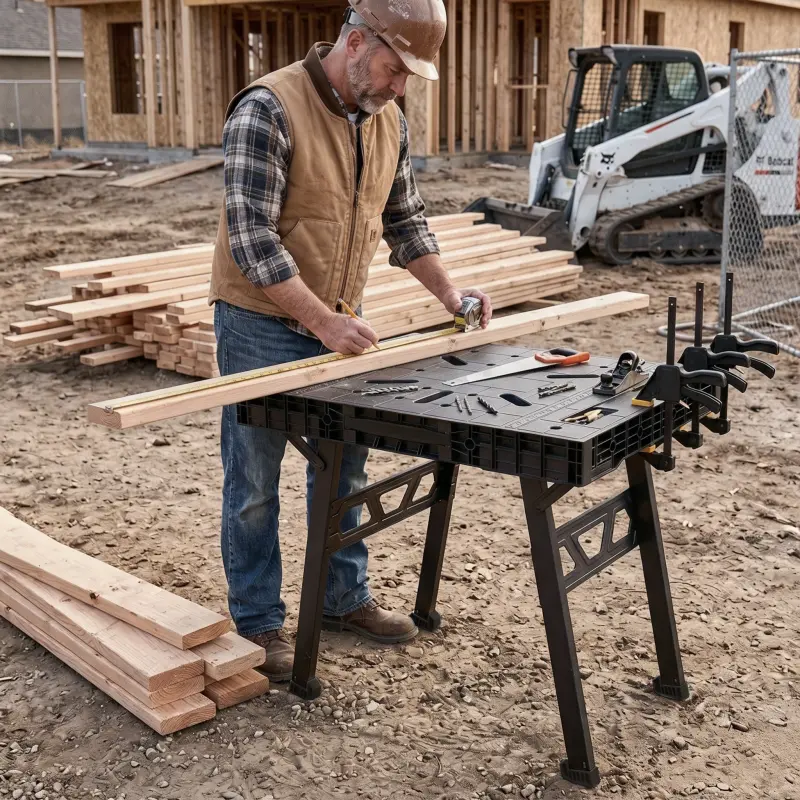
A folding workbench has to perform two very different jobs.
When it is opened, it needs to function as a stable and useful working platform. When the job is finished, it needs to become compact enough to move, store, and transport without creating unnecessary effort.
That combination makes folding workbench design more complicated than simply adding a folding mechanism to a conventional table.
For professional users, the quality of the design can affect setup time, working stability, material handling, storage requirements, and everyday usability. For importers, distributors, retailers, and private-label brands, design choices also influence product positioning, packaging, customer expectations, and repeat-order potential.
This is why buyers should look beyond a specification such as load capacity or product weight when evaluating a folding workbench.
A more useful evaluation considers the complete product system:
working surface + frame structure + folding mechanism + stability + load capacity + portability + setup + long-term usability
A folding workbench that is strong but difficult to transport may not be attractive to mobile users. A lightweight product that becomes unstable under load may create customer complaints. A compact product that takes too long to set up may lose part of the advantage created by its folding design.
The best design therefore balances several requirements at the same time.
This article explains the main design elements professional buyers should examine when evaluating a folding workbench, with a focus on how the structure affects real-world performance and commercial value.
- Why Folding Workbench Design Matters to Professional Buyers
- How the Frame Structure Affects Folding Workbench Performance
- What Makes a Folding Mechanism Practical for Repeated Use?
- How the Working Surface Affects a Folding Workbench
- How Load Capacity Should Be Evaluated in a Folding Workbench
- Why Portability Depends on More Than Product Weight
- How Folding Design Affects Storage and Transportation
- Height Adjustment Can Add Functional Value
- How Buyers Should Evaluate Folding Workbench Stability
- How Design Choices Affect B2B Product Positioning
- What Should B2B Buyers Ask a Folding Workbench Manufacturer?
- Folding Workbench Design Checklist for Buyers
- Frequently Asked Questions About Folding Workbench Design
- Final Takeaway: Evaluate the Whole Folding Workbench Design
Why Folding Workbench Design Matters to Professional Buyers
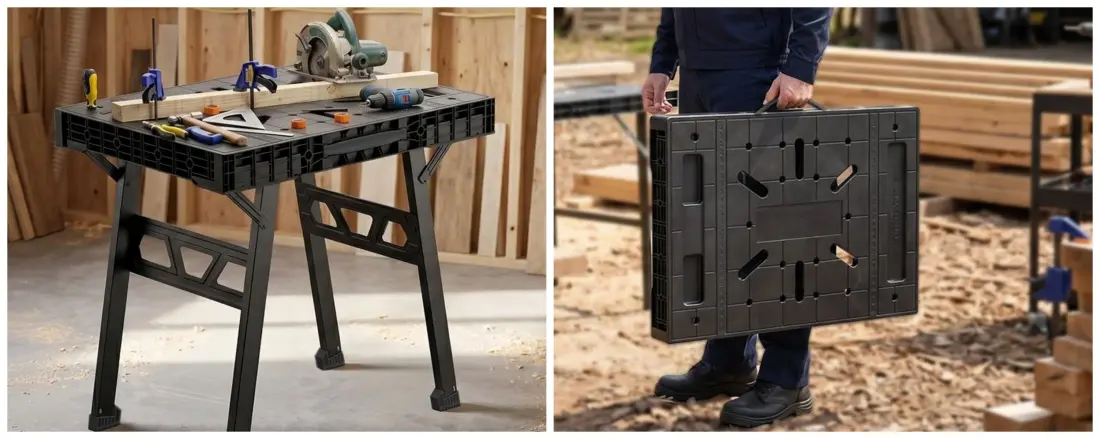
A folding workbench is not simply a fixed table with movable legs.
The folding function changes the engineering requirements of the entire product.
The workbench has to support a load when open, remain stable while users work, and then transition into a compact configuration for transport or storage.
These requirements create several design questions.
How does the frame support the working load?
How securely does the product lock into position?
How quickly can a user move from folded to working configuration?
How much space does the product require when stored?
Can the structure withstand repeated setup and folding?
For professional buyers, these questions have both functional and commercial implications.
A contractor may judge the product by how quickly it can be deployed on a jobsite. A retailer may focus on product differentiation and customer expectations. An importer may evaluate folded dimensions, shipping efficiency, and packaging. A private-label brand may care about customization and whether the design can support a broader product family.
This means the design needs to be evaluated from more than one perspective.
1.A Good Folding Design Has to Work in Two States
Every folding workbench has two primary operating states:
transport/storage configuration
and
working configuration
In the first state, compactness and handling are important.
In the second, stability, usable workspace, and structural strength become more important.
A successful design must make the transition between these states efficient without weakening the working platform.
2.Design Quality Is More Than Appearance
Two folding workbenches can look similar in product photographs while performing differently in use.
The difference may come from:
- frame geometry;
- connection points;
- leg thickness;
- locking structure;
- working-surface design;
- folding sequence;
- manufacturing accuracy.
This is why buyers should assess how the design functions rather than judging the product mainly by appearance.
How the Frame Structure Affects Folding Workbench Performance
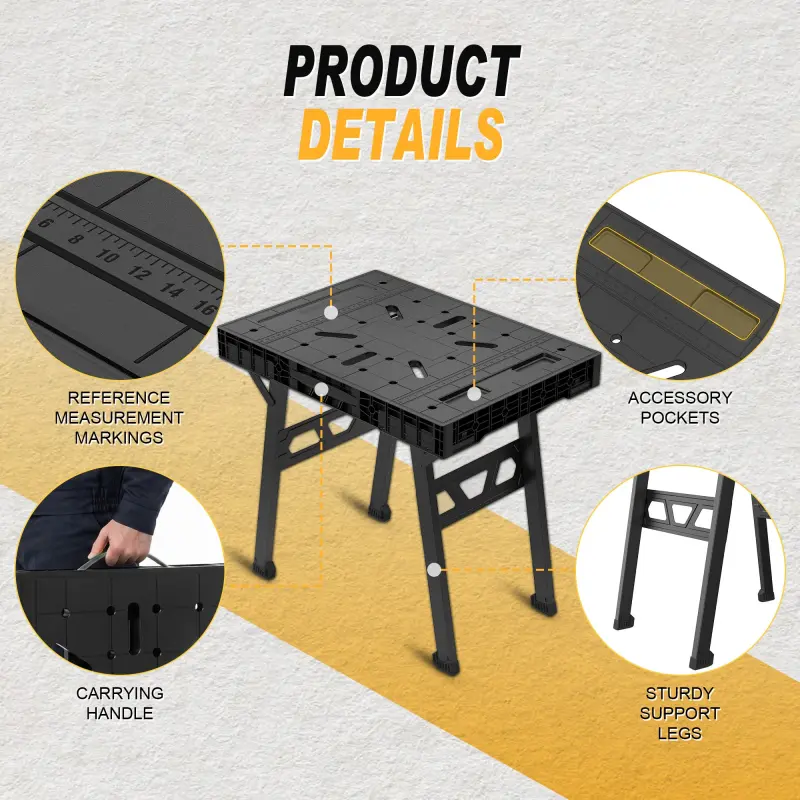
The frame is one of the most important structural systems in a folding workbench.
It carries the working surface, transfers loads toward the ground, and supports the folding mechanism.
A well-designed frame needs to balance strength with portability.
1.Look at the Structural Load Path
When a workpiece is placed on the tabletop, the load travels through the surface into the frame, through the legs, and eventually into the floor.
Each part of that path needs to work correctly.
Weak connection points can reduce the practical value of an otherwise strong tabletop.
Buyers should therefore examine:
- main frame members;
- leg connections;
- cross supports;
- locking points;
- contact points with the floor.
2.Frame Strength Should Match the Intended Application
Not every workbench needs the same level of structural reinforcement.
A light-duty hobby product and a professional workbench used for material preparation have different requirements.
For buyers, the important question is not:
How much metal does the frame contain?
It is:
Does the frame provide sufficient support for the intended workload without creating unnecessary weight?
3.Leg Construction Matters
The legs are directly connected to stability.
Their dimensions, material, geometry, connection points, and contact with the floor all influence how the workbench behaves during use.
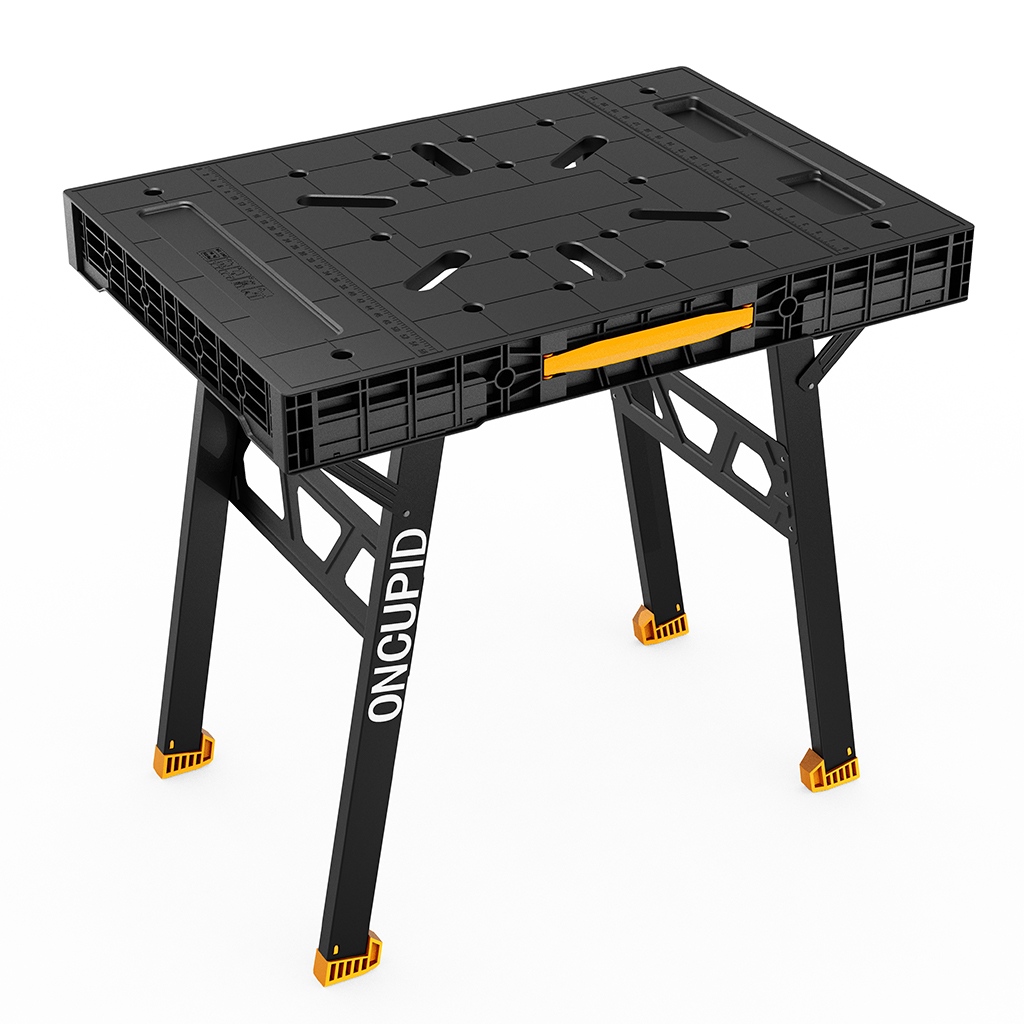
For example, the ONCUPID folding portable workbench uses durable metal legs with a stated leg thickness of 5.0 × 2.5 cm.
This is useful as a product specification, but buyers should still evaluate the leg dimensions together with the complete frame structure and locking system rather than treating one dimension as proof of overall performance.
What Makes a Folding Mechanism Practical for Repeated Use?
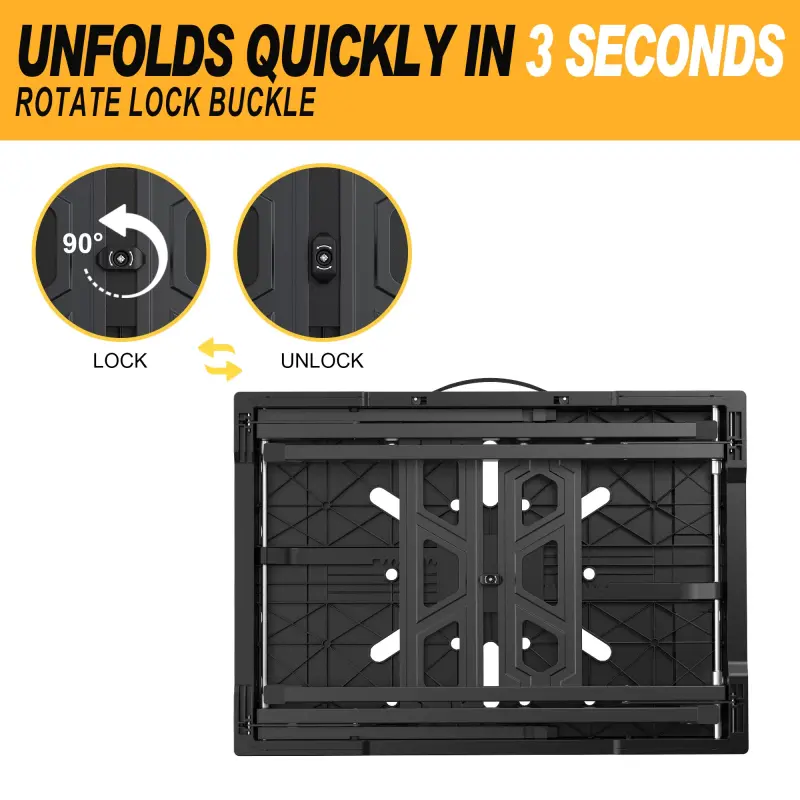
The folding mechanism is one of the features that separates a folding workbench from a conventional fixed model.
Its purpose is not simply to allow the legs to move.
It needs to make the transition between working and transport configuration straightforward, repeatable, and secure.
1.Setup Should Be Easy to Understand
A good mechanism should allow a user to understand the opening sequence quickly.
The ONCUPID folding portable workbench is designed around a simple sequence:
unlock → flip the tabletop → allow the legs to unfold → secure the working position
The stated setup time is under 3 seconds.
For professional users, fast setup can reduce the amount of time spent preparing a workstation.
For distributors, a simple opening sequence can also be a useful product feature because it is easy to demonstrate and explain to customers.
2.The Locking System Is as Important as the Folding System
Fast folding has little value if the workbench does not lock securely in its working configuration.
Buyers should therefore consider:
- locking action;
- resistance to accidental movement;
- ease of engagement;
- consistency after repeated use;
- relationship between the lock and the frame.
A folding workbench should not be judged only by how quickly it opens.
The complete mechanism needs to support reliable working performance after opening.
3.How the Working Surface Affects a Folding Workbench
A product may open smoothly when new.
The more important question is whether the same operation remains practical after repeated cycles of:
fold → transport → open → use → fold
For B2B buyers, repeated operation should be considered during sample evaluation and quality inspection.
How the Working Surface Affects a Folding Workbench
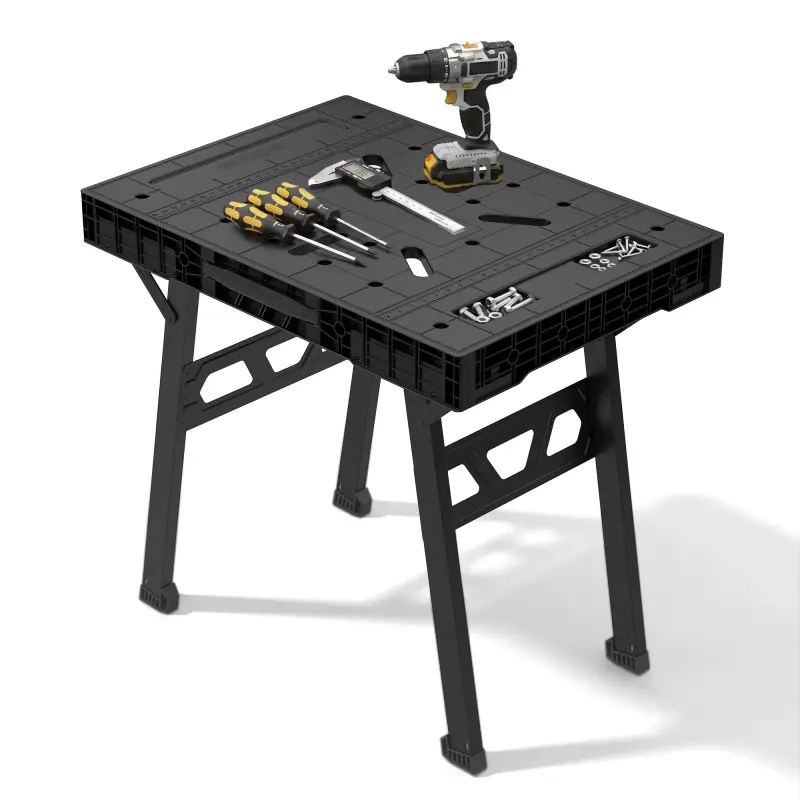
The tabletop determines what the user can actually do once the workbench is open.
A folding mechanism may create portability, but the working surface determines whether the product is useful for the intended tasks.
1.Working Area Should Match the Intended Application
A workbench used for cutting, drilling, clamping, repair, or assembly needs enough usable surface for the task.
Buyers evaluating folding workbenches specifically for woodworking applications can also explore How to Choose a Folding Woodworking Workbench for Flexible Workshop Use.
The ONCUPID Folding Portable Workbench provides a working platform of approximately 85 × 61 cm.
This creates a relatively broad surface while maintaining a format designed for folding and transport.
For buyers, the key is not to choose the largest possible tabletop.
It is to choose a surface that is large enough for the target applications without eliminating the portability that makes a folding workbench attractive.
2.Surface Features Can Create Functional Differentiation
A simple flat tabletop provides a working surface.
A more functional tabletop can support additional tasks.
The ONCUPID workbench includes bench dog holes and X-shaped grooves designed to support clamping of wood, metal, and plastic workpieces at different positions.
For retailers and brands, these features can create a stronger product proposition than a workbench that only provides a flat surface.
3.Working Surface Design Should Be Considered With Frame Design
A large tabletop is only useful when the supporting structure can handle the intended workload.
A buyer should therefore evaluate:
surface size + frame support + stability + load capacity
rather than selecting the workbench based on tabletop dimensions alone.
How Load Capacity Should Be Evaluated in a Folding Workbench
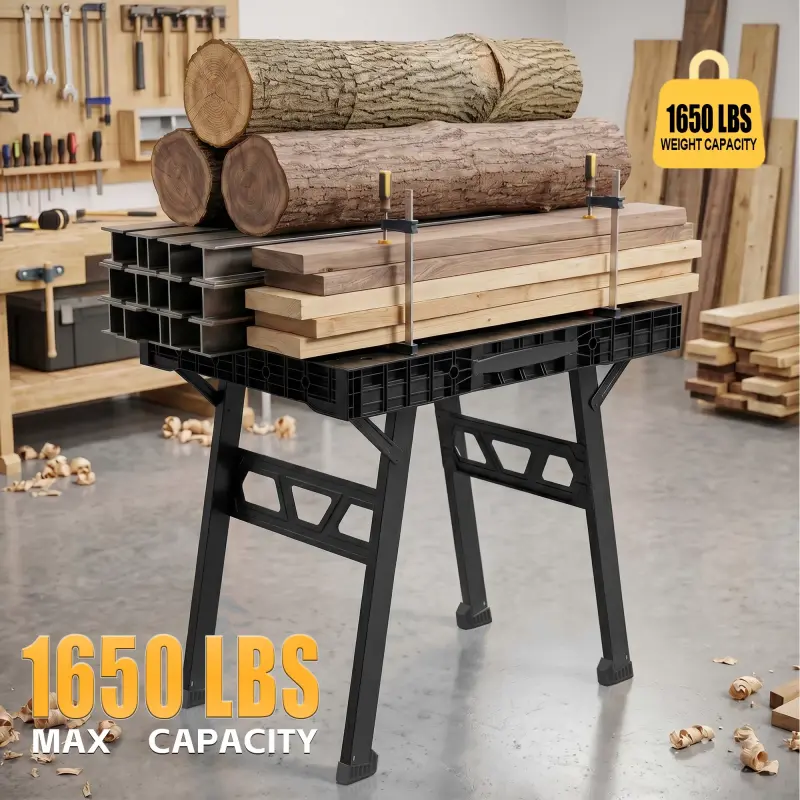
Load capacity is one of the first specifications buyers notice.
But the number should never be evaluated in isolation.
A stated load capacity needs to be understood together with the frame structure, working configuration, load conditions, and intended application.
1.Capacity Should Match the Target Application
A professional buyer should first determine what the workbench is expected to support.
Potential applications may include:
- timber;
- panels;
- tools;
- construction materials;
- repair workpieces;
- assembly tasks.
The workbench should then be evaluated against the requirements of those applications.
2.Higher Capacity Is Not Automatically Better
A higher load rating can be attractive, but if achieving it requires excessive material, weight, or bulk, the product may become less practical.
This is particularly important for folding equipment.
A workbench has to balance:
load capacity + structural strength + product weight + portability
A product that carries more but becomes too difficult to move may not create more value for the intended market.
3.Compare Capacity With the Complete Product Design
The ONCUPID Folding Portable Workbench has a stated material holding capacity of 750 kg.
The product comparison information also lists a 750 kg load capacity compared with 450 kg for a reference product.
For B2B buyers, these figures should be presented according to the manufacturer’s stated test or usage conditions.
The number becomes commercially meaningful when buyers understand how it relates to frame structure, leg construction, working surface, and product weight.
Buyers with higher-load workshop requirements can also review the Heavy Duty Workbench Buying Guide for Workshops and Businesses for a separate purchasing perspective.
Why Portability Depends on More Than Product Weight
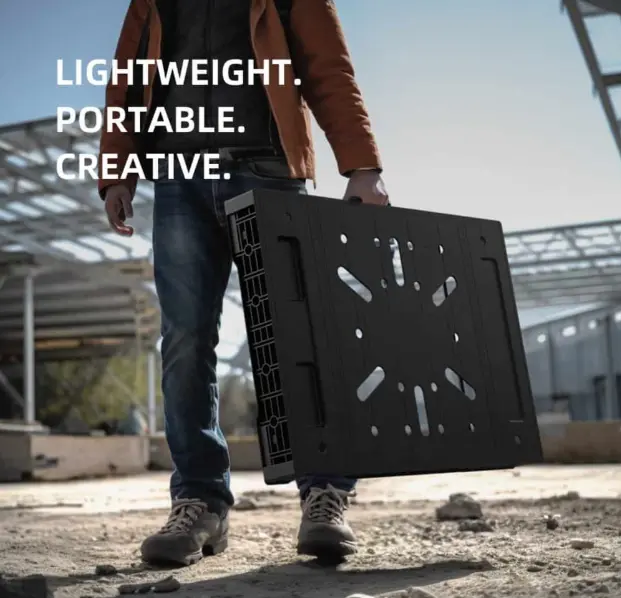
A folding workbench is expected to be portable.
However, portability is not simply a matter of reducing the product’s weight.
A portable product needs to be easy to handle in its actual transport configuration.
1.Product Weight and Folded Configuration Work Together
The ONCUPID Folding Portable Workbench has a stated product weight of 10.7 kg.
A 10.7 kg product can still be practical to move if its folded form is compact and its carrying points are well designed.
Conversely, a lighter workbench may still be inconvenient if it is bulky or awkward to handle.
2.Carrying Design Should Be Evaluated Under Realistic Conditions
Buyers should consider:
- carrying position;
- handle location;
- product balance;
- folded shape;
- frequency of movement;
- vehicle loading;
- storage requirements.
The integral carry handles on the ONCUPID workbench are intended to support easier transportation after folding.
For professional buyers, carrying convenience should be tested with the actual product rather than inferred from its weight alone.
How Folding Design Affects Storage and Transportation
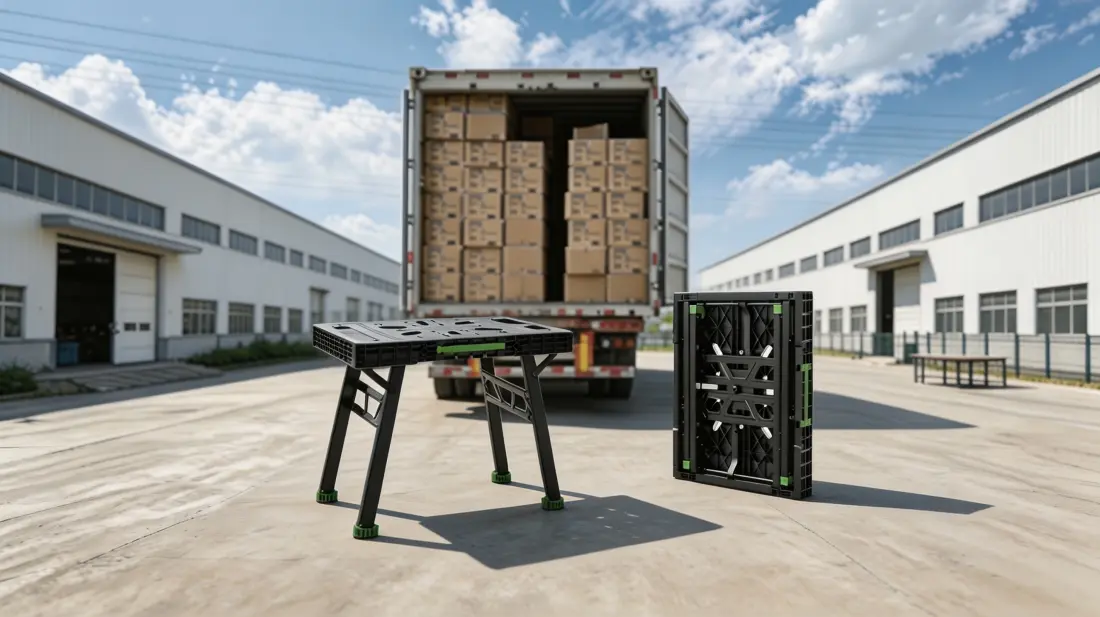
Folding is commercially useful because it changes how a workbench occupies space when it is not being used.
The value is particularly relevant to buyers who need to transport or store multiple units.
1.Folded Dimensions Affect Logistics
Buyers should request both:
working dimensions
and
folded dimensions
The working dimensions show how much workspace the customer receives.
The folded dimensions influence:
- vehicle loading;
- warehouse storage;
- packaging;
- shipping;
- retail handling.
For a B2B product, folded size should therefore be treated as part of the product’s commercial specification.
2.Storage Efficiency Can Affect Product Positioning
A compact folding workbench can be positioned for customers with:
- limited workshop space;
- mobile work requirements;
- temporary work areas;
- vehicle-based service operations;
- shared workspaces.
This allows the folding feature to become more than a technical mechanism.
It becomes part of the product’s market positioning.
Height Adjustment Can Add Functional Value
Not every folding workbench requires adjustable height.
However, when height adjustment is included, it can increase the range of users and tasks a product can serve.
For professional buyers, this can create differentiation within a crowded workbench category.
1.Height Should Match the Intended Work
Different tasks can call for different working positions.
A user performing detailed assembly may prefer a different height from someone handling larger materials or performing maintenance.
Height adjustment can therefore increase the number of situations in which the same workbench remains useful.
2.Adjustment Should Not Compromise Stability
An adjustable structure adds moving or locking components.
The adjusted position must remain stable during use.
Buyers should check:
- adjustment range;
- locking method;
- ease of adjustment;
- stability at each setting;
- repeatability.
The objective is not simply to provide more height positions.
It is to provide useful height flexibility without reducing structural confidence.
How Buyers Should Evaluate Folding Workbench Stability
Stability is one of the easiest characteristics to underestimate from a product photograph.
A workbench can appear substantial while still behaving poorly if its leg geometry, contact points, or locking system are not properly designed.
1.Evaluate the Product Fully Opened
The workbench should be evaluated after it has been completely opened and locked.
Look at:
- leg spread;
- contact with the floor;
- frame rigidity;
- locking points;
- movement under load.
2.Consider the Working Environment
A professional workbench may be used in garages, workshops, construction areas, maintenance locations, and temporary jobsite environments.
The expected working conditions should therefore be part of the evaluation.
3.Stability Is a System Characteristic
There is rarely one component responsible for stability.
It comes from the combined effect of:
frame geometry + legs + locking mechanism + working surface + load distribution + floor contact
This is why buyers should avoid using one specification as a shortcut for judging overall product quality.
How Design Choices Affect B2B Product Positioning
A folding workbench is not only a physical product.
For distributors and retailers, it is also a product proposition.
Design features determine what the buyer can communicate to the end customer.
1.Design Can Create Different Market Positions
A folding workbench can be positioned around:
- portability;
- professional durability;
- large working surface;
- high load capacity;
- clamping functionality;
- fast setup;
- storage efficiency.
Different combinations can serve different customer segments.
2.Product Differentiation Should Be Easy to Explain
A retailer needs to communicate why a product is worth considering.
A product feature becomes commercially useful when the customer can quickly understand its benefit.
For example:
750 kg capacity → supports demanding work
85 × 61 cm working surface → provides useful workspace
bench dog holes and X-shaped grooves → supports clamping
under-3-second setup → reduces setup effort
10.7 kg product weight → supports practical handling
The strength of the product position comes from how these features work together.
What Should B2B Buyers Ask a Folding Workbench Manufacturer?
Buyers looking for a broader procurement framework can also refer to the Portable Folding Workbench Buying Guide for Professional Buyers. Before placing an order, buyers should ask questions that go beyond the product photograph and headline specifications.
1.Product Design Questions
Ask:
- What is the working size?
- What is the folded configuration?
- What is the stated load capacity?
- What materials are used?
- How does the folding mechanism operate?
- How is the workbench locked?
- Is height adjustment available?
- What applications is the product designed for?
2.Manufacturing Questions
Ask:
- Can the manufacturer provide samples?
- How are structural components inspected?
- How is assembly controlled?
- How is product consistency maintained?
- Can product colors be customized?
- Can packaging be customized?
- Can specifications be modified?
3.Commercial Questions
For importers and distributors, also evaluate:
- MOQ;
- lead time;
- packaging;
- production capacity;
- quality documentation;
- OEM/ODM support;
- repeat-order capability.
The goal is not simply to find a workbench that looks good.
It is to determine whether the supplier can support the product commercially over time.
To learn more about Jingyan’s manufacturing capabilities, production experience, and company background, visit our Jingyan Tools Company Introduction.
Folding Workbench Design Checklist for Buyers
A structured checklist can make comparison easier.
| Design Area | What Buyers Should Check |
|---|---|
| Working Surface | Size, usability and task compatibility |
| Frame | Structural strength and geometry |
| Legs | Dimensions, support and contact points |
| Folding Mechanism | Opening sequence and ease of operation |
| Locking System | Security and repeatability |
| Load Capacity | Rated capacity and test conditions |
| Product Weight | Handling and transportation |
| Folded Form | Storage and vehicle efficiency |
| Clamping Features | Bench dog holes, grooves or other support features |
| Height Adjustment | Range, locking and stability |
| Materials | Suitability for intended application |
| Manufacturing | Consistency and quality control |
| Customization | Color, branding, packaging and specifications |
| Supply Capability | MOQ, lead time and repeat production |
The checklist should be used to compare complete product systems rather than individual specifications.
Frequently Asked Questions About Folding Workbench Design
1.What is the most important feature in a folding workbench?
There is no single feature that determines quality.
The frame, folding mechanism, locking system, working surface, load capacity, stability, product weight, and intended application should be evaluated together.
2.Does a folding workbench need to be lightweight?
Not necessarily.
It needs to be manageable for its intended transport and application. Excessive weight can reduce portability, but reducing weight too aggressively can affect structural performance.
3.What should buyers check in a folding mechanism?
Check the opening sequence, locking system, ease of operation, stability after opening, connection points, and suitability for repeated folding and setup.
4.Is a large working surface always better?
No.A larger surface can support larger tasks, but it can also increase product size and transportation requirements. The correct surface size depends on the target application.
5.Why are bench dog holes useful?
Bench dog holes can support clamping and positioning of workpieces when used with compatible accessories or clamps. They can provide additional functionality beyond a standard flat working surface.
6.Is 750 kg load capacity enough for professional use?
The ONCUPID Folding Portable Workbench has a stated 750 kg material holding capacity. Whether this is appropriate depends on the intended application and the manufacturer’s stated load conditions.
7.What matters more, load capacity or product weight?
Neither should be evaluated independently.
The better design balances the required load capacity with structural strength, product weight, portability, and intended use.
8.Can folding workbenches be customized for private-label programs?
Depending on the manufacturer’s capabilities, customization can include colors, branding, packaging, specifications, and selected design details.
Final Takeaway: Evaluate the Whole Folding Workbench Design
A folding workbench should not be judged simply by asking whether it folds.
Professional buyers should look at what happens before, during, and after folding.
Before use, the product needs to be practical to transport and store.
During setup, it needs to open efficiently and lock securely.
During work, the frame, legs, tabletop, and locking system need to provide appropriate support and stability.
After use, the product needs to return to a compact configuration without making the user spend unnecessary time on the process.
This is why the most useful evaluation considers:
working surface + frame structure + folding mechanism + stability + load capacity + product weight + portability + storage + application fit
The ONCUPID Folding Portable Workbench illustrates how these factors can be combined.
It provides an approximately 85 × 61 cm working platform, a stated 750 kg material holding capacity, a product weight of approximately 10.7 kg, and a folding design intended to create a workspace in under 3 seconds.
Its bench dog holes and X-shaped grooves add clamping functionality, while the metal leg structure supports the working platform.
For B2B buyers, however, the product itself is only one part of the decision.
A successful product line also depends on whether the manufacturer can maintain consistent production, support customization, provide appropriate documentation, and meet the buyer’s packaging, MOQ, lead-time, and replenishment requirements.
The best folding workbench is therefore not necessarily the one with the largest tabletop, highest load rating, or lowest product weight.
It is the product whose design choices work together for the intended market.
For importers, distributors, retailers, and private-label brands, that is the standard that should guide folding workbench evaluation before moving from sample review to commercial purchasing.
For importers, distributors, retailers, and private-label brands evaluating a folding workbench for commercial sourcing, you can contact Jingyan Tools to discuss specifications, samples, customization, packaging, MOQ, and production requirements.
Related products