Why Folded Dimensions Matter When Buying Foldable Hand Truck Dollies

When buying a hand truck dolly foldable model for commercial use, buyers often focus on load capacity, materials, wheel design, and unit price. These specifications are important, but one factor is frequently underestimated: folded dimensions.
For importers, wholesalers, and distributors, the size of a trolley when it is not in use can affect far more than storage convenience. It can influence packaging design, warehouse capacity, inventory density, shipment planning, vehicle utilization, and the overall cost of moving products through the supply chain.
A trolley that performs well in operation but remains unnecessarily large after folding may create hidden logistics costs. By contrast, a well-designed folding structure can reduce the space required for storage and transportation while making the product easier for end users to keep in vehicles, workshops, warehouses, or retail back rooms.
The impact becomes much more noticeable when purchasing hundreds or thousands of units. A difference that seems insignificant for one trolley can become substantial when multiplied across a full shipment or several inventory cycles.
For this reason, folded dimensions should be treated as a procurement and logistics specification, not simply as a product feature.
This guide explains why folded dimensions matter, how they affect storage and shipping, what information buyers should request from suppliers, and how to use dimensional data when comparing products for bulk purchasing.
- 1. Why Folded Dimensions Matter in Commercial Procurement
- 2. How to Read Folded Dimensions Correctly
- 3. How Folded Dimensions Affect Warehouse Storage
- 4. How Folded Dimensions Affect Packaging and Shipping
- 5. How Folded Dimensions Influence Total Procurement Cost
- 6. What B2B Buyers Should Ask Before Ordering
- 7. How to Use Folded Dimensions in a Supplier Comparison
- FAQ About Folded Dimensions and Bulk Purchasing
- Ready to Plan Your Next Bulk Order?
Why Folded Dimensions Matter in Commercial Procurement
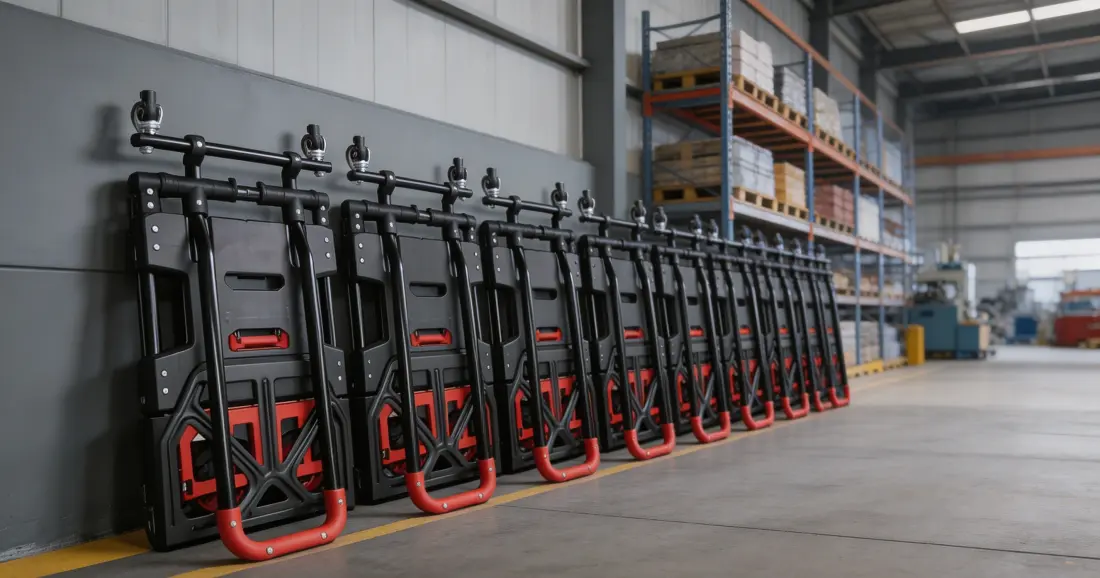
A folding design has an obvious purpose: reducing the space required when the trolley is not being used.
For a commercial buyer, however, that space reduction can create value at several stages of the supply chain.
Folded dimensions are therefore one part of the broader product and supplier assessment required before a bulk order is approved.
A trolley moves from manufacturing to packaging, then into storage, transportation, distribution, and finally the customer’s working environment. At each stage, its physical size can influence how efficiently it is handled.
This makes folded dimensions more important than they may initially appear.
1.Storage Is Part of the Product's Commercial Value
Consider two trolleys with similar load capacity and general construction. If one remains significantly larger after folding, the difference may have little practical impact for an individual user with a single unit.
For a distributor storing several hundred units, the situation changes.
Warehouse space has an operating cost. Products need to be received, stored, picked, counted, moved, and shipped. A product that occupies less space can provide more flexibility when inventory levels increase.
This does not mean that the smallest folded product is automatically the best choice. It means that storage efficiency should be considered alongside product performance.
2.Foldability Does Not Automatically Mean Compactness
A product can technically be foldable without being particularly space-efficient.
The useful question is not:
Can the product fold?
The more relevant question is:
How much usable space does the product occupy after folding?
A buyer should therefore compare both the working dimensions and the folded dimensions.
The folded shape also matters. A thin, regular profile may be easier to store against a wall, on a rack, inside a vehicle, or in a narrow storage area than a product with similar volume but an awkward shape.
3.Small Dimensional Differences Can Become Large at Scale
Suppose one product requires only a few centimeters less depth after folding.
For one unit, the difference may appear insignificant.
For 500 units, however, those dimensions can affect how products are arranged within cartons, pallets, warehouse zones, or delivery vehicles.
This is why dimensional efficiency should be evaluated at the inventory level, not just at the individual-product level.
How to Read Folded Dimensions Correctly
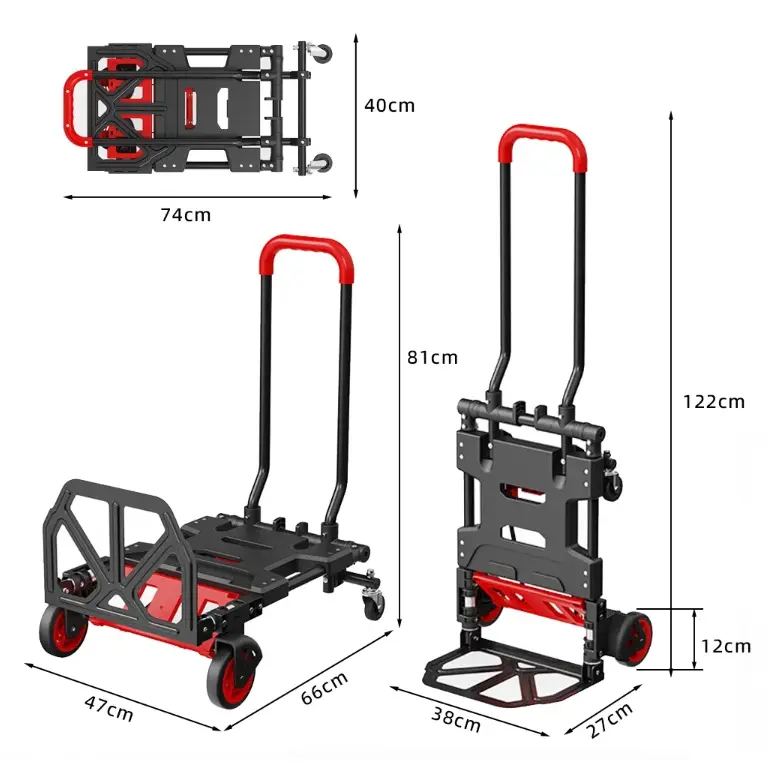
Folded dimensions are normally expressed using three measurements, but the numbers alone do not tell the entire story.
Buyers need to understand how the dimensions relate to actual storage, packaging, and handling conditions.
1.Compare Open Dimensions With Folded Dimensions
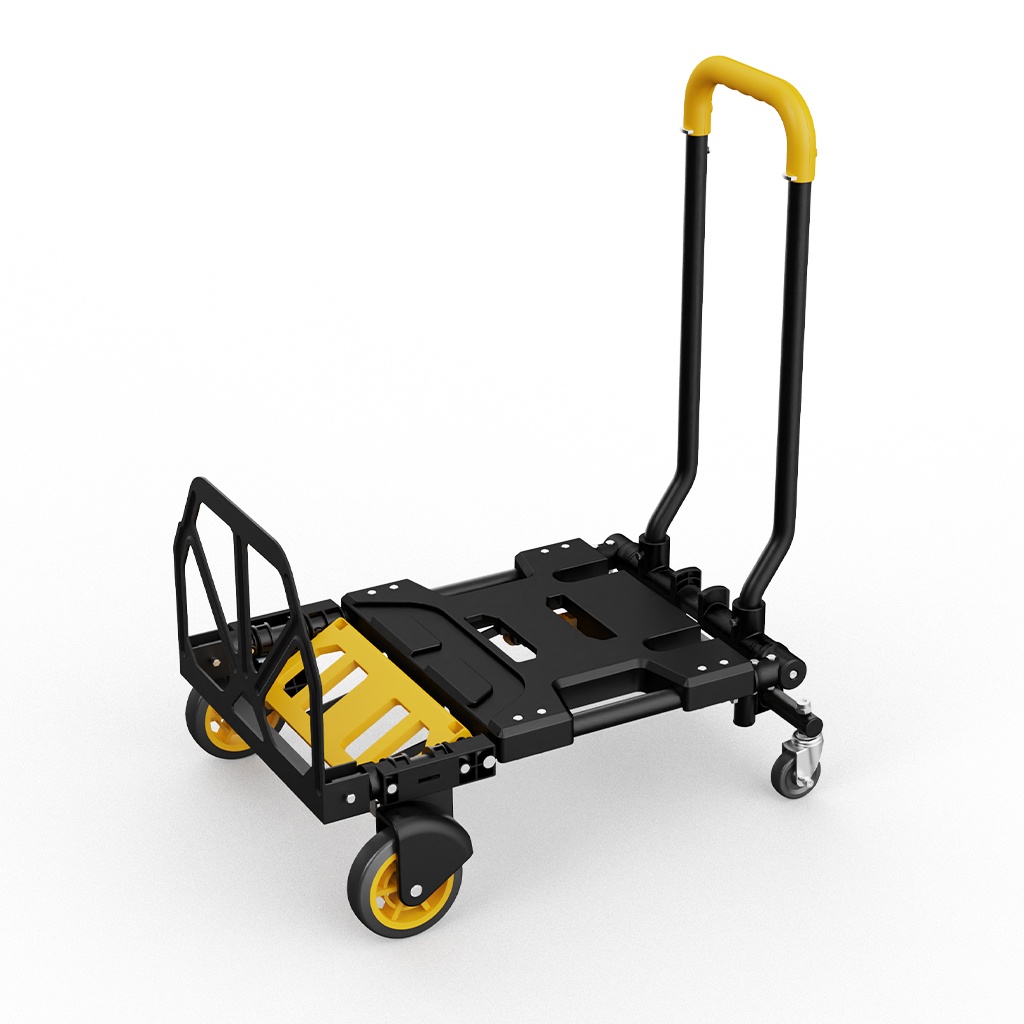
The product example used in this article has the following dimensions:
| Configuration | Dimensions |
|---|---|
| 4-Wheel Open | 47.5 × 62 × 80.8 cm |
| 2-Wheel Open | 47 × 40.5 × 121.5 cm |
| Folded | 37.5 × 13 × 81 cm |
These measurements show the difference between the product’s working configurations and its compact storage form.
The folded depth of 13 cm is particularly relevant when evaluating narrow storage areas.
For example, a distributor may be able to store a thin folded trolley against a wall or along a designated warehouse zone where a larger product would interfere with movement.
The important point is not that 13 cm is universally “good.” Its value depends on how the product will be stored and transported.
2.Look at the Folded Shape, Not Just the Measurements
A three-number specification cannot fully describe a product’s physical profile.
When reviewing a sample, look at the actual folded shape.
Ask:
- Do the wheels remain within the main profile?
- Does the handle protrude?
- Does the platform create an uneven surface?
- Can the product stand vertically?
- Can multiple units be stored together?
- Is it easy for warehouse personnel to pick up and move?
These details can make a significant difference in real-world storage.
Two products with similar calculated volumes can require very different amounts of usable warehouse space because one has a more convenient shape.
3.Separate Product Dimensions From Packaging Dimensions
This is one of the most important rules for commercial procurement:
The folded product dimensions are not the same as the shipping dimensions.
A trolley may fold to a compact size while still requiring additional space for protective packaging.
Wheels, handles, hinges, and other vulnerable areas may require cushioning or structural protection.
Before ordering, request:
- Folded product dimensions
- Open product dimensions
- Individual package dimensions
- Carton dimensions
- Units per carton
- Gross weight
- Net weight
- Pallet configuration
Only then can a buyer estimate the actual logistics footprint.
How Folded Dimensions Affect Warehouse Storage
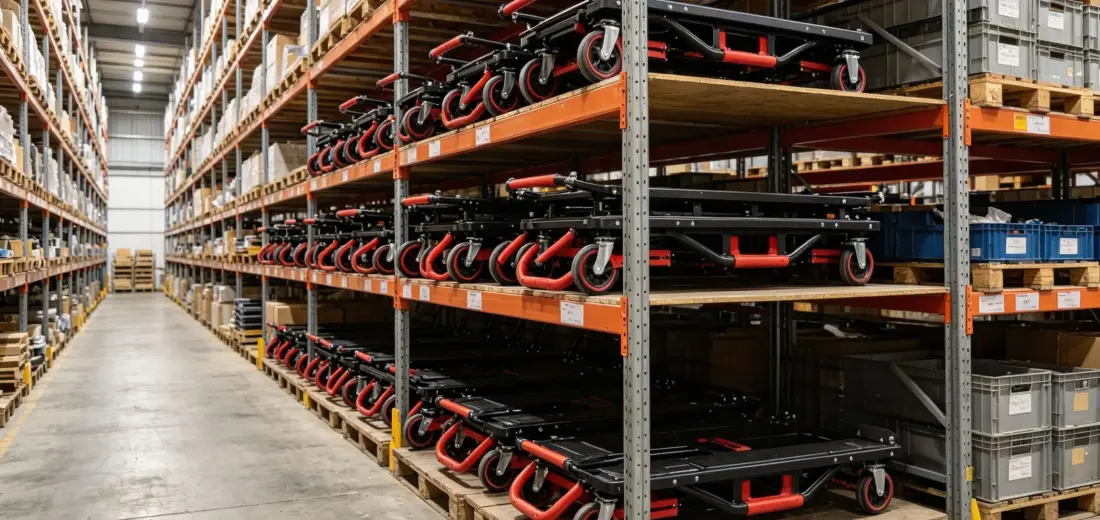
Warehouse efficiency is often discussed in terms of floor area, but effective storage also depends on product shape, accessibility, and handling requirements.
For distributors and wholesalers, folded dimensions can therefore influence both inventory density and day-to-day warehouse operations.
1.Improve Inventory Density
A compact folded trolley can potentially increase the number of units that can be accommodated within a given storage area.
However, the actual result depends on how the products are packed and stored.
Important factors include:
- Storage orientation
- Carton size
- Stacking height
- Pallet arrangement
- Rack dimensions
- Access clearance
For example, a narrow folded profile may make vertical storage more practical, while a product with greater depth may require wider storage positions.
The buyer should therefore evaluate folded dimensions together with the intended storage method.
2.Reduce Unnecessary Handling Space
Warehouse space is not occupied only by products.
Workers also need enough room to access, move, and organize inventory.
If folded units have irregular protrusions, employees may need to leave additional clearance between products.
That can reduce the effective storage density even when the nominal product dimensions appear acceptable.
A practical evaluation should therefore consider:
storage footprint + access space + handling requirements
rather than storage footprint alone.
3.Plan for Inventory Growth
One of the easiest mistakes for a distributor is to calculate storage requirements based only on the first order.
A new product may initially require space for 100 units. If sales increase, the same product may eventually require storage for 500 or 1,000 units.
A compact folded design can provide additional flexibility as inventory grows.
This does not eliminate the need for warehouse planning, but it gives the buyer another variable that can be optimized before the product enters the supply chain.
How Folded Dimensions Affect Packaging and Shipping
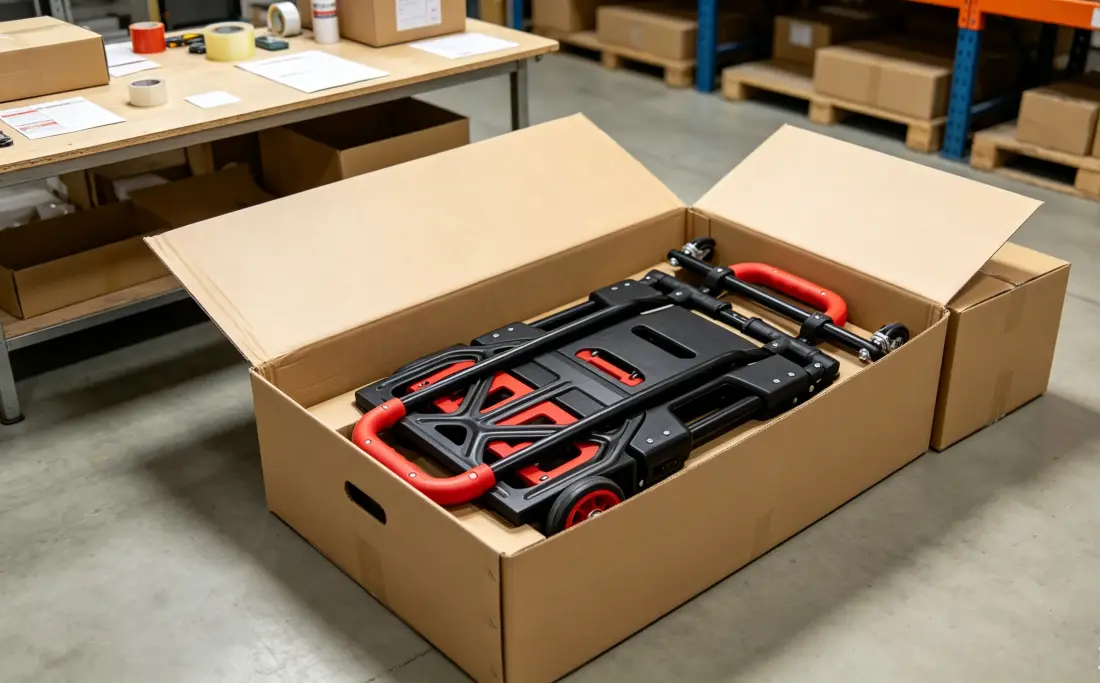
The relationship between folding and logistics becomes especially important when the product is packaged and prepared for shipment.
A compact folding structure can offer logistical advantages, but those advantages depend heavily on the packaging configuration.
1.Product Size Is Not Shipping Size
Consider the folded dimensions of the product example:
37.5 × 13 × 81 cm
The simple geometric bounding-box volume is approximately:
0.00395 m³ per unit
This is only a theoretical reference. It is not the actual shipping volume because packaging, protective materials, carton structure, and spacing between units all change the final dimensions.
Still, the calculation demonstrates why folded dimensions deserve attention during procurement.
The smaller the practical product profile becomes, the more possibilities the buyer may have when designing an efficient package.
2.Packaging Can Reduce the Benefit of a Compact Design
A compact trolley can lose much of its logistical advantage if the packaging leaves excessive empty space.
Imagine a product that folds tightly but is packed into a carton significantly larger than necessary.
The product is compact.
The shipment is not.
This is why buyers should evaluate product dimensions and packaging dimensions together.
Ask suppliers whether the packaging is designed around the folded configuration and whether the carton size can be optimized without compromising product protection.
3.Units Per Carton Matter
The number of units packed into each carton can affect handling and shipping efficiency.
Increasing units per carton may reduce the number of cartons handled during receiving and dispatch, but it can also increase carton weight or make manual handling more difficult.
A smaller quantity per carton may provide easier handling or greater protection.
The right configuration depends on:
- Product protection
- Carton strength
- Manual handling
- Pallet dimensions
- Warehouse layout
- Transportation method
- Target market requirements
The objective is therefore not to maximize units per carton at any cost.
It is to achieve a practical balance between space efficiency, protection, handling, and transportation cost.
How Folded Dimensions Influence Total Procurement Cost
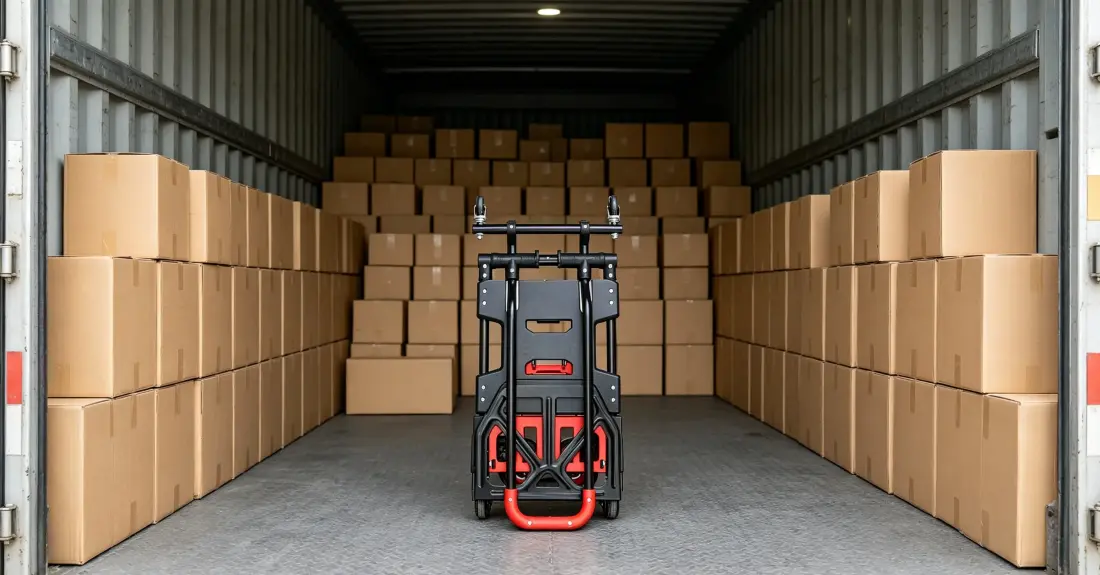
Folded dimensions do not directly determine the factory quotation, but they can influence several costs surrounding the product.
This makes dimensional efficiency relevant to total procurement value.
1.Storage Cost
A larger product may require more:
- Warehouse capacity
- Storage locations
- Handling movements
- Floor space
- Inventory planning
For a distributor with high inventory turnover, these costs may become meaningful over time.
A compact folded product can potentially reduce the space required per unit, although the actual savings depend on the warehouse design and storage system.
2.Transportation Cost
Shipping efficiency depends on the amount of usable cargo space occupied by each saleable unit.
Packaging dimensions, cartons per pallet, pallet height, and loading configuration can all affect the result.
This is why the relevant question is not simply:
What is the unit purchase price?
A broader question is:
What does each saleable unit cost to purchase, store, transport, and replenish?
This approach helps buyers identify costs that may not be visible in the original supplier quotation.
3.Landed Cost and Margin Planning
For importers, logistics costs form part of landed cost.
Landed cost then affects the margin available for distribution and retail.
A small difference in shipping efficiency may not matter for one shipment, but repeated orders can amplify the impact.
Buyers should therefore include folded dimensions in their landed-cost analysis without assuming that a smaller product will automatically be cheaper to ship.
The correct approach is to compare the entire package and shipment configuration.
What B2B Buyers Should Ask Before Ordering
Folded dimensions become useful only when they are supported by enough information to make a meaningful comparison.
Instead of requesting a product catalog and unit quotation alone, commercial buyers should ask suppliers for the dimensional data needed to understand the complete logistics profile.
1.Product and Packaging Questions
Ask the supplier:
- What are the exact folded dimensions?
- What are the open dimensions in each operating mode?
- What are the individual package dimensions?
- How many units fit in one carton?
- What are the gross and net weights?
- What is the pallet configuration?
- Can the packaging be adjusted for a specific sales channel?
These questions help distinguish the physical product from the actual shipment configuration.
2.Warehouse and Shipping Questions
Buyers should also ask:
- What storage orientation is recommended?
- Can the folded units be stored vertically?
- Can cartons be safely stacked?
- How many cartons fit on one pallet?
- What is the expected container loading arrangement?
- Will packaging dimensions remain consistent for repeat orders?
These questions are particularly useful for distributors who need predictable inventory planning.
3.Request Packaging Information Before Finalizing the Order
A product sample helps confirm the physical design.
Packaging information helps determine how the product will move through the supply chain.
For a bulk order, review how the folded trolley is protected, how much empty space is left inside the carton, whether the package is easy to handle, and whether the configuration works with your warehouse and distribution process.
These checks are especially useful before committing to a high-volume order.
How to Use Folded Dimensions in a Supplier Comparison
Once several suppliers provide dimensional and packaging information, compare the complete logistics profile rather than looking only at the smallest folded measurement.
The objective is not to find the product with the lowest folded size.
It is to identify the product that delivers the best balance between working performance, folded compactness, packaging efficiency, and commercial value.
1.Build a Dimensional Comparison Sheet
A practical comparison can include:
| Evaluation Point | Supplier A | Supplier B | Supplier C |
|---|---|---|---|
| Folded dimensions | |||
| 2-wheel open dimensions | |||
| 4-wheel open dimensions | |||
| Product weight | |||
| Individual package dimensions | |||
| Units per carton | |||
| Carton gross weight | |||
| Pallet quantity | |||
| Load capacity | |||
| MOQ | |||
| Lead time |
This comparison helps reveal whether a smaller folded product actually provides a meaningful logistics advantage.
For buyers reviewing a real product example, the 3-in-1 convertible folding trolley provides a useful reference for comparing working dimensions, folded size, and handling configurations.
2.Do Not Trade Away Function for Compactness
A smaller folded footprint is not useful if it creates unacceptable compromises elsewhere.
For example, a product may have a smaller folded depth but offer:
- A less practical platform
- Lower load capacity
- Poorer stability
- A more difficult folding mechanism
- More complicated packaging
- Higher product cost
Folded dimensions should therefore be treated as one important procurement variable rather than the only deciding factor.
Buyers who are still comparing the basic characteristics of different folding hand trucks may want to review a folding hand truck selection guide before evaluating detailed logistics requirements.
3.Evaluate the Full Product Life Cycle
The best purchasing decision considers the complete journey of the product:
Factory → Packaging → Warehouse → Transportation → Distributor → End User
At each stage, ask how efficiently the product uses available space.
A product that works well when open but becomes unnecessarily large when stored may create avoidable costs.
A product that combines useful working dimensions with an efficient folded profile has the potential to create value throughout the supply chain.
FAQ About Folded Dimensions and Bulk Purchasing
1.Why are folded dimensions important when buying hand truck dollies in bulk?
Folded dimensions can influence warehouse storage, packaging, inventory density, transportation planning, and shipment efficiency. The effect becomes more significant as order and inventory quantities increase.
2.Are smaller folded dimensions always better?
No. A smaller folded profile is valuable only when the product still provides appropriate working dimensions, load capacity, stability, and usability.
3.Should buyers compare folded product dimensions or package dimensions?
Both should be compared. Folded product dimensions describe the product itself, while package dimensions determine the space the product actually occupies during storage and transportation.
4.Can folded dimensions reduce shipping costs?
They can contribute to better shipping efficiency, but they do not guarantee lower shipping costs. Packaging, carton size, palletization, units per carton, and loading configuration also affect the final result.
5.What logistics information should a supplier provide?
At minimum, request folded and open dimensions, individual package dimensions, units per carton, gross and net weight, pallet configuration, and available loading information.
Ready to Plan Your Next Bulk Order?
When purchasing a foldable hand cart for wholesale or distribution, folded dimensions deserve the same attention as load capacity, materials, and operating design.
A compact folded structure can make a product easier to store, package, transport, and replenish. However, the commercial benefit depends on how effectively those dimensions work with the complete supply chain.
Before placing a bulk order, compare the folded product size with the packaging configuration, warehouse requirements, shipment plan, and expected inventory volume.
A well-designed product should not only perform efficiently when it is open.
It should also use space intelligently when it is folded.
Request a Bulk Quote
Related products