What Makes a Hand-Held Toolbox Easy to Carry During Daily Work?
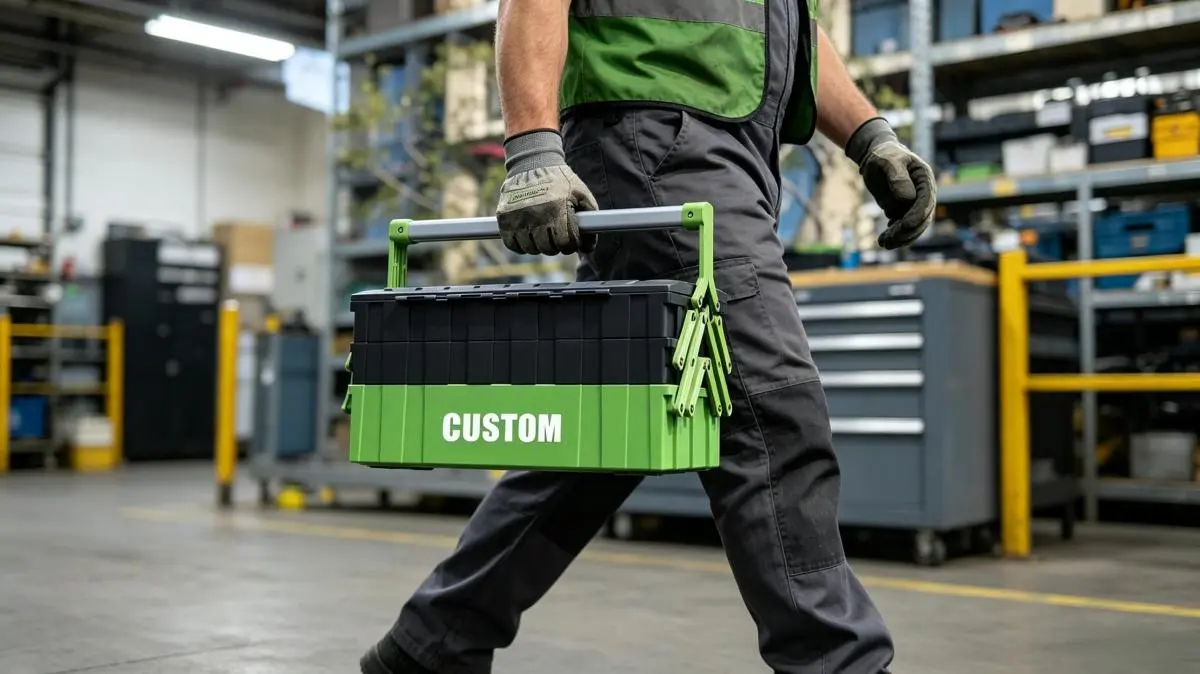
A hand held toolbox may look simple, but carrying comfort depends on much more than adding a handle to a storage case.
When a toolbox is carried occasionally, small ergonomic details may not seem important. During daily work, however, the same product can be lifted, moved, opened, repositioned, and carried repeatedly between vehicles, workshops, service areas, production zones, and job locations. Under these conditions, the relationship between the handle, the toolbox body, the loaded weight, and the user’s hand position becomes a major part of product usability.
For professional users and B2B buyers, this distinction matters. A toolbox that looks portable in a product photograph may feel unbalanced when loaded. A lightweight case may still be uncomfortable if its handle creates excessive pressure on the hand. A strong handle may still perform poorly if its connection transfers the load into a weak area of the body.
So what makes a hand-held tool box easy to carry during daily work?
The answer is not one isolated feature. A practical carrying experience comes from the interaction of handle geometry, grip clearance, load distribution, center of gravity, body dimensions, structural support, and repeated-use design.
For product developers, distributors, retailers, and private-label brands, these details are also useful when evaluating whether a portable tool box for professional use has genuine usability rather than simply a portable appearance.
- Why Carrying Design Matters More Than a Handle Alone
- How Handle-to-Body Design Affects Carrying Comfort
- Why Loaded Balance Matters More Than Empty Weight
- How Grip Geometry Reduces Hand Strain
- How Toolbox Dimensions Affect Movement While Carrying
- Why Opening and Carrying Should Be Designed Together
- How Material and Structure Support a Comfortable Hand-Held Toolbox
- How to Test a Hand-Held Toolbox Before Mass Production
- What B2B Buyers Should Check With a Toolbox Manufacturer
- A Practical Evaluation Checklist for Hand-Held Toolbox Design
- Frequently Asked Questions About Hand-Held Toolbox Design
- Final Takeaway: Comfortable Carrying Comes From the Whole Design
Why Carrying Design Matters More Than a Handle Alone
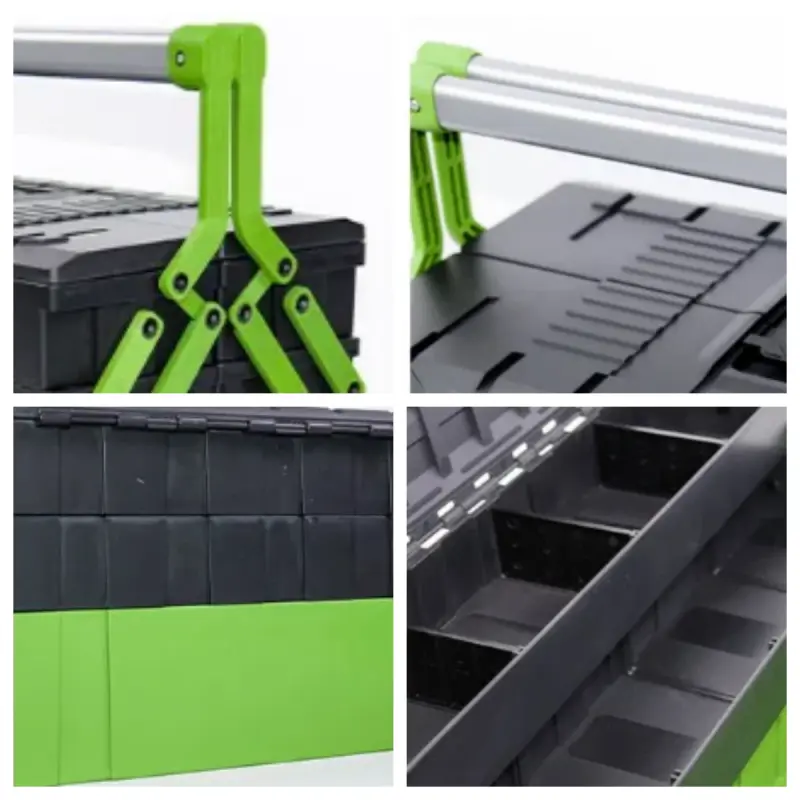
A toolbox can technically be “hand held” because it includes a handle, but that does not automatically make it comfortable to carry.
The handle is only the part the user touches. The carrying load travels through the handle connection, into the toolbox structure, and eventually into the user’s hand and arm. That entire load path needs to work together.
A useful way to evaluate a hand held toolbox is therefore to ask several practical questions:
- Where does the hand naturally sit?
- How much clearance is available around the grip?
- Does the toolbox remain balanced when loaded?
- Does the handle stay aligned with the main weight?
- Does the body swing or tilt while walking?
- Are sharp edges or hard transitions close to the hand?
- Does opening or closing the toolbox interfere with the carrying interface?
- Does the design remain comfortable after repeated carrying?
These questions are more meaningful than simply asking whether the product has a “strong handle.”
1.Portability Is a System, Not a Single Component
The carrying system includes at least four connected elements:
the handle, the handle connection, the toolbox body, and the loaded contents.
If one element is poorly designed, the user may feel the weakness somewhere else.
For example, a well-shaped grip cannot completely compensate for poor weight distribution. A reinforced handle connection cannot solve a toolbox that is too wide or deep for comfortable movement. A lightweight shell cannot eliminate discomfort caused by concentrated loads.
This is why carrying design should be evaluated as a system.
For B2B buyers, this also provides a better way to compare suppliers. Instead of asking only for the material or maximum load, buyers can ask how the manufacturer evaluates handle geometry, connection strength, loaded balance, and repeated carrying conditions.
How Handle-to-Body Design Affects Carrying Comfort
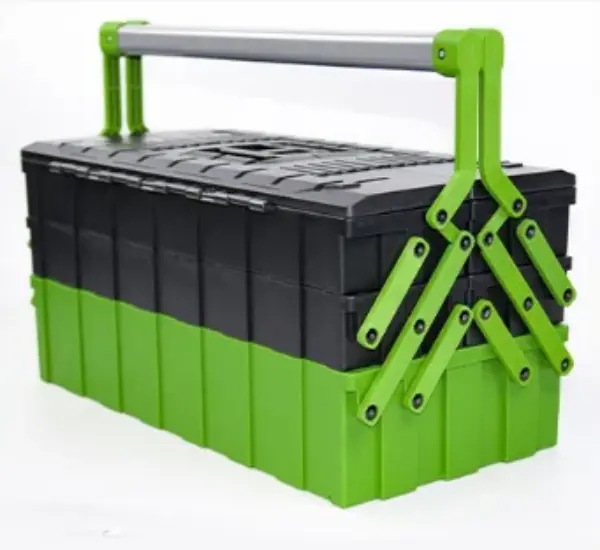
The handle is the user’s primary contact point, but the most important design relationship may actually be between the handle and the toolbox body.
The handle should be positioned so that the toolbox can hang naturally when lifted. The connection points should also transfer force into a structurally suitable part of the body instead of concentrating stress around a weak section.
1.Grip Clearance Should Match the Way People Carry
A hand needs more space than the visible thickness of the handle might suggest.
Users need enough clearance to insert the hand, close the fingers around the grip, and carry the toolbox without repeatedly touching the upper surface or nearby parts of the case.
This is particularly important when the toolbox is carried while wearing work gloves.
A grip that is technically usable with bare hands may feel restrictive when gloves are added.
For a professional hand-held toolbox, clearance should therefore be evaluated under realistic carrying conditions rather than from a clean product photograph alone.
2.Handle Position Influences Natural Balance
The position of the handle changes how the toolbox hangs when lifted.
When the handle is approximately aligned with the toolbox’s effective center of mass, the case can hang more naturally. When the carrying point is significantly displaced from that center, the box may rotate or tilt.
A tilted toolbox does not necessarily indicate a manufacturing defect. It may simply reflect an unfavorable relationship between handle placement and the loaded contents.
For designers, this means the handle location should be considered together with:
- the expected tool arrangement;
- the depth and height of the case;
- the approximate loaded weight;
- the location of heavier components;
- and how the toolbox is expected to be carried.
3.Handle Connections Are Part of the Ergonomic Design
Users often notice the grip itself but overlook the connection points.
From a manufacturing perspective, those connection areas are important because they transfer repeated carrying forces into the body.
A well-considered design should examine:
connection location + surrounding wall strength + fasteners or molded features + load direction + repeated movement.
For B2B sourcing, this is where the difference between a product photograph and actual engineering becomes visible.
A supplier that can explain how the handle and body are designed as a complete assembly provides more useful information than one that only states a material name.
Why Loaded Balance Matters More Than Empty Weight
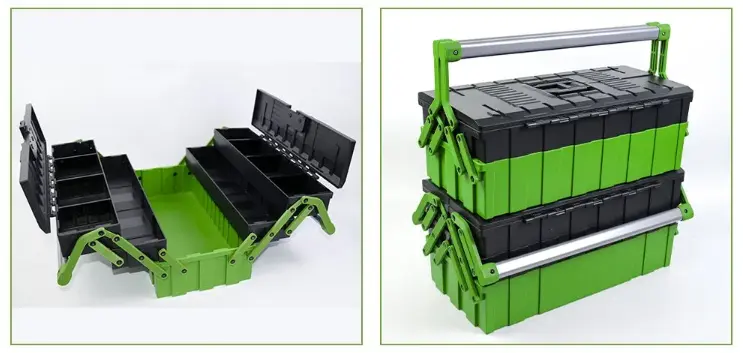
One of the most common mistakes in evaluating portable toolboxes is looking only at the empty product weight.
The toolbox is not normally carried empty.
Once screwdrivers, pliers, wrenches, fasteners, measuring tools, accessories, or maintenance components are added, the carrying experience becomes a function of the loaded product rather than the shell alone.
This is especially important for a hand held tool box intended for repeated daily movement.
1.The Center of Gravity Changes With the Contents
The center of gravity is not fixed in a toolbox.
If heavier tools are placed near one side, the product may naturally tilt toward that side. If heavier items are placed lower and closer to the central region, the case may feel more stable.
This is why carrying comfort cannot be judged solely from empty-product photography.
A meaningful evaluation should include representative contents.
For example, a toolbox designed for a maintenance product line might be loaded with a realistic combination of:
- hand tools;
- small hardware;
- accessories;
- measuring equipment;
- spare parts.
The exact contents will vary by market, but the principle remains the same: test the product in the condition in which customers are actually expected to carry it.
2.Total Weight and Perceived Weight Are Different
Two toolboxes can have a similar total weight but feel different in the hand.
The difference may come from:
- center-of-gravity position;
- handle location;
- grip shape;
- contact area;
- case dimensions;
- and how much the toolbox rotates while being carried.
This distinction is important for product development.
A supplier should not simply attempt to reduce the empty weight as much as possible. Removing material can affect structural performance, while reducing shell weight may not solve an uncomfortable load path.
The objective should instead be a practical relationship between structural mass, carrying position, and expected load.
3.Daily Carrying Requires More Than a One-Time Lift Test
A toolbox that feels acceptable after one lift may become irritating after repeated movement.
Daily-use evaluation should consider several repetitions rather than a single lift.
For example, a test can involve:
pick up → walk → place down → reopen → move again → repeat.
This type of evaluation exposes details that a static demonstration may not reveal.
For professional buyers, repeated-use behavior can be particularly relevant because the product may become part of a technician’s normal workflow.
How Grip Geometry Reduces Hand Strain
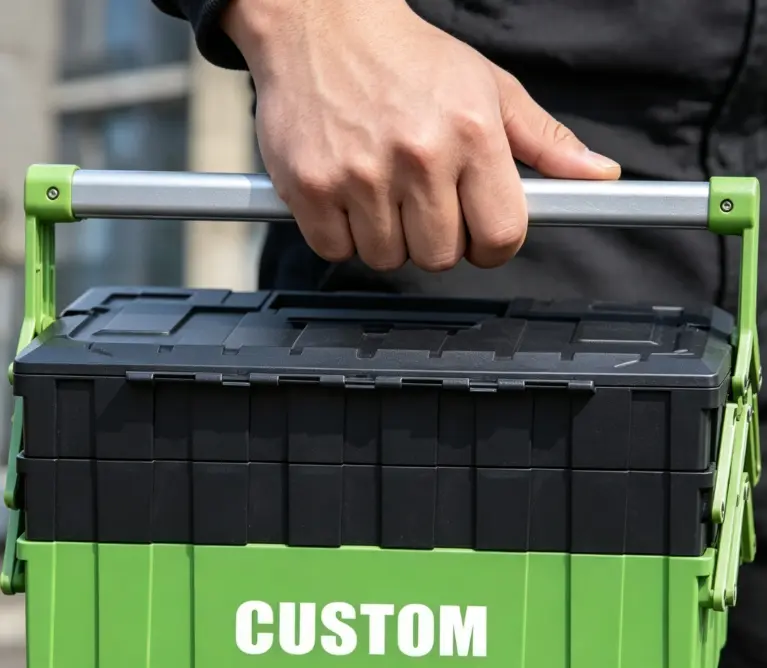
A toolbox handle is not successful simply because it is strong enough.
It must also provide a usable interface between the product and the user’s hand.
1.Grip Shape Affects Pressure Distribution
A narrow contact area can concentrate pressure into a smaller part of the hand.
A more suitable grip can distribute force across a broader contact area, making the carrying experience feel more controlled.
The goal is not necessarily to make the handle very thick.
The goal is to create a shape that allows the user to maintain a secure grip without requiring excessive finger pressure.
This becomes especially relevant when the toolbox is loaded and carried for longer periods.
2.Surface Texture Can Influence Grip Stability
A carrying handle should provide sufficient friction for controlled movement.
A completely smooth surface may feel less secure when the hand is wet or when gloves are used. However, excessive texture can also become uncomfortable.
For this reason, grip stability and grip comfort should be considered together.
A manufacturer evaluating a hand-held toolbox should consider the intended market, expected working environment, material characteristics, surface treatment, and grip geometry rather than evaluating texture independently.
3.The Transition Between Handle and Body Should Not Interfere With the Hand
The hand should have a clear gripping area.
If the connection structure protrudes into the user’s natural grip zone, it may create pressure points. Small geometric changes near the handle can therefore have a noticeable effect on comfort.
This is an example of why practical carrying design often comes down to details that are not immediately obvious from a product specification sheet.
How Toolbox Dimensions Affect Movement While Carrying
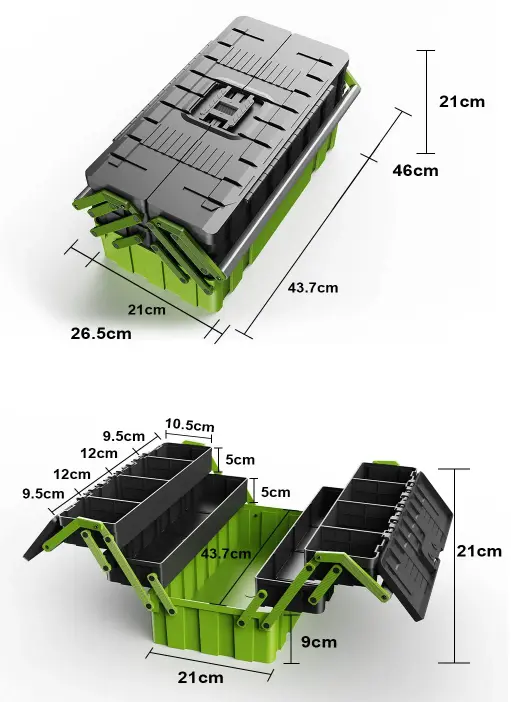
Carrying comfort also depends on the toolbox body itself.
The handle can be well designed, but an unnecessarily deep, wide, or awkwardly shaped case may interfere with the user’s leg, clothing, vehicle space, or nearby objects while moving.
1.Width Should Support Stable Carrying
A very wide case may create a larger lateral movement when the user walks.
This is not automatically a problem, but it can become less convenient when the product must pass through narrow work areas, storage aisles, vehicle doors, or equipment spaces.
For mobile professional applications, body width should therefore be considered together with the expected movement environment.
2.Depth Influences How the Toolbox Hangs
A deeper toolbox can shift the center of mass away from the carrying hand.
As depth increases, the case may have a greater tendency to rotate depending on how the internal load is distributed.
This is one reason why a larger physical size does not automatically produce a better carrying experience.
3.Corners and External Surfaces Affect Handling
External geometry matters during repeated movement.
Rounded or appropriately finished corners can reduce uncomfortable contact when a toolbox is moved close to the body or placed down repeatedly.
The purpose is not to make every toolbox visually rounded.
Instead, designers should identify the areas most likely to contact the user’s hand, arm, clothing, vehicle interior, or work surfaces and make those transitions practical.
Why Opening and Carrying Should Be Designed Together
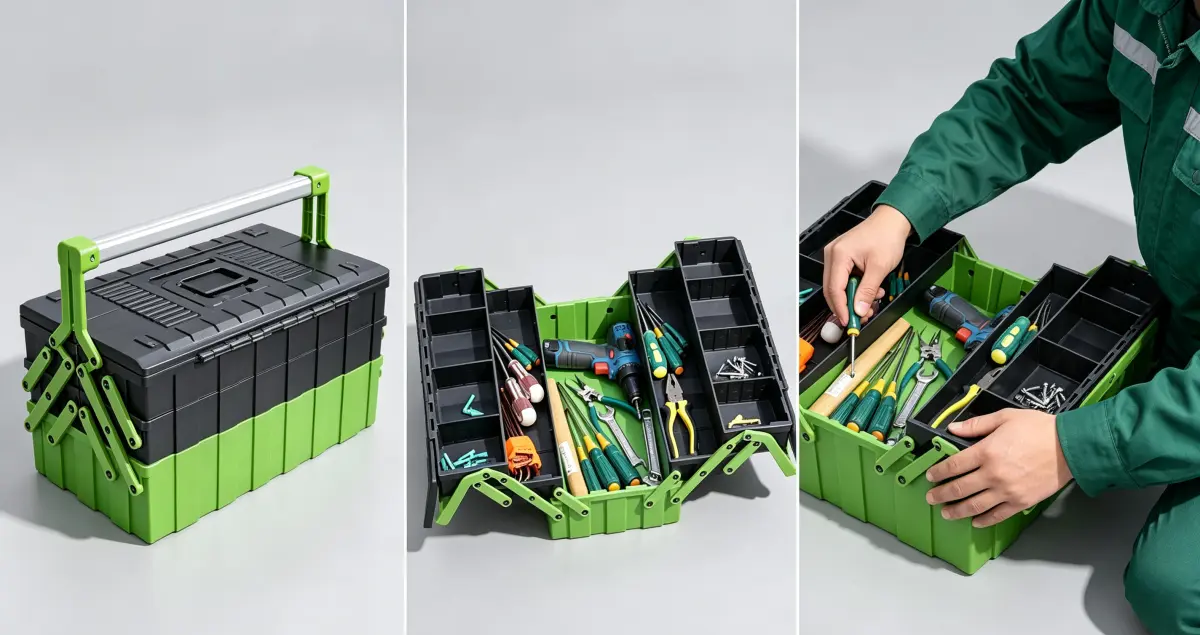
A toolbox is not only carried when closed.
In many working environments, users pick it up, move it, place it down, open it, retrieve tools, close it, and carry it again.
That sequence creates another design consideration: the carrying interface should work naturally with the opening and storage mechanism.
1.The Handle Should Not Fight the Opening Mechanism
A handle that interferes with the lid, trays, locks, or moving sections can make the product awkward even if carrying itself feels comfortable.
The interaction between these elements should therefore be considered during product development.
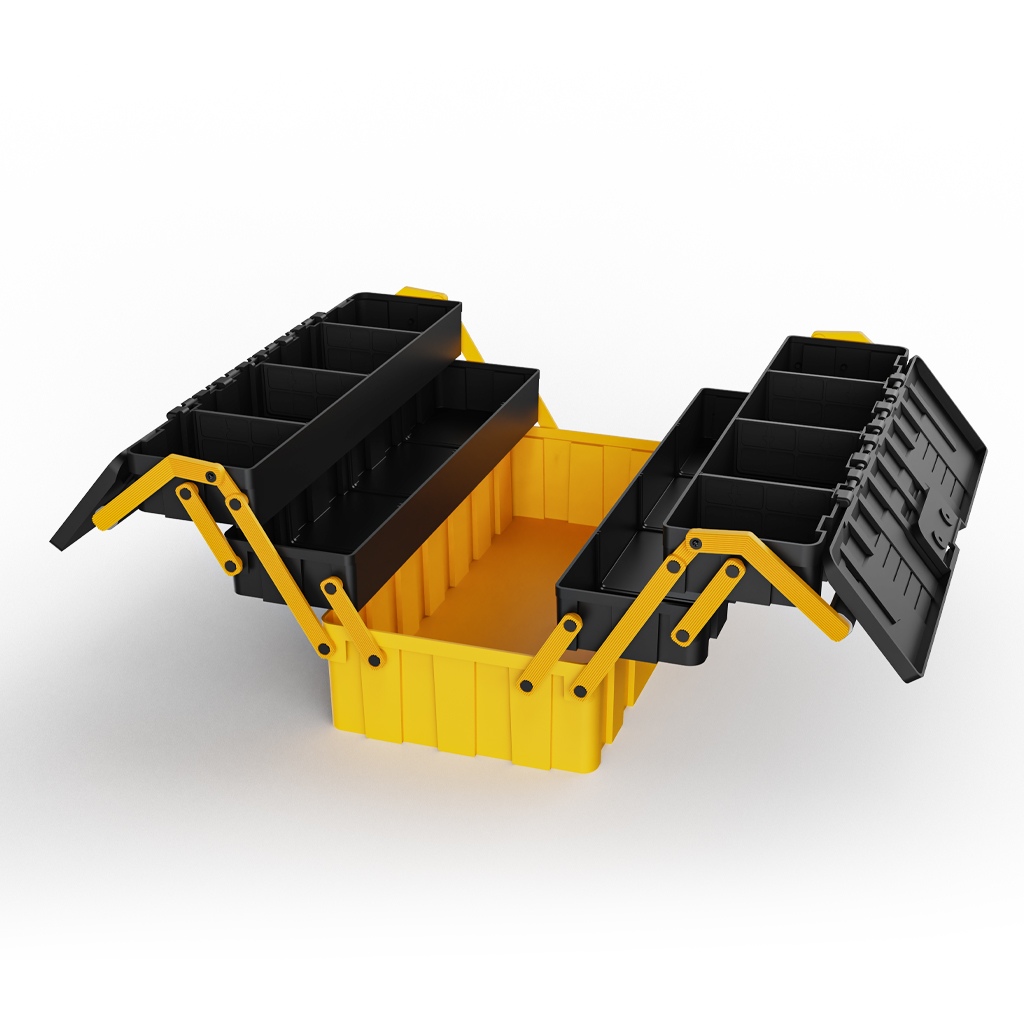
For a multi-layer toolbox, this means checking whether the carrying handle remains secure and unobstructive while the internal sections are opened.
2.Open-Product Balance Still Matters
Once a toolbox is opened, the visual and physical layout changes.
A cantilever-style structure, for example, can extend storage sections outward. This is useful for access, but designers also need to think about how the opened structure interacts with the base and the working surface.
That does not mean every hand-held toolbox needs the same structure.
It means that carrying design and opening design should be developed as one user workflow rather than as independent features.
A Practical Carry–Open–Use–Close Sequence
A useful product evaluation can simulate the actual sequence:
- Lift the closed toolbox.
- Carry it to a working location.
- Place it down.
- Open the storage system.
- Retrieve commonly used tools.
- Close the product.
- Carry it to the next location.
A design that works throughout this sequence is more useful than one that performs well only during the carrying stage.
How Material and Structure Support a Comfortable Hand-Held Toolbox
Material selection matters, but material alone does not determine whether a hand-held toolbox is easy to carry.
For buyers comparing material options in more detail, choosing a plastic toolbox also involves evaluating structure, component design, and the intended carrying conditions.
The final experience also depends on geometry, wall thickness, reinforcement, joints, moving parts, and manufacturing consistency.
1.Strength Should Be Distributed Through the Structure
A handle should not be treated as an isolated strong component attached to a relatively weak box.
The surrounding structure should be capable of transferring carrying forces.
This can involve:
- reinforced connection regions;
- suitable wall geometry;
- consistent molded sections;
- reliable fasteners or joints;
- controlled assembly;
- and repeatable manufacturing.
The exact solution depends on the toolbox architecture.
2.A Real Product Example: Three-Layer Configuration
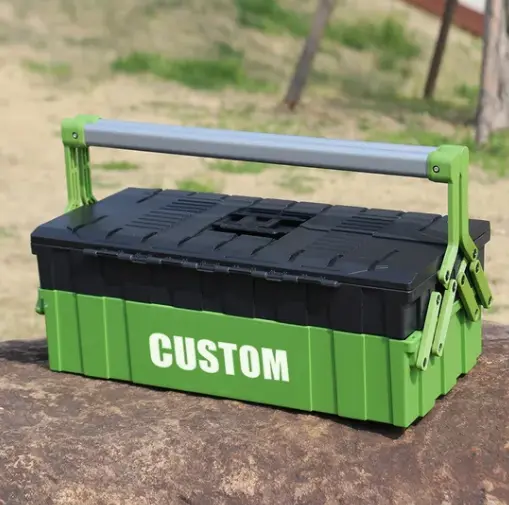
Jingyan’s three-layer toolbox provides a practical example of how carrying design can be connected with product configuration.
The listed model uses 46 × 26.5 × 15.8 cm dimensions, a 9.5 kg product weight, and a stated 30 kg load capacity. The available configurations include ABS+PA versions as well as a metal+PP+TPR option.
The important point for this article is not simply the specification.
It is how the physical configuration creates a carrying system.
The relatively compact body provides a defined hand-carrying footprint, while the layered structure allows the product to provide several storage areas without requiring a much wider case.
For B2B buyers evaluating a 3-layer toolbox, the right question is therefore not only “How much does it hold?” but also “How does the loaded product behave when it is carried repeatedly?”
3.A Five-Layer Configuration Changes the Carrying Equation
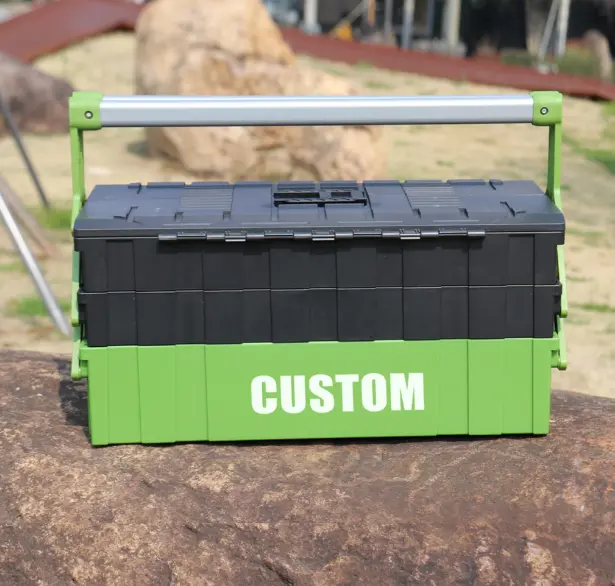
A five-layer version introduces additional vertical structure.
Jingyan’s listed configuration measures 46 × 26.5 × 21 cm, weighs 12.5 kg, and has a stated 30 kg load capacity.
The larger height and higher product weight change the carrying relationship.
This does not automatically make the five-layer design less practical. It simply means the design should be evaluated according to a different expected load and tool assortment.
For buyers considering a 5-layer toolbox, the key is to establish whether the additional structure provides meaningful commercial or user value while keeping the carrying experience appropriate for the target market.
This is an important distinction: a more complex toolbox does not automatically need to be better; it needs to be correctly matched to the intended carrying conditions.
How to Test a Hand-Held Toolbox Before Mass Production
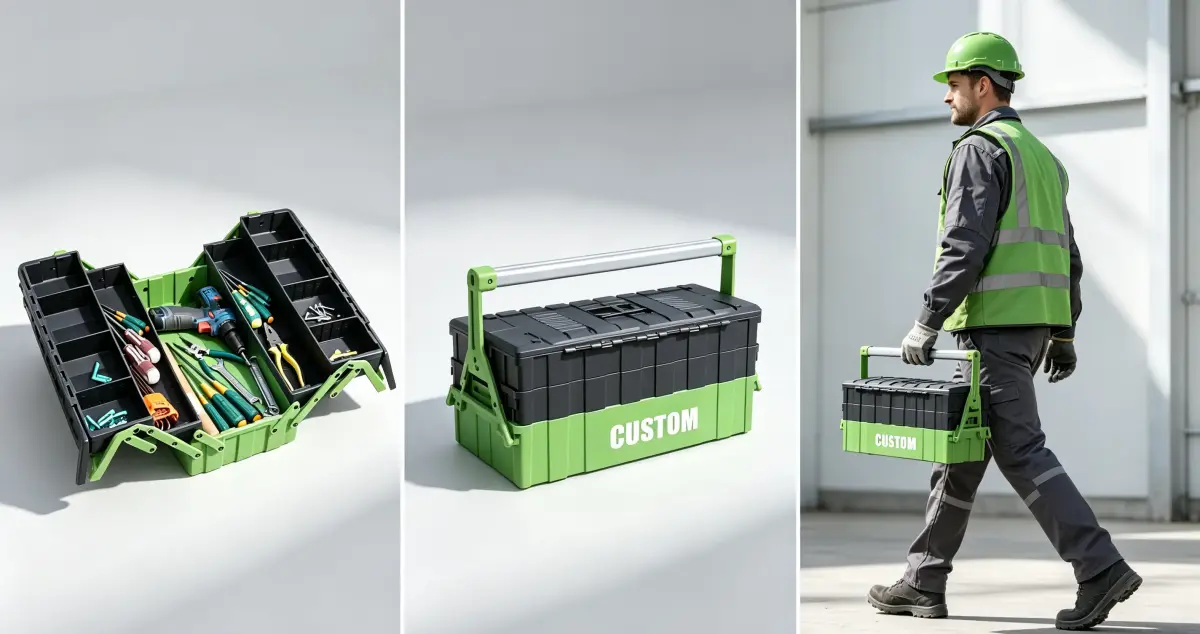
Carrying comfort should be tested rather than assumed.
For an OEM or private-label project, this can be especially valuable before finalizing tooling, packaging, or large-volume production.
1.Start With a Realistic Loaded Sample
Use representative tools instead of testing the empty toolbox.
The sample should approximate the expected weight and distribution of the final product.
The objective is to understand whether the handle, body, and internal load work together under realistic conditions.
2.Test the Main Carrying Position
Check whether the toolbox hangs naturally when lifted.
Observe:
- tilting;
- rotation;
- grip pressure;
- wrist position;
- handle movement;
- and contact between the case and the user’s body.
3.Repeat the Carrying Cycle
Repeat the same movement several times.
The test should not focus only on whether the toolbox survives the load.
It should also examine whether the user experience remains stable.
4.Record Ergonomic Observations
A simple product evaluation record can include:
Handle comfort — Balance — Grip stability — Case movement — Connection behavior — User feedback
This produces more useful development information than a single “pass” statement.
5.Use Test Results to Refine the Product
If the loaded toolbox rotates excessively, the solution may involve handle placement or load distribution rather than simply making the handle stronger.
If the grip creates pressure points, geometry may need to change.
If the handle remains comfortable but the case contacts the user’s leg while walking, the body dimensions may need refinement.
The useful lesson is that the observed problem should guide the design change.
What B2B Buyers Should Check With a Toolbox Manufacturer
For distributors, retailers, brands, and private-label buyers, carrying comfort is only one part of product development.
The supplier should also be able to support the design consistently at production scale.
1.Ask How the Supplier Validates the Carrying System
Useful questions include:
- How is handle strength evaluated?
- Are loaded samples used during product assessment?
- How are molded parts controlled?
- How are moving components assembled?
- What inspection points are used before shipment?
- Can the handle, color, packaging, or configuration be customized?
- Can the supplier support repeat production after the first order?
These questions connect the physical user experience with commercial reliability.
2.Consider the Manufacturer's Production Capability
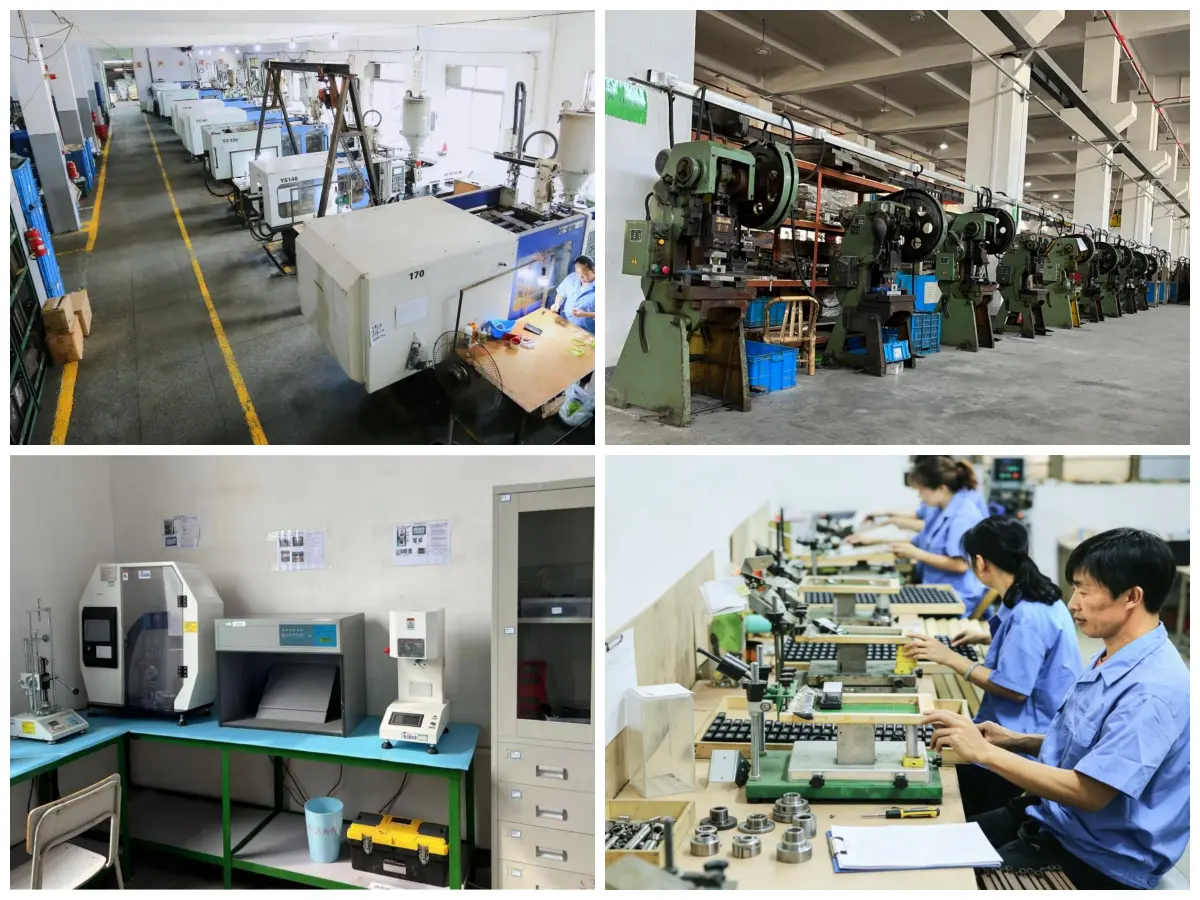
Jingyan Tools operates an OEM and ODM manufacturing system covering product development, mold design, production, quality control, and customer service.
The company currently describes a 16,000㎡ self-owned production base, more than 140 professionals, and more than 50 sets of production equipment across relevant manufacturing processes.
For a toolbox project, that capability can matter because carrying ergonomics often involves adjustments to molded components, structural sections, connection points, and tooling.
A supplier able to work across product design and manufacturing can make these changes more efficiently than a supplier that only assembles finished components.
3.OEM and ODM Should Start With the User Workflow
Customization should not begin with color alone.
For a hand-held toolbox, a more useful development discussion can begin with:
Who carries it?
How often is it carried?
What is normally inside it?
How far is it moved?
Where is it stored?
How is it opened and used?
Once those questions are understood, the supplier can discuss suitable dimensions, configuration, materials, branding, packaging, and production requirements.
This approach helps prevent unnecessary customization that adds complexity without improving the actual product.
A Practical Evaluation Checklist for Hand-Held Toolbox Design
Before selecting a hand-held toolbox for a product range, B2B buyers can review the following areas.
1.Carrying Interface
Check whether:
- the grip has adequate hand clearance;
- the handle position produces acceptable balance;
- the grip remains secure during movement;
- the connection area is structurally supported.
2.Loaded Condition
Check whether:
- the loaded toolbox remains reasonably stable;
- heavier tools do not create excessive rotation;
- the carrying experience matches the expected product weight;
- the box can be lifted and placed down repeatedly.
3.Product Geometry
Check whether:
- the body dimensions are appropriate for intended movement;
- corners and external transitions are practical;
- the case does not interfere unnecessarily with the user’s body;
- the handle works with the opening mechanism.
4.Production Considerations
Check whether:
- the supplier can maintain consistent molding;
- connection components can be controlled;
- repeat production can maintain the original design;
- packaging protects the handle and body during shipping;
- OEM/ODM adjustments can be made without creating unnecessary complexity.
The objective is not to find the toolbox with the greatest number of features.
The objective is to select a design whose carrying experience, structure, configuration, and production capability fit the intended market.
Frequently Asked Questions About Hand-Held Toolbox Design
1.What makes a hand-held toolbox easy to carry?
A hand-held toolbox is easier to carry when its handle position, grip geometry, loaded balance, body dimensions, and structural connections work together. A handle alone does not determine carrying comfort.
2.Is a lighter toolbox always easier to carry?
No. Lower product weight can help, but carrying comfort is also affected by weight distribution, center of gravity, handle position, grip shape, and body geometry.
3.Why is the handle position important?
The handle determines where the lifting force enters the toolbox. If it is poorly positioned relative to the loaded center of mass, the toolbox may tilt or rotate during carrying.
4.Should a toolbox be tested empty or loaded?
For daily-carry evaluation, it should be tested loaded with a realistic assortment of tools or representative weights. Empty testing does not fully reproduce the customer’s carrying experience.
5.What are important tool box handles design considerations?
6.Can a multi-layer toolbox still be comfortable to carry?
Yes, but additional layers can change product height, weight, and center of mass. The carrying system should therefore be evaluated with the intended configuration and expected load.
7.What should a B2B buyer ask a toolbox manufacturer?
Ask how the supplier evaluates handle structure, loaded carrying performance, materials, tooling, quality control, customization, packaging, and repeat-production consistency.
8.Can hand-held toolbox designs be customized for private-label products?
Depending on the project, customization can involve product color, branding, packaging, structural details, configuration, and other product-development requirements. These changes should be considered together with the intended user workflow.
Final Takeaway: Comfortable Carrying Comes From the Whole Design
A hand-held toolbox is easy to carry when the product behaves naturally as a complete carrying system.
The handle needs enough clearance for the user’s hand.
The grip needs to provide controlled contact without creating unnecessary pressure.
The handle position should work with the loaded center of mass.
The toolbox body should be compact enough for the intended movement environment.
The connection between the handle and body needs to transfer repeated carrying forces into a suitable structural area.
And most importantly, the product should be tested in the condition in which customers will actually use it.
For B2B buyers, this creates a more useful way to evaluate a portable tool box.
Instead of focusing only on product weight, material labels, or the appearance of the handle, buyers can evaluate the complete relationship between ergonomics, load distribution, body geometry, structural design, and manufacturing consistency.
Jingyan Tools uses its toolbox manufacturing experience to support both standard configurations and OEM/ODM development. Its three-layer and five-layer toolbox configurations also show how carrying design can be adapted to different product capacities and physical layouts.
For distributors, brands, and private-label buyers, the most effective development process is to define the intended carrying conditions first and then work backward toward the appropriate toolbox configuration.
A toolbox should not simply be portable because it has a handle.
It should be designed to be carried well.
That difference can become important when a toolbox is expected to move with the user every day.
Need a Portable Work Bench with Fast, Tool-Free Setup?
Tell us your target market, required quantity, packaging requirements, and customization needs.
Related products