Are Folding Workbenches Worth It? Pros, Cons and Best Uses

A folding workbench can be a worthwhile purchase, but it is not the best choice for every workspace or task. Its main advantage is straightforward: it provides a usable work surface when needed without permanently occupying the same amount of floor space. For people who share a garage, work in a compact workshop, or need a temporary workstation, that flexibility can make a real difference.
However, folding workbenches also involve trade-offs. The working surface may be smaller than that of a permanent bench, the folding structure must remain secure, and certain tasks require more rigidity than a portable design can provide. A low purchase price alone does not make a workbench good value.
So, are folding workbenches worth it? They are generally worth considering when space-saving, portability, and flexible setup solve a genuine problem. They may be less suitable when a bench needs to remain installed all day, when the work requires frequent high-force operations, or when large materials need a substantial permanent surface.
This article explains the main folding workbench pros and cons, the situations in which these products are most useful, when another type of workbench may be a better choice, and how to decide whether the benefits justify the purchase.
- The Short Answer: When Is a Folding Workbench Worth It?
- The Main Advantages of Folding Workbenches
- The Drawbacks: When a Folding Workbench May Not Be Worth It
- Which Tasks Make a Folding Workbench Worth Buying?
- When Should You Choose a Fixed Workbench Instead?
- A Practical Checklist for Deciding Whether It Is Worth It
- A Real Product Example: Evaluating Value From the Specifications
- Final Verdict: Are Folding Workbenches Worth It?
- Frequently Asked Questions
The Short Answer: When Is a Folding Workbench Worth It?
A folding workbench is usually worth considering when you need a practical working surface but cannot justify permanently dedicating floor space to a bench.
The strongest reasons to choose one include:
Limited floor space: The bench can be folded away after a task, allowing the area to serve another purpose.
Occasional work: You need a platform for assembly, repairs, maintenance, or short projects, but not a permanently occupied workstation.
Flexible working locations: You may need to move the work surface between suitable areas instead of completing every task at one fixed station.
Shared workspace: The same room needs to accommodate tools, storage, vehicles, or other activities at different times.
Convenient storage: A folding design may be easier to put away than a full-size permanent structure, provided its folded dimensions and weight suit the available space.
A fixed workbench may offer better value when you have a dedicated workshop, perform the same demanding task every day, or need a large surface that is always ready to use.
The key question is not whether folding workbenches are universally better or worse than fixed benches. It is whether their advantages match your actual working conditions.
A useful rule of thumb: If you regularly need to clear the workspace after finishing a task, the folding function has practical value. If the bench rarely needs to move and space is not a concern, that same feature may provide little additional benefit.
The Main Advantages of Folding Workbenches
1.They Free Up Space Between Jobs
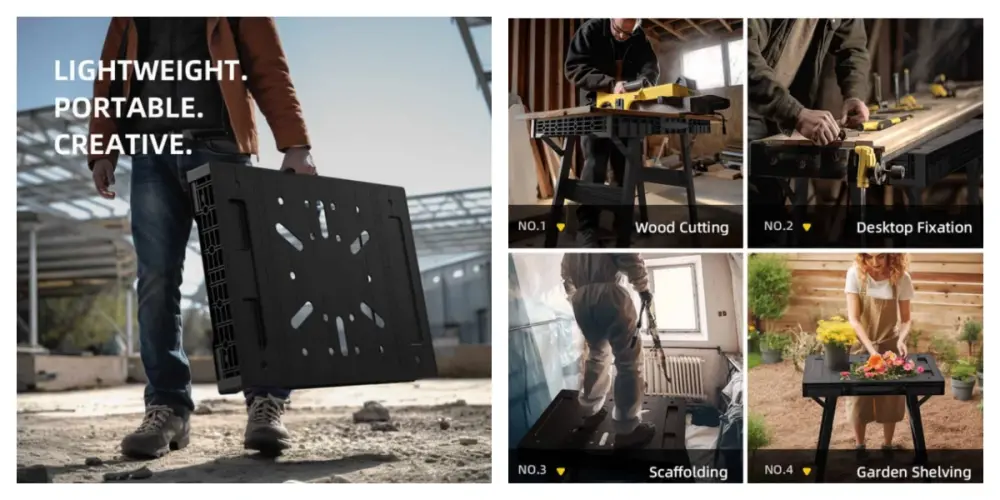
The clearest advantage of a folding workbench is that it does not need to occupy its full working footprint all the time.
In a compact garage or shared workshop, a permanent bench can limit how the room is used. Even when no work is taking place, the structure continues to occupy floor space. A folding model allows the workspace to change according to the task.
For example, you might need a work surface for a short repair, a small assembly job, or preparing materials. Once the work is finished, the bench can be folded and stored, provided the model’s actual folded dimensions suit the available storage area.
That difference matters most when a space has several purposes. The value comes not simply from owning a smaller bench, but from being able to reclaim the area when the bench is not in use.
There is one important distinction: folding does not mean the product takes up no space. You still need a suitable place to store it, and the actual folded dimensions should be checked before buying.
2. They Make the Work Area More Flexible
A fixed workstation encourages a consistent working arrangement. That can be useful, but it can also limit flexibility.
A folding workbench allows the user to set up a temporary work area where a suitable, level surface is available. It can support different tasks at different times, as long as each task falls within the product’s intended use and stated limits.
This flexibility is useful when a single space has to support assembly, sorting, maintenance, or occasional project work. Rather than permanently installing a separate surface for every activity, users can bring out the bench when needed.
For occasional users, this may be more practical than investing in a larger permanent workstation. For anyone working in a shared environment, it can also make it easier to restore the space to its original function after the task is complete.
However, a portable work surface is not automatically suitable for every operation. The task, workpiece, required stability, and need for dedicated fixtures still matter.
3. They Can Be Easier to Move and Store
A folding structure is intended to make storage and transport more convenient than leaving a full-sized bench permanently assembled.
That does not mean every folding workbench is lightweight or easy for every person to carry. Product weight, folded thickness, carrying method, and storage location all affect how convenient it is in practice.
Before buying, consider the full movement process:
Can you move the bench from storage to the work area without an awkward lift?
Can it pass through the doors or access points you normally use?
Is there enough storage space for its folded configuration?
Can one person handle it safely, or will assistance be needed?
These questions become particularly important if the bench will be moved frequently. A product that folds but is awkward to carry may deliver less convenience than expected.
The real benefit is easier handling for your particular situation, not portability as a label on the product page.
4. They Can Reduce the Need for a Permanent Workstation
Not every task justifies a fully installed workbench. Some users need a working surface only for occasional assembly, maintenance, or short projects.
A folding bench can fill this gap without requiring a permanent location. It may be especially useful when users are unsure whether a dedicated workstation would be used frequently enough to justify its space and cost.
For instance, a shared workspace may need a temporary surface at certain times but need the floor area clear at others. In that situation, a folding design offers a practical compromise between having no work surface and installing a permanent bench.
The benefit is not that a folding workbench replaces every type of bench. It is that it can provide a usable work area without requiring the same ongoing space commitment.
The Drawbacks: When a Folding Workbench May Not Be Worth It
1. It May Not Match a Fixed Bench for Every Task
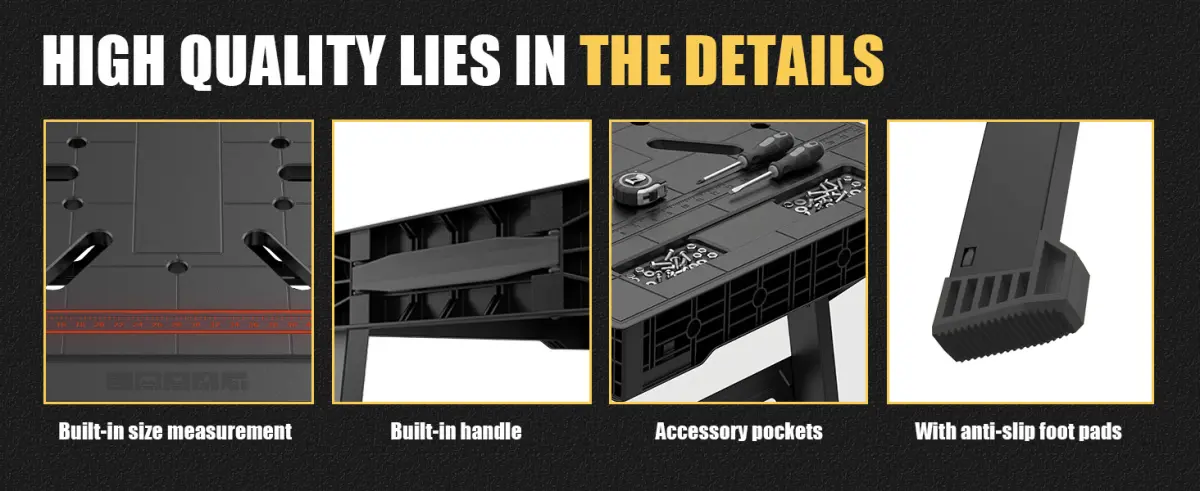
A folding workbench has moving joints or a folding structure that must remain securely positioned during use. Depending on the model and the task, it may not provide the same feel as a well-installed permanent bench.
This difference can become more noticeable during tasks that apply force sideways or repeatedly push and pull against the working surface. Cutting, planing, forceful tightening, or other demanding operations can make stability more important than portability.
That does not mean all folding workbenches are unstable. It means stability must be assessed for the specific model and operation, rather than assumed from the product category.
Use the bench on a suitable, level surface and follow the manufacturer’s setup and locking instructions. If a task requires a highly rigid platform or special mounting points, a fixed bench designed for that work may be a better option.
2. The Working Surface May Be Too Small
Portability often involves a compromise in working area. A compact bench may be convenient to store, yet provide less usable space than a permanent workstation.
Think about the materials and tools you actually handle. A surface that comfortably accommodates a small assembly might be unsuitable for a large panel, long workpiece, or task requiring several components to remain laid out at once.
A smaller surface can also make tool placement more difficult. If the workpiece takes up most of the available area, there may be little room left for measuring equipment, accessories, or parts waiting to be installed.
The right comparison is therefore not simply “folding versus fixed.” It is usable surface area versus the space you can afford to dedicate to the bench.
If your work routinely requires more space than a portable model provides, buying a folding bench may result in frustration rather than value.
3. The Folding Mechanism Needs Attention
The folding structure is one of the reasons to buy this type of workbench, but it is also a part of the product that deserves attention.
Users should check that the bench opens and closes as intended, that its support structure is fully positioned before work begins, and that the locking arrangement operates according to the manufacturer’s instructions. Loose components, visible damage, or unexpected movement should never be ignored.
Repeated folding and unfolding can also make wear more apparent over time. The appropriate inspection and maintenance requirements depend on the design and the manufacturer’s instructions.
A folding workbench is not automatically difficult to maintain. Nevertheless, buyers should not judge it only by how quickly it opens. Ease of setup needs to be accompanied by dependable locking and safe use.
4. Storage and Carrying Still Take Effort
Although a folding workbench reduces the space it occupies when stored, you still need to lift, move, or position it. For users with limited storage access or difficulty handling bulky items, that can become a practical limitation.
The folded product also takes up some room. A bench may fit under a shelf, against a wall, or inside a storage area, but those options depend on its actual folded measurements.
The purchase is less attractive if there is no convenient place to store it, or if moving it in and out becomes so inconvenient that it is rarely used.
This is why the folding feature should be evaluated as part of the full routine, not as a specification in isolation. Consider where the bench will be kept, how it will be moved, and what must happen before and after each task.
5. A High Load Rating Does Not Answer Every Question
Some folding workbenches advertise high load capacities. That information can be relevant, but it should not be the only reason to buy a product.
A stated maximum load is meaningful only when understood in the context of the model, the test method, load distribution, and the manufacturer’s intended conditions of use. A rating should not automatically be interpreted as permission to apply the same load in every position or during every type of operation.
For example, a static load figure does not by itself tell you how a bench will behave when a user applies sideways force, moves a workpiece, or performs a task involving repeated impact. Those are different questions and may require different evidence.
Before buying, review the product documentation and identify the limits that matter to your actual task. If any load-related requirement is critical, ask the supplier to clarify the relevant test conditions and supporting information.
A high number can be attractive, but the product’s suitability for the intended job matters more than a single headline specification.
Which Tasks Make a Folding Workbench Worth Buying?

The best folding workbench uses are those where the user benefits from having a work surface available temporarily, then being able to clear the area.
1. Occasional Assembly, Repairs and Maintenance
A folding workbench can be useful for jobs that need a flat working surface but do not require a permanently installed station. Examples may include assembling small items, preparing components, completing simple repairs, or carrying out occasional maintenance.
In these situations, the workbench can be set up for the task and stored afterwards. The value lies in having a designated work surface when required without keeping the entire area occupied between jobs.
The suitability of a particular model still depends on the workpiece, the required stability, and the tools being used. Tasks that require heavy side pressure or specialized clamping arrangements may need a different workstation.
2. Shared or Multi-Purpose Work Areas
Shared spaces are among the clearest use cases for folding workbenches.
A garage, utility room, storage area, or compact workshop may need to accommodate different activities throughout the day. A permanent bench can interfere with those activities, especially when the area also has to remain accessible for storage or movement.
A folding workbench lets users create a temporary work zone instead. When the job is done, the bench can be stored and the area returned to its other purpose.
This is most useful when the storage location is convenient and the product’s folded footprint is compatible with the available space. If a folding bench is difficult to retrieve or put away, its theoretical space-saving benefit may be less valuable in everyday use.
3. Temporary Workstations and Field Tasks
Some tasks happen away from a permanent workshop. Users may need a work surface for temporary assembly, inspection, or maintenance at a suitable work location.
A folding bench can make sense in these situations because it can be transported and set up where the work takes place. The actual benefit depends on the product’s carrying weight, folded dimensions, access conditions, and suitability for the task.
For work in changing environments, users should also check that the ground or floor is appropriate and that the bench can be set up securely. Outdoor use should not be assumed to be suitable for every model or every weather condition.
4. Short Projects That Do Not Justify a Dedicated Bench
A permanent bench may be excessive for someone who completes occasional projects rather than working at a bench every day.
In this case, a folding workbench can provide a middle ground: a more intentional working surface than improvised supports, without committing a permanent area to a station that may sit unused.
It is most worthwhile when the user can identify recurring tasks that benefit from a dedicated surface and can store the bench conveniently afterwards.
On the other hand, if the bench will be used only once and the work can be completed safely with an existing suitable surface, a new purchase may not be necessary. The purpose of evaluating value is to determine whether the product solves a recurring problem, not to justify buying another tool.
When Should You Choose a Fixed Workbench Instead?
A fixed workbench may be the better investment when the workspace is permanent, the work is frequent, and the task benefits from a stable setup that remains ready to use.
Consider a permanent bench when:
The workspace is dedicated: You do not need to reclaim the floor space for other activities.
The work is frequent: Keeping the bench ready may be more convenient than setting it up repeatedly.
The task requires greater rigidity: Repeated force, side pressure, or specialized fixtures make the work surface and its support structure particularly important.
A larger surface is essential: Your materials, components, or tools need more space than a compact portable model provides.
The bench will stay in one position: You gain little from folding if the bench rarely needs to be moved.
A fixed workbench is not automatically better in every respect. It may take up more space and be harder to relocate. The decision depends on which limitation is more important in your situation.
The best choice is the one that fits the actual job and workspace. A folding model is not a compromise when flexibility is the main requirement; similarly, a fixed bench is not excessive when permanent stability and availability matter most.
A Practical Checklist for Deciding Whether It Is Worth It
Before you buy, make the decision using the way you expect to use the product, rather than relying on the word “portable” or one headline feature.
1. Identify the Problem You Need to Solve
Start with the reason you want a workbench. Is the main issue limited space, the lack of a suitable work surface, the need to work in different places, or the inconvenience of a permanent station?
If you cannot identify a specific problem, the value of a new folding bench may be limited. If you regularly need a temporary surface and then need the floor clear, the use case is much stronger.
2. Consider How Often You Will Use It
Frequency affects value. A bench used regularly for recurring tasks may justify a higher initial cost than a product that is rarely needed. However, frequency alone is not enough: the tool must also fit the tasks safely and comfortably.
A simple way to think about it is to consider the expected cost per use:
Expected cost per use = purchase cost ÷ estimated number of uses
This is not a complete financial model, but it can help put the purchase into perspective. A low-cost bench that does not suit your tasks may provide little value, while a more suitable model may be useful over many years of appropriate use.
You should also consider any additional costs that apply, such as storage accessories or replacement parts, without assuming that every model will require them.
3. Confirm the Working and Folded Dimensions
Check the dimensions of the open bench against the work you normally do. Then check its folded dimensions against the place where you intend to store it.
Do not assume that all folding workbenches become equally compact. Two products may have similar working surfaces but different folded footprints, weights, or handling requirements.
A product is more likely to deliver its intended convenience when both configurations suit your needs: it provides enough working area when open and can be stored without creating a new problem.
4. Match the Product to the Actual Task
Think about the loads, forces, tools, and materials involved. A workbench suitable for occasional assembly may not be the right choice for a task requiring sustained heavy lateral force or specialized fixtures.
Read the manufacturer’s stated capacity and operating instructions. If the intended use is demanding or the load requirement is critical, request the relevant product documentation rather than guessing from appearance or headline figures.
Do not use a bench with an unknown, damaged, or improperly secured folding structure. Follow the manufacturer’s setup instructions and keep the working area appropriate for the task.
5. Evaluate the Total Convenience, Not Just the Folding Feature
A good purchasing decision considers the entire routine: taking the bench from storage, setting it up, completing the task, folding it, and returning it to storage.
If that sequence is straightforward and solves a genuine space problem, the folding feature has practical value. If the bench is difficult to carry, awkward to store, or unsuitable for the work, the benefit may be smaller than expected.
The strongest purchase case is a product that meets the working requirements and makes the overall routine easier—not simply one that has a folding mechanism.
A Real Product Example: Evaluating Value From the Specifications
Product specifications can help illustrate how to judge value without assuming every folding workbench is equally suitable.
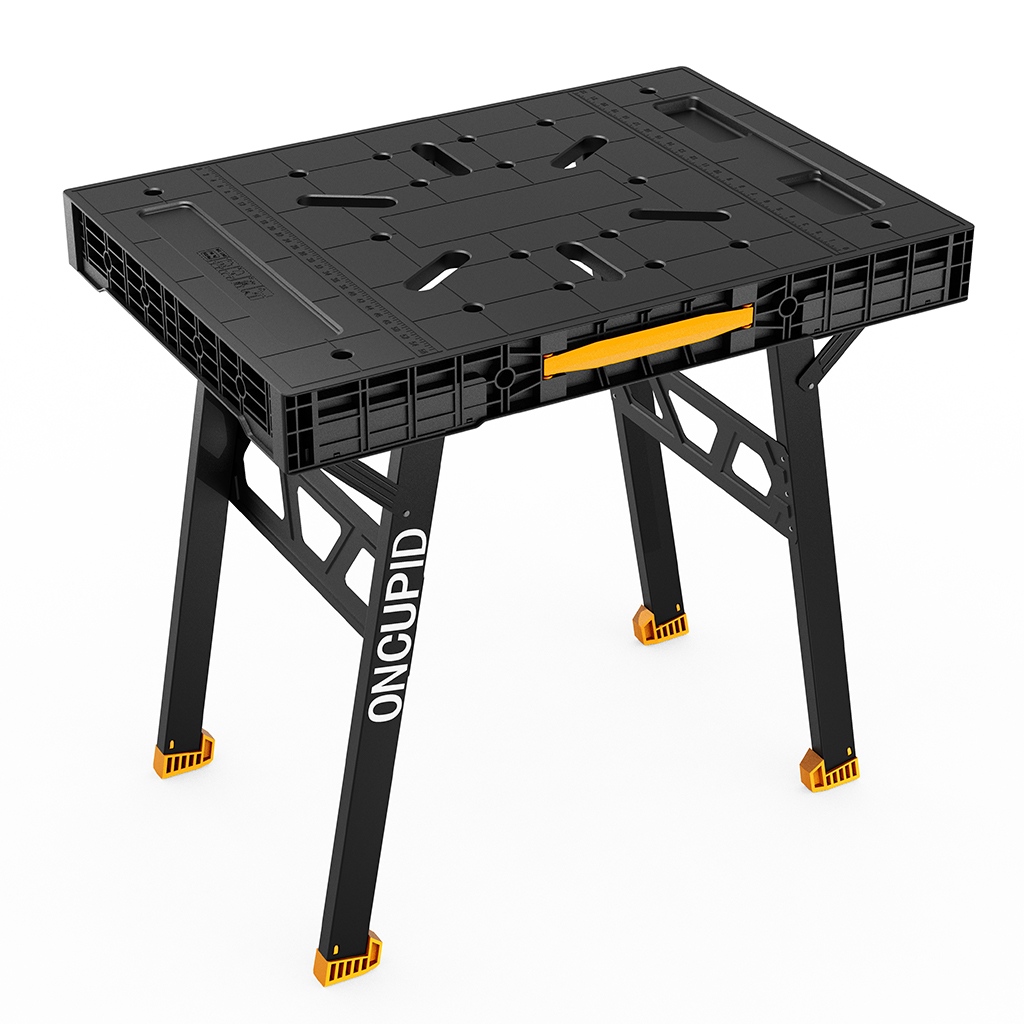
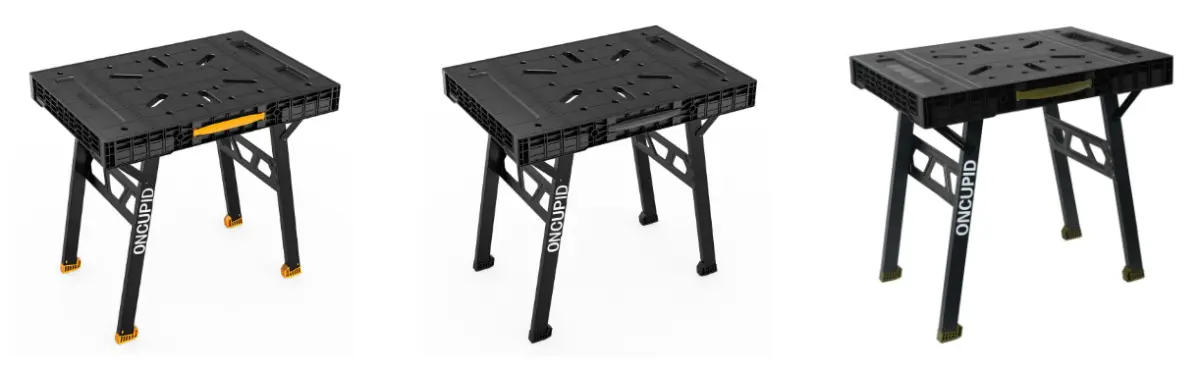
For example, a Jingyan Tools folding workbench listing describes a model with a PP working surface, a metal frame, an approximately 85.2 × 60.8 × 79 cm open configuration, a product weight of around 10.5 kg, and a stated maximum load capacity of 750 kg. The product information also describes a folding structure and a load-testing claim. Buyers should confirm the exact model’s current specifications and test conditions before relying on any advertised capacity.
These details help a potential buyer begin evaluating the product. The dimensions show the approximate working area; the product weight helps the buyer consider handling; the folding structure addresses storage flexibility; and the stated load figure provides one specification to verify against the intended task.
But these figures do not prove that the product is the right choice for everyone. A user with very limited storage may care most about the folded dimensions, while someone carrying a bench frequently may focus on the weight and handling method. A buyer performing demanding work should also confirm the applicable load conditions, stability, and operating limitations.
The appropriate conclusion is not that a high-capacity folding workbench is always worth buying. It is that a model should be evaluated against the same real-world requirements that made a folding workbench attractive in the first place.
Jingyan Tools manufactures workbenches and other tool products for global buyers. Ningbo Jingyan Tool Industrial Co., Ltd. was founded in 2003 and reports a 16,000 m² production base, more than 140 staff, and more than 50 sets of production equipment. That background may be relevant to buyers reviewing the manufacturer behind a product, but factory scale alone does not establish that a specific model is suitable for every task.
For anyone comparing models or considering a product for a particular use, the most useful next step is to review the specifications for the exact model and clarify any requirements that are not covered in the listing. A product page is a starting point, not a substitute for confirming suitability. The final decision should be based on the intended task, product documentation, and the amount of space and handling flexibility the user needs.
Final Verdict: Are Folding Workbenches Worth It?
Yes, folding workbenches are worth it when flexibility and space-saving solve a real problem. They are particularly useful for occasional projects, shared work areas, temporary workstations, and users who need to clear the floor after a task.
Their advantages are less important when the bench remains in one place, when a large permanent work surface is necessary, or when the task requires a level of rigidity that the chosen portable model cannot provide.
The most sensible decision comes from matching three things: the task you need to complete, the space available, and the product’s documented capabilities. Consider not only the purchase price but also how frequently you will use the bench, how easy it is to store, and whether it is suitable for the work.
For individual buyers, the right folding workbench should solve a recurring problem without creating new frustrations. For retailers, distributors, and brands evaluating the category, the same principle applies: a product is worth adding to a range when its features match a clear customer need and can be supported by accurate product information.
If you are evaluating folding workbench models for a particular application or product range, review the specifications of the exact model and clarify any requirements before placing an order.
Frequently Asked Questions
1.Are folding workbenches as sturdy as fixed workbenches?
Not necessarily. Stability depends on the specific design, support structure, surface, setup, and task. A suitable folding workbench can work well for many jobs, but a fixed bench may be preferable for repeated high-force work or applications that require a permanently rigid setup.
2.Can a folding workbench support heavy loads?
Some models advertise high maximum load capacities, but the stated figure must be understood in context. Ask how the rating was determined, what load conditions apply, and whether the documentation covers the intended operation. Never assume that a static-load figure automatically applies to every type of force or movement.
3. Are folding workbenches good for everyday use?
They can be, provided the model suits the daily tasks and is set up and maintained according to the manufacturer’s instructions. If the bench needs to remain available all day and does not need to move, a fixed workbench may be more convenient.
4.What are the biggest disadvantages of folding workbenches?
The main drawbacks may include a smaller working surface, less suitability for certain high-force tasks, the need to check the folding structure, and the requirement for storage and handling. These disadvantages vary by model and should be assessed against the work being performed.
5.Is a folding workbench worth it for a small workspace?
Often, yes—especially when the work area serves several purposes and the bench is needed only at certain times. The benefit depends on whether the folded product can be stored conveniently and whether its open working surface is large enough for the planned tasks.
Related products