How to Source Folding Sawhorses From a Manufacturer in China

Sourcing folding sawhorses from China can help importers, distributors, retailers, and tool brands develop or expand a product range with manufacturing and customization options. However, choosing a supplier involves more than finding a low quotation. Buyers need to establish whether the manufacturer can supply the required configuration, maintain consistent specifications, support the necessary packaging and branding, and manage repeat orders reliably.
When looking for a folding sawhorse manufacturer in China, it helps to follow a structured sourcing process. Start by defining the product and target market, then verify the manufacturer’s role, evaluate suitable models, approve a sample, agree on quality requirements, and confirm the commercial and shipping arrangements before bulk production.
This approach is especially important when a sawhorse will be sold under a private label or distributed through an established retail channel. A clear specification and documented approval process help reduce misunderstandings between the buyer and manufacturer before they become costly production or delivery problems.
- Define Your Folding Sawhorse Requirements Before Requesting Quotes
- Verify the Folding Sawhorse Manufacturer in China
- Review the Available Folding Sawhorse Models
- Evaluate a Sample Before Approving Bulk Production
- Confirm Quality Control and Product Documentation
- Confirm the Quotation, OEM/ODM Scope, and Packaging
- Plan Bulk Production, Inspection, and Shipment
- Why Buyers Consider Jingyan Tools for Folding Sawhorse Sourcing
- Frequently Asked Questions About Sourcing Folding Sawhorses
- Start Your Folding Sawhorse Sourcing Enquiry
Define Your Folding Sawhorse Requirements Before Requesting Quotes
Before contacting a China sawhorse supplier, decide what the product must do and what your business needs from the finished goods. A brief that identifies the essential requirements is more useful than a general request for a catalogue and the lowest price.
1.Identify the Target Market and Product Application
Start with the market, customer type, and intended application. A product developed for a hardware retail assortment may need different packaging and branding from one supplied to a professional tool distributor. These commercial requirements should be considered alongside the product’s physical design.
Prepare a sourcing brief covering the points relevant to your project:
-
Intended market and customer group
-
Required working height and product dimensions
-
Open and folded dimensions
-
Fixed-height or adjustable-height configuration
-
Frame construction and component materials
-
Hooks or other included accessories
-
Color, logo, and private-label requirements
-
Retail packaging, carton specifications, and labeling
-
Target order quantity and expected reorder frequency
-
Required product documents or market-specific information
Separate essential requirements from preferences. For example, a particular folded dimension may be mandatory for your packaging plan, while a color variation may be negotiable. Making that distinction helps the manufacturer identify a suitable existing model before discussing custom development.
2.Decide Between an Existing Model and Custom Development
Ask whether an existing folding sawhorse model can meet your core requirements. Starting with a standard model may simplify sampling and reduce the number of design decisions that must be resolved before production.
Customization may be appropriate when your business needs a specific structure, dimensions, color, logo placement, packaging, or other product changes. However, different requests involve different levels of work. A packaging or logo adjustment is not the same as changing a frame structure, component, or mold.
List the requirements under three headings: must-have, adjustable, and optional. This gives the manufacturer a clearer basis for assessing feasibility, sample arrangements, costs, and lead time.
The goal is to establish a shared product brief before discussing price. Without one, two quotations may appear comparable even though they cover different configurations, accessories, or packaging.
Verify the Folding Sawhorse Manufacturer in China
A supplier’s description of itself does not necessarily reveal which production processes it controls. For a new product line or repeat-order program, buyers should understand the manufacturer’s role and how it manages production from components to finished goods.
1.Understand Which Processes Are Managed In-House
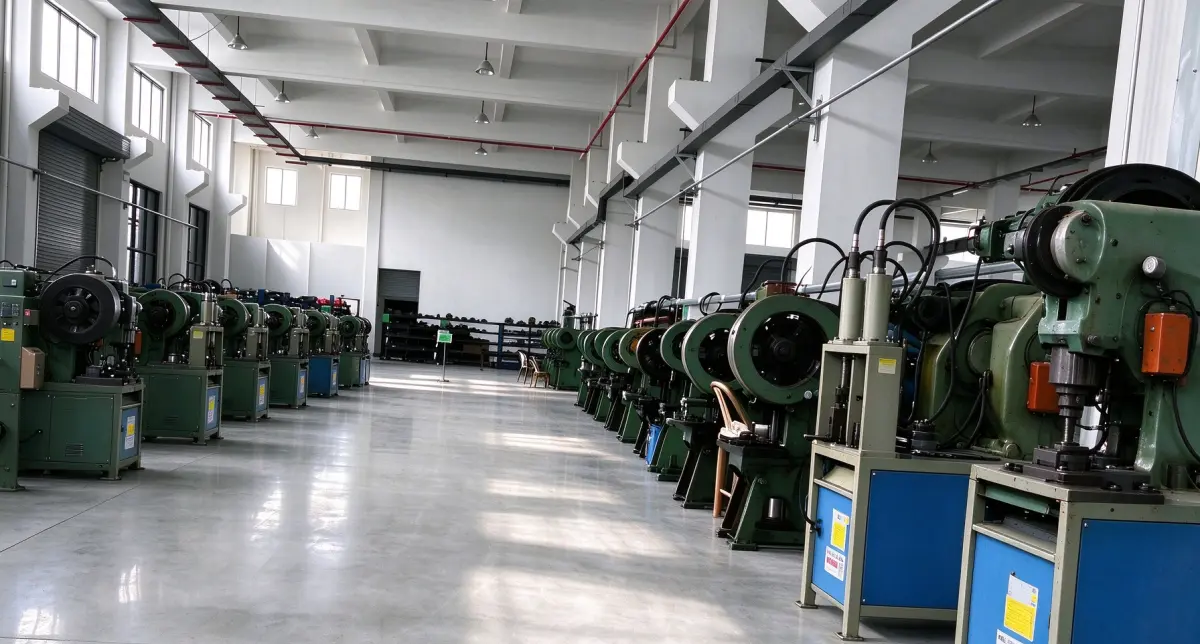
Ask the supplier to explain the production flow and identify which processes are completed in-house and which are handled by external partners. Depending on the product, relevant operations may include metal-part processing, plastic-component production, mold development, assembly, surface treatment, inspection, and packaging.
Outsourcing is not automatically a problem. What matters is whether responsibilities are clearly defined and whether the supplier can maintain the approved specification across the full order. Ask who authorizes component changes, who resolves quality issues, and who checks that the finished goods match the approved sample.
A video meeting or factory visit can help you assess whether the explanation is consistent with the supplier’s actual operations. Rather than relying on a general statement that the company has a factory, look for a clear explanation of how the product is developed, manufactured, checked, and packed.
2.Assess Production Resources and Repeat-Order Control
The first sample is only one part of a sourcing project. The manufacturer also needs a workable process for maintaining the approved product when the order moves into mass production or when the buyer places a repeat order.
Ask how the supplier records approved specifications, handles proposed material or component changes, checks production quality, and manages nonconforming goods. Find out who coordinates order updates and the documents required for shipment.
A useful answer should describe the actual process rather than relying only on broad promises such as “high quality” or “strict quality control.” Buyers should understand what will be checked, when it will be checked, and how an issue will be reported and resolved.
If the project requires a particular inspection record, test report, or approval procedure, agree on it before production begins. This helps both parties understand the quality requirements before the order reaches the final inspection stage.
Review the Available Folding Sawhorse Models
After establishing the basic requirements and verifying the supplier’s production role, review the models that may fit your project. A product catalogue helps narrow the choices, but the actual model reference and configuration still need to be confirmed.
1.Confirm the Exact Model and Configuration
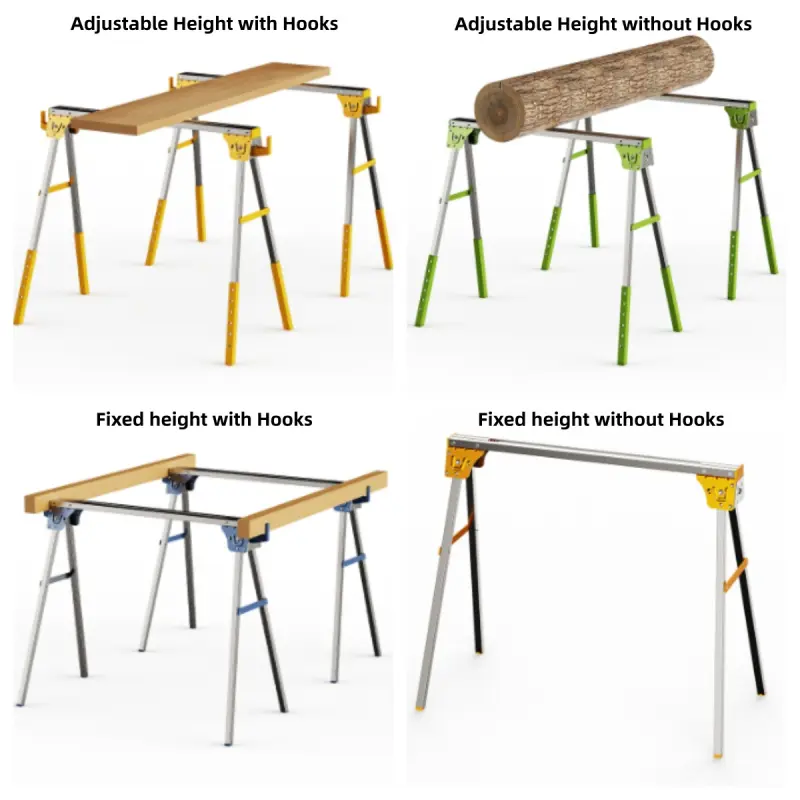
Folding sawhorses can differ in frame structure, working height, folded dimensions, accessories, adjustment mechanisms, and component materials. Confirm the exact model number and the configuration included in the quotation.
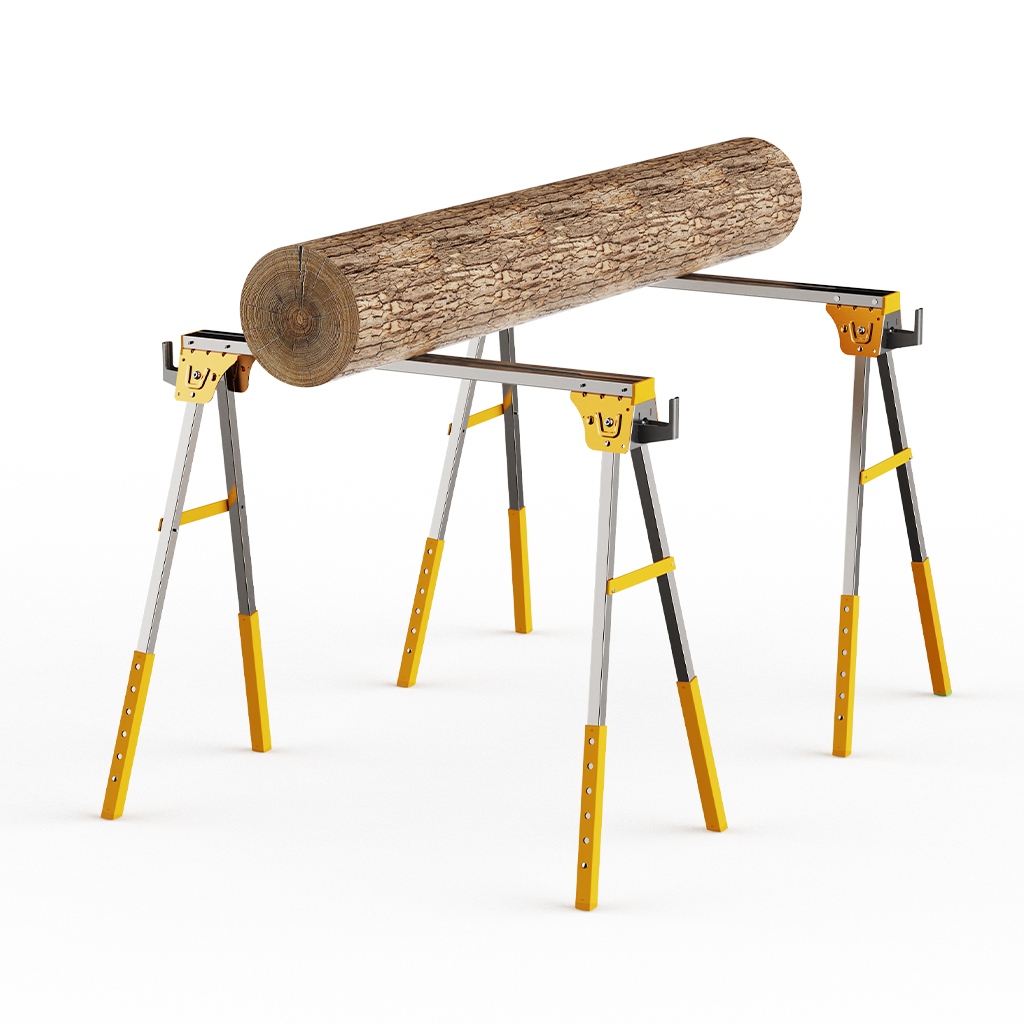
For example, a model with hooks should not be treated as identical to one without hooks. Similarly, a fixed-height model and an adjustable-height model may suit different product requirements. These differences can affect the product’s intended use, price, packaging, and position in your range.
Request the available specification sheet and check the details against your sourcing brief. If a dimension or feature is essential, record it in writing. Do not rely solely on a product photograph or a verbal description when approving the model.
2.Check the Details That Affect the Purchase Order
Depending on the project, review:
-
Open and folded dimensions
-
Product weight and construction
-
Height-adjustment mechanism, if applicable
-
Included hooks and accessories
-
Stated load capacity and the conditions behind the claim
-
Color, logo, and branding options
-
Packaging format and quantity per carton
The purpose of this step is to select a model that meets the project requirements. If you are comparing quotations from several suppliers, use a consistent specification so that differences in price can be assessed fairly. Our article, How to Compare Sawhorses From Different Suppliers, covers that separate comparison task in more detail.
Once the model and configuration are agreed, move to sample evaluation rather than continuing with an open-ended catalogue discussion.
Evaluate a Sample Before Approving Bulk Production
A sample allows the buyer to inspect the actual product before committing to a larger order. It should be checked against the written specification and intended application, not simply judged by how it looks in a photograph.
1.Create a Sample Inspection Checklist
Before the sample arrives, prepare a checklist based on the agreed requirements. Depending on the model, the review may include:
-
Correct model and configuration
-
Product dimensions and folding operation
-
Stability on an appropriate, level surface
-
Fit and finish of the main components
-
Operation of adjustment mechanisms and accessories
-
Visible defects or assembly issues
-
Color, logo, and product markings
-
Packaging condition, if packaging is part of the sample review
Any functional or load-related test should use an appropriate, safe procedure and agreed conditions. Do not infer load performance from appearance alone, and do not use an improvised test that could put people at risk.
If the sample does not meet the requirements, record the issue clearly. Photos, measurements, and a written list of required changes can help both sides distinguish between corrections that are necessary and features that should remain unchanged.
2.Record Sample Approval as a Production Reference
When the sample meets the agreed requirements, document the approval. The record should identify the model, configuration, specifications, color, accessories, branding, and packaging requirements as applicable.
If a revised sample is supplied, make sure the approval refers to the correct version. Keep dated photographs or other agreed reference records so the buyer and manufacturer can identify the approved product later.
Sample approval should not be treated as a formality. It creates a shared reference for mass production and reduces the risk of receiving bulk goods that differ from the product the buyer accepted.
Confirm Quality Control and Product Documentation
Before placing the bulk order, understand how the manufacturer checks the product and which documents are relevant to the target market. Requirements can vary by product, destination, customer, and intended sale, so they should be confirmed for the actual project.
1.Ask How Quality Is Checked During Production
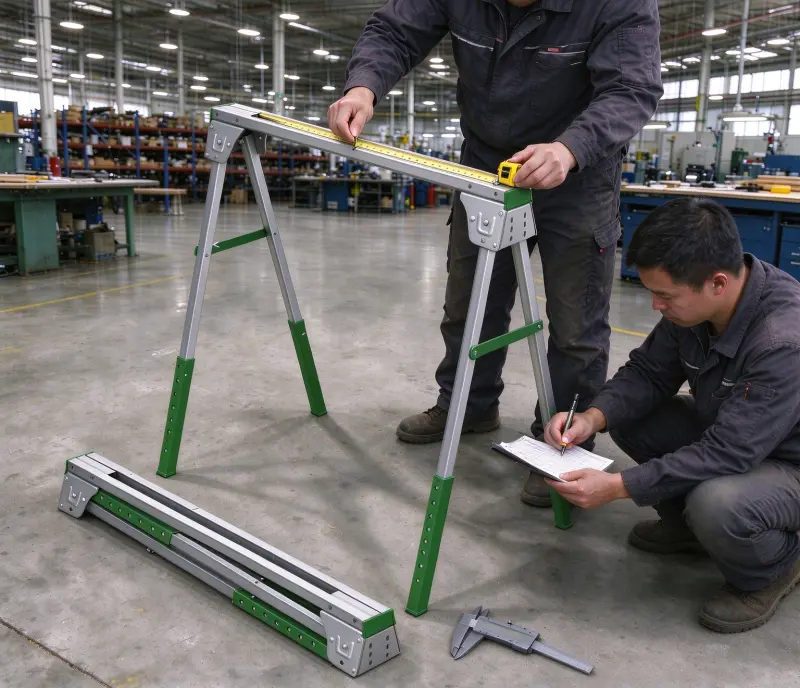
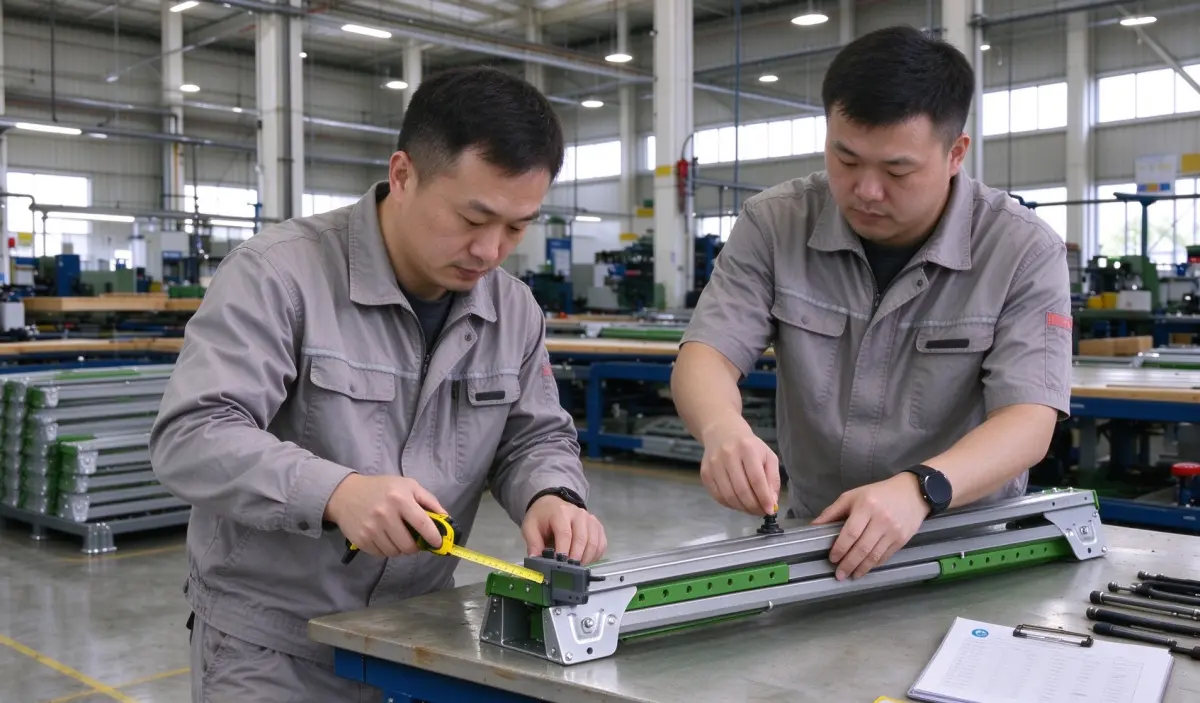
Ask the manufacturer to explain the quality checks relevant to the sawhorse. Depending on the product, these may include incoming-component inspection, assembly checks, dimensional checks, functional checks, final inspection, and agreed performance tests.
Find out which characteristics are controlled, when the checks take place, and how defects or deviations are recorded. If your purchase order requires inspection records or test reports, agree on the required format and delivery timing before production begins.
Where a load-capacity or performance claim is important, confirm the test method and the conditions behind it. A general company certificate does not automatically prove every specification of an individual sawhorse model.
2.Verify Documents Against the Actual Product and Market
Ask which certificates, test reports, labels, or declarations are required for your product and destination market. Check whether the documents identify the relevant product or product family, whether they are current where applicable, and whether their scope supports the claim you intend to make.
A certificate held by a manufacturer should not automatically be treated as covering every product it produces. The same principle applies to test reports and compliance documents: verify the issuing body, product identification, scope, validity where applicable, and any limitations.
Agree on the documents that must be available before shipment. This avoids a situation in which the buyer, manufacturer, and logistics provider discover at the end of production that they have different expectations.
Confirm the Quotation, OEM/ODM Scope, and Packaging
A useful quotation should match the product and commercial requirements already discussed. Before approving an order, confirm what the quoted price includes and identify any items that remain unresolved.
1.Check What the Quotation Includes
Ask the supplier to identify the quoted model and clarify the unit of sale, included accessories, packaging format, minimum order quantity, sample charges, production lead time, payment terms, and any other agreed commercial conditions.
Also confirm which costs may change if the product specification or order quantity changes. The purpose is not to predict every possible future cost; it is to make sure both parties understand what the current quotation covers.
For retail distribution, review packaging and labeling requirements before mass production. Carton dimensions, quantity per carton, barcode placement, product inserts, and private-label artwork can affect the order even when the physical product remains unchanged.
If you are comparing several quotations, make sure each supplier is pricing the same configuration and packaging requirements. A lower price may not represent a better offer if accessories, packaging, or required services are excluded.
2.Define OEM/ODM Requirements in Writing
For a private-label or customized project, describe each requested change clearly. These may include logo placement, product color, packaging, labels, or agreed product modifications. Identify which design files the buyer will supply and which materials the manufacturer is expected to prepare.
A packaging adjustment may be relatively straightforward, while a structural, dimensional, material, or tooling change may require feasibility review, additional sampling, and a revised schedule. Ask the manufacturer to confirm the implications before approving the final specification.
Jingyan Tools provides OEM and ODM manufacturing services across its industrial tool product range. For a folding sawhorse project, the specific customization scope should be assessed against the selected model and the buyer’s requirements rather than assumed to be identical for every product.
Plan Bulk Production, Inspection, and Shipment
Once the model, sample, specifications, quotation, and customization scope are approved, consolidate the requirements into a clear purchase order and production plan. Important details should not remain scattered across multiple conversations.
1.Confirm the Approved Production Reference
The purchase order should identify the product model, approved configuration, quantity, color, accessories, packaging, branding, required documents, and delivery requirements. Attach or reference the approved specification and sample record.
Agree on the expected production timeline and the milestones at which the buyer will receive updates. If artwork, sample approval, or packaging confirmation is still outstanding, identify it as a dependency rather than assuming that the production schedule has already started.
For repeat orders, confirm whether any requirements have changed. Even when the model number stays the same, packaging, artwork, material requirements, or destination-market documentation may need to be reviewed again.
2.Agree on Inspection and Shipping Responsibilities
Before production starts, clarify whether a pre-shipment inspection is required, who will perform it, which criteria will be checked, and how nonconforming goods will be handled. Agree on how inspection results will be shared and what happens if the goods do not meet the approved requirements.
Confirm the shipping terms, delivery destination, packing information, required shipping documents, and responsibilities of the buyer, manufacturer, and logistics provider. The right arrangement depends on the order and the agreed commercial terms.
A clear handover plan helps prevent avoidable delays. It also ensures that the teams responsible for production, quality, packaging, and shipment work from the same approved requirements.
Why Buyers Consider Jingyan Tools for Folding Sawhorse Sourcing
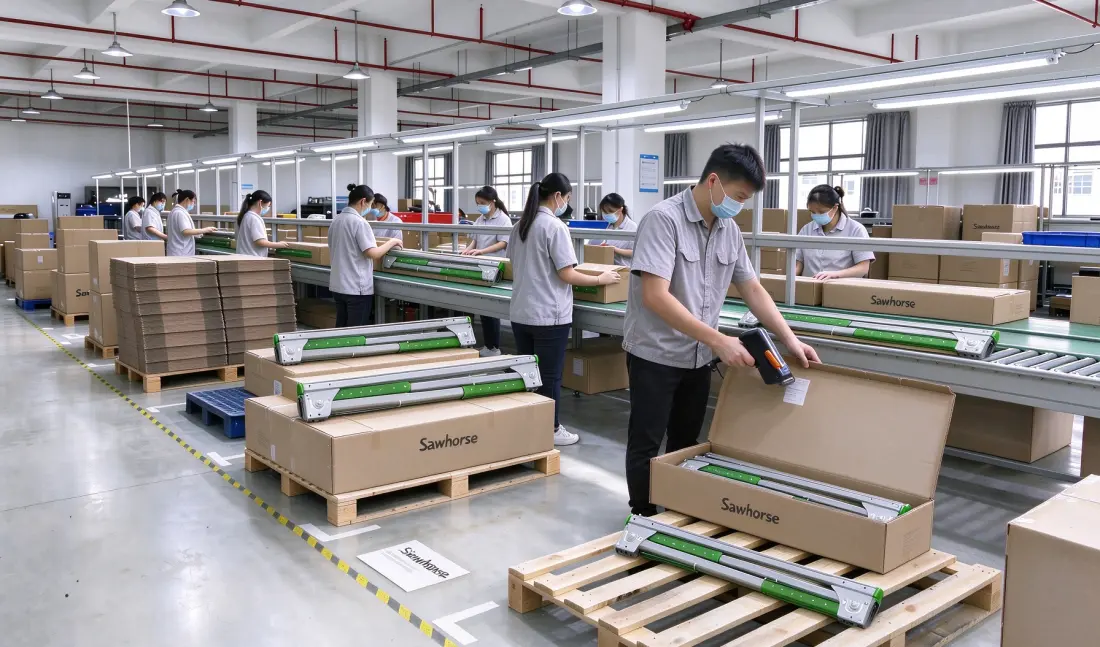
At Jingyan Tools, we manufacture industrial tool products for importers, distributors, retailers, and brands seeking OEM, ODM, wholesale, or product-development support. Ningbo Jingyan Tool Industrial Co., Ltd. was established in 2003. Our manufacturing base covers approximately 16,000 m², our team includes more than 140 professionals, and our facility operates more than 50 sets of production equipment. Our functions include R&D, mold development, production, quality control, and customer service.
Our experience also includes cooperation with internationally recognized retail and tool brands. These include STANLEY, Bosch, Lowe’s, Toughbuilt, Costco, Walmart, and DEWALT. Some of our brand relationships have lasted for more than 20 years. The duration and scope of individual relationships vary, so these examples should be understood as part of our broader manufacturing and customer-service experience rather than a claim that every listed brand has the same cooperation history or purchases every product category.
For buyers, this experience is relevant because a sourcing project requires more than making a product. It also requires clear specifications, production coordination, quality processes, packaging decisions, and communication between the buyer and manufacturer. Our manufacturing resources and OEM/ODM services provide a basis for discussing these requirements with customers.
For a folding sawhorse project, the next step is to identify the suitable model and confirm its specifications. Our sawhorse range includes different folding models and configurations, including options with and without hooks. The current model details should be checked against the buyer’s actual requirements before a sample or quotation is approved.
When contacting Jingyan Tools, share your target market, estimated quantity, preferred model or configuration, packaging requirements, branding needs, and any documents required for sale. This gives our team a practical starting point for discussing model suitability, sample arrangements, customization feasibility, and quotation scope.
Frequently Asked Questions About Sourcing Folding Sawhorses
1.What information should I send when requesting a quotation?
Provide the target market, intended application, preferred model or configuration, estimated quantity, packaging requirements, branding needs, and any essential dimensions or performance requirements. If you have a reference product, drawing, or specification sheet, include it. A clear brief helps the manufacturer identify a suitable model and clarify any missing information.
2.Should I approve a sample before placing a bulk order?
For a new supplier or product, sample approval is a useful control point. It lets the buyer review the actual model, folding operation, finish, and agreed configuration before committing to mass production. Keep the final approved sample record and specification as references for production.
3.How can I assess whether a China sawhorse supplier is a manufacturer?
Ask which processes the supplier controls, which are outsourced, who manages inspection, and how the approved product is maintained during repeat production. A video meeting or factory visit can provide additional evidence. The key is whether the supplier can explain a credible production-control process rather than relying only on a general claim that it has a factory.
4.What should I check in a folding sawhorse quotation?
Confirm the exact model, unit of sale, configuration, included accessories, packaging, minimum order quantity, sample charges, lead time, payment terms, and customization scope. Record exclusions and unresolved items in writing before placing the order.
5.Do a manufacturer's certificates automatically cover every sawhorse model?
No. A company-level certificate should not automatically be treated as proof that every product or specification is covered. Check the document’s scope, product identification, validity where applicable, and relevance to the destination market.
6.Can folding sawhorses be customized for a private label?
Customization depends on the model and the requested changes. Logo placement, color, labeling, packaging, and structural modifications can involve different levels of work. Share the requirements early so the manufacturer can assess feasibility, sampling, costs, and timing before bulk production is confirmed.
Start Your Folding Sawhorse Sourcing Enquiry
A successful sourcing project begins with a clear brief and continues through manufacturer verification, model selection, sample approval, quality planning, and controlled bulk production. Each stage should resolve a specific question before the project moves forward.
If you are planning to source folding sawhorses, send us your target market, estimated quantity, preferred configuration, packaging requirements, branding needs, and required documents. The Jingyan Tools team can then discuss suitable models, sample arrangements, customization feasibility, and the information needed for a quotation.
Related products