Portable Sawhorses for Professional Work: What Buyers Should Consider
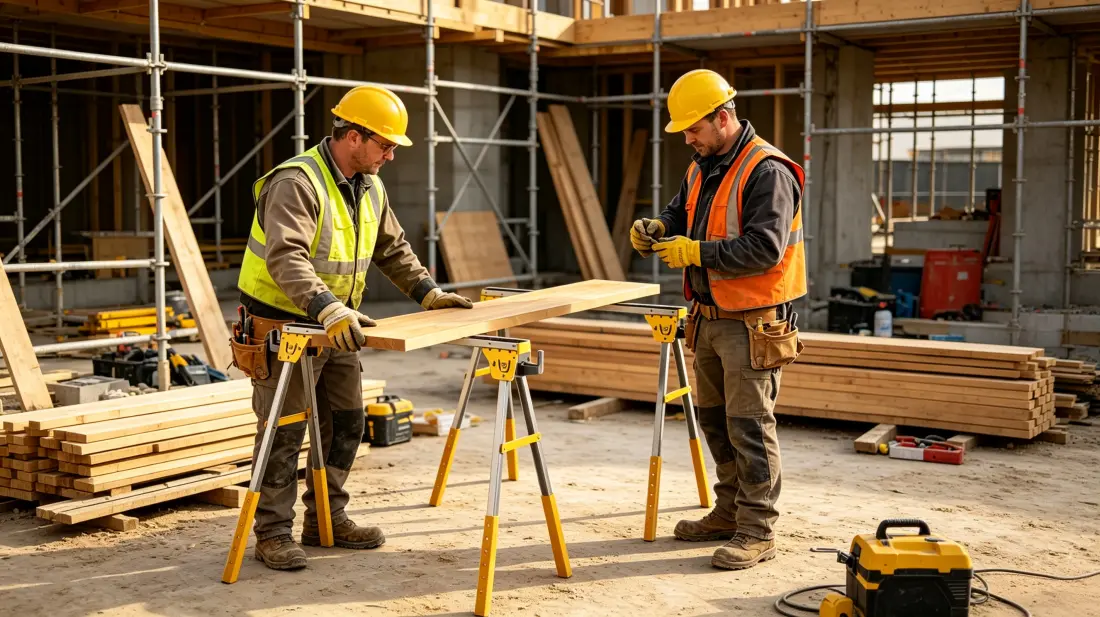
When professional buyers evaluate a sawhorse, the conversation often starts with load capacity, materials, price, or the folding mechanism. Those specifications matter, but they do not fully explain whether a product is truly practical for mobile professional work.
Portability deserves a closer look because a sawhorse is rarely used in only one fixed location.
A contractor may transport it between jobsites. A woodworking professional may move it around a workshop. A maintenance team may keep it in a service vehicle. A distributor needs to store it before delivery, while a retailer has to consider how the product will be packaged, displayed, handled, and transported by the customer.
That makes portable saw horses more than a convenient product category. Portability can influence the entire lifecycle of the product—from warehouse storage and delivery to jobsite use and final customer satisfaction.
For professional buyers, the useful question is therefore not simply:
“Is this sawhorse portable?”
A better question is:
“How much practical value does its portability create for my customers, my product line, and my supply chain?”
That difference is especially important when sourcing products for professional woodworking, construction, renovation, maintenance, hardware retail, and private-label tool programs.
This article focuses specifically on portability as a procurement and product-line consideration. It does not attempt to repeat the broader topics of material comparison, general sawhorse selection, load-capacity education, or folding-versus-traditional design. Instead, the focus is on what portability means from a B2B buyer’s perspective and how it can affect product usability and commercial value.
- Why Portability Matters to Professional Buyers
- What Should “Portable” Mean in a Professional Sawhorse?
- Why Folded Dimensions Deserve More Attention in B2B Procurement
- Portability Should Be Evaluated as a Workflow
- How Portability Can Improve a Professional Product Line
- Portable Sawhorses and Transportation Efficiency
- Why Portability Matters for Distributors and Importers
- Portability Does Not Mean Sacrificing Professional Performance
- A Practical Example: NH-SH001 Portable Folding Sawhorse
- What Buyers Should Verify Before Placing a Bulk Order
- How Portability Can Influence Product Positioning
- Portable Sawhorses as Part of a Mobile Tool Ecosystem
- A B2B Portability Evaluation Checklist
- When Portable Sawhorses Make the Most Sense for a Product Line
- Frequently Asked Questions About Portable Sawhorses
- Final Takeaway: Portability Is a Product-Line Decision
Why Portability Matters to Professional Buyers
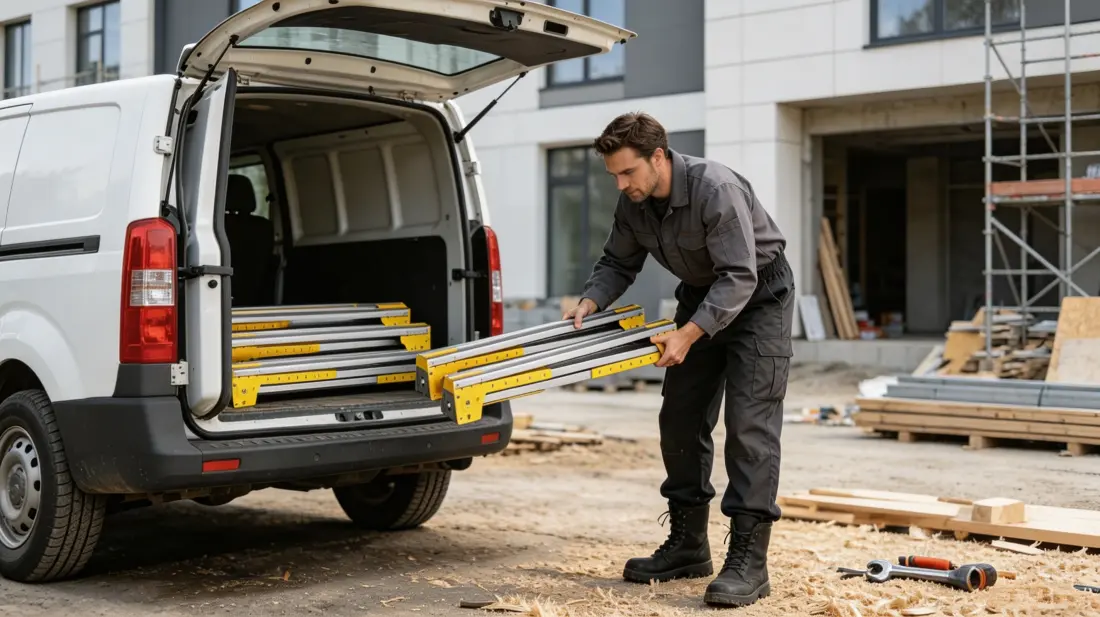
Portability is sometimes treated as a simple marketing word.
In professional procurement, it should be treated as a measurable product characteristic.
A portable product reduces friction somewhere in the user’s workflow. That friction may come from transportation, storage, repositioning, loading, unloading, or setting up temporary work areas.
The important point is that portability can create value before, during, and after actual product use.
1.Portability Is Part of the Product Lifecycle
A sawhorse has more than one physical state.
During work, it needs to provide an effective support platform.
Before and after work, however, it may spend time in a vehicle, warehouse, workshop, garage, stockroom, or delivery carton.
This means buyers should look at both:
Working footprint
and
Storage footprint
A product can perform well when fully opened but still be inconvenient when transported or stored.
The reverse can also happen. A product may fold into a small package but become unnecessarily cumbersome to deploy.
The stronger commercial proposition is a product that performs well in both states.
2.Portability Has Value for More Than the End User
For a professional end user, portability is mainly about moving the product.
For a B2B buyer, the picture is broader.
Portability can affect:
- Product positioning
- Retail appeal
- Warehouse organization
- Vehicle storage
- Product packaging
- Distribution efficiency
- SKU differentiation
- Customer satisfaction
This is why portability should not be considered only after the engineering team has already finalized the product.
For some markets, it deserves to be part of the original product concept.
What Should “Portable” Mean in a Professional Sawhorse?
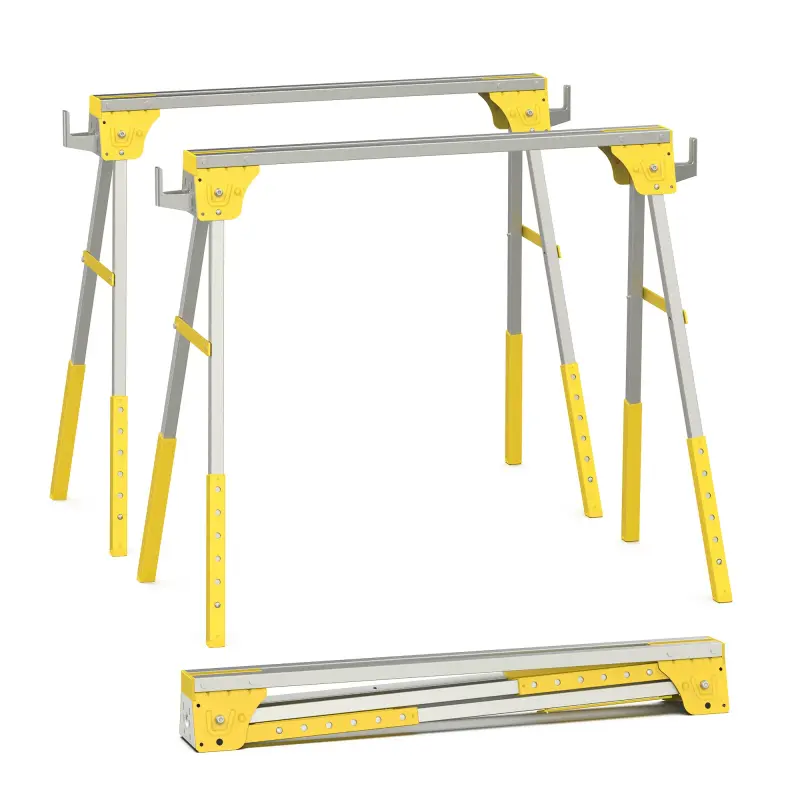
Not every folding product is equally portable.
A buyer needs more specific criteria than a product title containing the word “portable.”
A practical assessment can include five dimensions:
- Carrying effort
- Folded volume
- Handling simplicity
- Transportation compatibility
- Storage efficiency
These dimensions are related but not interchangeable.
1.Carrying Effort Is More Than Net Weight
Weight is usually the first number buyers notice.
It is also one of the easiest numbers to misunderstand.
A specification sheet may show the weight of one unit, a complete pair, or packaged goods. These values serve very different purposes.
For professional users, carrying effort can also depend on the shape of the product, where it is held, how easily the folding structure stays together, and whether the user needs to carry one unit or two.
This is why a sensible comparison is not:
lighter = more portable.
Instead, buyers should ask:
How easy is the product to handle in the actual environment where it will be used?
That is a much more useful procurement question.
2.Folded Volume Can Determine Whether Portability Is Actually Useful
A product can technically fold and still be inconvenient.
The important question is what happens to its volume after folding.
For procurement purposes, buyers should record:
- Open dimensions
- Folded length
- Folded width
- Folded thickness
- Packaging dimensions
Among these, folded thickness can be particularly useful when evaluating storage alongside other equipment.
A narrow folded profile may allow a unit to stand against a wall, fit into a vehicle more easily, or occupy less stockroom space.
For this reason, the phrase collapsible saw horses should not be interpreted only as “can be collapsed.”
The commercially useful question is how much space is actually recovered.
Why Folded Dimensions Deserve More Attention in B2B Procurement
Open dimensions describe how much working space a sawhorse provides.
Folded dimensions describe how efficiently the product moves through the rest of the supply chain.
That difference is easy to overlook.
A distributor may never use the product itself, yet folded dimensions can affect how it is received, stored, picked, shipped, and delivered.
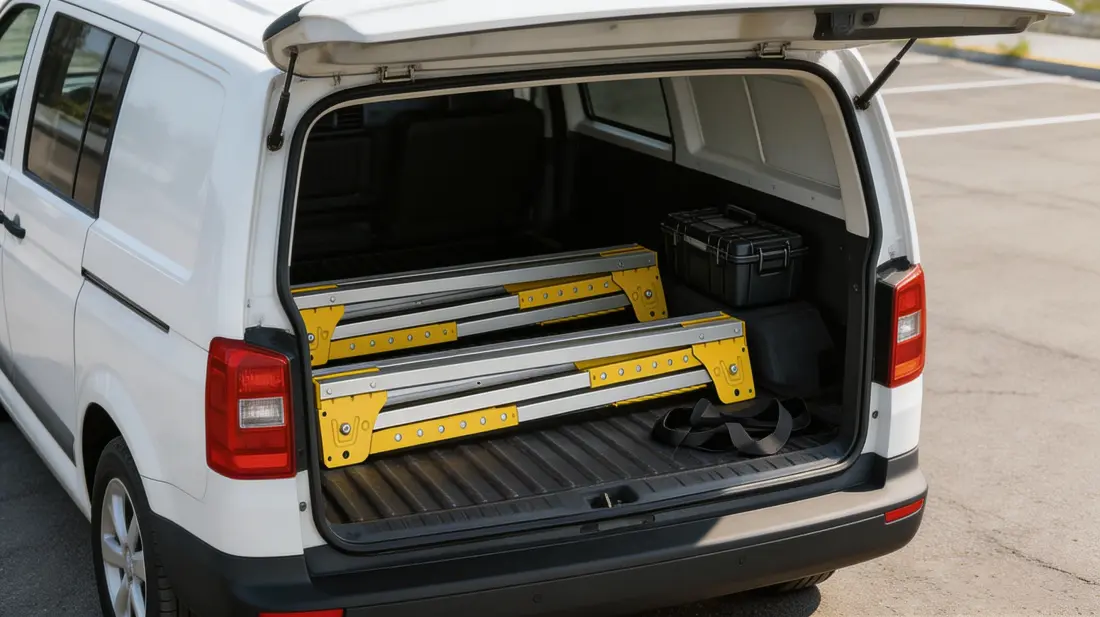
1.The Vehicle-Space Test
One useful procurement exercise is to imagine the customer’s actual vehicle.
A professional customer may use a:
- Pickup truck
- Service van
- Trailer
- Work vehicle
- Workshop delivery vehicle
Now ask where the folded product would go.
Will it fit beside other tools?
Can it be positioned vertically?
Can several units be carried without blocking other equipment?
Can one worker remove it without unpacking half of the vehicle?
These are practical portability questions.
A product does not become more portable simply because its legs fold. Its folded shape needs to work within the customer’s transportation environment.
2.The Workshop-Space Test
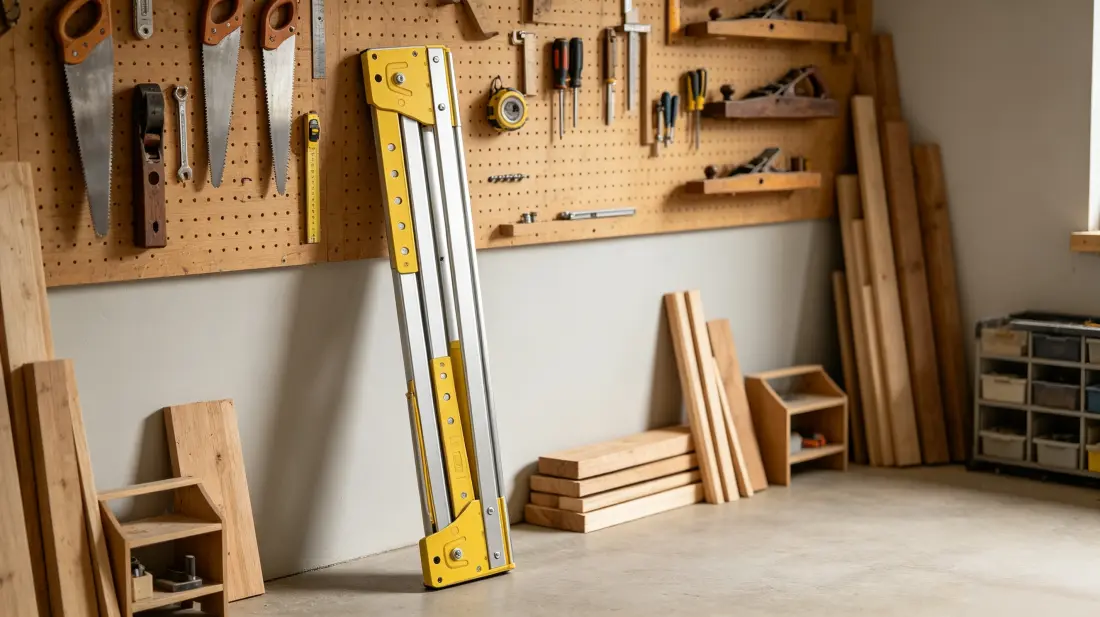
Not every user transports equipment every day.
Some users care more about reclaiming workspace.
A small workshop may need the sawhorse for a few hours and then need the same floor area for assembly, finishing, storage, or another operation.
In that case, portability means:
easy to move + easy to put away + small storage footprint.
This is particularly relevant for professional workshops where available floor area has a direct operational value.
3.The Warehouse-Space Test
The same principle applies one level earlier in the supply chain.
A distributor or importer may store hundreds of units before they are allocated to customers.
Here, folded dimensions influence:
- Shelf or floor utilization
- Picking efficiency
- Stock organization
- Internal handling
- Replenishment processes
For this reason, B2B buyers should request both product dimensions and carton dimensions before calculating the commercial value of a portable sawhorse.
Portability Should Be Evaluated as a Workflow
A professional user rarely asks:
“Can I carry this object?”
Instead, the real question is:
“Can I move this product through my work process without wasting time or space?”
That is a more useful definition of portability.
1.Before Work Starts
The product needs to move from wherever it is stored to the working area.
A portable design can reduce this initial setup effort.
2.During the Job
A mobile jobsite can change.
The cutting position may move.
The workpiece may change.
The user may need to create another temporary workstation.
A portable sawhorse is valuable when it can be repositioned without becoming a major part of the job.
3.After the Job
The final step is frequently ignored.
After work is complete, the product needs to be folded, loaded, stored, or transported again.
This repeated movement is one reason portability should be evaluated across the full workflow rather than judged from one demonstration.
How Portability Can Improve a Professional Product Line
For a B2B buyer, one of the most important questions is not only whether the product works.
It is whether the product gives the business a useful position in the market.
Portability can support that goal.
1.Portability Can Expand the Addressable Use Cases
A fixed support product is naturally tied to a more stable environment.
A portable product can serve users who move between locations.
That can include:
- Mobile contractors
- Field maintenance teams
- Renovation professionals
- Workshop operators
- Installation crews
- Rental businesses
- Professional tradespeople
This does not mean portability automatically creates demand.
It means portability can help a product line serve customer groups whose work environment requires movement.
2.Portability Can Create a Clearer Retail Message
Some technical specifications take time to explain.
Portability is different.
A folded product next to an unfolded product can communicate the benefit immediately.
For retailers and brands, this can simplify visual merchandising.
A product image can demonstrate:
full working function + compact storage
without requiring a long technical explanation.
That makes portability particularly useful as a consumer-facing B2B product benefit.
Portable Sawhorses and Transportation Efficiency
Transportation is one of the areas where portability has the clearest business implications.
But buyers should distinguish between product portability and shipping efficiency.
They are connected, but they are not the same.
1.Product Portability vs. Shipping Efficiency
A sawhorse can be easy for an individual customer to carry while still being inefficient to ship if its packaging is oversized.
Likewise, a product can have a compact product shape but require excessive packaging material.
This is why professional procurement should consider both levels:
User-level mobility
and
Supply-chain efficiency
The supplier should be able to provide product dimensions, folded dimensions, carton dimensions, unit quantity per carton, and gross weight.
That data allows buyers to compare products on a more meaningful commercial basis.
2.Packaging Is Part of the Portability Proposition
Why Portability Matters for Distributors and Importers
The value of portable products changes as they move through the B2B chain.
A manufacturer sees a product.
An importer sees inventory.
A distributor sees inventory plus customers.
A retailer sees inventory plus shelf space plus customer expectations.
The same portability feature therefore has different commercial meanings.
A portable product should not be designed independently from its packaging.
If the product folds efficiently but the carton wastes a large amount of unused volume, some of the logistics advantage is lost.
Packaging should therefore protect the product while preserving a sensible relationship between:
- Product size
- Folded size
- Carton size
- Units per carton
- Handling requirements
For importers, this is especially relevant because packaging can influence both warehouse and transportation costs.
1.For Distributors
Distributors normally want products that can serve several customer segments without becoming difficult to explain.
A portable folding sawhorse can fit naturally into professional hardware assortments because mobility is relevant to multiple trade users.
For distributors, the strongest value may come from versatility of customer fit, not portability alone.
2.For Importers
Importers need to consider the total delivered economics.
That means evaluating:
- Product dimensions
- Folded dimensions
- Carton dimensions
- Gross weight
- Packing method
- Order quantity
- Lead time
- Quality consistency
A compact product can make the supply chain easier to manage, but only if the manufacturer maintains stable specifications.
3.For Retailers
Retailers have another question:
Can the portability benefit be understood quickly?
Product images, packaging graphics, shelf labels, and comparison charts can all help.
Portability becomes commercially stronger when it is easy to see rather than requiring technical interpretation.
4.For Private-Label Tool Brands
Private-label buyers can treat portability as part of their brand architecture.
For example, a tool brand could build a mobile-work range that includes:
- Portable support products
- Portable work surfaces
- Tool storage
- Material-handling tools
This turns portability into a product-family concept instead of an isolated specification.
Jingyan’s OEM/ODM operation currently supports private-label customization such as customer logos and packaging, which can be relevant when buyers want to build a branded tool assortment rather than purchase a generic item.
Portability Does Not Mean Sacrificing Professional Performance
One concern buyers may have is whether making a sawhorse portable automatically requires making it lighter, smaller, or less capable.
That is not necessarily true.
Good product design is about managing trade-offs.
A professional sawhorse can be designed to combine a structural frame with functional components that support handling and storage.
The goal is not to minimize every dimension.
The goal is to create a product whose physical characteristics make sense together.
For example:
- Enough structural performance for the intended market
- A manageable unit weight
- A useful folded profile
- Stable positioning
- Practical setup
- Repeatable folding
- Appropriate packaging
That combination is more meaningful than a single headline specification.
For readers specifically comparing construction materials, existing article Metal vs Plastic Sawhorses: Which Is Better for Professional Buyers? already handles that separate search intent in more depth.
A Practical Example: NH-SH001 Portable Folding Sawhorse
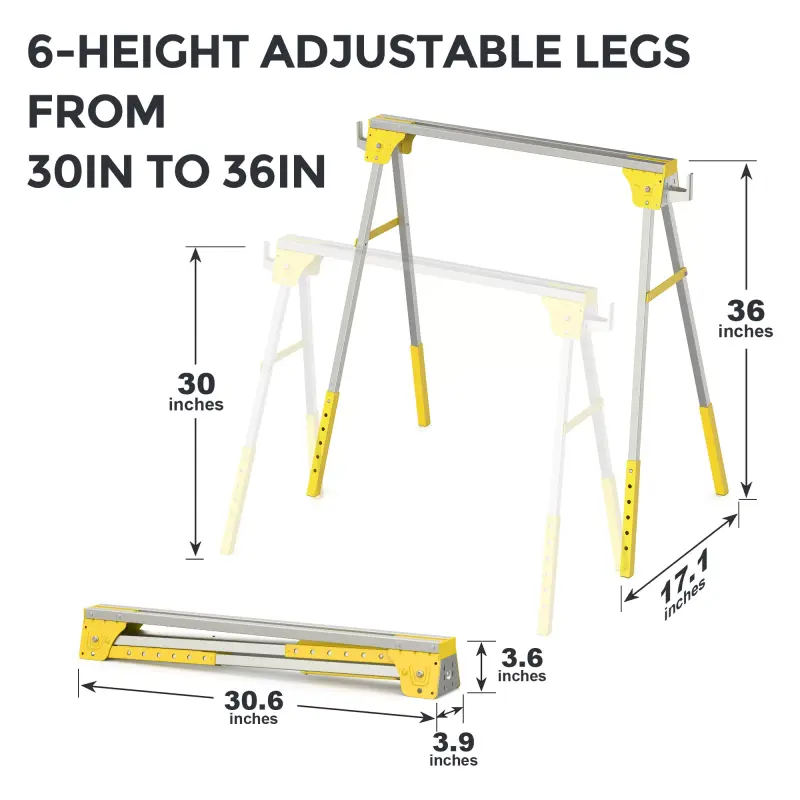
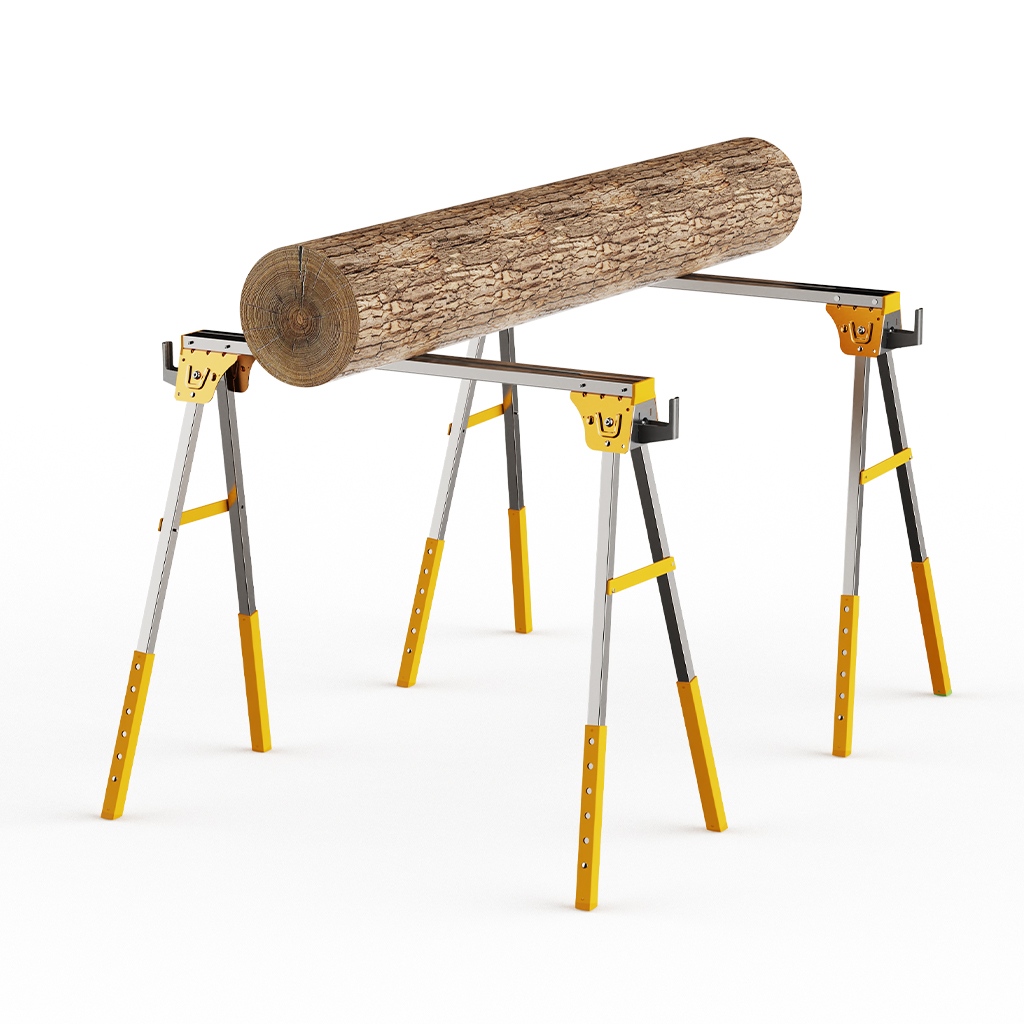
A useful example of how portability can be integrated into a professional product is the NH-SH001.
The product combines a metal frame with PP and TPR components and is designed for professional woodworking and on-site work.
Its stated specifications are:
| Specification | NH-SH001 |
|---|---|
| Material | Metal + PP + TPR |
| Open Dimensions | 88.7 × 43 × 72.6 cm |
| Folded Dimensions | 78 × 10.7 × 9.7 cm |
| Weight | 4.5 kg/unit |
| Load Capacity | 2,650 lbs/pair |
| Height Adjustment | Supported |
| Utility Hooks | 2 |
| Colors | Green / Yellow / Blue |
For a portability discussion, the most important observation is not one individual specification.
It is the relationship between them.
Each unit weighs approximately 4.5 kg, while the folded form reduces to 78 × 10.7 × 9.7 cm.
That means the buyer can evaluate portability using both:
handling weight
and
storage profile.
The model also supports height adjustment and includes two utility hooks, which means portability is not being treated as the only product benefit.
This is an important distinction for professional product lines.
A successful portable product should not rely on “easy to carry” as its entire value proposition. It should combine mobility with useful work functionality.
For the complete product specification, buyers can review the NH-SH001 folding sawhorse.
What Buyers Should Verify Before Placing a Bulk Order
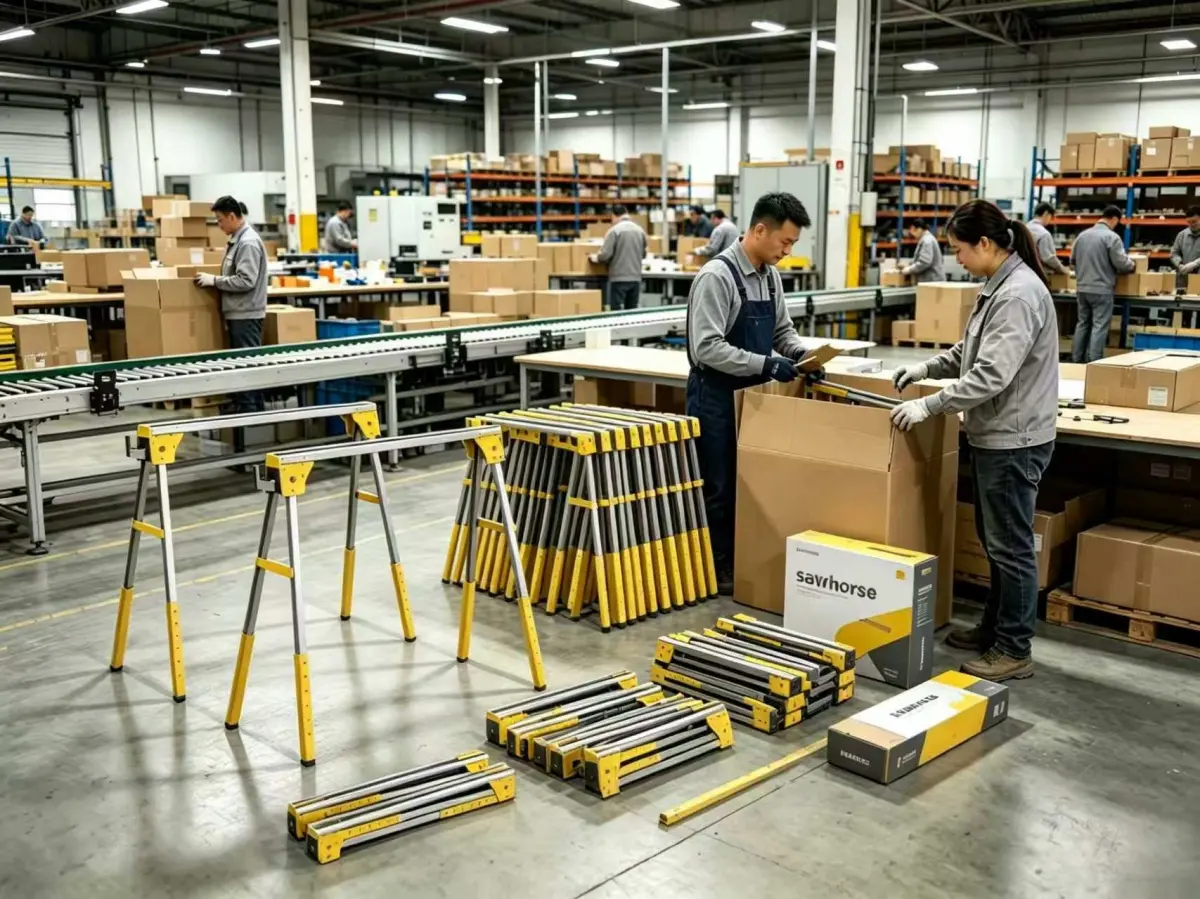
Portability should be validated with physical evidence whenever possible.
A product photograph can show a folded position.
It cannot tell you everything about repeated handling, joint resistance, packaging practicality, or real-world maneuverability.
1.Verify the Actual Product Weight
Confirm whether the stated weight refers to:
- One unit
- One pair
- Individual packaging
- Complete carton
This avoids incorrect freight and handling assumptions.
2.Verify Folded Dimensions
Do not accept only the phrase “foldable.”
Request exact folded measurements.
Ideally, the supplier should provide three dimensions rather than a single thickness figure.
3.Test Opening and Closing
The folding sequence should be practical and repeatable.
Ask:
- How many actions are needed?
- Is the product intuitive to open?
- Is the locking position easy to identify?
- Can a user close it without excessive effort?
- Does the folded product remain manageable?
The goal is to evaluate the complete motion rather than one showroom demonstration.
4.Evaluate Vehicle Handling
A useful sample test is simple:
Put the folded product into the type of vehicle used by your target customer.
Then place other typical tools around it.
This reveals more about portability than a specification sheet alone.
5.Review Packaging Separately
A product may be compact while its packaging is not.
Request carton dimensions and gross weight before calculating your logistics assumptions.
6.Ask How Consistency Is Maintained During Mass Production
Portability features often involve moving components and dimensional relationships.
That makes manufacturing consistency important.
Ask the supplier how it checks:
- Folding components
- Connection points
- Dimensions
- Locks
- Assembly
- Final product condition
A useful quality question is:
What happens after the product leaves the prototype stage?
This shifts the discussion away from a single sample and toward repeatable production.
Can the same folding experience be maintained across production batches?
That is the issue professional buyers actually need to understand.
The goal is consistency, not just a successful sample
A well-performing sample is encouraging.
A repeatable manufacturing process is more important for a long-term product line.
How Portability Can Influence Product Positioning
Portability is not only an engineering characteristic.
It can become part of the message a buyer puts in front of customers.
1.Positioning for Contractors
The emphasis can be:
Move the support system where the work is.
This connects portability directly to mobile jobsite activity.
2.Positioning for Workshops
The emphasis can be:
Use the workspace when needed and recover it afterward.
This makes storage efficiency part of the value proposition.
3.Positioning for Retail Customers
The emphasis can be:
Professional capability without a permanent footprint.
That communicates both use and storage benefits.
4.Positioning for Private-Label Brands
The emphasis can be:
A flexible professional support platform that fits a broader mobile-work product range.
This allows portability to become part of a product family’s identity.
Portable Sawhorses as Part of a Mobile Tool Ecosystem
Professional users often purchase tools that solve connected problems.
A sawhorse may provide temporary support.
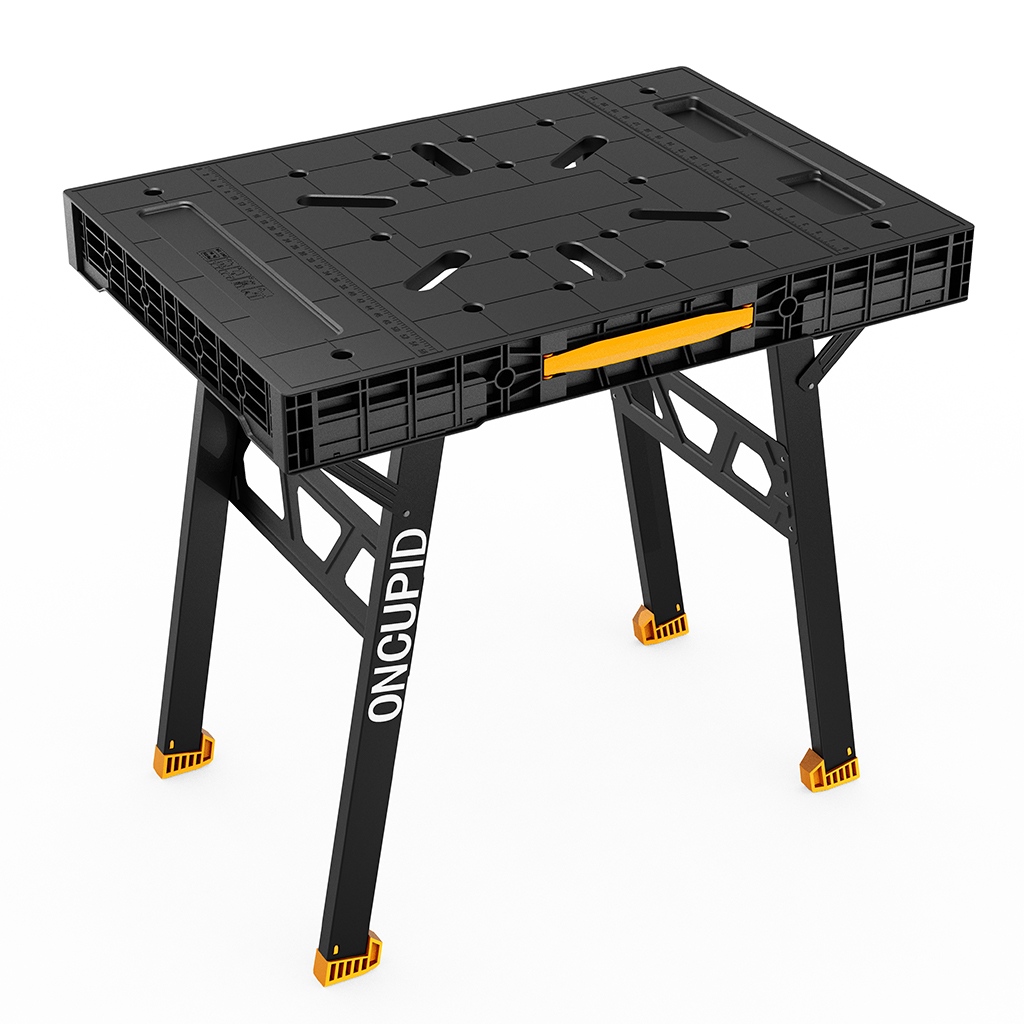
A workbench can provide a broader work surface.
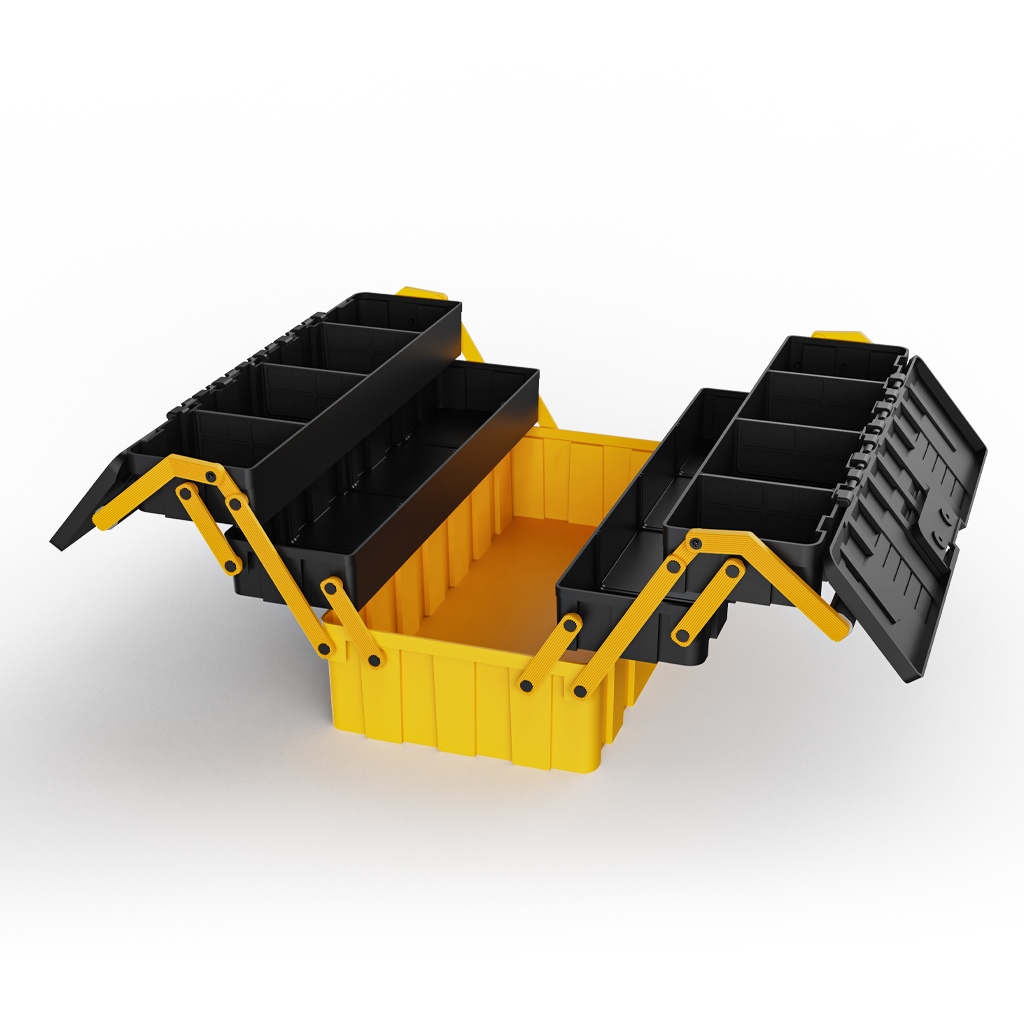
A toolbox provides organization.
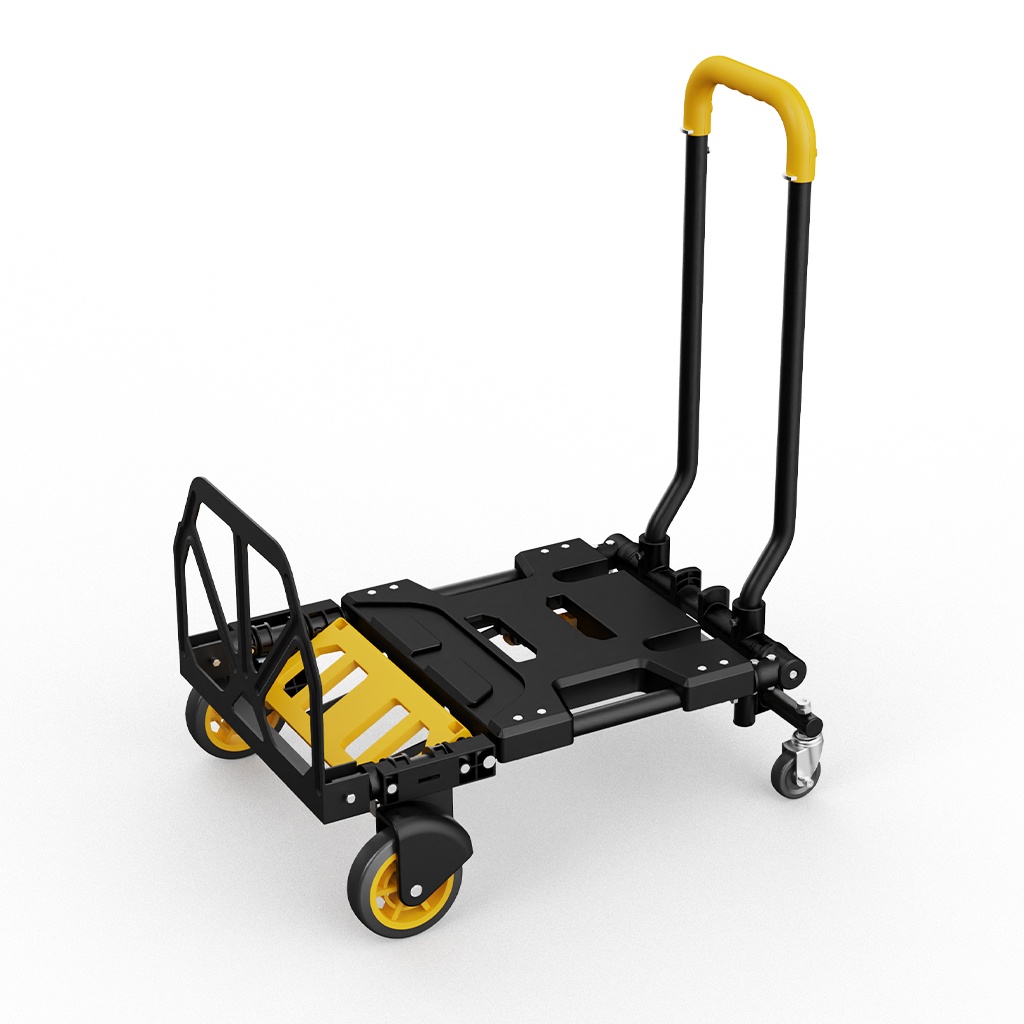
A hand truck assists with material movement.
The products perform different jobs, but they share a common idea:
making professional work easier to organize and move.
That creates a logical product-line opportunity for B2B buyers.
A distributor that sells portable support products may also find it useful to evaluate related categories such as portable workbench solutions, portable toolbox solutions, and folding hand truck solutions.
The purpose is not to make every tool identical.
It is to build an assortment around related professional workflows.
For buyers already researching specific sawhorse selection criteria, How to Choose a Folding Sawhorse: Quality Factors, Performance Standards and Supplier Evaluation should remain the more focused resource for general folding-sawhorse purchasing questions.
A B2B Portability Evaluation Checklist
Before approving a portable sawhorse for a product line, buyers can use this checklist.
| Evaluation Area | Questions to Ask |
|---|---|
| Carrying | Can one person handle the unit conveniently? |
| Weight | Is the weight clearly defined per unit or pair? |
| Folded Size | What are the exact folded dimensions? |
| Thickness | How narrow is the folded profile? |
| Folding | Is the opening and closing process practical? |
| Vehicle Fit | Can the product share space with other tools? |
| Workshop Storage | Can it be stored without wasting floor space? |
| Packaging | Are carton dimensions commercially efficient? |
| Handling | Can the customer load and unload it easily? |
| Product Positioning | Does portability create a clear selling point? |
| Quality | Are folding and connection points checked consistently? |
| Customization | Can colors, logos, packaging, or other specifications be adapted? |
| Supply | Can the supplier maintain consistent production at volume? |
This checklist is intentionally different from a general sawhorse buying guide.
Its purpose is to answer one question:
Does portability create enough practical and commercial value to justify including this product in the assortment?
When Portable Sawhorses Make the Most Sense for a Product Line
Portable sawhorses are particularly relevant when the target market has one or more of the following characteristics:
- Frequent jobsite movement
- Limited vehicle storage
- Temporary work areas
- Small workshops
- Multi-purpose professional use
- Retail customers who value compact storage
- Distributor customers who need versatile products
- Private-label brands building mobile tool assortments
The more movement involved in the customer’s workflow, the more commercially relevant poean portability should be treated as a universal advantage.
rtability becomes.
However, this does not m
A buyer should still match the feature to the target segment.
A warehouse-oriented market may care more about packaging.
A field-service market may care more about handling.
A retail market may care more about visual communication.
A private-label brand may care more about how portability fits the overall product portfolio.
Frequently Asked Questions About Portable Sawhorses
1.What makes a sawhorse truly portable?
A truly portable sawhorse should be practical to carry, move, store, and transport. Folding capability helps, but actual portability also depends on product weight, folded dimensions, handling, and how well the product fits the user’s work environment.
2.Are portable saw horses suitable for professional users?
Yes, when the product is designed for the intended professional application. Buyers should evaluate the complete product rather than assuming that portability alone indicates professional performance.
3.Why are folded dimensions important?
Folded dimensions determine how efficiently the product can be stored and transported after use. For professional users, this can affect vehicle organization, workshop storage, and jobsite handling.
4.Is folded thickness more important than open dimensions?
Neither specification replaces the other. Open dimensions explain the working footprint, while folded dimensions explain the storage and transport footprint. Both are needed for a professional procurement decision.
5.Are folding saw horses always more portable?
Not automatically. A folding mechanism creates the possibility of better portability, but the design still needs to provide a manageable folded form and practical handling.
6.Should buyers compare net weight or packaged weight?
Both are useful, but for different reasons. Net weight helps evaluate user handling, while packaged or gross weight is important for logistics, warehouse handling, and shipping calculations.
7.What should importers ask about packaging?
Ask for carton dimensions, gross weight, quantity per carton, packing method, and protection of moving or finished components.
8.Can portability be a useful retail selling point?
Yes. Portability is often easy to demonstrate visually through folded/unfolded product photography, packaging graphics, and in-store comparison.
9.Does portability matter for private-label tool brands?
It can. Portability can form part of a mobile-work or compact-workspace product family and can be integrated into product naming, packaging, merchandising, and model differentiation.
10.How can buyers verify portability before placing a large order?
Start with a physical sample. Test carrying, folding, loading into a representative vehicle, storage, and repeated handling. Then review packaging information and production quality controls before scaling the order.
Final Takeaway: Portability Is a Product-Line Decision
For professional B2B buyers, portability should not be reduced to a marketing adjective.
A useful portable sawhorse should create practical value at several points in its lifecycle:
moving → setting up → working → repositioning → folding → transporting → storing
That is what makes portability commercially meaningful.
The strongest products are not necessarily the lightest products or the smallest folded products.
They are the products whose weight, working dimensions, folded profile, handling characteristics, packaging, and intended application work together.
For distributors, portability can increase the usefulness of a product across mobile professional markets.
For importers, it can influence storage and logistics considerations.
For retailers, it can become a simple visual selling point.
For private-label brands, it can support a broader mobile-work product strategy.
And for manufacturers, it creates an opportunity to develop products around actual professional workflows rather than isolated specifications.
The right procurement question is therefore not:
“Is this a portable sawhorse?”
It is:
“Does this product make professional work easier to move, store, and organize—and does that advantage create enough value for my target market?”
That is the standard that should guide a serious portable sawhorse sourcing decision.
For buyers interested in OEM, private-label, or bulk sourcing, you can contact Jingyan Tools for wholesale supply and discuss your target market, quantity, specifications, and customization requirements.
Related products